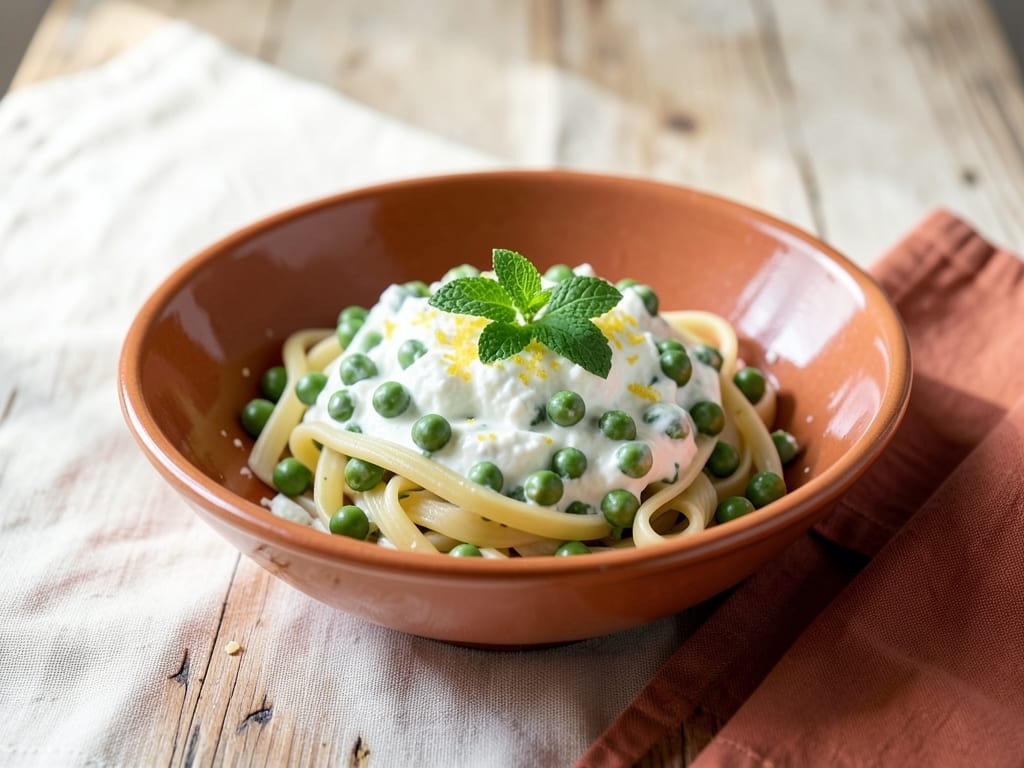
Mint Pea and Ricotta Sauce
A bright, spring-inspired Italian pasta sauce featuring creamy ricotta, tender peas, and aromatic fresh mint. The simplicity of this sauce—just garlic, lemon, and olive oil to bind it all—lets each ingredient shine. It's ready in about 20 minutes and works beautifully with delicate pasta shapes like pappardelle or linguine.
- Prep
- 10 min
- Cook
- 12 min
- Total
- 22 min
- Makes
- About 2 cups sauce (serves 4 over 1 lb pasta)
Steps
Before you start
- Have all ingredients prepped and ready since this cooks quickly (mise en place)
- Start cooking pasta just before you begin the sauce so both are ready at the same time
- Use room-temperature ricotta so it combines smoothly without seizing
- Use fresh mint; dried mint will not work in this recipe
Heat oil and cook garlic
- Heat the olive oil in a large skillet over medium heat.
- Add the minced garlic and sauté for about 1 minute, stirring occasionally, until fragrant but not browned.
- The oil should shimmer and the garlic should just begin to soften.
+ Show details− Hide details
Ready when: Garlic is fragrant and just beginning to turn light golden at the edges
Tip: Don't let garlic brown or it will taste bitter; keep the heat at medium
Add peas and cook briefly
- Add the thawed peas to the skillet with the garlic and oil.
- Stir gently and cook for 2 to 3 minutes over medium heat until the peas are warmed through and very slightly softened.
- They should still have some firmness and retain their bright green color.
+ Show details− Hide details
Ready when: Peas are heated through and still bright green with slight firmness
Tip: Don't overcook; peas should keep their tender-crisp texture and color
Combine with ricotta
- Reduce heat to medium-low.
- Add the room-temperature ricotta cheese to the skillet, breaking it gently into smaller pieces with a wooden spoon as you stir.
- Toss everything together until the peas are evenly coated in ricotta, about 2 minutes.
- The sauce should look creamy and loosely combined.
+ Show details− Hide details
Ready when: Ricotta is warm and creamy, evenly coating the peas
Tip: Keep heat low so ricotta doesn't break or seize; you're looking for a silky, creamy sauce
Add lemon zest and juice
- Stir in the lemon zest and juice from both lemons (about 3 to 4 tablespoons / 45 to 60 ml of juice total).
- Taste and season with salt and pepper to your liking.
- The acidity should brighten the dish and beautifully balance the richness of the ricotta.
+ Show details− Hide details
Ready when: Sauce tastes bright and well-seasoned, with lemon aroma evident
Tip: Add lemon juice gradually and taste as you go; you can always add more but you cannot remove it
Adjust consistency with pasta water
- If the sauce seems too thick or clumpy, add reserved pasta water a little at a time (about 2 to 3 tablespoons / 30 to 45 ml per addition) and stir gently until it reaches a loose, creamy consistency that will coat pasta nicely and flow off a spoon.
+ Show details− Hide details
Ready when: Sauce flows smoothly and lightly coats the back of a spoon
Tip: Add pasta water in small amounts and start with less than you think you need; you can always add more
Finish with fresh mint and serve
- Remove the skillet from heat.
- Gently fold in the torn fresh mint, stirring just until it is evenly distributed throughout the sauce—the mint should remain bright green.
- The sauce is now ready to serve immediately with hot, freshly cooked pasta (about 1 pound serves 4 as a main).
- Toss the pasta with the sauce, adding an extra tablespoon or two of pasta water if needed to achieve a silky consistency.
- Finish with a drizzle of good olive oil and freshly grated Parmigiano-Reggiano if desired.
+ Show details− Hide details
Ready when: Mint is evenly distributed and remains bright green throughout
Tip: Add mint off heat to preserve its fresh flavor and vibrant green color
Good to know
Tips
- Use fresh ricotta if you can find it at a cheese counter or Italian market—it has a lighter texture and more delicate flavor than packaged ricotta
- Don't skip the lemon zest; it adds brightness and aroma that juice alone cannot deliver
- This sauce relies on the quality of your ingredients. Choose the best peas, ricotta, and olive oil you can find
- The sauce is best served immediately after finishing with mint, but it keeps well refrigerated for up to 3 days
Make ahead
The sauce can be made up to 4 hours ahead and refrigerated in an airtight container. Reheat gently over low heat with a splash of pasta water. Add the fresh mint just before serving so it stays bright and aromatic. Do not mix in the mint before refrigerating, as it will lose color and flavor.
Storage & reheating
Room temperature: Up to 2 hours if covered. Refrigerator: Up to 3 days in an airtight container; reheat gently over low heat with a little pasta water. Freezer: Up to 1 month in an airtight container (freeze without the mint; add fresh mint after reheating). Thaw overnight in the refrigerator before reheating gently.
Substitutions
- fresh or frozen peas → frozen fava beans, thawed and peeled. Use about 1 cup fava beans instead of 2 cups peas. Fava beans are earthier and denser; peel the skins off thawed beans if possible for a more refined texture. Adds wonderful spring flavor.
- fresh mint leaves → fresh basil (preferably Thai basil or Genovese). Basil adds a peppery note instead of mint's cool freshness. Add off heat just before serving to preserve color and flavor.
- ricotta cheese → Greek yogurt (full-fat, plain). Greek yogurt provides similar creaminess and tang. Use the same amount (1½ cups). It won't break down quite as smoothly, so whisk it gently into the warm sauce to avoid lumps.
- extra-virgin olive oil → unsalted butter. Use 4 tablespoons (57g) butter in place of olive oil. Butter creates a richer, slightly silkier sauce. Cook garlic over medium-low heat to prevent browning.