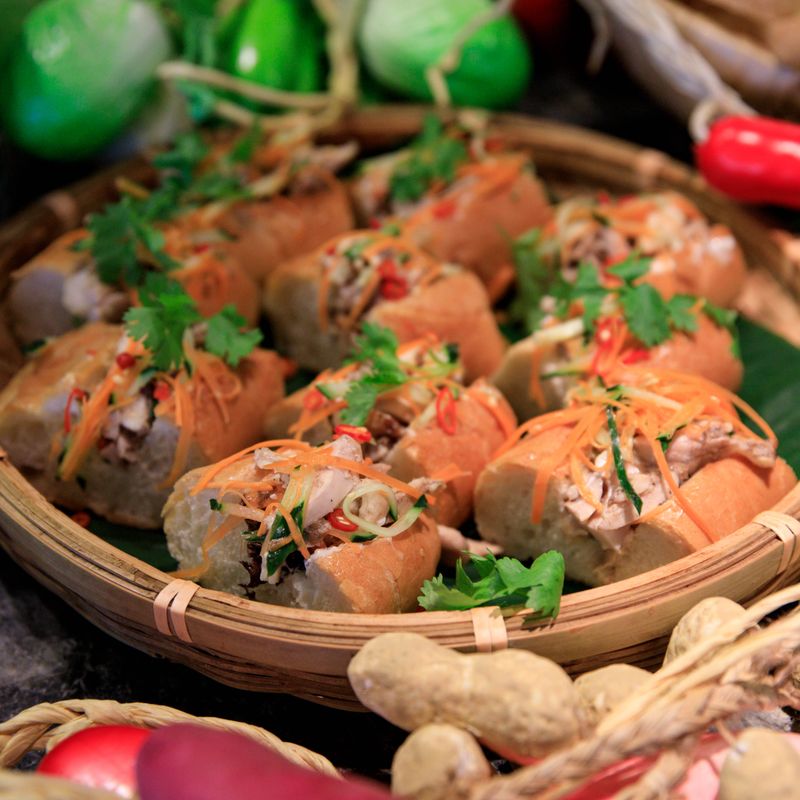
Vietnamese Egg and Pâté Sandwich with Liver Mousse and Fresh Vegetables
A classic Vietnamese bánh mì-style sandwich featuring a soft-boiled egg, creamy liver pâté, and fresh vegetables on a crispy baguette. This quick-assembled breakfast or lunch combines rich pâté and a runny-yolked egg with bright pickled vegetables and herbs for an authentic, satisfying meal.
Steps
Before you start
- Bring a small pot of water to a boil before you start—timing for soft-boiled eggs is crucial
- Have all vegetables sliced and ready so assembly is quick while eggs are warm
- If using cold pâté, let it sit at room temperature for 5 minutes so it spreads easily
Boil water for eggs
- Fill a small saucepan with enough water to cover the eggs by 1 inch (about 2 cups).
- Bring to a rolling boil over high heat.
+ Show details− Hide details
Ready when: Water is at a full rolling boil
Tip: Use an already-hot kettle to speed this up
Soft-boil the eggs
- Gently lower the room-temperature eggs into the boiling water using a spoon.
- Set a timer for 6 minutes and 30 seconds for a soft yolk with a just-set white.
- The water should remain at a gentle boil.
+ Show details− Hide details
Ready when: White is opaque and firm, yolk jiggles slightly when tapped gently
Tip: This timing produces a runny yolk ideal for bánh mì; if you prefer a firmer yolk, cook for 7–8 minutes instead
Ice bath the eggs
- Transfer the eggs to a bowl filled with ice water using a slotted spoon.
- Let them rest for 2 minutes to stop the cooking process.
+ Show details− Hide details
Ready when: Eggs are cool to the touch
Tip: This prevents overcooking and makes peeling easier
Prepare the baguette
- While the eggs cool, use a bread knife to split the baguette in half lengthwise.
- If the baguette is very thick or dense, you can gently scoop out some of the interior crumb to make room for fillings (this is optional but traditional).
- For a crispier exterior, you can lightly toast the cut side in a dry skillet over medium heat for 30 seconds to 1 minute per side, until just warmed and slightly golden.
+ Show details− Hide details
Ready when: Baguette is split and warmed through (if toasting)
Tip: Don't over-toast—you want the bread to still be soft inside
Spread pâté and butter
- Spread the pâté evenly over the bottom half of the baguette, using about 1.5 ounces (40 g) per sandwich.
- If using butter, spread a thin layer on the top half of the baguette.
- This adds richness and helps prevent the bread from soaking up too much moisture.
+ Show details− Hide details
Tip: Cold pâté is hard to spread; let it sit at room temperature for 5 minutes first
Peel and slice eggs
- Once the eggs are cool enough to handle, gently tap and roll each one to crack the shell all over.
- Peel carefully under cool running water, starting at the wider end where the air pocket makes it easier.
- Once peeled, slice each egg in half lengthwise, or into 3–4 thin slices if you prefer.
+ Show details− Hide details
Ready when: Egg is fully peeled and sliced
Tip: Peel under cool water to prevent the shell from sticking to the white
Layer vegetables and egg
- On the pâté-spread bottom half, arrange in this order: tomato slices, cucumber sticks, egg slices, and fresh cilantro.
- Distribute evenly so each bite has all the components.
- If using jalapeño, scatter the slices over the cilantro.
+ Show details− Hide details
Tip: Layer vegetables from heaviest to lightest so the egg and herbs stay on top
Season and finish
- Sprinkle the filling lightly with sea salt and freshly ground black pepper.
- If using soy sauce or fish sauce, drizzle a small amount (about ¼ teaspoon per sandwich) over the vegetables.
- If using mayo, spread a light layer on the top half of the baguette, or drizzle it over the filling.
- Close the sandwich.
+ Show details− Hide details
Tip: Less is more with soy or fish sauce—it's potent and salty
Slice and serve
- Using the bread knife, cut each sandwich diagonally in half (or into thirds if you prefer smaller pieces).
- Serve immediately while the egg yolk is still warm and runny.
- The warm egg and pâté will create a luxurious sauce.
+ Show details− Hide details
Ready when: Sandwich is cut into neat pieces
Tip: A serrated knife cuts through the crispy bread without crushing the filling
Good to know
Tips
- The key to a great bánh mì is contrast: rich pâté, runny egg yolk, crisp bread, and fresh vegetables. Don't skip the ice bath for eggs—it stops cooking at the perfect moment.
- If your baguette is several days old, lightly mist the cut side with water before toasting to refresh it slightly.
- A soft-boiled egg is essential here; a hard-boiled egg won't give you that luxurious yolk that doubles as a sauce.
- Make sure vegetables are at room temperature or cool—warm veg will wilt against the warm egg and pâté. Slice them just before assembly.
Storage & reheating
Best eaten fresh. If you must store: wrap each sandwich tightly in foil and refrigerate for up to 4 hours. The bread will soften and the egg will cool, but it's still edible. To reheat, unwrap and warm gently in a dry skillet over medium-low heat for 1–2 minutes per side until the bread is warm (do not microwave, which makes the bread tough).
Substitutions
- liver pâté or mousse → Liverwurst or braunschweiger. These are more spreadable and have a similar rich, savory flavor. Use the same amount.
- cucumber, English or hothouse → Pickled daikon and carrot (Vietnamese-style). Use 3–4 tablespoons total for more authentic flavor. These add tang and crunch that complement the pâté beautifully.
- fresh cilantro → Fresh mint or a mix of mint and Thai basil. Use the same amount. Both are traditional Vietnamese herbs that add brightness to bánh mì.
- mayonnaise → Sriracha mayo (sriracha mixed with mayo 1:3 ratio). Adds heat and spice instead of plain richness. Use sparingly—about 1 tablespoon per sandwich.
More breakfast sandwiches
See all →
Find more like this
- Meal
- Breakfast
- Cuisine
- Vietnamese
- Main ingredient
- Eggs
- Diet
- HalalSugar-Free
- Method
- Stovetop