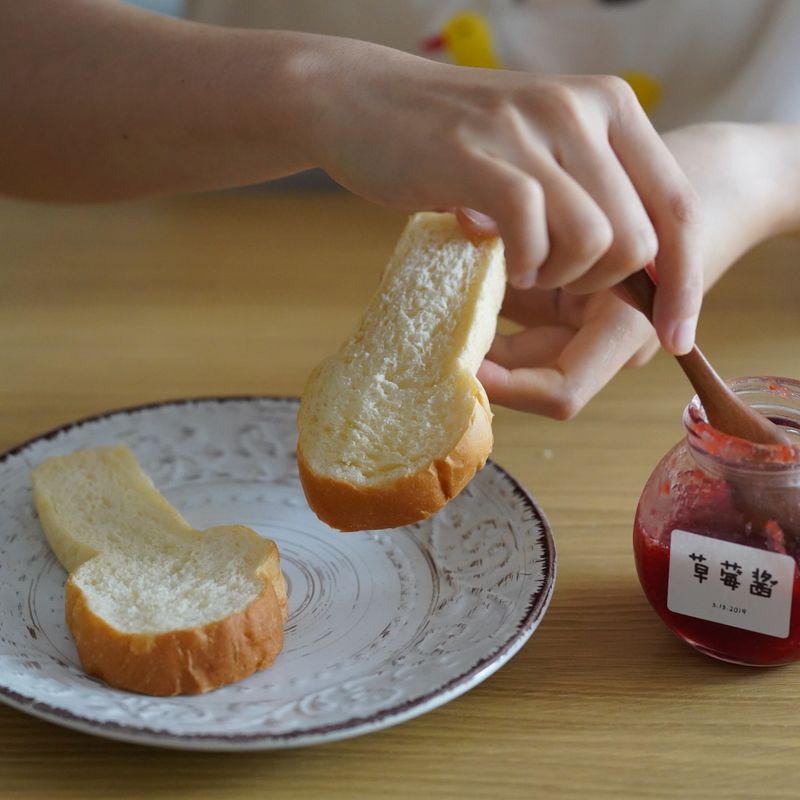
Japanese Tamago Sando with Fluffy Egg Custard and Strawberry Jam
A delicate Japanese egg sandwich featuring silky tamago custard made from gently scrambled eggs and milk, sweetened with a touch of sugar and mirin, layered with strawberry jam and creamy Japanese mayonnaise on soft, pillowy shokupan (Japanese milk bread). Crusts are trimmed for an elegant presentation, and the sandwich is chilled before serving for the best texture and taste.
- Prep
- 15 min
- Cook
- 8 min
- Wait
- 25 min
- Total
- 48 min
- Makes
- 2 sandwiches (4 pieces)
Steps
Before you start
- Have all ingredients at room temperature except the butter (chilled)
- Use a nonstick pan or well-seasoned carbon steel to prevent sticking
- Chill the assembled sandwich in the refrigerator for at least 20 minutes before cutting so the fillings set properly
Whisk egg mixture
- In a medium bowl, crack the 3 eggs and whisk together with 37 ml (2.5 tablespoons) milk, 7 g (1.5 teaspoons) sugar, 5 ml (1 teaspoon) mirin, and 1.5 g (¼ teaspoon) salt until well combined and slightly foamy, about 20 seconds.
- Strain through a fine mesh sieve to remove any lumps and ensure a silky texture.
+ Show details− Hide details
Ready when: mixture is smooth and light yellow
Tip: Straining the mixture prevents lumps in the finished tamago and creates a custardy texture.
Heat pan and butter
- Place an 8-inch (20 cm) nonstick skillet over medium-low heat and add 14 g (1 tablespoon) cold butter, cut into small pieces.
- Swirl the pan gently as the butter melts, coating the entire bottom and sides evenly.
- The pan should be hot enough that a drop of egg mixture sizzles gently.
+ Show details− Hide details
Ready when: butter is foamy and fully melted, coating the pan
Tip: Medium-low heat is crucial—if the pan is too hot, the eggs will scramble rather than set into a creamy custard. Use a nonstick or well-seasoned pan to prevent sticking.
Pour and cook eggs slowly
- Pour the strained egg mixture into the center of the hot pan.
- Using wooden chopsticks or a silicone spatula, gently push the eggs from the edge toward the center in slow, steady strokes every 10–15 seconds.
- Do not stir constantly; let the eggs set slightly between strokes.
- Cook for 6–7 minutes total, maintaining a gentle heat so the eggs cook into a soft, creamy custard rather than discrete curds.
+ Show details− Hide details
Ready when: eggs are mostly set but still glossy and custard-like, with very soft, no visible liquid egg remaining
Tip: Resist the urge to stir constantly. Slow, gentle folding creates the signature silky tamago texture. The eggs continue to cook off heat, so remove them slightly underdone.
Cool and chill custard
- Transfer the tamago custard to a small clean bowl and spread it out slightly to cool it faster.
- Let it cool to room temperature, about 5 minutes, then refrigerate for at least 15 minutes until chilled and firm enough to spread.
- The custard will thicken slightly as it cools.
+ Show details− Hide details
Ready when: custard is cooled and thick enough to hold its shape on a spoon
Tip: Chilling the custard is essential so it doesn't soak into the bread or slide off during assembly.
Prepare bread slices
- Lay out 4 slices of shokupan on a cutting board.
- Using a sharp serrated bread knife, carefully trim off the crusts on all four sides of each slice, creating neat, crustless rectangles.
- Work gently so you don't compress the bread.
+ Show details− Hide details
Ready when: all crusts are neatly removed, leaving only the soft interior
Tip: A sharp serrated knife and gentle sawing motion prevent squashing the delicate crumb. If the bread is day-old, it's slightly easier to trim.
Butter the bread
- Spread about ½ teaspoon (2–3 g) of softened unsalted butter evenly on one side of each of the 4 bread slices, using a butter knife.
- Butter just one side per slice—this will be the interior surface.
+ Show details− Hide details
Ready when: each slice has a thin, even layer of butter on one side
Tip: Soft butter spreads easily without tearing the delicate bread. This thin layer adds richness and prevents the jam from soaking into the bread.
Spread mayo and jam on two slices
- Take 2 of the buttered bread slices and place them buttered-side up on the cutting board.
- On the first slice, spread about 1 tablespoon (15 g) of Japanese mayonnaise evenly over the buttered surface.
- On the second slice, spread about 1.5 tablespoons (22–23 g) of strawberry jam evenly, leaving a small margin around the edges.
+ Show details− Hide details
Ready when: mayo and jam are evenly distributed on their respective slices
Tip: Spread the jam to the edges but leave a tiny margin so it doesn't squeeze out when you press down. Japanese mayo adds a subtle umami sweetness that complements the custard.
Layer tamago and jam
- Divide the chilled tamago custard into two equal portions.
- Spread about half of it (roughly 2–3 tablespoons or 30 g per sandwich) evenly over the mayo on the first slice.
- Then place the jam-covered slice on top, jam side down, pressing gently so the layers adhere.
- The jam should sit directly on the tamago.
- Repeat with the remaining 2 bread slices, remaining custard, and the second portion of jam.
+ Show details− Hide details
Ready when: two assembled sandwiches with all layers visible when looked at from the side
Tip: Press gently but firmly so the layers bond without squashing the soft bread. The jam acts as a sweet bridge between the creamy custard and bread.
Chill assembled sandwiches
- Wrap each completed sandwich loosely in food-grade plastic wrap or place them on a plate and cover with plastic wrap.
- Refrigerate for at least 15–20 minutes.
- This allows the flavors to meld and the fillings to set so the sandwich holds together when sliced.
+ Show details− Hide details
Ready when: sandwich is cold to the touch and fillings feel firm
Tip: Chilling also makes the sandwich easier to slice cleanly without the bread tearing or fillings squishing out.
Slice and serve
- Using a sharp serrated bread knife, slice each sandwich diagonally from corner to corner, creating two triangular halves.
- Wipe the knife clean between cuts for neat edges.
- Arrange the sandwich quarters on a plate and serve immediately while chilled.
+ Show details− Hide details
Ready when: sandwich is cut cleanly into two triangular halves with visible layers
Tip: A warm, damp knife or one dipped in warm water between cuts helps prevent tearing and gives you cleaner edges. The diagonal cut is traditional for Japanese sando and looks elegant.
Good to know
Tips
- This recipe produces the silky, custardy tamago texture that is the hallmark of a superior sando. The key is cooking the eggs at a low, steady temperature and letting them set gradually rather than scrambling them aggressively.
- Japanese mayonnaise (Kewpie) is richer and sweeter than regular mayo and is worth seeking out in the Asian or international section of most supermarkets. It makes a noticeable difference.
- For a more traditional touch, you can add a very thin slice of butter on top of the tamago layer before adding the jam slice. This adds richness but is optional.
- Shokupan bread is available at Japanese bakeries, Asian markets, and even some supermarket bakery sections. It is also called 'milk bread' or 'Japanese-style white bread.' Using fresh shokupan makes the biggest difference in the final sandwich.
Make ahead
The tamago custard can be prepared up to 1 day ahead and stored in an airtight container in the refrigerator. You can also assemble the sandwiches up to 4 hours in advance, wrap them in plastic wrap, and refrigerate. Do not slice until just before serving.
Storage & reheating
Store leftover assembled sandwiches in an airtight container in the refrigerator for up to 2 days. The bread will gradually absorb moisture from the fillings, so eat within 24 hours for the best texture. Do not freeze. To serve, let the sandwich come to room temperature for 5 minutes for the best flavor, or enjoy it straight from the fridge.
Substitutions
- strawberry jam (smooth or seedless preferred) → apricot jam, peach jam, or marmalade. Use a smooth jam without large seeds. The citrus notes of marmalade pair beautifully with the tamago and work especially well if you prefer less sweetness.
- Japanese mayonnaise (Kewpie or similar) → regular mayonnaise or Greek yogurt thinned with a touch of honey. Japanese mayo has more egg yolk and a slight sweetness, but regular mayo works. For a lighter option, use a small amount of Greek yogurt mixed with ½ teaspoon honey.
- mirin (sweet rice wine) → honey or a pinch of white sugar. Mirin adds a subtle umami sweetness. If unavailable, use 1 teaspoon honey or an extra ½ teaspoon sugar. The flavor will be slightly less complex.
- shokupan (Japanese milk bread) → soft white bread, Pullman loaf, or brioche. Shokupan is ideal, but any soft, pillowy white bread works. Avoid dense or artisanal breads, as they don't have the same delicate crumb structure.
More breakfast sandwiches
See all →
Find more like this
- Meal
- Breakfast
- Cuisine
- Japanese
- Main ingredient
- Eggs
- Diet
- Vegetarian
- Method
- Stovetop