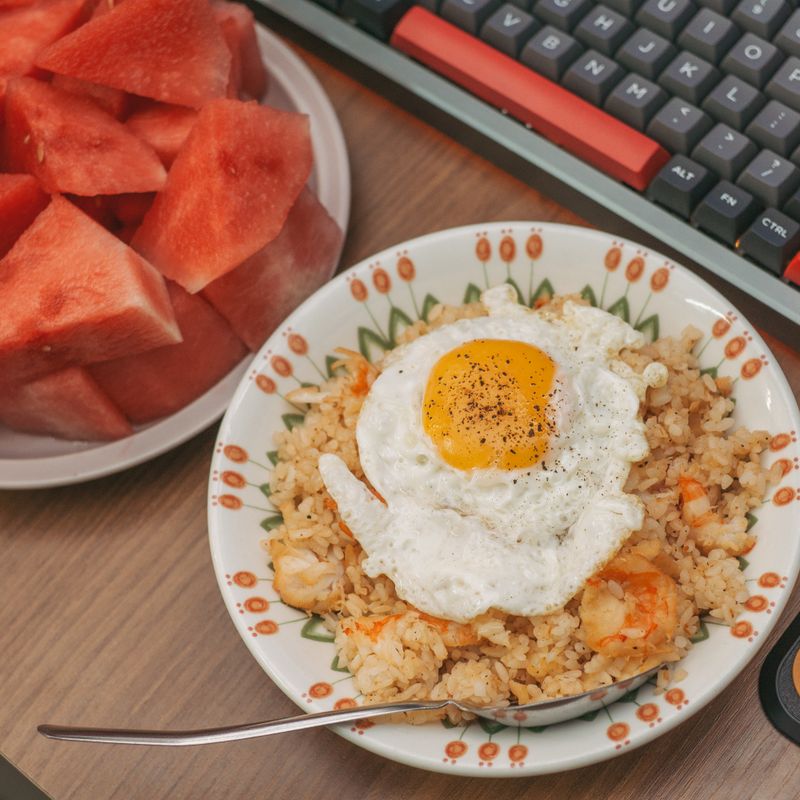
Vietnamese Breakfast Bánh Cuốn with Fried Egg and Shrimp Paste
Crispy pan-fried bánh cuốn rolls filled with a savory layer of shrimp paste, topped with a runny fried egg, and wrapped in soft rice paper. Served with fresh herbs and a balanced fish sauce dipping sauce, this Vietnamese street-food classic is a satisfying, protein-rich breakfast that comes together in under 20 minutes.
Steps
Before you start
- Have all ingredients prepped and arranged in small bowls before you start cooking—rice paper will tear if the components aren't ready
- If your shrimp paste is very firm, mix it with 1 teaspoon of water to loosen it slightly
- Fill a shallow dish with warm water for softening rice paper; keep it nearby
Make dipping sauce
- In a small bowl, whisk together the fish sauce, lime juice, water, and sugar until the sugar dissolves.
- Taste and adjust with a pinch more salt or lime if needed.
- Set aside at room temperature.
+ Show details− Hide details
Ready when: Sugar dissolves and sauce tastes balanced—tangy and salty with subtle sweetness
Tip: Make the sauce first so the flavors meld while you prepare the rolls
Soften rice paper
- Fill a shallow dish with warm water (not hot).
- One at a time, dip each rice paper sheet into the warm water for 3–4 seconds, just until pliable but still slightly stiff.
- Lay it on a damp kitchen towel.
- Work quickly—oversoaking makes them tear.
+ Show details− Hide details
Ready when: Rice paper is soft and flexible but not falling apart; it continues to soften as it sits
Tip: Don't soak too long or the paper will tear when you roll. A brief dip is all you need
Spread shrimp paste
- Lay a softened rice paper on a clean work surface.
- Along the lower third of the wrapper, spread about 1 tablespoon of shrimp paste in a thin, even horizontal line, leaving a 1-inch border on each side.
+ Show details− Hide details
Ready when: Shrimp paste is spread in a neat line without holes or lumps
Tip: Don't overfill or the filling will squeeze out when you roll; 1 tablespoon per wrapper is ideal
Roll the bánh cuốn
- Fold the bottom edge of the rice paper up and over the shrimp paste line, then roll tightly away from you, keeping the sides tucked in as you roll.
- Make it snug but don't squeeze so hard the wrapper tears.
- You should have a tight cylinder about 2 inches tall and 3 inches wide.
- Repeat with the second rice paper and remaining shrimp paste.
+ Show details− Hide details
Ready when: Two tight rolls with sealed seams; wrapper is smooth and no shrimp paste shows through
Tip: Let the rice paper soften completely on its own; don't force a roll that's still stiff or it will crack
Heat oil and pan
- Heat the vegetable oil in an 8-inch non-stick skillet over medium heat for 1 minute, tilting to coat the bottom evenly.
- The oil should shimmer but not smoke.
+ Show details− Hide details
Ready when: Oil shimmers and moves easily when the pan is tilted
Tip: Use a non-stick skillet to prevent the delicate rice paper from sticking and tearing
Fry the bánh cuốn
- Carefully place both rolls seam-side down in the hot oil.
- Fry without moving them for 2 minutes until the bottom is golden and crispy.
- Using tongs, gently flip each roll and fry the second side for another 2 minutes until it's also golden and crispy.
- The rice paper should look lightly browned and translucent, and you should hear a gentle crackle.
+ Show details− Hide details
Ready when: Both sides are golden brown and crispy; the wrapper is translucent and makes a crackling sound when touched with tongs
Tip: Don't flip too early or the bottom won't crisp. Wait until the bottom is visibly golden before turning
Transfer and wipe pan
- Using tongs, transfer both fried bánh cuốn to a plate lined with paper towels to rest for 1 minute and drain any excess oil.
- Wipe out the skillet with a paper towel, leaving about 1 tablespoon of oil in the pan.
+ Show details− Hide details
Ready when: Rolls rest on paper towels; excess oil is absorbed
Tip: Drain on paper towels to keep the rolls crispy, not soggy
Fry the eggs
- Return the skillet to medium heat with the remaining oil.
- Crack both eggs into the pan side by side and fry sunny-side up for 3–4 minutes, until the whites are set and opaque but the yolks are still runny.
- Season lightly with salt and white pepper while they cook.
+ Show details− Hide details
Ready when: Egg whites are fully set and opaque; yolks jiggle slightly when you shake the pan and look glossy
Tip: Keep the heat at medium so the bottoms don't brown and burn before the whites set
Assemble and serve
- Place a fried bánh cuốn on each plate.
- Slide an egg onto the top of each roll, letting the runny yolk drape down the sides.
- Scatter the torn fresh herbs around and over each roll.
- Serve immediately with the fish sauce dipping sauce on the side.
+ Show details− Hide details
Ready when: Dish is plated with herbs scattered and sauce ready for dipping
Tip: Serve right away while the bánh cuốn are still crispy and the egg yolk is warm and runny
Good to know
Tips
- If your rice paper tears while rolling, don't panic—simply use another sheet or place a torn piece over the hole to patch it; a few cracks won't ruin the roll.
- The runny egg yolk is the key to a luxurious bánh cuốn; don't overcook it. If you prefer a firmer yolk, increase the frying time to 5 minutes.
- Bánh cuốn is a street-food favorite best eaten immediately and with your hands; the soft-chewy-crispy textures are at their best within minutes of assembly.
- Vietnamese shrimp paste (mắm tôm) has a strong, pungent aroma—this is normal and intentional. The flavor mellows when mixed with the other components and becomes savory and umami-rich.
Storage & reheating
Best enjoyed fresh and warm. If you have leftovers, store the fried bánh cuốn (without the egg) in an airtight container in the refrigerator for up to 1 day. Reheat gently in a 350°F (175°C) oven for 5 minutes to restore crispness. The dipping sauce keeps refrigerated for up to 3 days. Do not freeze cooked bánh cuốn as the rice paper texture will not recover.
Substitutions
- Vietnamese shrimp paste (mắm tôm) → 2 tablespoons of pâté or liverwurst. Use a milder pâté if you prefer less intense umami flavor. The texture should be spreadable.
- fresh herb mix (Thai basil, cilantro, and mint) → 2 tablespoons each of fresh dill, mint, and finely sliced scallions. This substitution shifts the flavor profile but maintains the fresh, herbaceous quality.
- fish sauce (nước mắm) → 1.5 tablespoons soy sauce mixed with 0.5 tablespoon lime juice. Less pungent than fish sauce but still provides savory depth. Adjust to taste.
- vegetable oil or neutral oil → peanut oil or sesame oil. Peanut oil gives a neutral fry; sesame oil adds nutty flavor. Use slightly less sesame oil as it burns quickly.
More breakfast sandwiches
See all →
Find more like this
- Meal
- Breakfast
- Cuisine
- Vietnamese
- Method
- Stovetop