Korean Galbijjim-Inspired Braised Egg Sandwich with Soy and Sesame on Bao
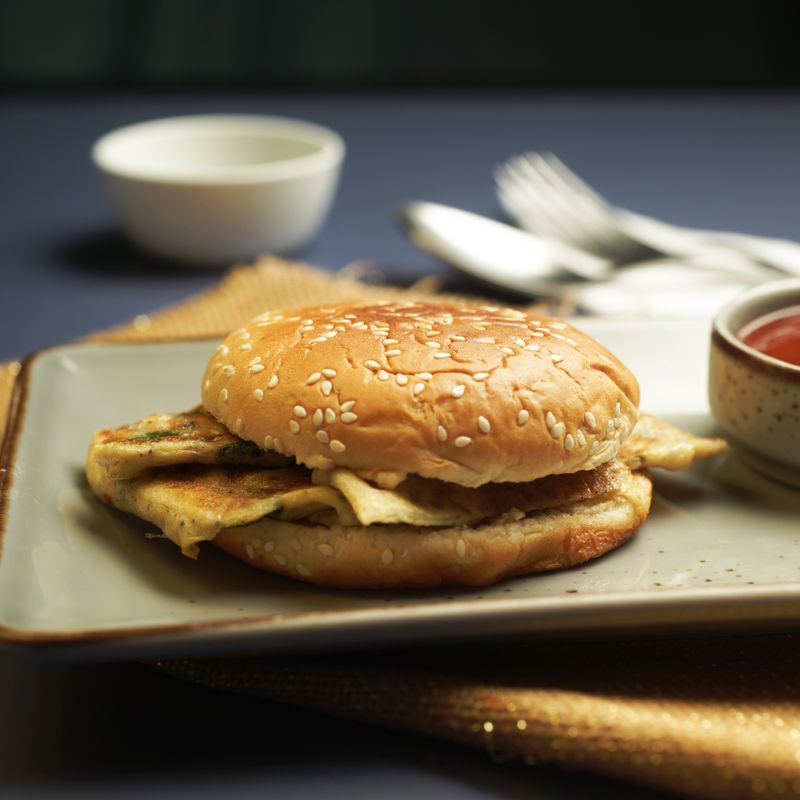
A fusion breakfast sandwich featuring a tender, soy-braised egg with ginger, garlic, and sesame served on a steamed bao bun. Inspired by the deep, umami-rich flavors of Korean galbijjim (braised beef), this sandwich swaps the protein for a soft-cooked egg that absorbs the aromatic braising liquid. The egg is nestled in a pillowy bao with fresh scallions and a dollop of sesame aioli, creating a satisfying breakfast or light lunch.
Steps
Before you start
- Have all ingredients measured and prepped before you start braising—the braise moves quickly and you won't have time to mince.
- Bring eggs to room temperature for 10 minutes so they cook evenly when braised.
- If making bao from scratch, prepare dough well ahead; store-bought bao can be steamed fresh while the eggs braise.
Prepare braising liquid
- In a small saucepan (2 to 3-quart), whisk together the soy sauce, mirin, water, minced ginger, minced garlic, sesame oil, star anise, bay leaf, and scallion halves.
- Bring to a simmer over medium heat, stirring occasionally, for 3 to 4 minutes until fragrant and the garlic and ginger have started to infuse the liquid.
- Taste and adjust seasoning if needed—the liquid should be savory and slightly sweet.
+ Show details− Hide details
Ready when: Liquid is steaming and fragrant; ginger and garlic are visible throughout
Tip: Do not boil hard—a gentle simmer infuses the flavors without evaporating the liquid too quickly.
Gently lower eggs into braise
- Carefully place the room-temperature eggs into the simmering braising liquid.
- If the liquid doesn't cover them by at least an inch, add a splash more water.
- Lower the heat slightly to medium-low so the braise maintains a gentle, steady simmer.
- Cover the pan with a lid.
+ Show details− Hide details
Ready when: Eggs are submerged and liquid is gently simmering
Tip: Use a spoon to lower the eggs in gently to prevent cracks. The liquid should barely bubble—aggressive heat will crack the eggs or cook them unevenly.
Braise eggs until jammy yolks set
- Maintain the gentle simmer and braise, covered, for 20 to 25 minutes.
- After 20 minutes, carefully remove one egg with a slotted spoon and cut it in half to check the yolk—it should be mostly set but still slightly soft and custard-like in the center.
- If you prefer a firmer yolk, braise for a few more minutes.
- Once cooked to your liking, carefully remove all eggs with a slotted spoon and place them in a shallow bowl.
+ Show details− Hide details
Ready when: Yolk is mostly opaque with a soft, custard-like center; whites are fully set and slightly translucent from the soy
Tip: A 20-minute braise gives you a jammy, runny yolk; 25 minutes yields a firmer but still soft center. Test at 20 minutes so you don't overcook.
Warm bao buns
- While the eggs finish braising, set up a vegetable steamer basket or bamboo steamer over a pot of simmering water.
- Place the bao buns in the steamer, cover, and steam for 3 to 4 minutes until they are soft, pillowy, and warmed through.
- If your bao are already warmed or at room temperature, just steam for 1 to 2 minutes to refresh them.
+ Show details− Hide details
Ready when: Bao are soft, slightly glossy, and warm to the touch
Tip: Don't over-steam bao or they become soggy and fall apart. Aim for just tender and warm.
Make sesame aioli
- While the eggs and bao are finishing, whisk together the mayonnaise, sesame oil, and rice vinegar in a small bowl until smooth and well combined.
- Taste and add a pinch more sesame oil if desired for deeper sesame flavor.
- Set aside.
+ Show details− Hide details
Ready when: Aioli is smooth and creamy with no streaks
Tip: The rice vinegar adds a subtle tang that brightens the rich sesame aioli; don't skip it.
Cool and peel eggs lightly
- Let the braised eggs cool in the shallow bowl for 5 to 10 minutes until they are cool enough to handle.
- Gently crack and peel away the shells, letting cool water run over them if needed to help loosen the shell.
- The whites should be infused with a brown, soy-stained color.
- Pat the peeled eggs dry with a paper towel.
+ Show details− Hide details
Ready when: Eggs are cool to the touch; shells are fully removed and eggs are dry
Tip: Peeling warm braised eggs is tricky—cooling them for at least 5 minutes makes the shell come away more easily and cleanly.
Assemble sandwiches
- Split each warmed bao bun gently with your fingers or a small knife, creating a pocket.
- Spread a thin layer of the sesame aioli on both inside surfaces of each bao.
- Slice each braised egg in half lengthwise and nestle two halves (one whole egg) into each bao.
- Scatter the sliced scallions over the eggs, sprinkle with toasted sesame seeds, and add a few slices of fresh cucumber if using.
- Close the bao gently, allowing some of the filling to peek out.
+ Show details− Hide details
Ready when: Sandwiches are stuffed, balanced, and ready to eat
Tip: Warm bao are delicate—handle them gently when filling to avoid tearing. Don't overstuff or the bao will burst when you bite into it.
Good to know
Tips
- Soy-stained eggs develop their color gradient from time in the braise. If you want deeper color and more intense flavor, braise for an extra 5 to 10 minutes, but avoid overcooking the whites, which will become rubbery.
- The braising liquid is wonderful—don't discard it. It can be strained and stored in the refrigerator for up to 5 days to use as a marinade for vegetables, tofu, or chicken.
- If your bao are frozen, thaw them completely before steaming, or add an extra 1 to 2 minutes to the steam time.
- The sesame aioli adds richness and umami; if you skip it, the sandwich will taste less balanced. A simple mixture of mayo and toasted sesame oil is essential.
Storage & reheating
The braised eggs can be made up to 2 days ahead. Store them in their braising liquid in an airtight container in the refrigerator. To reheat, gently warm in the liquid over medium-low heat for 5 to 7 minutes. The sesame aioli keeps refrigerated for up to 5 days. Assemble the sandwich just before serving for the best texture—reheated bao becomes tough when stored with filling.
Substitutions
- mirin (sweet Japanese rice wine) → 2 tablespoons honey or light brown sugar dissolved in 2 tablespoons water. Mirin adds sweetness and body to the braise; honey or sugar will sweeten but won't add the same depth. Use slightly less sugar than mirin if substituting—taste as you go.
- steamed bao buns (Chinese-style) → soft dinner rolls, brioche buns, or thick white bread sliced horizontally. Bao have a unique fluffy texture, but pillowy dinner rolls or brioche will work. The sandwich becomes more Western but still delicious.
- mayonnaise → Japanese kewpie mayonnaise. Kewpie mayo has a richer, more eggy flavor that pairs beautifully with sesame and adds a subtle sweetness.
- cucumber → thinly sliced daikon radish or pickled radish (takuan). Both add a crisp, refreshing crunch. Pickled radish brings a tangy bite that complements the savory braise.