Vegan Sourdough Pear Ginger Discard Bread
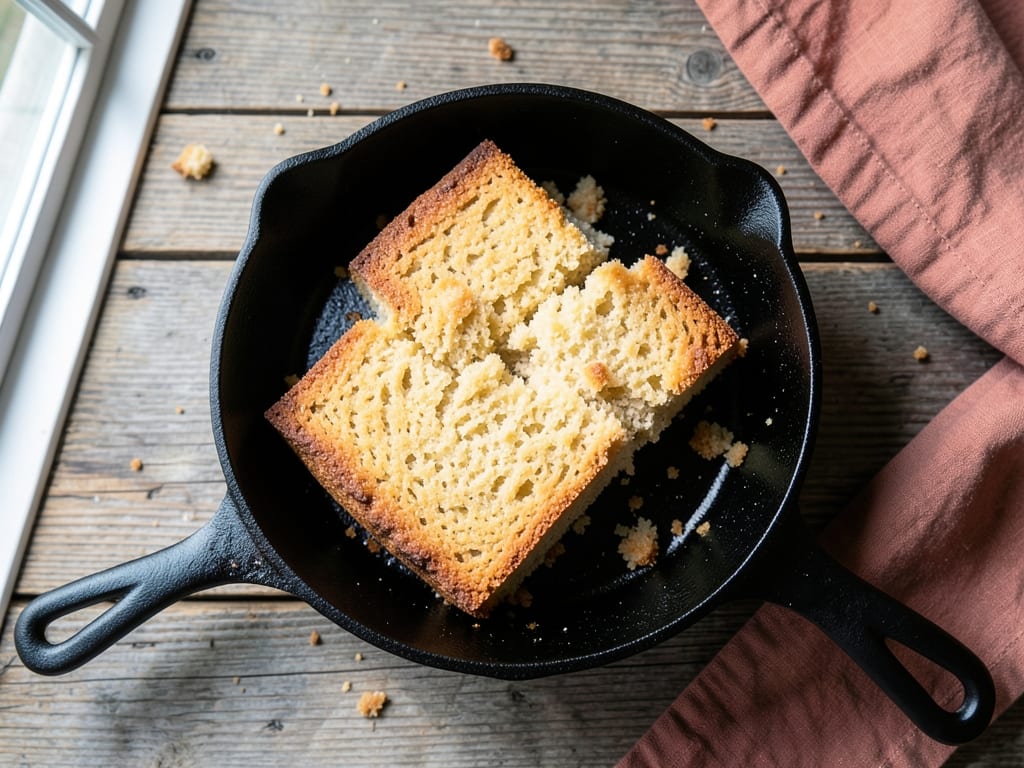
A rustic, fragrant quick bread made with sourdough discard that would otherwise be discarded. Chunks of fresh pear provide bursts of sweetness and natural moisture, while fresh ginger adds a warm, spiced note throughout. Entirely vegan and perfect for breakfast, snacks, or an afternoon treat. The sourdough discard contributes a subtle tang and helps create a tender, keeping crumb.
- Prep
- 15 min
- Cook
- 55 min
- Wait
- 15 min
- Total
- 1 hr 25 min
- Makes
- 1 loaf (8 slices)
Steps
Before you start
- Bring sourdough discard to room temperature if it was refrigerated (30 minutes to 1 hour)
- Preheat your oven to 350°F (175°C)
- Prepare a 9×5-inch loaf pan with parchment paper or light oil coating
- Have all ingredients measured and ready before you start mixing
Preheat oven and prepare loaf panOven 350°F / 175°C
- Preheat your oven to 350°F (175°C).
- Line a 9×5-inch (23×13 cm) loaf pan with parchment paper, or lightly grease the bottom and sides with oil.
- Set the pan aside on a baking sheet for easy handling.
+ Show details− Hide details
Ready when: Oven is fully preheated
Tip: Lining with parchment paper makes removing the finished loaf much easier and helps prevent sticking.
Prep fruit and ginger
- Peel and core the fresh pears, cutting them into ½-inch (1.3 cm) dice—you should have about 1.5 cups diced pear.
- Using a microplane grater or box grater, finely grate the fresh ginger.
- Set both aside separately.
+ Show details− Hide details
Ready when: Pears are diced into uniform pieces; ginger is finely grated
Tip: Work quickly after peeling pears so they don't brown. If they do brown, a squeeze of lemon juice will help, though it's not critical for this recipe.
Combine dry ingredients
- In a medium bowl, whisk together the flour, baking powder, salt, and cinnamon (if using).
- Whisk for about 20 seconds to ensure the baking powder is evenly distributed throughout.
- Set aside.
+ Show details− Hide details
Ready when: Dry ingredients are evenly combined with no visible lumps of baking powder
Tip: Whisking the dry mixture ensures baking powder is distributed evenly for consistent rising throughout the loaf.
Mix wet ingredients and flavor base
- In a large bowl, stir together the room-temperature sourdough discard, granulated sugar, neutral oil, and vanilla extract (if using) with a rubber spatula or spoon.
- Stir until well blended and no large lumps of discard remain.
- The mixture should look relatively smooth.
+ Show details− Hide details
Ready when: Sourdough discard is fully incorporated and no lumps are visible; mixture is smooth
Tip: Room-temperature sourdough discard mixes much more smoothly than cold discard, which will be lumpy and difficult to blend.
Fold in fruit and ginger
- Gently fold the diced pears and grated ginger into the sourdough mixture using a rubber spatula.
- Fold until they're distributed evenly throughout—some small pear pieces breaking apart is fine.
- Avoid vigorous stirring, which can make the pear pieces mushy.
+ Show details− Hide details
Ready when: Pears and ginger are evenly distributed; mixture is speckled with ginger
Tip: Folding gently keeps pear pieces mostly intact, which will add nice texture and pockets of flavor rather than turning to mush during baking.
Fold in dry ingredients
- Add the dry ingredient mixture to the sourdough mixture.
- Using a rubber spatula, fold gently, turning the mixture from the bottom up and over the top, for about 20–30 seconds, just until combined.
- The batter should look thick, slightly lumpy, and only mostly mixed—you should still see a few streaks of flour.
- Stop folding immediately; do not overmix.
+ Show details− Hide details
Ready when: Batter is thick and only mostly mixed; a few flour streaks are still visible
Tip: Overmixing develops gluten and toughens the crumb. Slightly lumpy batter makes for a tender, more delicate loaf. It's better to undermix here.
Transfer to pan and bakeOven 350°F / 175°C
- Pour the batter into the prepared loaf pan, using a spatula to smooth the top gently—don't press down.
- Place the pan in the preheated 350°F (175°C) oven.
- Bake for 50–55 minutes, until the top is golden brown and a toothpick or cake tester inserted into the center comes out with just a few moist crumbs clinging to it (not raw batter, but not bone dry either).
+ Show details− Hide details
Ready when: Top is deep golden brown; toothpick inserted in center comes out with a few moist crumbs
Tip: If the top begins to brown too quickly (after 35–40 minutes), tent it loosely with aluminum foil to prevent burning while the interior continues to bake.
Cool the bread
- Remove the loaf from the oven.
- Let it rest in the pan for 10 minutes to firm up slightly—this makes unmolding easier and prevents the bread from breaking.
- Then carefully invert the loaf onto a wire cooling rack (holding the parchment if you used it) or run a small knife around the edges to loosen it and turn it out.
- Cool on the rack to room temperature, about 30 minutes.
- The bread is easiest to slice once fully cooled and no longer steaming.
+ Show details− Hide details
Ready when: Bread is completely cool and no longer steaming
Tip: Slicing while still warm can cause the bread to crumble into uneven pieces. Waiting for it to cool completely yields much cleaner, more attractive slices.
Good to know
Tips
- Don't skip the sourdough discard—it's essential for flavor and texture. It adds subtle tang, moisture, and helps create a tender, forgiving crumb that keeps well.
- Ripe but still firm pears work best; overripe ones are too soft and will disintegrate into the batter, making it gummy and affecting rise. Look for pears that yield slightly to pressure but aren't mushy.
- Freshly grated ginger is much more potent and aromatic than ground ginger. If you're sensitive to spice or new to ginger, start with 1.5 tablespoons and taste the batter before committing to the full amount.
- For extra richness, once the loaf is completely cooled, drizzle it with a simple glaze made from 1 cup powdered sugar mixed with 2–3 tablespoons plant-based milk (oat, almond, or soy work well) until pourable.
Make ahead
This recipe is best baked fresh, as sourdough discard will continue to ferment and become more acidic if left sitting as batter for extended time. However, you can prepare the dry ingredients (mixed in a bowl, covered) and prep the pears and ginger (stored separately in the refrigerator) up to 8 hours ahead, then quickly combine and bake when ready.
Storage & reheating
Let the bread cool completely, then wrap tightly in plastic wrap or store in an airtight container at room temperature for up to 3 days. The loaf will dry out gradually after day 3. For longer storage, wrap tightly in plastic wrap, then aluminum foil, and freeze for up to 3 months. To reheat, wrap the frozen loaf in foil and warm in a 325°F (163°C) oven for 15–20 minutes, or thaw at room temperature (2–3 hours) and serve at room temperature. Individual slices can be microwaved for 15–20 seconds.
Substitutions
- Fresh pears (Bartlett, Bosc, or Anjou—firm but ripe) → Fresh apples (Granny Smith, Honeycrisp, or Pink Lady), peeled, cored, and diced (same amount: 1.5 medium, 270 g). Apples are firmer than pears and provide more tartness. The bread will be equally moist and delicious.
- Fresh ginger root → Ground ginger, 1 teaspoon (2 g), or ½ to 1 teaspoon to taste. Ground ginger is about 5–6 times more concentrated than fresh. Start with less and adjust to your preference. The flavor will be warmer but less bright.
- Neutral vegetable oil (canola, safflower, or light olive oil) → Unsweetened applesauce (⅓ cup / 80 g) or vegan butter, melted and cooled (⅓ cup / 80 g). Applesauce will create a slightly denser but very tender crumb and add more fruity sweetness. Vegan butter will yield a richer flavor but less distinct pear taste.
- Sourdough discard → Plain, unsweetened non-dairy yogurt (1 cup / 240 g), and increase baking powder to 2 teaspoons (10 g). Yogurt provides moisture and some sourness, but less fermented tang. The extra baking powder compensates for the change in rise power.