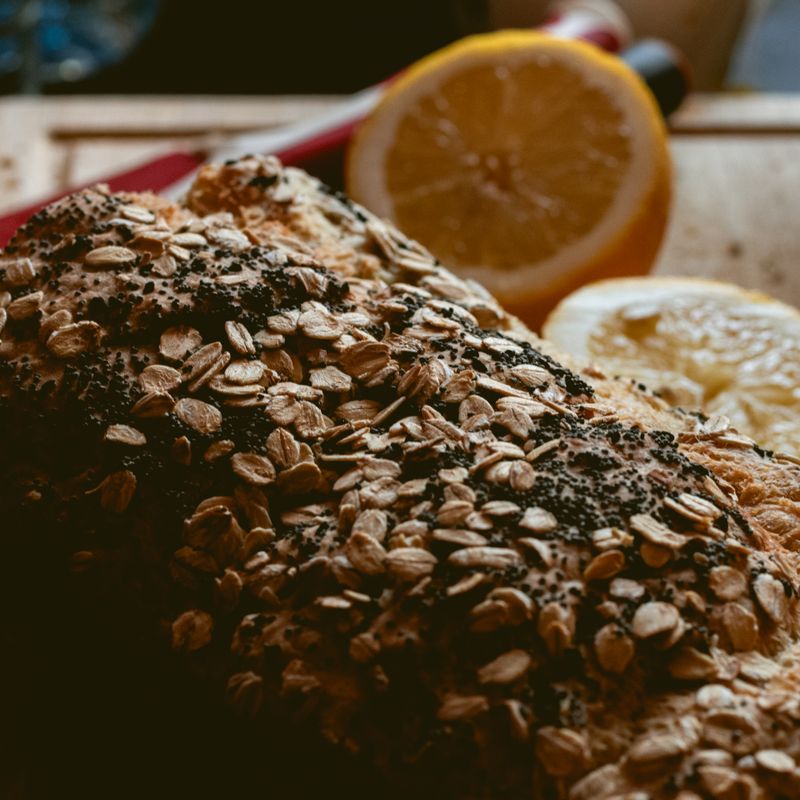
Vegan Sourdough Lemon Poppy Seed Discard Loaf
A tender, moist quick bread made from sourdough discard with bright lemon flavor and poppy seeds. This vegan loaf transforms sourdough starter discard into an easy, flavorful breakfast or snack that stays moist thanks to the oil and sourdough base. No eggs needed.
- Prep
- 10 min
- Cook
- 50 min
- Wait
- 50 min
- Total
- 1 hr 50 min
- Makes
- 1 loaf (10 slices)
Steps
Before you start
- Have sourdough discard at room temperature (can be fed or unfed, active or inactive)
- Preheat your oven to 350°F (175°C) before starting prep
- Prepare a 9×5-inch (23×13 cm) loaf pan by oiling or lining with parchment paper
Preheat oven and prepare panOven 350°F / 175°C
- Preheat your oven to 350°F (175°C).
- While the oven heats, lightly oil the inside of a 9×5-inch (23×13 cm) loaf pan or line it with parchment paper, leaving some overhang on the sides for easy removal.
- Set aside.
+ Show details− Hide details
Ready when: Oven reaches 350°F (175°C)
Tip: Line the pan with parchment paper for easy removal and to help prevent sticking on the sides and bottom.
Mix dry ingredients
- In a medium bowl, whisk together the all-purpose flour, baking powder, and salt until well combined.
- Stir in the poppy seeds until they are evenly distributed throughout the dry mixture.
+ Show details− Hide details
Ready when: Poppy seeds are evenly distributed and no lumps of baking powder are visible
Tip: Whisk the dry ingredients thoroughly to ensure the baking powder is distributed evenly, which helps the loaf rise uniformly.
Combine wet ingredients
- In another medium bowl, whisk together the sourdough discard, neutral oil, lemon juice, and lemon zest until well combined and smooth.
- The mixture should be relatively smooth with no large lumps of starter remaining.
+ Show details− Hide details
Ready when: Mixture is smooth and the lemon zest is evenly distributed
Tip: Make sure the lemon zest is fully distributed to achieve consistent bright lemon flavor in every slice.
Dissolve sugar
- Add the granulated sugar to the wet ingredient mixture and whisk until the sugar is fully dissolved and the mixture becomes pale and slightly thickened, about 1–2 minutes.
- There should be no visible granules of sugar remaining.
+ Show details− Hide details
Ready when: Sugar is fully dissolved and mixture is pale
Tip: Dissolving the sugar fully helps distribute sweetness evenly and improves the overall texture of the crumb.
Combine wet and dry
- Pour the wet ingredients into the bowl with the dry ingredients.
- Using a spatula or wooden spoon, fold gently until just combined.
- The batter should be thick but pourable; some small flour streaks are fine and actually preferred.
- Do not overmix.
- If the batter seems very thick and dry, add the optional plant-based milk 1 tablespoon at a time until you reach a consistency that is thick but spreadable.
+ Show details− Hide details
Ready when: Ingredients are just combined with no visible large pockets of dry flour
Tip: Overmixing develops gluten and will make the loaf tough and dense. A few lumps will result in a more tender crumb.
Pour into pan and smooth
- Pour the batter into the prepared loaf pan.
- Smooth the top with a wet spatula or the back of a wet spoon, pressing gently to eliminate any large air pockets.
- Tap the pan gently on the counter 2–3 times to help release any remaining air bubbles.
+ Show details− Hide details
Ready when: Batter is level in the pan with a smooth top surface
Tip: A wet spatula prevents sticking and makes smoothing the top much easier and neater.
Bake until goldenOven 350°F / 175°C
- Place the pan in the preheated 350°F (175°C) oven and bake for 45–50 minutes, until the top is golden brown and a toothpick or cake tester inserted into the center of the loaf comes out clean or with just a few moist crumbs (not wet batter).
- The loaf should be lightly springy when pressed gently.
+ Show details− Hide details
Ready when: Top is golden brown and a toothpick inserted into the center comes out clean or with a few moist crumbs, not wet batter
Tip: Start checking the loaf at 40 minutes. If the top is browning too quickly, loosely tent it with foil. Every oven is different, so watch for visual cues rather than relying solely on timing.
Cool in pan
- Remove the loaf from the oven and let it cool in the pan for 10 minutes at room temperature.
- This resting time allows the crumb structure to set so it won't fall apart when you turn it out.
+ Show details− Hide details
Ready when: Loaf has pulled slightly away from the sides of the pan and is cool enough to handle
Tip: Don't skip this step. Cooling in the pan prevents the loaf from crumbling when turned out.
Turn out and cool completely
- Run a thin knife around the edges of the loaf to loosen it from the pan, then carefully turn it out onto a wire cooling rack.
- If you lined the pan with parchment paper, gently peel and remove the paper as the loaf comes out.
- Place the loaf directly on the rack and allow it to cool completely to room temperature, about 35–40 minutes.
- Do not slice until it has cooled completely.
+ Show details− Hide details
Ready when: Loaf is cool to the touch
Tip: Slicing a warm loaf can cause it to crumble. Patience at this step ensures neat, intact slices and better flavor development as it cools.
Good to know
Tips
- Sourdough discard can be either fed or unfed, active or inactive. Use whatever you have on hand. Unfed discard will add more tang; fed discard will be milder and sweeter.
- For maximum lemon flavor, don't reduce the lemon zest—it's the most flavorful and aromatic part of the fruit and provides visual appeal.
- This loaf stays moist longer than egg-based quick breads thanks to the sourdough and oil. You can slice and serve it the next day with no loss of flavor or moisture.
- Serve slices toasted with vegan butter and jam, or enjoy plain alongside tea, coffee, or a smoothie for an easy vegan breakfast.
Make ahead
The batter can be prepared up to 2 hours ahead and kept covered at room temperature. Add the optional plant milk just before baking if needed for hydration. The baked loaf can be made up to 2 days ahead and stored properly.
Storage & reheating
Room temperature: Wrap the cooled loaf tightly in plastic wrap or store in an airtight container for up to 3 days. Refrigerator: Store in an airtight container for up to 5 days. Freezer: Wrap the cooled loaf tightly in plastic wrap and then in foil; freeze for up to 2 months. Thaw at room temperature for 1–2 hours, or reheat individual slices in a toaster oven at 325°F (163°C) for 5 minutes.
Substitutions
- neutral-flavored oil (canola, vegetable, or light olive oil) → melted vegan butter or coconut oil. Use the same amount. Vegan butter adds richness; coconut oil will impart a subtle coconut flavor. Both work well.
- lemon zest, finely grated → zest from 1.5 limes or the zest of 1 orange. Lime zest gives a sharper, more tart flavor; orange zest is slightly sweeter. Adjust the juice accordingly if substituting.
- poppy seeds → sesame seeds, sunflower seeds, pumpkin seeds, or a mix. Use the same amount. These seeds have a more pronounced nutty flavor. Seeds may settle to the bottom; stir the batter just before pouring to distribute evenly if desired.
- unsweetened plant-based milk (oat, almond, or soy) → water or additional sourdough discard. Water is completely neutral; additional discard will enhance the tangy, sourdough flavor. Either works well.
More quick breads
See all →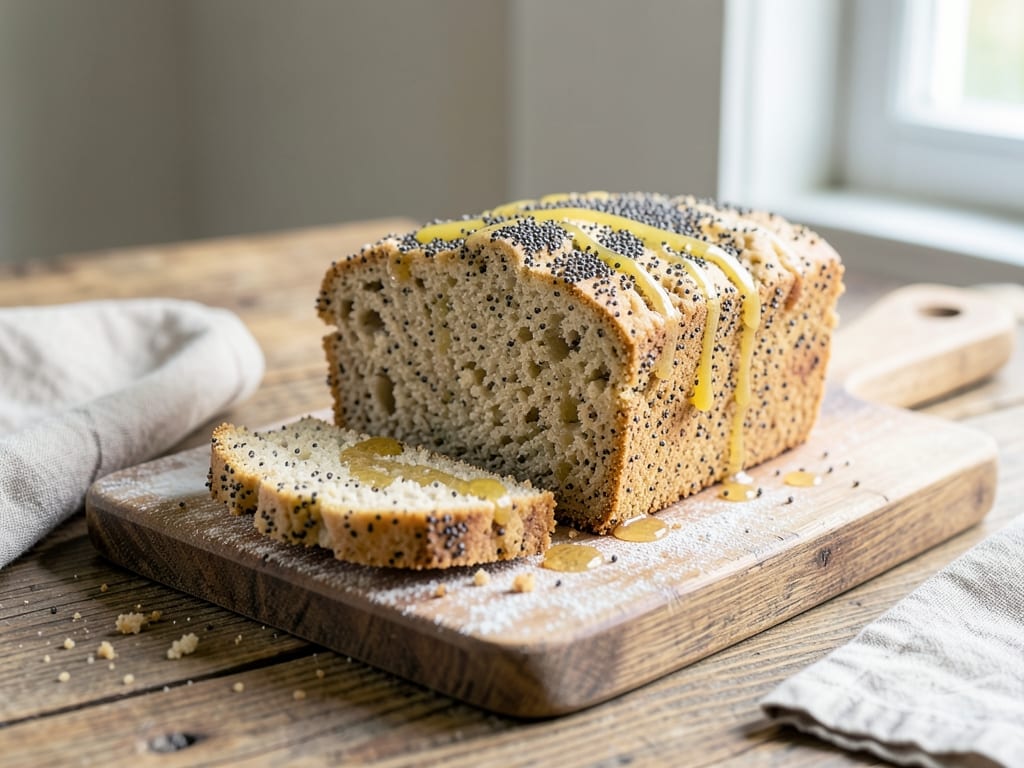


Find more like this
- Meal
- Breakfast
- Main ingredient
- Lemons
- Method
- Oven
- Quick & Easy
- EasyMake Ahead