Toasted Pumpkin Seed Vinaigrette
A bright, nutty Mexican-inspired vinaigrette made with freshly toasted pumpkin seeds, tangy lime juice, and red wine vinegar. The toasted seeds add depth and body, while garlic and cumin bring warmth. This dressing works beautifully on crisp salads, roasted vegetables, grain bowls, or as a finishing drizzle for soups.
Steps
Before you start
- Have all ingredients measured and ready
- Use raw, unsalted pumpkin seeds for the best toasted flavor
- A blender or food processor makes the smoothest vinaigrette, but a whisk works too
Toast the seeds
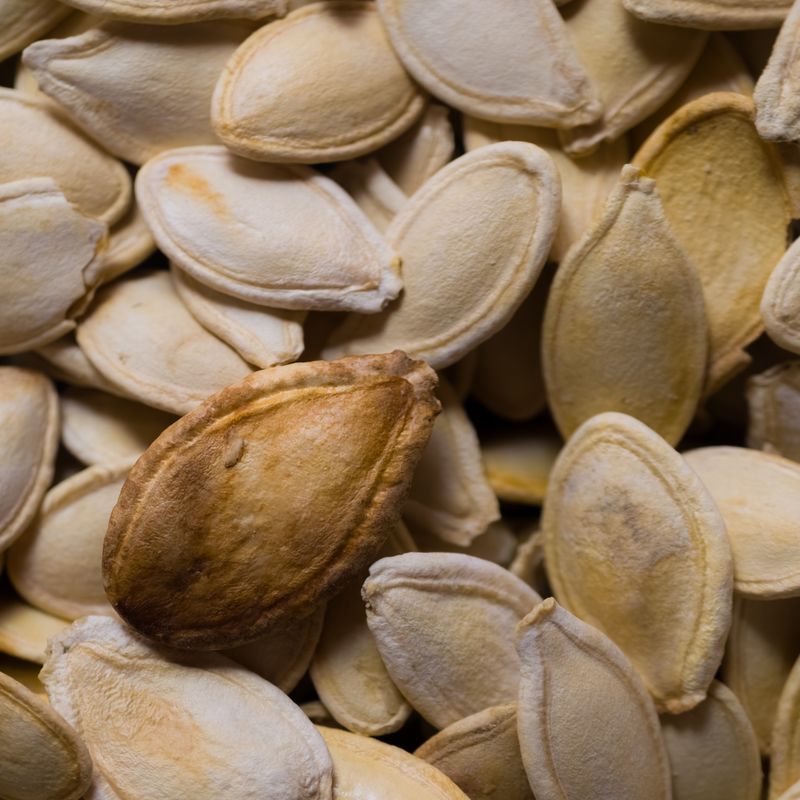
- Pour the ½ cup (65 g) of raw pumpkin seeds into a small dry skillet over medium heat.
- Stir frequently for 3–5 minutes, until fragrant and lightly golden.
- Listen for the seeds to pop slightly; this signals they're done.
- Transfer immediately to a cutting board to cool for 1 minute, then roughly chop them into 1- to 2-inch pieces.
+ Show details− Hide details
Ready when: Seeds are fragrant and lightly golden, with a few popping sounds
Tip: Don't walk away—toasted seeds burn quickly. Remove them from the pan as soon as they're golden to prevent over-roasting.
Combine wet ingredients
- In a blender or food processor, add the cooled chopped pumpkin seeds, ⅓ cup (80 ml) lime juice, 2 tablespoons (30 ml) red wine vinegar, 1 minced garlic clove, and ⅓ cup (80 ml) olive oil.
Blend until smooth
- Blend on high speed for 30–45 seconds, stopping to scrape down the sides as needed, until the vinaigrette is smooth with a light, creamy texture.
- A few tiny seed bits are fine—this adds texture—but aim for no large chunks.
+ Show details− Hide details
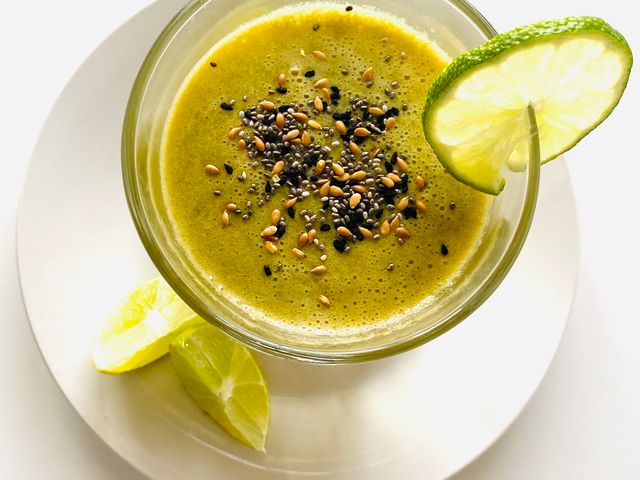
Ready when: Vinaigrette is smooth and creamy with a pale green color
Tip: If using a whisk instead of a blender: finely crush the toasted seeds with the back of a spoon, then whisk all ingredients together vigorously until emulsified.
Season and adjust
- Add ¼ teaspoon (0.5 g) ground cumin, a pinch of kosher salt, and freshly ground black pepper to taste.
- Whisk or pulse briefly to combine.
- If the vinaigrette is too thick, add 1–2 tablespoons (15–30 ml) of warm water and whisk again until you reach your desired consistency.
+ Show details− Hide details
Ready when: Vinaigrette is well seasoned and pourable but still coats a spoon lightly
Tip: Taste on a small piece of greens or avocado to gauge the salt level—a little goes a long way with a blended vinaigrette.
Transfer and serve
- Pour the finished vinaigrette into a clean jar with a tight-fitting lid.
- Use immediately over salads, roasted vegetables, or grain bowls, or refrigerate for later use.
+ Show details− Hide details
Tip: Give the jar a good shake before each use, as the vinaigrette may separate slightly during storage.
Good to know
Tips
- Toast seeds over medium heat only—high heat will scorch them and turn the dressing bitter.
- For a thinner vinaigrette suited to drizzling or grain bowls, increase the water to 3–4 tablespoons (45–60 ml).
- This vinaigrette works beautifully on warm roasted vegetables (beets, Brussels sprouts, squash) where the warm surface helps it coat evenly.
- If you prefer a more rustic texture, skip the blender and finely chop the toasted seeds by hand, then whisk with the other ingredients until combined.
Make ahead
This vinaigrette can be made up to 3 days ahead. Store in a tightly sealed jar in the refrigerator. Shake well before using, as the ingredients will separate slightly over time.
Storage & reheating
Room temperature (up to 2 hours): covered jar. Refrigerator: in a sealed jar for up to 3 days. Freezer: not recommended due to the emulsion breaking down during thawing. To reheat/revive: shake well and bring to room temperature before serving, or whisk with a splash of warm water if the oil has solidified.
Substitutions
- raw unsalted pumpkin seeds (pepitas) → sunflower seeds or sesame seeds. Toast in the same way. Sunflower seeds offer a milder, buttery flavor; sesame brings a more pronounced nutty depth. Adjust cumin accordingly if using sesame.
- fresh lime juice → lemon juice or white wine vinegar. Use equal amounts. Lemon is slightly less sharp; white wine vinegar adds more acidity. The color will shift from pale green to golden.
- red wine vinegar → sherry vinegar or apple cider vinegar. Use the same amount. Sherry is mellower and slightly sweet; cider vinegar is more assertive. Both pair well with roasted vegetables.
- ground cumin → coriander, chili powder, or smoked paprika. Use ¼ teaspoon of any of these for a different cultural twist. Coriander brightens the flavor; chili and paprika add warmth and subtle heat.