Sesame Miso Lime Dressing
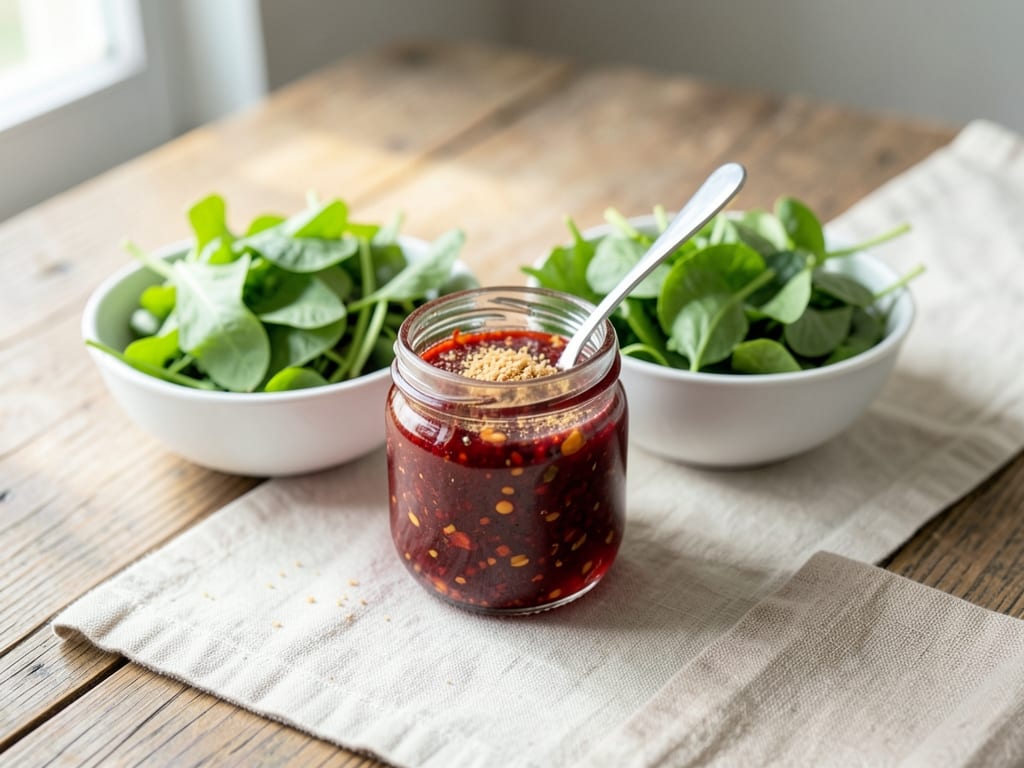
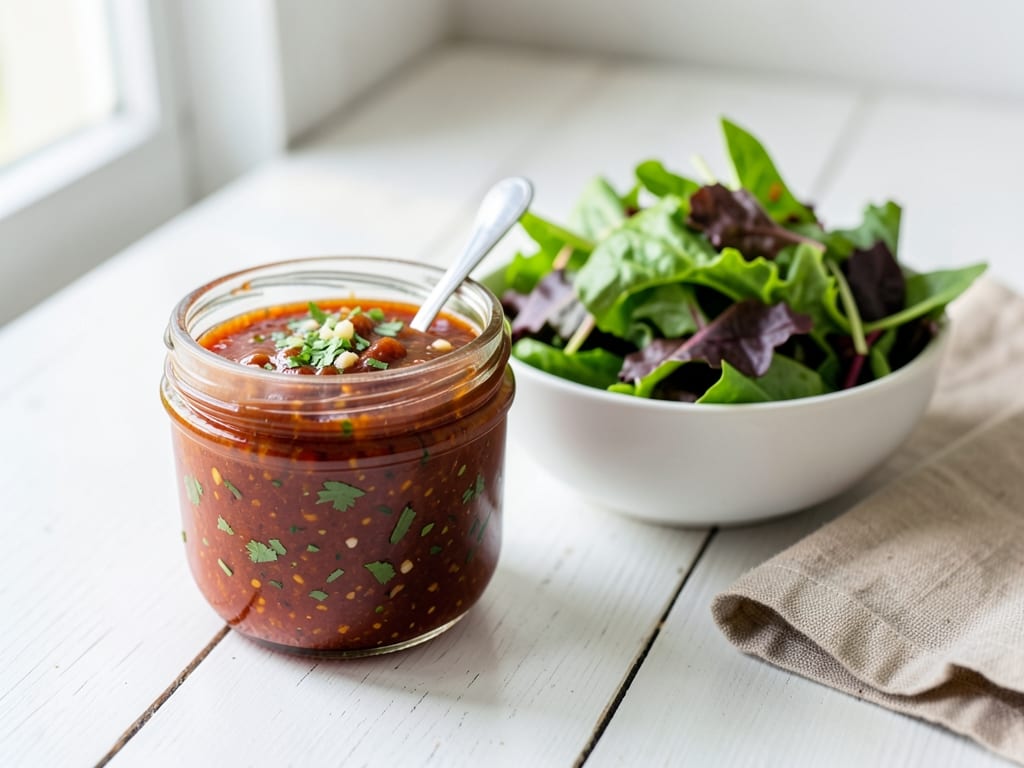
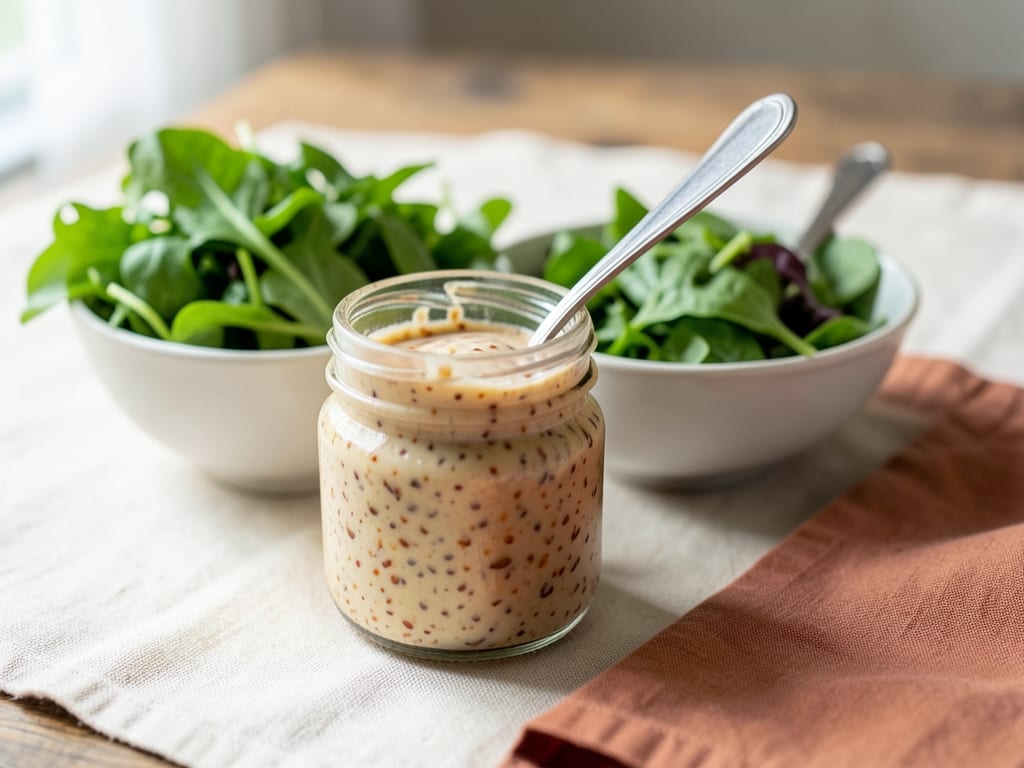
A bright, umami-rich dressing that bridges Asian flavors with modern simplicity. White miso adds savory depth, sesame paste brings nutty richness, and lime juice cuts through with fresh acidity. Scallions add a subtle allium bite. This dressing works equally well on leafy greens, grain bowls, roasted vegetables, or as a dipping sauce for grilled proteins.
Steps
Before you start
- Have all ingredients at room temperature for smooth whisking
- Juice the limes fresh (you'll need about 2 medium limes)
- Warm the water to roughly body temperature (it helps dissolve the miso smoothly)
Combine paste and miso
- In a small bowl, whisk together the sesame paste and white miso until partially combined.
- The mixture will be quite thick at this stage.
- Use firm, deliberate strokes to break up the white miso paste and distribute it evenly throughout the sesame paste.
+ Show details− Hide details
Ready when: Miso paste is evenly distributed throughout the sesame paste with no large white lumps
Tip: Don't worry if the mixture still looks lumpy—the liquid will smooth it out in the next steps.
Add water to loosen
- Pour the warm water into the bowl and whisk constantly.
- Add it slowly at first—about ½ tablespoon at a time—to avoid creating lumps.
- The sesame paste will gradually loosen and become creamier.
- Once the mixture looks like thick peanut butter, you can pour in the remaining water more quickly.
+ Show details− Hide details
Ready when: Mixture is creamy and pourable, with no visible lumps
Tip: If lumps form, stop and whisk more vigorously for 10 seconds—they will dissolve. Warm water is key; cold water makes the sesame paste seize up.
Add lime juice and adjust consistency
- Whisk in the fresh lime juice a little at a time, using the same gradual approach.
- Start with 1 tablespoon of lime juice, whisk well, then add the remaining 2 tablespoons in ½-tablespoon increments.
- The dressing will brighten in color and flavor as you go.
- Taste and assess the consistency: you want a dressing that flows easily from a spoon but clings slightly to salad leaves.
+ Show details− Hide details
Ready when: Dressing is smooth, pourable, and bright with no lumps
Tip: If the dressing is too thick, add water by the teaspoon. If too thin, whisk in a touch more sesame paste (¼ teaspoon at a time).
Finish with oil and scallions
- Whisk in the toasted sesame oil until fully incorporated, then fold in the sliced scallions with a few gentle strokes of the whisk—you want them distributed but not completely broken down.
- Taste the dressing carefully and add a small pinch of salt if needed.
- Remember that white miso is quite salty, so go easy.
+ Show details− Hide details
Ready when: All ingredients are fully incorporated, dressing is homogeneous, and scallions are evenly distributed
Tip: Reserve a few fresh scallion slices to stir in just before serving for brighter color, crunch, and fresh onion bite.
Good to know
Tips
- This dressing thickens as it cools, so make it slightly looser than your target consistency if serving cold. You can always thin it with a splash of water or lime juice at the table.
- White miso varies in saltiness by brand. Start with 1 tablespoon and taste before adding the full 1.5 tablespoons—you can always add more.
- Toasted sesame oil is crucial; regular (light) sesame oil lacks the nutty, aromatic depth that defines this dressing.
- This dressing is excellent on cold soba noodles, as a dip for summer rolls or grilled vegetables, or drizzled over roasted sweet potato and chickpea bowls.
Make ahead
Prepare the dressing (without scallions) up to 2 days ahead and store in an airtight container in the refrigerator. Add the scallions fresh on the day of serving so they stay crisp and bright. Let the dressing come to room temperature and stir well before using, as the sesame paste may separate slightly during storage.
Storage & reheating
Room temperature: up to 4 hours (best served fresh). Refrigerator: up to 2 days in an airtight container; the sesame paste may separate, so stir or shake vigorously before using. Freezer: not recommended—sesame paste and miso don't freeze well and the texture will become grainy when thawed.
Substitutions
- white miso (shiro miso) → red miso (aka miso). Use the same amount. Red miso will deepen the color and add slightly more saltiness and fermented funk, making the dressing richer and less delicate. Reduce salt accordingly.
- sesame paste (tahini or Asian sesame paste) → tahini. Tahini is lighter and more neutral than toasted sesame paste. Use the same amount, but the dressing will lose the toasted sesame flavor—consider boosting the sesame oil by ½ teaspoon to compensate.
- fresh lime juice → rice vinegar. Use 2 tablespoons rice vinegar instead of 3 tablespoons lime juice, plus add 1 tablespoon fresh lime juice or lemon juice for brightness. Rice vinegar alone is less sharp and won't deliver the same citrus pop.
- scallions (green onions) → fresh cilantro or mint. Use the same amount, finely chopped. Cilantro adds herbaceous brightness; mint adds cooling freshness. Omit if you're adding this dressing to a Southeast Asian dish that's already herbaceous.