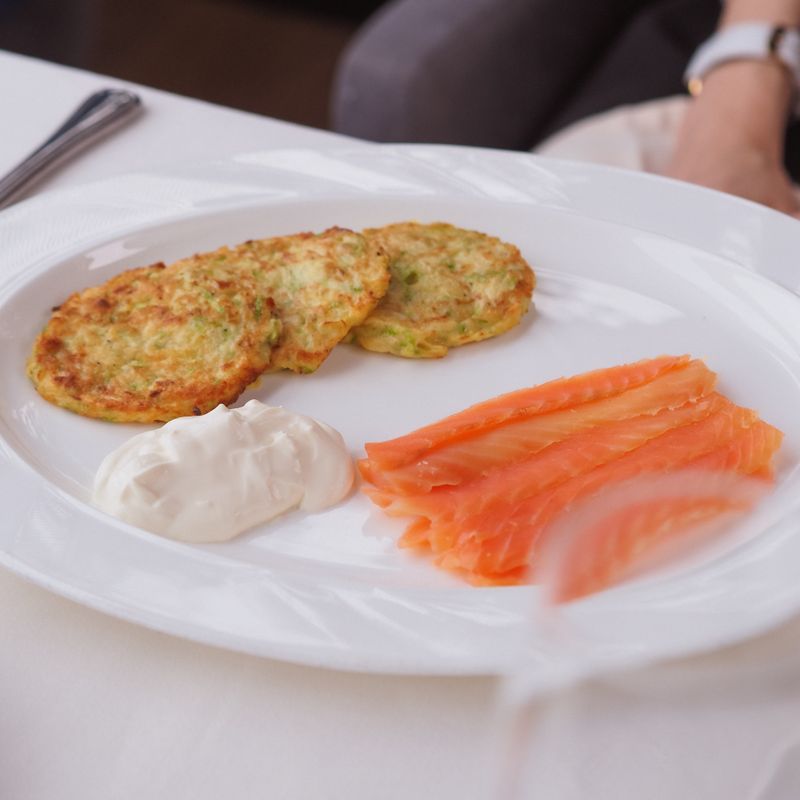
Thrifty Potato Pancakes with Applesauce
Crispy-edged potato pancakes (latkes) bound with egg and a whisper of flour, served alongside cool applesauce. This thrifty pantry-friendly version relies on pantry staples and requires just a bowl, a grater, and a skillet. The pancakes are pan-fried until golden and crunchy on both sides, then drained on paper towels. Serve warm as a side dish or light main course.
- Prep
- 15 min
- Cook
- 20 min
- Wait
- 5 min
- Total
- 40 min
- Makes
- 12 pancakes (3 per serving)
Steps
Before you start
- Line a plate with paper towels for draining
- Peel and coarsely grate the potatoes just before mixing—they oxidize and darken if left sitting
- Have all ingredients measured and the skillet ready before you start shredding
- Preheat the oven to 200°F (93°C) to keep finished pancakes warm while you cook the rest
Grate and drain potatoes
- Using a box grater or food processor, coarsely grate the peeled potatoes and onion into a large mixing bowl.
- Working quickly (grating takes just 2–3 minutes), transfer the mixture to a fine-mesh strainer or colander set over a sink or bowl.
- Press down firmly with the back of a spoon to squeeze out as much liquid as possible—this step is essential so the pancakes are crispy rather than soggy.
- The potatoes will release about 1/3 cup of starchy liquid.
- Let drain for 30 seconds.
+ Show details− Hide details
Ready when: Liquid stops dripping and potatoes are visibly dry
Tip: Don't skip the draining step; excess moisture makes the pancakes steam instead of fry. Work quickly after grating because potatoes oxidize and turn gray.
Mix batter
- Return the drained potato mixture to the bowl.
- Add the beaten eggs, flour, kosher salt, and black pepper.
- Stir gently with a fork until just combined—the mixture will be wet and shaggy.
- Do not overmix; lumps of potato are fine and will hold the pancakes together better.
+ Show details− Hide details
Ready when: All dry flour is moistened and ingredients are evenly distributed
Tip: A slightly lumpy batter yields better texture than smooth. Don't beat it.
Heat oil in skilletOven 350°F / 175°C
- Pour the vegetable oil into a 10–12 inch cast-iron or stainless-steel skillet.
- Set the heat to medium-high and let the oil warm until shimmering and just beginning to smoke, about 2–3 minutes.
- The oil temperature should reach 350°F (175°C); if you have a thermometer, use it.
- If not, test by dropping a small piece of potato into the oil—it should sizzle vigorously and brown in about 1 minute.
+ Show details− Hide details
Ready when: Oil shimmers and moves freely in the pan; a test piece sizzles immediately
Tip: If the oil smokes heavily, lower the heat slightly. Too-cool oil makes greasy, soggy pancakes.
Fry first batch
- Working quickly, drop 3 heaping tablespoons (about 60 g) of the potato mixture into the hot oil for each pancake.
- You can fit 4–5 pancakes in a 10–12 inch skillet.
- Using the back of a spatula, gently flatten each to about ¼ inch thick.
- Do not press too hard or they will compact; just guide them into an even, thin cake.
- Fry for 3–4 minutes on the first side without moving them, allowing the bottom to turn golden brown and crispy.
+ Show details− Hide details
Ready when: Pancake bottom is golden brown and releases cleanly from the skillet when lifted
Tip: Resist the urge to move them. They'll stick if you fuss with them, but will release once fully browned. If the bottom burns before 3 minutes, lower the heat slightly for the next batch.
Flip and finish
- Using a flat spatula, flip each pancake and fry the second side for 2–3 minutes until golden brown and cooked through.
- The pancake should be crispy on both sides and tender (not mushy) when squeezed gently.
- If the center still feels very soft, fry for another 30 seconds.
+ Show details− Hide details
Ready when: Both sides are golden brown and the pancake is firm but not hard when gently pressed
Tip: The second side browns faster than the first because the pan is hotter. Watch carefully so it doesn't burn. If it's browning too fast, lower the heat slightly.
Drain on paper towelsOven 200°F / 95°C
- Transfer the fried pancakes to the paper towel-lined plate and set in the preheated 200°F (93°C) oven to keep warm.
- This prevents them from steaming and losing their crispness as you cook the remaining batches.
- Repeat steps 4–5 with the remaining batter, re-heating the oil between batches until it shimmers again (about 1–2 minutes).
- You should have about 12 pancakes total.
+ Show details− Hide details
Ready when: All pancakes are cooked and warm
Tip: Keeping them in a warm oven prevents them from getting soggy. Don't stack them on top of each other or they will soften.
Serve with applesauce
- Transfer the warm pancakes to a serving platter and serve immediately with unsweetened applesauce on the side (about ¼ cup per person).
- The cool, tart applesauce balances the rich, crispy pancakes.
- Serve as a side dish with roasted chicken or fish, or as a light vegetarian main with a simple green salad.
+ Show details− Hide details
Tip: Eat them right away while they're crispy. Leftover pancakes can be reheated in a 350°F (175°C) oven for 5–7 minutes to restore some crispness, but they are best fresh.
Good to know
Tips
- The key to crispy pancakes is thorough draining and high heat. Soggy pancakes are almost always caused by inadequate draining or oil that is not hot enough.
- If you have a food processor, use the shredding disk to grate the potatoes and onion in seconds—it's much faster than a box grater and equally effective.
- Do not add more flour than called for. The potato mixture should be wet and shaggy so the pancakes stay tender inside and crispy outside. Excess flour makes them dense.
- Serve these pancakes as a side dish with roasted chicken, baked fish, or a beef brisket, or pair with a dollop of sour cream for a lighter meal. In Jewish tradition, they are often served at Hanukkah celebrations.
Make ahead
The batter can be made up to 30 minutes ahead and stored in an airtight container in the refrigerator. If it sits longer, the potatoes will oxidize and darken, and excess liquid may separate. Stir well before frying. For best results, grate the potatoes and cook immediately.
Storage & reheating
Cooked pancakes keep in an airtight container in the refrigerator for up to 3 days. Reheat in a 350°F (175°C) oven for 5–7 minutes to restore crispness (microwaving will make them soggy). They do not freeze well because they lose their crispy texture. Applesauce keeps in the refrigerator for up to 1 week, or frozen for up to 3 months.
Substitutions
- unsweetened applesauce → sour cream mixed with a tablespoon of fresh lemon juice. Tangy sour cream provides a rich, cooling contrast instead of sweet applesauce. Use 1 cup (240 ml) sour cream mixed with 1 tablespoon (15 ml) lemon juice.
- all-purpose flour → cornstarch or potato starch. Cornstarch or potato starch creates a crispier exterior. Use the same amount (3 tablespoons / 24 g). Do not substitute with whole-wheat flour, which will make the pancakes dense.
- vegetable oil or neutral cooking oil → olive oil or avocado oil. Use a neutral variety or light olive oil if you prefer a fruity flavor. Avoid extra-virgin olive oil, which has a lower smoke point and will scorch. Avocado oil works well and has a high smoke point.
- russet potatoes, medium → half potatoes and half parsnips or celeriac (celery root). Mix 12 oz (340 g) potatoes with 12 oz (340 g) grated parsnip or celeriac for a more complex, slightly sweet flavor. The texture will be similar, but cook time may be 30 seconds shorter because parsnips are more delicate.