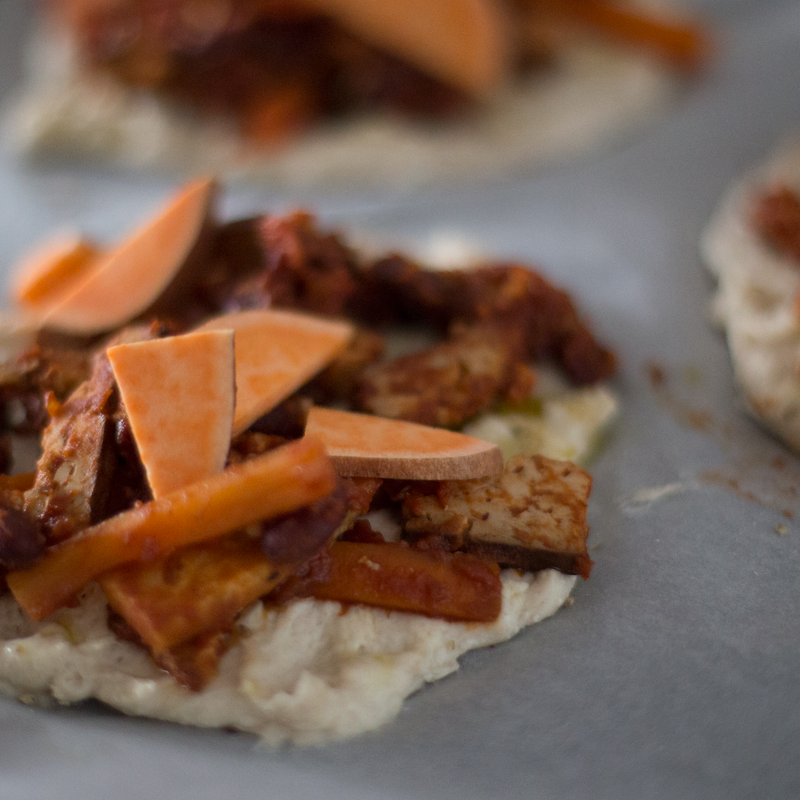
Sweet Potato & Sage Flatbread Dough
A tender, naturally golden dough infused with roasted sweet potato puree and fragrant fresh sage. This vegetable-enriched flatbread dough yields a moist crumb with subtle earthy sweetness, perfect for pan-frying or baking into rustic flatbreads. The dough comes together quickly without long fermentation, making it ideal for weeknight dinners.
- Prep
- 15 min
- Cook
- —
- Wait
- 30 min
- Total
- 45 min
- Makes
- 1 batch dough (enough for 4 large or 8 small flatbreads)
Steps
Before you start
- Measure the sweet potato puree and let it cool to room temperature if freshly made
- Have all ingredients weighed and ready (mise en place)
- Use fresh sage for the best flavor; dried sage will mute the herb character
Activate yeast
- Pour the warm water (110°F / 43°C) into a small bowl and sprinkle the instant yeast over it.
- Let sit for 2 minutes, then stir with a fork until the yeast is fully dissolved.
- The mixture should look slightly foamy or milky after a minute or two; this confirms the yeast is alive.
+ Show details− Hide details
Ready when: Yeast mixture is foamy or milky, not grainy
Tip: Water that is too hot (above 120°F) will kill the yeast; too cool and it will not activate properly.
Combine dry ingredients
- In a large mixing bowl, whisk together the flour, kosher salt, and finely chopped fresh sage.
- Make sure the sage is evenly distributed throughout the flour so the herb flavor is consistent in every bite.
+ Show details− Hide details
Ready when: Sage flecks are visible and evenly scattered in the flour
Tip: Chop the sage finely just before mixing so it doesn't discolor or dry out.
Add wet ingredients
- Create a well in the center of the dry ingredients and pour in the activated yeast mixture and the sweet potato puree.
- Drizzle the olive oil over the top.
- Using a wooden spoon or your hand, gently stir to bring the dry ingredients into the wet ingredients, mixing until a shaggy dough forms with no dry pockets of flour visible.
+ Show details− Hide details
Ready when: Shaggy dough forms with no visible dry flour
Tip: Don't overmix at this stage; just bring everything together. Overmixing develops gluten too early and can make the flatbread tough.
Knead the dough
- Transfer the shaggy dough to a lightly floured work surface.
- Knead for 6–8 minutes by hand (or 4–5 minutes using a stand mixer with a dough hook on medium speed).
- Push the dough away from you with the heel of your hand, fold it back over itself, rotate a quarter turn, and repeat.
- The dough will start sticky but will gradually become smooth, elastic, and slightly tacky (not wet).
- You should be able to form a smooth ball.
+ Show details− Hide details
Ready when: Dough is smooth, elastic, and springs back slightly when poked; it holds together without sticking excessively
Tip: Resist the urge to add too much flour during kneading. The sweet potato puree makes the dough naturally moist; it should feel slightly soft, not dry.
First rise
- Form the dough into a ball and place it in a lightly oiled bowl, turning it once to coat all sides with oil.
- Cover the bowl tightly with plastic wrap or a damp kitchen towel.
- Let the dough rest at room temperature (68–72°F / 20–22°C) for 30 minutes.
- The dough should increase in volume by about one-third, though it does not need to fully double.
+ Show details− Hide details
Ready when: Dough has increased by about one-third in volume; a gentle poke leaves a slight indent
Tip: For faster rising, place the bowl in a warm spot (70–75°F). Do not rush this step—allowing the dough to rest prevents it from being tough and dense.
Divide and shape
- Turn the dough out onto a lightly floured surface.
- Divide it into 4 equal pieces for large flatbreads, or 8 pieces for smaller ones.
- Gently shape each piece into a ball by pulling the edges toward the center and smoothing the surface.
- Let the shaped dough rest on the work surface, covered loosely with plastic wrap, for 5–10 minutes.
- This relaxes the gluten and makes shaping easier.
+ Show details− Hide details
Ready when: Balls are smooth and hold their shape; they gently spring back when lightly pressed
Tip: Handle the dough gently to preserve the air bubbles created during the rise, which will give your flatbread a nice texture.
Good to know
Tips
- Sweet potato puree adds moisture and slight sweetness to the dough, making it tender and naturally golden. Avoid canned versions with added sugar; use pure puree or make your own by roasting fresh sweet potatoes and blending them.
- Fresh sage is essential to this dough's character. It pairs beautifully with the sweetness of the potato and adds a savory, slightly peppery note. Chop it just before mixing to preserve its volatile oils.
- This dough does not require an overnight fermentation. A quick 30-minute rise at room temperature is enough to develop flavor and improve texture, making it perfect for a fast weeknight meal.
- After shaping, the dough portions are ready to cook immediately, or you can refrigerate or freeze them for later. This flexibility makes the recipe easy to prepare ahead.
Make ahead
You can refrigerate the dough after the first rise: transfer it to an oiled container, cover tightly, and store for up to 24 hours. Let it come to room temperature (about 30 minutes) before dividing and shaping. Alternatively, freeze the dough portions in individual freezer bags for up to 3 months; thaw overnight in the refrigerator before use.
Storage & reheating
Freshly mixed dough: use within 2 hours if left at room temperature. Refrigerated dough: up to 24 hours in an airtight container. Frozen shaped dough balls: up to 3 months in a freezer bag; thaw overnight in the refrigerator. Once you've made flatbreads from this dough, store them in an airtight container at room temperature for 2 days, in the refrigerator for 4 days, or frozen for up to 3 months. Reheat in a skillet over medium heat for 1–2 minutes per side until warm and pliable.
Substitutions
- sweet potato puree (fresh or canned) → pumpkin puree (unsweetened). Pumpkin is slightly drier; add 1 tablespoon extra water if the dough feels too stiff. The flavor will be earthier and less sweet.
- fresh sage leaves → 1 teaspoon dried sage. Dried sage is more concentrated; use half the amount by weight. Stir it in with the flour to rehydrate during mixing.
- instant yeast (or bread yeast) → active dry yeast. Use the same amount by weight (5 g) but allow an extra 5–10 minutes for the dough to rise, as active dry yeast ferments slightly slower.
- all-purpose flour → whole wheat flour (up to 50% of the total). Replace up to 1.25 cups all-purpose flour with whole wheat flour. The dough will be earthier and denser; add 2–3 tablespoons extra water if needed.
More flatbread doughs
See all →


Find more like this
- Meal
- Dinner
- Cuisine
- American
- Main ingredient
- Sweet Potatoes
- Method
- Stovetop
- Quick & Easy
- 5 Ingredients or LessEasyBeginner