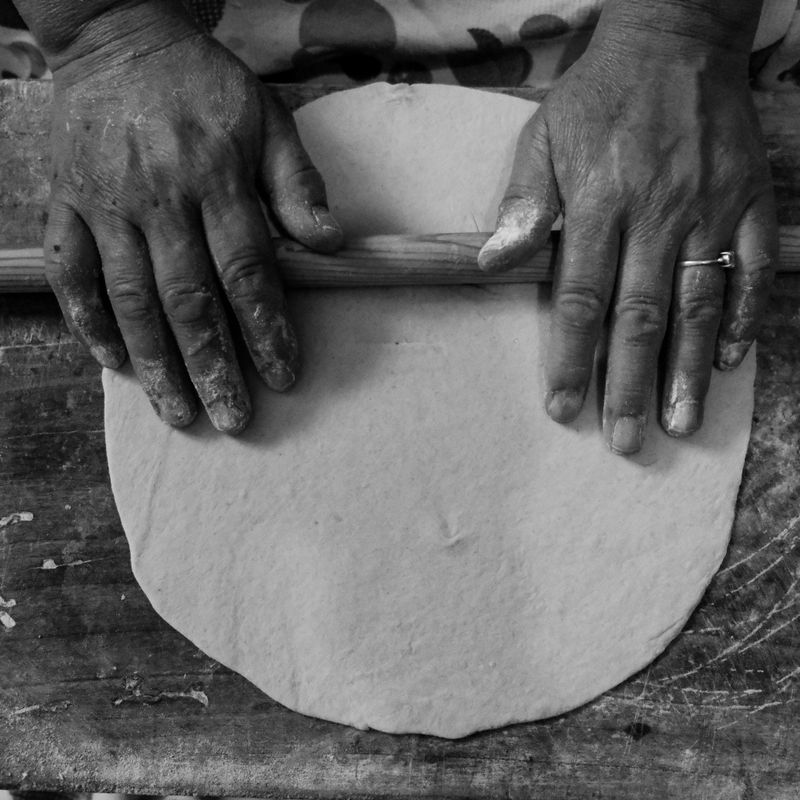
Black Sesame & Miso Flatbread Dough
A tender, flavorful Japanese-inspired flatbread dough infused with umami from miso paste and nutty depth from black sesame seeds. This versatile dough works beautifully for griddled flatbreads, focaccia-style rounds, or as a base for savory toppings. The miso adds complexity without tasting salty, while toasted black sesame contributes an earthy, slightly bitter note. Mix and knead by hand or machine in under 15 minutes.
- Prep
- 15 min
- Cook
- —
- Wait
- 1 hr 30 min
- Total
- 1 hr 45 min
- Makes
- 4 flatbreads (or 8 smaller pieces)
Steps
Before you start
- Read through the recipe to understand the rest-and-knead method.
- Have all ingredients at room temperature, especially the water (68–72°F / 20–22°C).
- Measure miso paste by weight if possible, or spoon gently into a measuring spoon and level—do not pack.
- Set a timer for the bulk fermentation so the dough doesn't over-proof.
Combine dry ingredients
- In a large bowl, whisk together the all-purpose flour (310 g), black sesame seeds (50 g), and kosher salt (3 g).
- Create a shallow well in the center of the dry mix.
+ Show details− Hide details
Ready when: Dry ingredients are evenly mixed; sesame seeds are distributed throughout.
Tip: Whisk thoroughly so the salt and sesame distribute evenly and the dough rises uniformly.
Dissolve miso and combine wet ingredients
- In a small bowl or cup, whisk the miso paste (27 g) into the room-temperature water (180 ml) until smooth and no lumps remain.
- If stubborn, press the miso gently against the bowl with the back of a spoon.
- Drizzle the olive oil (15 ml) into the miso-water mixture and stir to combine.
+ Show details− Hide details
Ready when: Liquid is uniform in color with no miso streaks; oil is incorporated.
Tip: Warm water (not hot) helps dissolve miso smoothly. Cold water can leave small lumps that won't hydrate properly.
Mix dough
- Pour the wet ingredients into the well in the dry mixture.
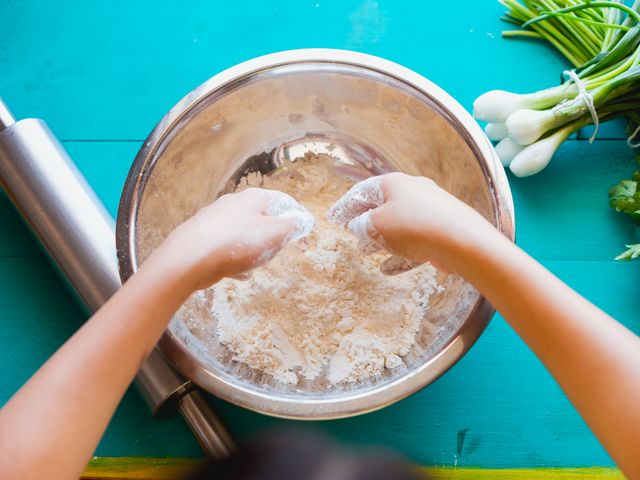
- Using a wooden spoon or bench scraper, stir and pull the flour into the liquid from the sides of the well, working in circular motions.
- Continue for 2–3 minutes until all dry flour is incorporated and a shaggy, wet dough forms.
- Do not knead yet.
+ Show details− Hide details
Ready when: No visible dry flour remains; dough is rough and uneven, not yet smooth.
Tip: Avoid overmixing at this stage. A shaggy consistency helps hydration during the rest period.
Rest dough (autolyse)
- Cover the bowl with a damp kitchen towel or plastic wrap.
- Let the dough rest on the counter at room temperature (68–72°F / 20–22°C) for 20 minutes.
- During this time, the flour continues to absorb water and gluten begins to develop naturally.
+ Show details− Hide details
Ready when: Dough appears more cohesive and slightly smoother, though still shaggy.
Tip: This rest period makes the dough easier to knead and produces a more extensible final dough.
Knead dough until smooth and elastic
- Turn the dough out onto a clean, lightly oiled work surface.
- Knead by hand for 8–10 minutes, using the heel of your hand to push the dough away from you, then folding it back over itself.
- Rotate the dough a quarter turn after each fold and repeat.
- The dough should gradually become smooth, elastic, and slightly tacky but not sticky.
- If it sticks excessively, lightly dust with flour as needed.
+ Show details− Hide details
Ready when: Dough is smooth and elastic; when poked gently, it springs back slowly. It should feel slightly tacky but not stick to your hands.
Tip: Don't over-knead. Once the dough becomes elastic and springs back when poked, stop—further kneading won't improve texture and may toughen the flatbread.
First rise (bulk fermentation)
- Shape the dough into a ball and place it back in the clean, lightly oiled bowl.
- Cover with a damp towel or plastic wrap.
- Let it rise at room temperature (68–72°F / 20–22°C) for 60–70 minutes, until it has increased in volume by about 50–75% (it should look puffy but not fully doubled, as these flatbreads benefit from a shorter fermentation).
+ Show details− Hide details
Ready when: Dough has visibly increased in size, feels slightly airy, and has small bubbles visible on the surface when you peek under the cover.
Tip: Don't let it rise too long or it may collapse when shaped. If your kitchen is warm (above 75°F / 24°C), reduce fermentation time to 45–50 minutes.
Shape and portion dough
- Turn the risen dough out onto a lightly floured work surface.
- Gently divide it into 4 equal pieces (if making 4 flatbreads) or 8 smaller pieces.
- Shape each portion into a loose ball by gently folding the edges toward the center.
- Let the balls rest, uncovered, on the work surface for 5–10 minutes before flattening.
+ Show details− Hide details
Ready when: Balls are smooth on top and feel slightly relaxed. When you press one gently, it slowly springs back.
Tip: Divide the dough carefully to avoid degassing it completely. A bench scraper helps portion evenly without tearing the dough.
Good to know
Tips
- Miso is salty and adds umami depth. If you use a very salty miso (like dark/red miso), you may want to reduce the kosher salt to 1/4 teaspoon (1.5 g). Taste a small amount of raw dough to adjust.
- Black sesame seeds (and all sesame seeds) benefit from toasting. If yours aren't already toasted, toast them in a dry skillet over medium heat for 2–3 minutes, stirring frequently, until fragrant. This deepens their nutty flavor and ensures better distribution in the dough.
- This dough works beautifully griddled on a cast-iron skillet or carbon steel pan over medium-high heat for 2–3 minutes per side until puffed and lightly golden. You can also bake these flatbreads on a preheated baking sheet at 475°F (245°C) for 8–10 minutes.
- If your kitchen is very warm (above 75°F / 24°C), reduce bulk fermentation time to 45–50 minutes and watch the dough closely. Conversely, if it's cold (below 65°F / 18°C), extend fermentation to 75–90 minutes.
Make ahead
You can prepare the dough through step 4 (after the autolyse rest) up to 8 hours ahead. Cover and refrigerate; remove from the fridge 1 hour before kneading to bring the dough closer to room temperature. Alternatively, after shaping (step 7), the portions can be wrapped individually and frozen for up to 1 month. Thaw in the refrigerator overnight or on the counter for 1–2 hours before cooking.
Storage & reheating
Dough portions keep refrigerated in an airtight container or wrapped in plastic wrap for up to 2 days. Uncooked dough can be frozen for up to 1 month (wrap each portion tightly in plastic, then place in a freezer bag). Thaw in the fridge overnight. Once cooked into flatbreads, store at room temperature in an airtight container for up to 1 day, or refrigerate for up to 3 days. Reheat on a skillet over medium heat for 1–2 minutes per side until warm and pliable.
Substitutions
- black sesame seeds, toasted → white sesame seeds, toasted. Use the same weight (50 g). White sesame provides a milder, slightly sweeter nuttiness but less visual drama. Toast them lightly in a dry pan over medium heat for 2–3 minutes until fragrant.
- white or red miso paste → tahini (sesame paste). Use 2 tablespoons (32 g) to keep the flavor balanced. This shifts the umami profile toward pure sesame richness and reduces saltiness slightly; adjust the salt to taste.
- white or red miso paste → soy sauce. Use 1 tablespoon (15 ml) of low-sodium soy sauce and reduce the water to 165 ml (0.7 cups). This creates a more aggressively savory, less complex dough.
- black sesame seeds, toasted → nigella seeds (kalonji). Use the same weight (50 g). Nigella has a different flavor profile—more peppery and less sweet—but distributes well throughout the dough for visual and flavor variation.
More flatbread doughs
See all →
Find more like this
- Meal
- Lunch
- Cuisine
- Japanese
- Method
- Stovetop
- Quick & Easy
- 5 Ingredients or LessEasyMake Ahead