Cilantro Lime Rice Flour Flatbread Dough
A vibrant, naturally gluten-free flatbread dough with bright cilantro and lime flavors. This tender dough is perfect for making thin, pliable flatbreads that pair beautifully with curries, tacos, or as wraps. The rice flour creates a delicate texture while fresh cilantro and lime juice add herbaceous brightness. This dough comes together quickly and requires minimal kneading, making it ideal for weeknight meals or meal prep.
- Prep
- 10 min
- Cook
- —
- Wait
- 30 min
- Total
- 40 min
- Makes
- 4 flatbreads (8-inch), or 8 smaller breads
Steps
Before you start
- Have all ingredients at room temperature
- Measure rice flour by spooning into a measuring cup and leveling off—do not scoop or pack
- Finely chop the cilantro just before mixing so it stays vibrant
Combine dry ingredients
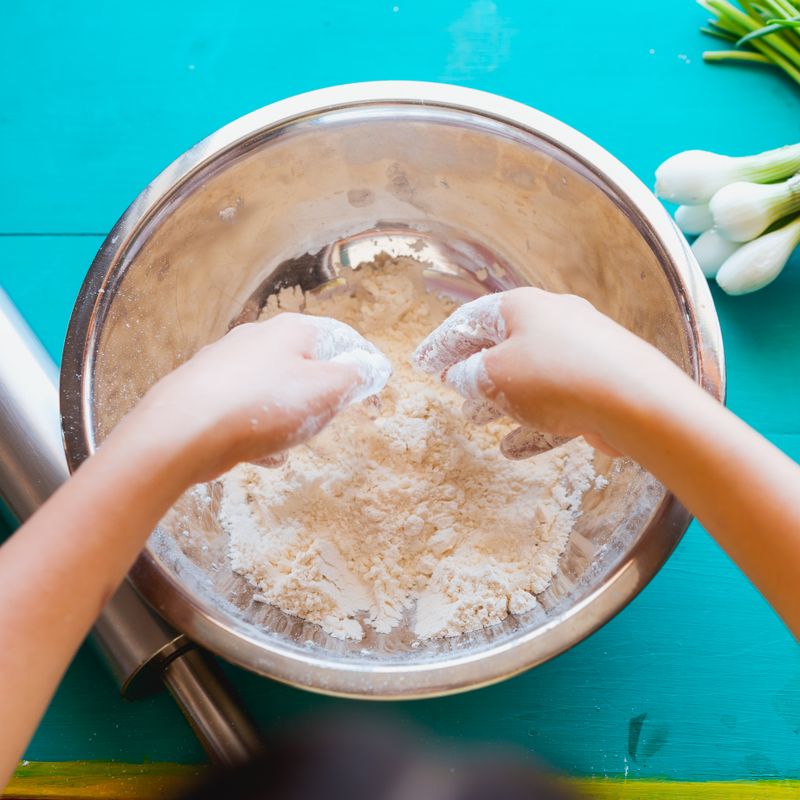
- In a large mixing bowl, whisk together the rice flour and kosher salt.
- Create a well in the center of the flour mixture.
+ Show details− Hide details
Ready when: Flour is evenly combined and well is visible in center
Tip: Sweet rice flour (mochiko) gives better binding than regular rice flour; do not substitute without testing as the dough texture may be affected
Mix wet ingredients
- In a small bowl or measuring cup, whisk together the warm water, fresh lime juice, and neutral oil until combined.
+ Show details− Hide details
Ready when: Liquid is evenly mixed
Tip: Warm water (around 75–80°F / 24–27°C) helps the dough come together smoothly and makes kneading easier
Combine wet and dry
- Pour the wet mixture into the well in the flour.
- Using a wooden spoon or dough whisk, gently stir, gradually pulling flour from the sides of the bowl into the liquid.
- Stir until a shaggy dough begins to form, about 1 minute.
+ Show details− Hide details
Ready when: All flour is hydrated and a rough, slightly sticky dough has formed
Tip: Mix slowly at first so flour doesn't puff up into your face; rice flour dough should feel wetter and stickier than wheat-based doughs
Fold in cilantro
- Add the finely chopped cilantro to the dough.
- Using the wooden spoon or your hand, fold the cilantro gently into the dough, turning and pressing it in until the green herbs are evenly distributed throughout, about 1–2 minutes.
+ Show details− Hide details
Ready when: Cilantro is evenly distributed throughout the dough with no dry pockets
Tip: Chop cilantro just before adding so it stays vibrant green and doesn't oxidize or wilt
Knead lightly
- Turn the dough out onto a lightly oiled work surface.
- Knead gently for 2–3 minutes, folding the dough over itself and pressing with the heel of your hand.
- The dough should be slightly sticky but hold together; it will feel more tender and less elastic than wheat dough.
- Add just a tiny sprinkle of rice flour if it's sticking to your hands excessively, but aim for a soft, moist dough.
+ Show details− Hide details
Ready when: Dough is smooth, holds together, and does not tear easily when stretched gently
Tip: Rice flour doughs do not develop gluten, so over-kneading won't toughen them, but brief kneading helps bring cohesion; do not expect the dough to become springy or elastic like wheat dough
Rest the dough
- Form the dough into a ball and place it in the bowl, or transfer it to a small bowl brushed lightly with oil.
- Cover with plastic wrap or a damp kitchen towel.
- Let rest at room temperature for 30 minutes.
- During this time, the dough will hydrate fully and become easier to roll out.
+ Show details− Hide details
Ready when: Dough is soft, pliable, and no longer feels raw or crumbly
Tip: This rest period is essential for rice flour doughs; skipping it will result in dough that is difficult to roll and may crack or fall apart
Good to know
Tips
- Sweet rice flour (mochiko) is the key to a tender, pliable flatbread. Regular white rice flour produces a drier, more crumbly dough; jasmine or basmati rice flour may also be used with slightly different results.
- After the 30-minute rest, the dough is ready to roll out and cook. Divide into 4 equal portions (or 8 for smaller flatbreads) and shape on a lightly oiled surface. Roll each portion to about ⅛-inch (3 mm) thick between two sheets of parchment paper or plastic wrap to prevent sticking.
- Cook the flatbreads in a dry skillet (cast iron or stainless steel) over medium-high heat. They will cook quickly—about 45–60 seconds per side—until lightly spotted and puffed. No oil is needed in the pan since the dough contains fat.
- If the dough seems too sticky to work with even after resting, dust your work surface and rolling pin with rice flour rather than all-purpose flour. Rice flour absorbs less moisture and won't toughen the dough.
Make ahead
The dough can be made up to 4 hours ahead. After resting, wrap it tightly in plastic wrap and refrigerate. Bring to room temperature for 15–20 minutes before rolling and cooking. Do not freeze unbaked dough as the texture will degrade.
Storage & reheating
Room temperature: Keep wrapped or in an airtight container for up to 2 hours. Refrigerator: Wrap tightly in plastic wrap; use within 4 hours. Once cooked into flatbreads, store in an airtight container in the fridge for up to 3 days; reheat in a dry skillet over medium heat for 30 seconds per side, or wrap in a damp towel and microwave for 15–20 seconds. Do not freeze raw dough.
Substitutions
- sweet rice flour (also called glutinous rice flour or mochiko) → A blend of 1½ cups (210 g) all-purpose or bread flour and ½ cup (70 g) cornstarch. This will produce a slightly different texture—less tender and more elastic—but still makes a serviceable gluten-containing flatbread. Mix and knead as directed.
- fresh cilantro leaves → Fresh mint, parsley, or a combination of both, finely chopped in the same amount. The flatbreads will have a different flavor profile but will work well with other dishes; adjust seasoning if desired
- fresh lime juice → Fresh lemon juice in the same amount, or 2 tablespoons lime juice plus 1 tablespoon white vinegar. Lime provides bright acidity; lemon will be slightly less tart. Vinegar adds tanginess but changes flavor. Reduce salt by ¼ teaspoon if using vinegar.
- neutral oil (vegetable, canola, or avocado) → Melted unsalted butter or coconut oil. Butter adds richness; coconut oil adds subtle coconut flavor. Both work in equal amounts.