Sun-Dried Tomato Focaccia
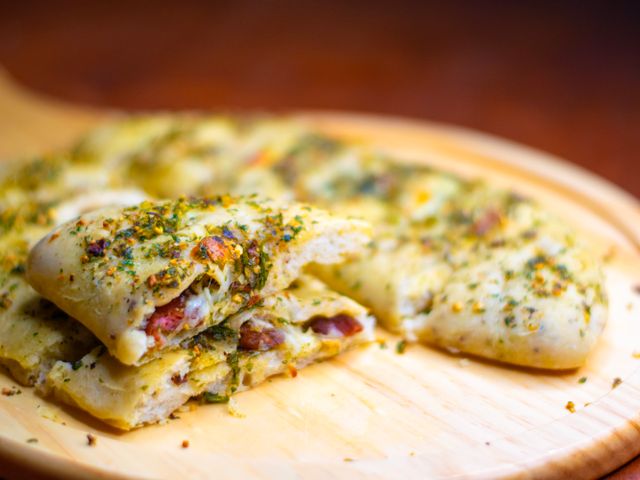
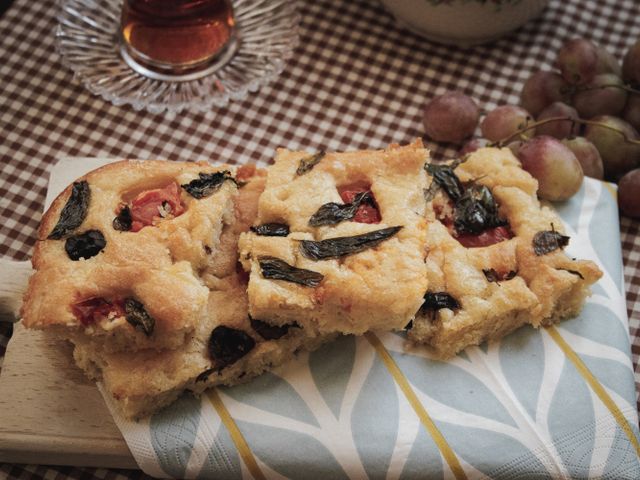
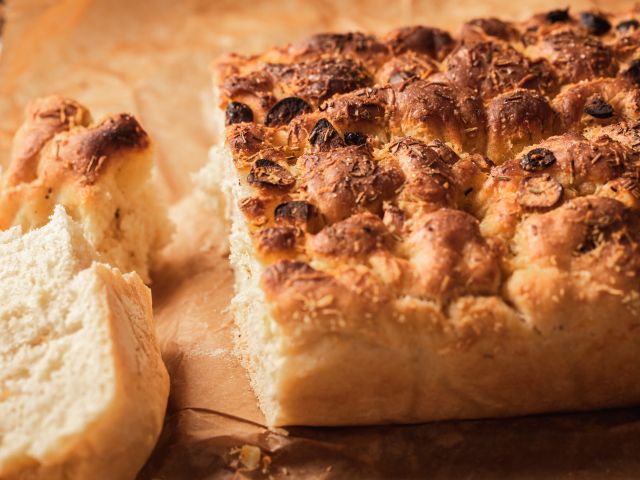
A rustic Italian flatbread with a tender, dimpled crumb and golden crust. Sun-dried tomatoes and fresh rosemary infuse the dough with bright, herbaceous flavor. The dough rises in olive oil for a rich, flavorful base, then gets dimpled and topped with more sun-dried tomatoes, coarse salt, and rosemary before baking until the surface is spotted and crisp.
- Prep
- 25 min
- Cook
- 25 min
- Wait
- 1 hr 35 min
- Total
- 2 hr 25 min
- Makes
- 1 focaccia (8 servings)
Steps
Before you start
- Preheat oven to 425°F (220°C) at least 15 minutes before baking
- If using active dry yeast (not instant), dissolve it in warm water first
- Pat sun-dried tomatoes dry with paper towels to remove excess oil
- Have all ingredients and equipment ready before you begin
Mix the dough
- In a large bowl, whisk together 3¼ cups (400 g) flour, 1½ teaspoons (5 g) instant yeast, and 1½ teaspoons (9 g) kosher salt.
- Add 1¼ cups (300 ml) warm water (110°F / 43°C) and ¼ cup (60 ml) olive oil.
- Stir with a wooden spoon or bench scraper until a shaggy dough forms with no dry flour visible, about 1 minute.
+ Show details− Hide details
Ready when: No dry flour remains and a wet, shaggy dough forms
Tip: Don't overmix; the dough should look rough and sticky. Overworking it at this stage makes it tough.
Rest and knead the dough
- Let the dough rest for 5 minutes, covered loosely with plastic wrap or a damp towel.
- Then knead it in the bowl by folding it over itself with one hand or a bench scraper 10–12 times, rotating the bowl as you go.
- The dough should feel tacky but less shaggy.
- It's okay if some oil remains on top.
+ Show details− Hide details
Ready when: Dough is smoother and more cohesive, though still quite sticky
Tip: This minimal kneading develops just enough gluten without making the crumb dense. A wet, oil-risen dough should stay loose.
Fold in sun-dried tomatoes and rosemary
- Scatter ½ cup (80 g) chopped sun-dried tomatoes and 2 tablespoons (8 g) finely chopped fresh rosemary over the dough.
- Fold and knead them in with 4–6 folds, rotating the bowl, until the tomatoes and herbs are evenly distributed throughout.
+ Show details− Hide details
Ready when: Sun-dried tomatoes and rosemary are scattered throughout the dough with no large pockets
Tip: If the tomatoes are very large, chop them smaller so they distribute evenly and don't create tough spots.
Oil the pan and transfer dough
- Pour 2 tablespoons (30 ml) olive oil into a 9×13-inch (23×33 cm) baking pan, tilting and rotating to coat the bottom and sides.
- Turn the dough out onto the oiled pan, then stretch and press it gently with oiled hands to fit the pan, reaching into the corners.
- The dough will feel soft and may not cover the whole pan yet—that's fine.
- Cover loosely with plastic wrap.
+ Show details− Hide details
Ready when: Dough is stretched somewhat to fit the pan and is loosely covered
Tip: Keep your hands lightly oiled to prevent sticking. Don't fight the dough if it shrinks—it will expand during rising.
First rise
- Let the dough rise, covered, at room temperature (68–72°F / 20–22°C) for 45–50 minutes.
- It should increase in volume and feel airy, reaching nearly to the edges of the pan, though it doesn't need to fill it completely.
+ Show details− Hide details
Ready when: Dough has visibly risen and wobbles slightly when the pan is moved; it looks light and airy
Tip: If your kitchen is cool, the rise may take longer. Dough ready to dimple should jiggle gently when the pan is tapped.
Preheat ovenOven 425°F / 220°C
- About 15 minutes before the dough finishes rising, preheat your oven to 425°F (220°C).
- This ensures the oven is fully heated when the focaccia goes in.
+ Show details− Hide details
Ready when: Oven beeps or indicates it has reached temperature
Tip: Use an oven thermometer to verify the actual temperature, especially if your oven runs hot or cold.
Dimple and top the dough
- Once the dough has risen, uncover it.
- Using your fingertips (or the handle of a wooden spoon), gently but firmly dimple the entire surface, creating small indentations every ½ inch (1.25 cm).
- Don't push all the way to the bottom—just ¼ to ½ inch (6–12 mm) deep.
- The dimples give focaccia its signature texture.
- Scatter a few additional chopped sun-dried tomato pieces over the top if desired, and sprinkle with 1 teaspoon (6 g) coarse sea salt and a few fresh rosemary sprigs.
+ Show details− Hide details
Ready when: Entire surface is covered with dimples; toppings are distributed across the dough
Tip: Work gently so you don't deflate the dough too much. The dimples should be consistent but not so deep that the dough looks shredded.
Bake the focacciaOven 425°F / 220°C
- Place the pan in the preheated 425°F (220°C) oven.
- Bake for 22–27 minutes, until the top is golden brown with light tan-to-dark spots, the edges are golden, and the focaccia sounds hollow when you tap the bottom (you can carefully tilt it with tongs to check).
- The bottom should also be golden and crisp.
+ Show details− Hide details
Ready when: Top is golden brown with light to dark brown spots; bottom sounds hollow when tapped; crust is crispy to the touch
Tip: If the top browns too quickly before the interior is cooked, tent it loosely with foil for the last 5–7 minutes, but remove it to re-crisp the surface for the final 2–3 minutes.
Cool and serve
- Remove the focaccia from the oven and let it cool in the pan for 5 minutes.
- Then slide it out onto a wire rack or cutting board and let it cool for another 5–10 minutes before cutting.
- The focaccia is best served warm or at room temperature.
+ Show details− Hide details
Ready when: Focaccia can be handled without falling apart; the crust firms as it cools
Tip: Don't cut the focaccia while it's piping hot—the crumb is still setting. A brief cool-down makes for much cleaner slices.
Good to know
Tips
- Water temperature matters: 110°F (43°C) is ideal for yeast activation. Too hot and it will kill the yeast; too cold and fermentation will be slow. Use a kitchen thermometer if you have one.
- Oil-risen dough is forgiving: Because the dough rises in olive oil, it stays moist and flexible. This makes it very beginner-friendly and less prone to over-rising or drying out.
- The dimples are essential: They're not just for looks. Dimples trap oil and toppings, create extra crispy pockets, and give focaccia its signature tender-and-crispy texture.
- Don't skip the second proof: Even though focaccia seems to rise quickly, that first long rise is what develops flavor. Rushing it will give you a denser, blander bread.
Make ahead
The dough can be refrigerated after the first rise. Cover it well and refrigerate for up to 12 hours. When ready to bake, remove from the fridge, let it come to room temperature for 20–30 minutes, dimple and top it, then bake as directed. Alternatively, the finished focaccia can be baked, cooled completely, and frozen for up to 3 months; thaw at room temperature or warm in a 350°F (175°C) oven for 10–12 minutes.
Storage & reheating
Room temperature: Store in an airtight container or wrapped in foil for up to 2 days. The crust will soften slightly but the focaccia will remain good. Refrigerator: Wrap tightly and store for up to 4 days; rewarm gently in a 350°F (175°C) oven for 8–10 minutes. Freezer: Cool completely, wrap tightly in plastic wrap and foil, and freeze for up to 3 months. Thaw at room temperature or reheat in a 350°F (175°C) oven for 12–15 minutes until warm and crispy.
Substitutions
- sun-dried tomatoes in oil → Chopped roasted red peppers or fresh diced tomatoes (tossed with a pinch of salt to remove excess moisture). Fresh tomatoes will add moisture, so reduce water slightly (by 2–3 tablespoons / 30–45 ml) and squeeze out excess from roasted peppers. The flavor will be softer and less concentrated than sun-dried tomatoes.
- fresh rosemary → Fresh thyme, oregano, or a mix of Mediterranean herbs (use the same amount). Each herb will give a different flavor profile but will work well with the tomatoes. Thyme is slightly more delicate; oregano is earthier.
- instant yeast (or bread yeast) → Active dry yeast (use 2 teaspoons / 7 g and dissolve in the warm water for 5 minutes before mixing with flour). Active dry yeast takes slightly longer to activate. Mixing it with water first ensures even distribution and faster fermentation.
- all-purpose flour → Bread flour (use the same weight, 400 g, or 3⅛ cups) or a mix of half whole wheat and half all-purpose flour. Bread flour will create a chewier, more substantial crust. Whole wheat adds nuttiness and density; reduce water by 1–2 tablespoons (15–30 ml) if using whole wheat, as it absorbs more liquid.