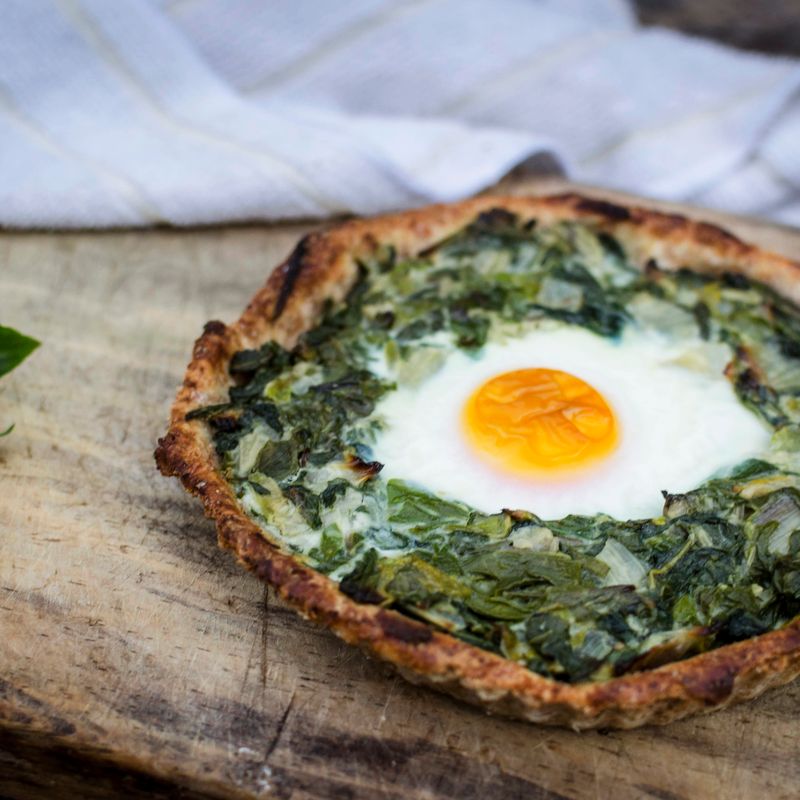
Sourdough Spinach and Artichoke Focaccia Tart
A rustic Italian-American tart built on a puffy, dimpled sourdough focaccia base, topped with a creamy ricotta spread, tender wilted spinach, and marinated artichoke hearts. The focaccia rises in the pan, creating a light, airy crumb that contrasts beautifully with the rich, herbaceous topping. Serve warm or at room temperature as an appetizer, side dish, or light lunch.
- Prep
- 30 min
- Cook
- 35 min
- Wait
- 2 hr
- Total
- 3 hr 5 min
- Makes
- 1 focaccia tart (8 wedges)
Steps
Before you start
- Have your sourdough starter at peak activity (bubbly and doubling at room temperature within 4–8 hours of feeding)
- Preheat your oven to 425°F (220°C) about 15 minutes before the focaccia is ready to bake
- Thaw and squeeze spinach thoroughly if using frozen; fresh spinach will reduce in volume significantly when wilted
Mix focaccia dough
- In a medium bowl, combine 150g active sourdough starter, 180ml warm water (80–90°F / 27–32°C), 325g bread flour, and 9g kosher salt.
- Stir with a fork or wooden spoon until all flour is moistened and shaggy dough forms, about 2 minutes.
- The dough will be sticky and loose, not smooth.
+ Show details− Hide details
Ready when: All flour fully hydrated; dough is wet and loose
Tip: Sourdough dough is naturally stickier than instant-yeast dough. Don't over-mix; you want a loose, shaggy consistency.
Knead and develop gluten
- Add 30ml olive oil to the dough.
- Using wet hands or a wooden spoon, knead the dough in the bowl for about 8 minutes.
- Fold it over itself repeatedly, stretching and turning as you go.
- The dough will gradually become smoother, less sticky, and cohesive, though still soft.
+ Show details− Hide details
Ready when: Dough is smooth, elastic, and pulls back gently when stretched; no longer shaggy
Tip: Wet your hands frequently to prevent sticking. You're building gluten structure to create the focaccia's light, open crumb.
Oil and shape in pan
- Brush a 9×13-inch (23×33 cm) rectangular baking pan generously with olive oil.
- Transfer the dough to the pan and stretch it gently to fill most of the bottom, leaving about ½ inch of space from the edges.
- Use wet fingers to avoid tearing.
- The dough doesn't need to reach the corners perfectly; it will expand during the rise.
+ Show details− Hide details
Ready when: Dough loosely covers the pan, about ½ inch thick, with room to rise
Tip: If the dough springs back aggressively, let it rest for 5 minutes, then stretch again. This makes it easier to work with.
First rise until puffy
- Cover the pan with a damp kitchen towel or plastic wrap.
- Let the dough rise at warm room temperature (68–72°F / 20–22°C) for 90 minutes, or until puffy and roughly doubled in volume.
- You should see air bubbles on the surface and the dough should feel light when gently poked.
+ Show details− Hide details
Ready when: Dough is puffy and airy; a gentle poke with a wet finger leaves a shallow depression that slowly springs back halfway
Tip: Sourdough rises more slowly than commercial yeast dough. If your kitchen is cold, give it extra time—up to 2 hours is fine.
Prepare spinach filling
- While the dough rises, heat 1 tablespoon of the reserved artichoke oil in a large skillet over medium-high heat.
- Add 15g minced garlic and cook for 30 seconds until fragrant.
- Add all 240g fresh spinach in batches, stirring constantly, until completely wilted and any moisture has evaporated, about 5–7 minutes.
- The spinach should be very dry and concentrated.
- Transfer to a plate and let cool slightly.
- Season with a pinch of salt and black pepper.
+ Show details− Hide details
Ready when: Spinach is completely wilted and very dry; no liquid pooling in the skillet
Tip: Squeeze out excess moisture from the spinach as it cooks. Wet spinach will make the focaccia soggy. If using frozen spinach, thaw and squeeze it thoroughly before cooking.
Prepare ricotta mixture
- In a small bowl, combine 185g room-temperature ricotta, 3g lemon zest, 1 teaspoon minced fresh garlic (optional, in addition to the garlic for spinach), a pinch of salt, and a grind of black pepper.
- Stir gently with a fork until smooth.
- Taste and adjust seasoning.
+ Show details− Hide details
Ready when: Ricotta is smooth and creamy, with bright lemon flavor
Tip: Room-temperature ricotta blends more smoothly. If straight from the fridge, let it sit on the counter for 15 minutes first.
Dimple and top focacciaOven 425°F / 220°C
- Preheat your oven to 425°F (220°C).
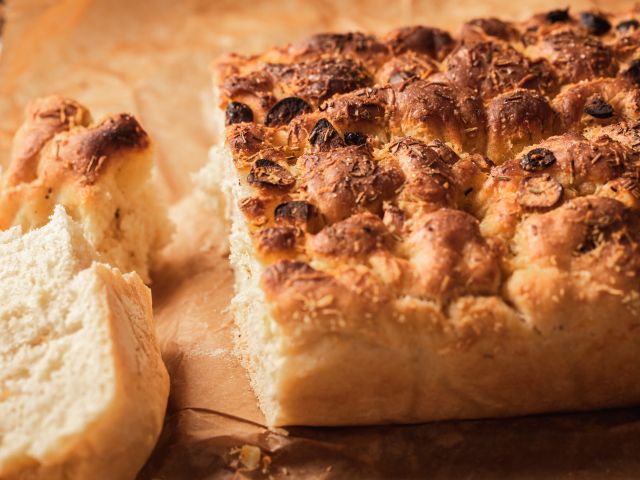
- Once the dough has risen, use your wetted fingertips to dimple the entire surface of the focaccia, creating small indentations roughly 1 inch apart.
- This is the classic focaccia texture and helps the toppings nestle in.
- Spread the ricotta mixture evenly over the dough, leaving a ½-inch border.
- Scatter the cooled wilted spinach over the ricotta, then arrange the drained artichoke hearts halves on top, distributing them evenly.
- Drizzle with 1 tablespoon extra-virgin olive oil and sprinkle with 50g grated Parmigiano-Reggiano, a pinch of red pepper flakes (if using), and a light season of salt and black pepper.
+ Show details− Hide details
Ready when: Focaccia is dimpled, toppings are evenly distributed, and surface glistens with oil
Tip: Don't press too hard when dimpling; you want gentle indentations, not deep holes. The dough will puff up around them during baking.
Bake until goldenOven 425°F / 220°C
- Bake at 425°F (220°C) for 25–30 minutes.
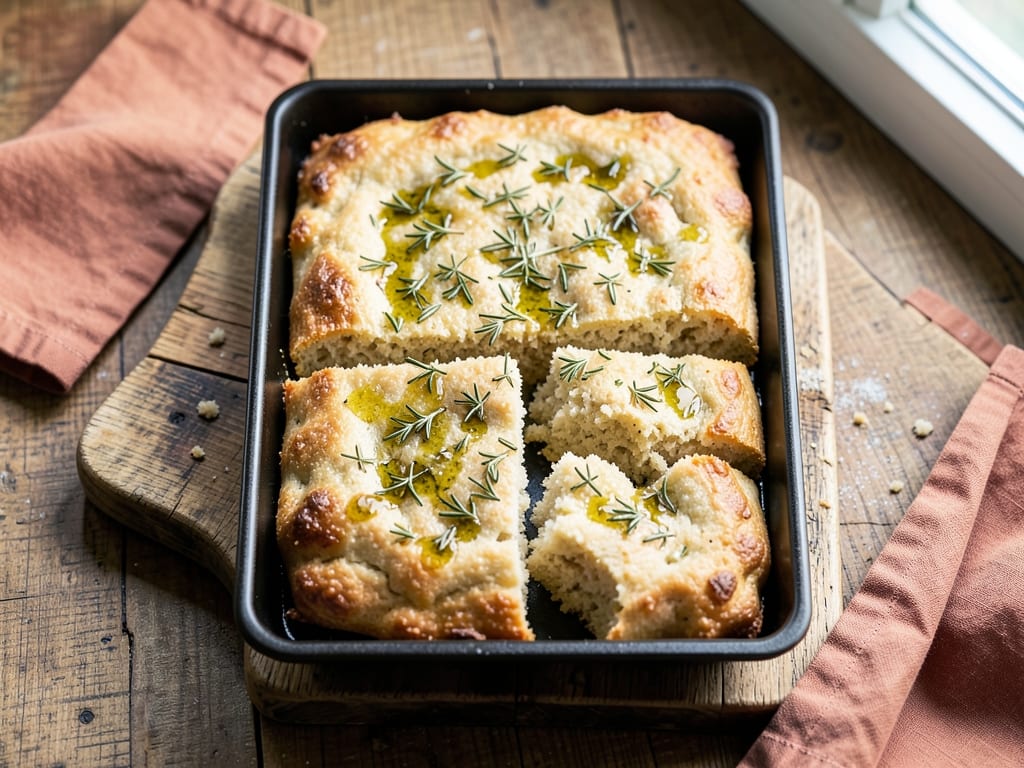
- The focaccia is done when the crust is deep golden brown, the edges are slightly darker, and the topping is bubbling gently around the edges.
- A skewer inserted into the thickest part of the dough should meet just a little resistance.
- The overall structure should feel firm and set.
+ Show details− Hide details
Ready when: Crust is deep golden brown; edges are darker; topping bubbles gently; internal temperature around 200–205°F (93–96°C) at the center
Tip: If the top browns too quickly but the dough is still pale underneath, lower the oven temperature to 400°F (200°C) for the last 10 minutes.
Cool and finish
- Remove the focaccia from the oven and let it rest in the pan for 5 minutes.
- Drizzle with a final light thread of extra-virgin olive oil.
- If using fresh basil, tear a few leaves and scatter over the top.
- Let cool for 5–10 minutes in the pan before slicing into 8 wedges and serving warm or at room temperature.
+ Show details− Hide details
Ready when: Focaccia is warm but cool enough to handle; basil is bright green
Tip: Cooling slightly makes slicing much cleaner. A bench scraper or sharp bread knife works best for cutting through the crispy crust.
Good to know
Tips
- Peak sourdough starter is essential: it should be bubbly, roughly doubled, and smell pleasantly sour after a feeding. If your starter is sluggish, feed it and let it sit on the counter at room temperature for 8–12 hours before using.
- Don't skip the spinach-wilting step. Fresh spinach holds a lot of water, and releasing it concentrates flavor and prevents a wet, soggy focaccia base.
- The dimpling step is both aesthetic and functional. The indentations hold the ricotta and vegetables in place and create pockets that become crispy during baking.
- Leftover focaccia is excellent split horizontally and filled with sandwich ingredients, or torn into pieces for bread salad.
Make ahead
You can prepare the spinach filling and ricotta mixture up to 1 day ahead. Store both separately in the refrigerator. Let them come to room temperature before assembling. Alternatively, mix and shape the focaccia dough, then refrigerate it covered for up to 16 hours. Bring to room temperature and let it proof for 60–90 minutes before dimpling and topping.
Storage & reheating
Store covered at room temperature for up to 2 days. Reheat in a 350°F (175°C) oven for 10–12 minutes until warmed through. Refrigerate leftovers in an airtight container for up to 3 days; reheat the same way. Freeze wrapped tightly in plastic wrap and foil for up to 1 month. Thaw at room temperature and reheat in a 350°F (175°C) oven for 15–18 minutes.
Substitutions
- fresh spinach, lightly packed → 10 oz (280g) thawed frozen spinach, squeezed very dry. Frozen spinach works well and reduces cooking time. Make sure to remove as much liquid as possible to avoid a soggy focaccia.
- marinated artichoke hearts in oil → 12 oz (340g) roasted red bell peppers, drained and torn into 1-inch pieces. Roasted peppers are softer and sweeter. Use the same volume and prepare the same way.
- whole milk ricotta → ½ cup (120g) mascarpone mixed with ¼ cup (60ml) whole milk. Mascarpone is richer and denser; thinning with milk creates a spreadable consistency. Reduce salt slightly.
- active sourdough starter → ½ teaspoon (2.5g) instant yeast plus 200g all-purpose flour and 180ml warm water (skip the starter entirely). If you don't have active starter, use instant yeast. The focaccia will bake faster (same 425°F time) but will lack sourdough flavor and texture.