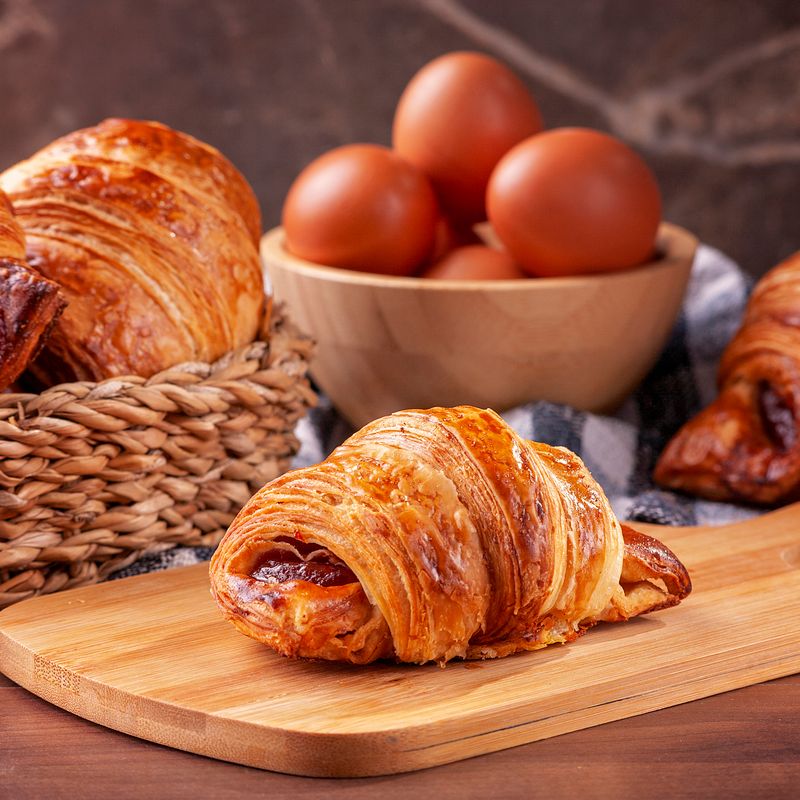
Spanish Torrijas with Orange Syrup and Cinnamon
Torrijas are a traditional Spanish delicacy: thick slices of stale bread dipped in spiced milk and egg, then pan-fried until golden and crispy on the outside. They're finished in the oven and served warm with a fragrant orange-cinnamon syrup that soaks into the bread's tender crumb. The contrast of crispy exterior and custardy interior, paired with the bright citrus and warm spice, makes this an elegant yet comforting breakfast or dessert.
- Prep
- 15 min
- Cook
- 20 min
- Wait
- 45 min
- Total
- 1 hr 20 min
- Makes
- 8 torrijas (4 main servings or 8 appetizer portions)
Steps
Before you start
- Use 2–3 day-old bread so it's stale enough to soak without falling apart
- Preheat your oven to 350°F (175°C) before you begin frying
- Zest the orange before juicing it for the syrup
- Have all ingredients ready and measured so you can work quickly once you start dipping and frying
Make the orange-cinnamon syrup
- In a small saucepan, combine the water, sugar, orange zest, orange juice, ground cinnamon, and cinnamon sticks (if using).
- Bring to a boil over medium-high heat, stirring once to dissolve the sugar.
- Once boiling, reduce heat to medium-low and simmer for 8–10 minutes until the syrup thickens slightly and becomes fragrant.
- You should have about ¾ cup (180 ml) of syrup.
- Remove from heat and let cool to warm (not hot).
- The syrup can be made up to 2 hours ahead.
+ Show details− Hide details
Ready when: Syrup thickens and coats the back of a spoon lightly; smell of orange and cinnamon is prominent
Tip: Don't reduce the syrup too much or it will thicken into a sticky paste. Warm syrup soaks into the torrijas better than room-temperature syrup.
Prepare the dipping mixture
- Pour the whole milk into a large shallow bowl or pie dish.
- Add the cinnamon and vanilla extract, and whisk until combined and the cinnamon is evenly distributed.
- Set aside.
Beat the eggs
- In another shallow bowl, beat the 2 eggs together with a fork until well combined and slightly frothy.
- Set aside.
Heat the oilOven 350°F / 175°C
- Pour the olive oil into a 12-inch (30 cm) skillet and place over medium-high heat.
- Let the oil warm for 2–3 minutes until it shimmers and a bread cube dropped in it sizzles immediately.
- The oil should be around 350°F (175°C) if using a thermometer.
+ Show details− Hide details
Ready when: Oil shimmers and moves easily in the pan; a small bread cube sizzles immediately upon contact
Tip: If the oil is too cool, the bread will absorb oil and become greasy. If too hot, the outside will burn before the inside cooks through.
Dip and fry the first batch
- Working with one slice at a time, dip a bread slice into the spiced milk for about 2 seconds per side—just enough to coat and soak slightly, but not so long that it becomes soggy and falls apart.
- Immediately dip the wetted slice into the beaten egg, coating both sides thoroughly.
- Carefully place the slice into the hot oil.
- Fry 3–4 slices at a time (don't crowd the pan) for 2–3 minutes on the first side until golden brown and crispy.
- Flip and fry another 2–3 minutes on the reverse side until equally golden.
- Use a slotted spatula to transfer fried torrijas to a baking sheet as you go.
+ Show details− Hide details
Ready when: Bread is deep golden brown on both sides with a crispy exterior; the surface should feel firm to the touch
Tip: Dip quickly—the milk-soaked bread is fragile. If it starts to break apart, your dip time was too long. Keep the oil at a steady temperature; lower the heat slightly if the bottoms brown too fast before the centers warm through.
Finish in the ovenOven 350°F / 175°C
- Once all 8 torrijas are fried and arranged on the baking sheet, place them in the preheated 350°F (175°C) oven for 8–10 minutes.
- This gentle heating sets the interior custardy texture and allows the bread to warm through completely without further crisping the exterior.
- Remove from the oven when still warm to the touch.
+ Show details− Hide details
Ready when: Torrijas are warm throughout and slightly spongy in the center when pressed gently; a skewer inserted into the middle comes out warm
Tip: The oven finish is crucial—it sets the custard-like texture inside without over-crisping. Don't skip this step.
Pour syrup and serve
- Remove the torrijas from the oven and arrange them on a serving platter or individual plates while still warm.
- Carefully pour or ladle the warm orange-cinnamon syrup over the hot torrijas, allowing it to soak in.
- Serve immediately while they're warm and the syrup is still fragrant.
+ Show details− Hide details
Tip: If the syrup has cooled too much, warm it gently in the saucepan for 30 seconds before pouring. The warmth helps it soak into the bread rather than sitting on top.
Good to know
Tips
- Stale bread is essential—fresh bread is too soft and absorbs the egg and milk mixture too quickly, becoming mushy rather than custardy. If your bread is very fresh, leave it out, uncovered, for 24–48 hours to dry slightly.
- Work quickly when dipping and frying. The longer milk-soaked bread sits before frying, the more likely it is to fall apart. Set up an assembly line: milk bowl, egg bowl, hot oil, baking sheet.
- Monitor your oil temperature carefully. Too cool and the torrijas absorb oil and become greasy; too hot and they burn before the inside cooks. A thermometer is helpful, but the sizzle test works: a small piece of bread should sizzle immediately.
- Serve warm but not piping hot—the syrup cools quickly once poured. If the torrijas cool and the syrup becomes sticky, a brief 2-minute warm-up in a 300°F (150°C) oven will restore the dish beautifully.
Make ahead
The orange-cinnamon syrup can be made up to 2 hours ahead and reheated gently just before serving. The dipping mixture (milk and cinnamon) can be prepared 30 minutes ahead and kept at room temperature. The entire dish is best served fresh within 15 minutes of cooking, but can be held warm in a 200°F (93°C) oven for up to 30 minutes if needed.
Storage & reheating
Leftover torrijas keep in an airtight container in the refrigerator for up to 2 days. Reheat gently in a 300°F (150°C) oven for 8–10 minutes to restore crispness, or in the microwave for 30–45 seconds for a softer texture. The syrup stores separately in the fridge for up to 5 days. Torrijas do not freeze well due to the crispy-custardy texture, though the syrup freezes for up to 2 months.
Substitutions
- stale white or brioche bread, cut into ¾-inch (2 cm) thick slices → brioche bread or challah, cut into ¾-inch (2 cm) slices. Use slightly thicker slices (1 inch / 2.5 cm) if your bread is very delicate. Avoid soft commercial sandwich bread, which falls apart.
- whole milk → equal parts whole milk and heavy cream (e.g., ¾ cup / 180 ml each). This creates a richer, custard-like interior. Use the same total liquid volume.
- large navel orange, zest and juice → 1 lemon (zest and juice) plus 2 tablespoons (30 ml) brandy or sherry, optional. Lemon creates a brighter, more tart syrup. Brandy or sherry adds depth and is traditional in some Spanish recipes.
- extra-virgin olive oil, for frying → neutral oil (vegetable, canola, or grapeseed oil). Use if you prefer a milder flavor or if the olive oil taste is too strong for your preference. The cooking temperature remains the same.
More breakfast dishes
See all →


Find more like this
- Meal
- Breakfast
- Cuisine
- Spanish
- Diet
- VegetarianHalal