Sourdough Lagana (Greek Sesame Flatbread)
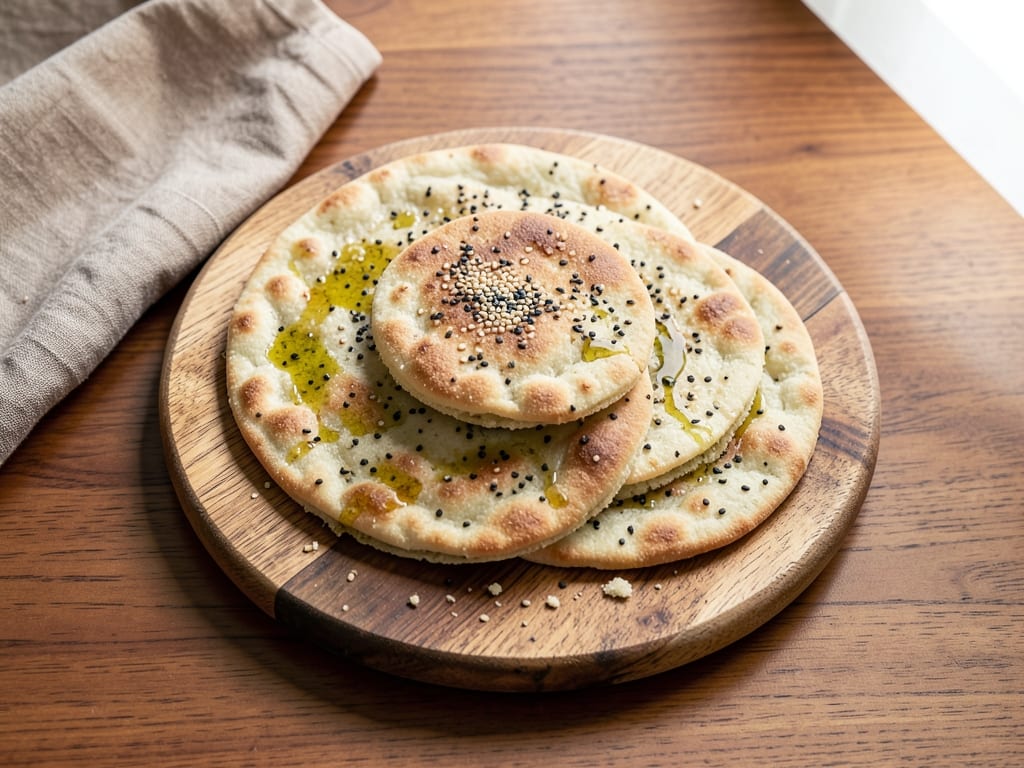
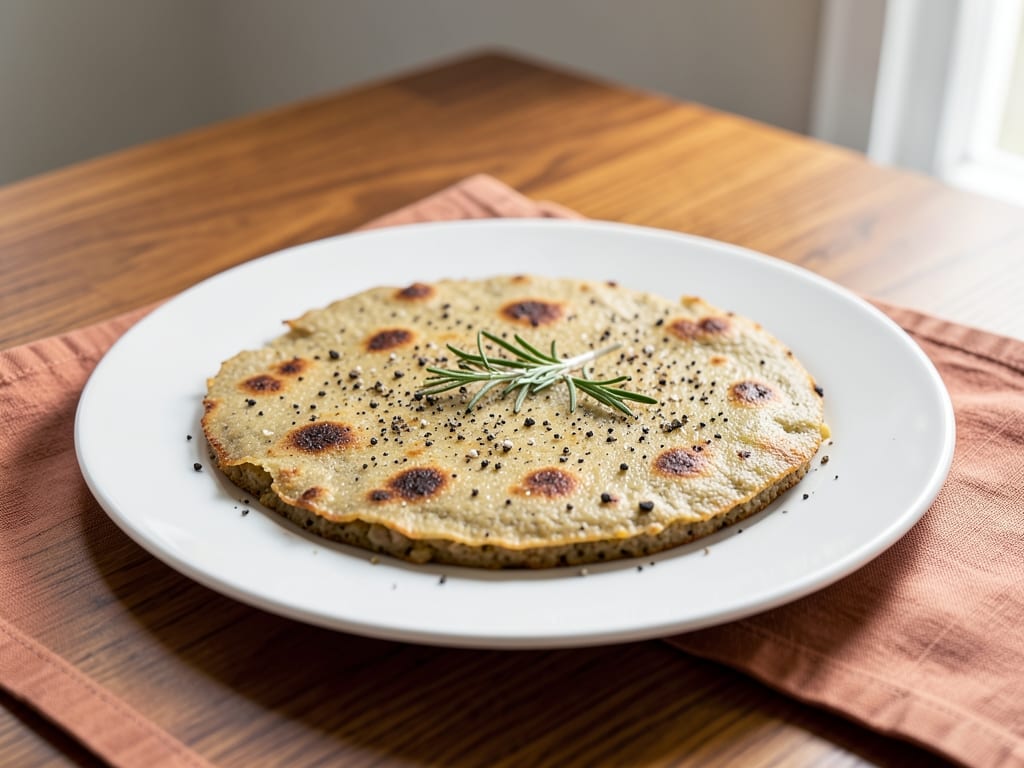
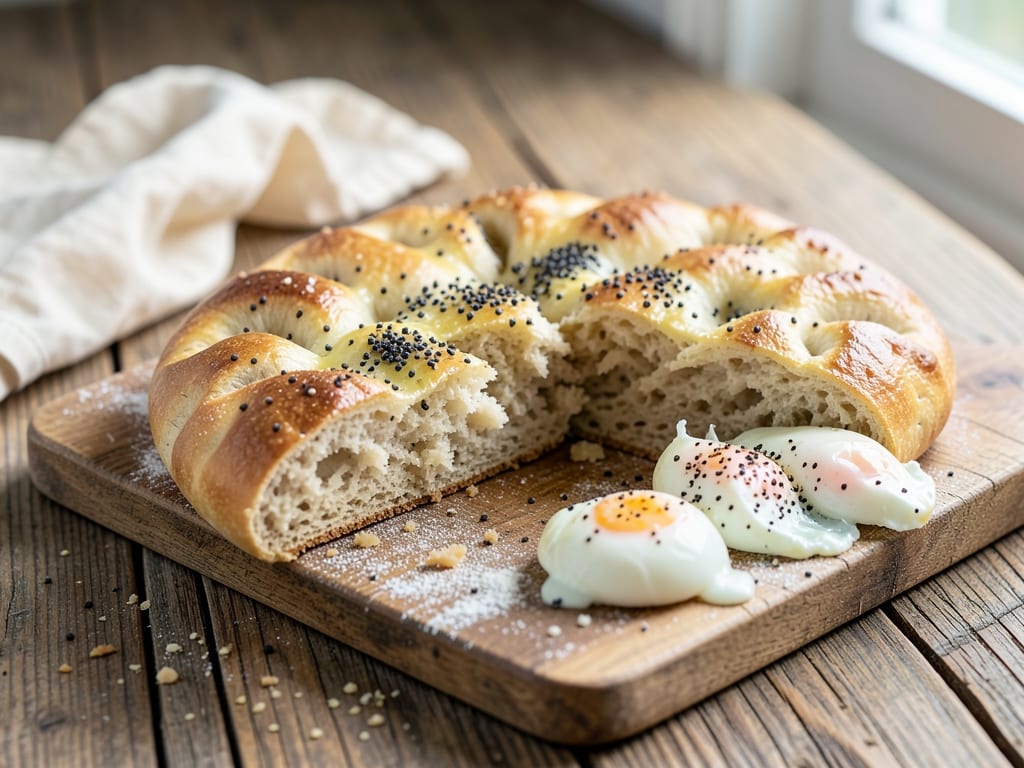
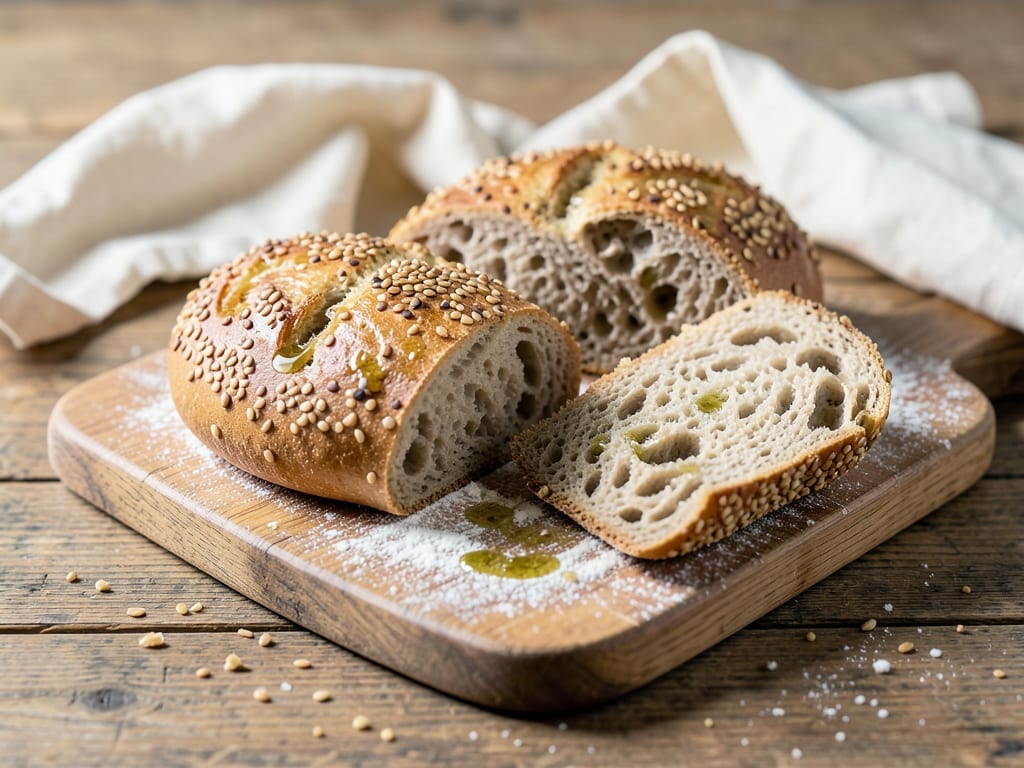
A sourdough take on the traditional Greek Clean Monday flatbread: two oval loaves with a chewy, open crumb, deeply dimpled tops glistening with olive oil, and a generous crust of toasted sesame seeds. Naturally leavened, so no commercial yeast is needed.
- Prep
- 44 min
- Cook
- 20 min
- Wait
- 5 hr 20 min
- Total
- 6 hr 24 min
- Makes
- 2 oval flatbreads (about 12 × 7 inches / 30 × 18 cm each), 8 servings
Steps
Before you start
- Feed your starter 4–8 hours before mixing so it is bubbly, doubled, and just past peak. A starter that floats in water is ready.
- Plan for about 6½ hours from start to finish, most of it hands-off. The dough rises at about 75°F (24°C); a cooler kitchen will need extra time.
- Line two large rimmed baking sheets with parchment paper before you shape the dough.
- Use a good, fruity extra-virgin olive oil; it is a main flavor here.
Mix and rest dough
- In a large bowl, whisk the lukewarm water, sourdough starter, honey, and the 2 tablespoons (30 ml) olive oil until the starter is mostly dissolved and the liquid looks milky.
- Add the bread flour and fine sea salt.
- Mix with a wet hand or a sturdy spatula for about 2 minutes, squeezing and folding, until no dry flour remains and the dough is shaggy and sticky.
- Cover the bowl and rest for 30 minutes so the flour hydrates.
+ Show details− Hide details
Ready when: No dry flour pockets remain; dough looks shaggy but cohesive
Tip: Dip your hand in water as you mix to keep the sticky dough from clinging.
First stretch and fold
- With a wet hand, grab one edge of the dough, stretch it up until you feel resistance, and fold it over the center.
- Turn the bowl a quarter turn and repeat 3 more times (4 folds in all).
- Cover and rest 30 minutes.
+ Show details− Hide details
Ready when: Dough tightens and feels slightly smoother after folding
Second stretch and fold
- Repeat the same 4-sided stretch and fold.
- The dough should now feel noticeably smoother, more elastic, and less sticky.
- Cover and rest another 30 minutes.
+ Show details− Hide details
Ready when: Dough holds a rounded shape and stretches without tearing
Bulk ferment
- Do a final gentle fold, then cover and leave the dough at about 75°F (24°C) for 2½ hours, undisturbed.
- The total bulk fermentation from mixing is about 4½ hours.
+ Show details− Hide details
Ready when: Dough has grown 50–75% in volume, is jiggly, domed at the edges, and shows bubbles on the surface and around the sides of the bowl
Tip: In a cool kitchen this may take up to 1–2 hours longer. Judge by the dough, not the clock.
Divide and pre-shape
- Lightly oil your work surface with a little of the topping olive oil.
- Turn the dough out and cut it in half with a bench scraper (about 520 g each).
- Gently fold each piece into a loose round by pulling the edges to the center, then flip seam-side down.
- Cover with a towel and rest 20 minutes.
+ Show details− Hide details
Ready when: Rounds are puffy and relaxed, spreading slightly
Tip: Handle gently to keep the gas bubbles that give the lagana an open crumb.
Shape the ovals
- Line two baking sheets with parchment and brush each lightly with olive oil.
- With oiled fingertips, gently press and stretch each round on the parchment into an oval about 12 × 7 inches (30 × 18 cm) and about ½ inch (1.25 cm) thick.
- If the dough springs back, rest it 5 minutes and stretch again.
+ Show details− Hide details
Ready when: Ovals hold their shape with an even thickness and no thin spots
Tip: Stretch from the center outward to avoid tearing the thin edges.
Final proof and preheatOven 450°F / 230°C
- Cover the shaped loaves loosely with a towel.
- Let them proof for 45 minutes.
- About 20 minutes into the proof, preheat the oven to 450°F (230°C) with a rack in the center (or two racks if baking both sheets at once, in the upper and lower thirds).
+ Show details− Hide details
Ready when: Dough looks puffy and a gently pressed fingertip leaves a dent that springs back slowly
Dimple and top
- Brush the loaves with most of the remaining olive oil.
- With oiled fingertips, press straight down firmly to the pan at 1-inch (2.5 cm) intervals to make deep dimples all over.
- Drizzle the last of the oil into the dimples, then sprinkle each loaf evenly with 1½ tablespoons (15 g) sesame seeds and the flaky salt, if using.
+ Show details− Hide details
Ready when: Dimples are deep and pooled with oil; sesame coats the surface
Tip: Press all the way down; shallow dimples puff out and disappear in the oven.
Bake the laganaOven 450°F / 230°C
- Bake at 450°F (230°C) for 18–22 minutes.
- If baking both sheets together, swap their positions and rotate them front to back halfway through.
- Bake until the tops are deep golden brown, the sesame is toasted, and the edges are crisp.
- The internal temperature should read about 205°F (96°C).
+ Show details− Hide details
Ready when: Deep golden brown top, toasted sesame, firm bottom that sounds hollow when tapped, 205°F (96°C) inside
Tip: Sesame burns quickly; if the seeds darken before the loaf is golden, tent loosely with foil.
Cool and serve
- Slide the loaves on their parchment to a wire rack and cool for at least 15 minutes.
- Tear or cut into pieces and serve warm or at room temperature.
+ Show details− Hide details
Ready when: Loaves are warm, not hot, and the crumb feels set when pressed
Good to know
Tips
- Use the starter at its peak: too young and the dough is slow and dense; too old and it turns sour and slack.
- Do not skimp on the oil in the dimples; it pools and fries the top, giving the traditional crisp-chewy contrast.
- A baking steel or stone preheated with the oven gives a crisper bottom: slide the parchment with the loaf directly onto it.
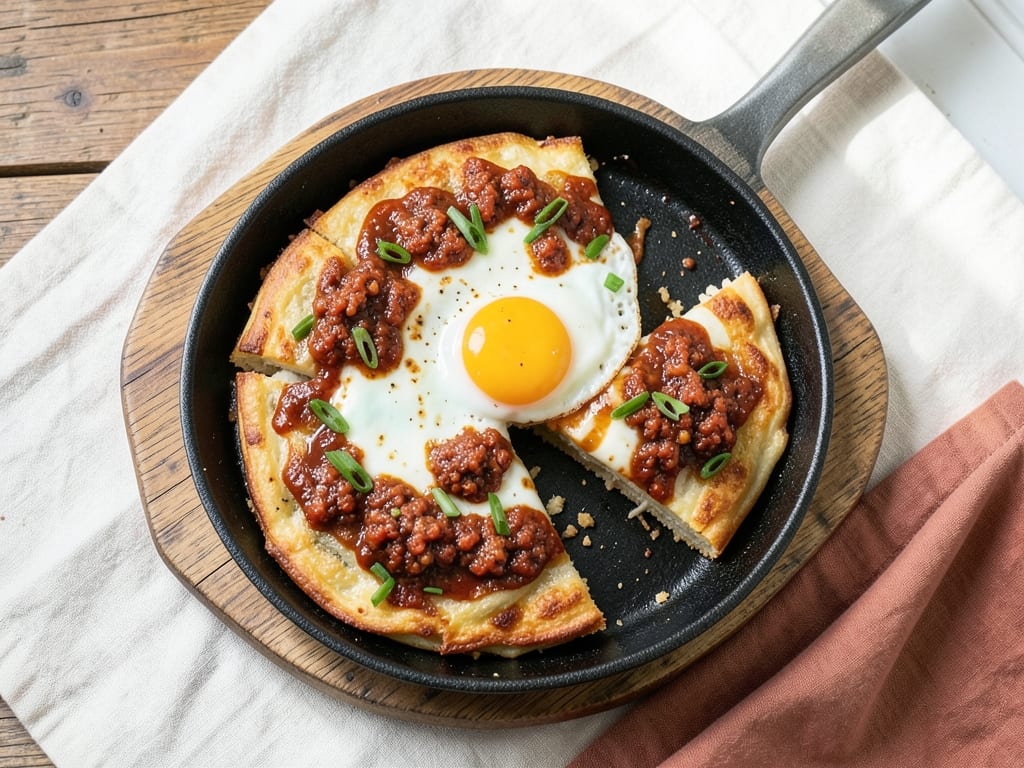
- Serve with dips like taramosalata, hummus, or tzatziki, or alongside olives and feta, as is traditional on Clean Monday.
Make ahead
"After shaping (step 6), cover the loaves and refrigerate on the sheets for 8–12 hours. Let them sit at room temperature for 45–60 minutes while the oven preheats, then dimple, top, and bake as directed. The dough can also be mixed and bulk fermented, then refrigerated overnight before dividing."
Storage & reheating
"Room temperature: wrap in a clean towel or store in a paper bag for up to 2 days. Fridge: not recommended, as it dries the bread out. Freezer: slice or leave whole, wrap tightly, and freeze up to 3 months. Reheat from frozen or room temperature on a baking sheet at 350°F (175°C) for 8–12 minutes until warm and the crust is crisp."
Substitutions
- bread flour → all-purpose flour. Works well, but the dough is slightly softer and the crumb a little less chewy. Reduce water by 15–20 ml if the dough feels too slack.
- honey → granulated sugar. Use 1 tablespoon (12 g); it feeds the starter and helps browning the same way.
- sesame seeds → nigella seeds or a mix of sesame and nigella. Use the same total weight for a more aromatic topping.
- bread flour → 100 g whole wheat flour replacing 100 g of the bread flour. Adds nuttiness; add 1–2 tablespoons (15–30 ml) more water as whole wheat absorbs more.