Sourdough Japanese Black Sesame and Nori Umami Rounds
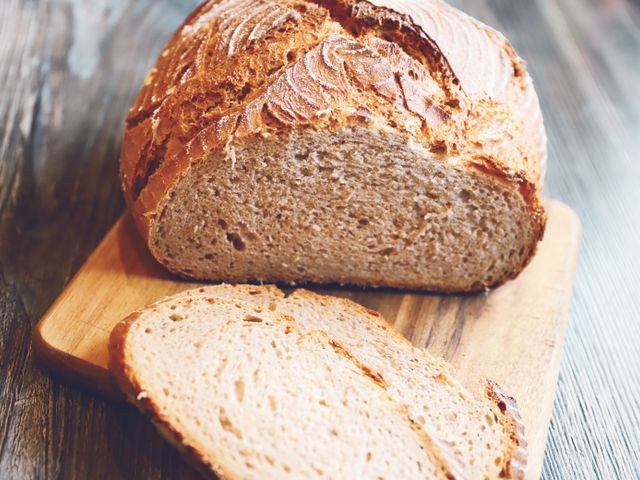
Chewy sourdough rounds infused with kombu dashi, studded with nutty black sesame seeds, and layered with crispy nori sheets. These savory, umami-forward rolls celebrate Japanese flavors in a rustic bread format—perfect for snacking, lunch boxes, or alongside soup.
- Prep
- 20 min
- Cook
- 25 min
- Wait
- 3 hr
- Total
- 3 hr 45 min
- Makes
- 8 rolls (about 2.5 oz / 70 g each)
Steps
Before you start
- Have sourdough starter at peak (doubled, bubbly) 4–6 hours before mixing
- Cut nori sheets into strips ahead of time
- Make or have kombu dashi cooled and ready
- Line a baking sheet with parchment paper
Mix dough
- In a large bowl, combine the 200 g active sourdough starter, 150 ml cooled kombu dashi, 300 g bread flour, and 5 g fine sea salt.
- Stir with a spatula or your hand until all flour is hydrated and no dry bits remain.
- The dough will be shaggy and slightly sticky.
- Cover the bowl with a damp kitchen towel.
+ Show details− Hide details
Ready when: All flour is hydrated; mixture is shaggy
Tip: Don't knead yet—let the dough rest before stretching and folding to develop gluten more easily.
First rise with folds
- Let the dough rest uncovered at room temperature (68–72°F / 20–22°C) for 30 minutes.
- Then perform a series of stretch-and-folds: wet your hand, grab one side of the dough, stretch it up and fold it over the center, rotate the bowl 90°, and repeat 4 times.
- Cover and rest for 30 minutes.
- Repeat the stretch-and-fold sequence two more times at 30-minute intervals (total 90 minutes of bulk fermentation with 3 sets of folds).
- The dough should feel airy, jiggly, and roughly 50% larger.
+ Show details− Hide details
Ready when: Dough is airy, jiggly, noticeably larger, and holds shape when folded
Tip: Keep the dough covered between folds to prevent it from drying out. Room temperature matters—warmer = faster fermentation.
Mix in sesame and nori
- Gently turn the dough onto a lightly floured work surface.
- Scatter 40 g black sesame seeds over the top.
- Using your fingers or a bench scraper, fold the seeds into the dough by lifting and folding sections over until mostly incorporated.
- Do the same with the nori strips, folding them in gently so they're distributed throughout but some remain visible on the surface.
+ Show details− Hide details
Ready when: Sesame seeds and nori are folded in and visible throughout
Tip: Fold gently to avoid deflating the dough. Some nori shreds breaking is fine—it adds flavor throughout.
Pre-shape rounds
- Using a bench scraper, divide the dough into 8 equal pieces (each roughly 80–85 g).
- Pre-shape each into a loose round by dragging it toward you on the work surface, creating tension on top.
- Place seam-side up on a lightly floured surface or in a banneton if you have one.
- Cover loosely with a towel.
+ Show details− Hide details
Ready when: Eight roughly equal rounds with light surface tension
Tip: Aim for equal-size pieces so they bake uniformly. Pre-shaping helps tighten the gluten.
Final proofOven 450°F / 230°C
- Cover the pre-shaped rounds with a damp towel and let them rest at room temperature for 45–60 minutes, until they feel slightly puffy and bounce back slowly when poked (not immediately, not fully either).
- While they proof, preheat your oven to 450°F (232°C).
+ Show details− Hide details
Ready when: Dough is puffy; poke test shows slow bounce-back without full deflation
Tip: Underproofing (too stiff) gives less oven spring; overproofing (too soft) collapses in the oven. Aim for that sweet spot.
Shape final rounds
- Gently flip one pre-shaped round seam-side down onto your work surface.
- Using your hands, gently stretch it into a taut round about 3 inches (7.5 cm) in diameter, cupping the dough in your palms and rotating it to build tension.
- Repeat with all 8 rounds.
- Arrange them seam-side down on a parchment-lined baking sheet, spacing them about 2 inches (5 cm) apart.
+ Show details− Hide details
Ready when: Eight taut rounds on a sheet with visible sesame seeds and nori bits
Tip: Don't handle roughly—you want to keep the gas bubbles intact for a light crumb.
Score and finish
- If you have a lame or sharp knife, score a shallow cross or single slash on top of each round.
- Lightly brush the tops with 1 tbsp toasted sesame oil (optional but recommended for shine and flavor).
- This step is quick—about 2 minutes total.
+ Show details− Hide details
Ready when: Rounds are scored or slashed; oil evenly applied
Tip: Scoring helps steam escape and gives a more attractive oven spring. The sesame oil adds nutty aroma and a light crackle.
Bake roundsOven 450°F / 230°C
- Place the baking sheet in the preheated 450°F (232°C) oven.
- Bake for 22–25 minutes, until the rounds are deep golden brown on top and sound hollow when tapped on the bottom.
- The internal temperature should reach 205–210°F (96–99°C).
- Rotate the sheet halfway through baking if your oven has hot spots.
+ Show details− Hide details
Ready when: Golden brown, hollow-sounding when tapped on bottom, internal temp 205–210°F (96–99°C)
Tip: If the tops brown too fast, tent with foil in the last 5 minutes. A hollow sound = well-baked interior.
Cool completely
- Remove the baking sheet from the oven and place on a wire rack.
- Let the rounds cool on the sheet for 5 minutes, then transfer them to a wire rack.
- Cool for at least 30 minutes before serving.
- The crumb will finish setting as it cools, and the nori flavor will deepen.
+ Show details− Hide details
Ready when: Rounds are fully cooled and sound crisp when tapped
Tip: Resist slicing while warm—the interior is still setting. Warm bread also doesn't show texture clearly.
Good to know
Tips
- Starter freshness matters: use a sourdough starter that has been fed 4–6 hours prior and is actively bubbling at peak. A sluggish starter will extend fermentation times significantly.
- Kombu dashi is essential for umami—it's what makes these rolls distinctive. If you don't have time to make it, look for instant kombu dashi powder or brewed dashi concentrate at Japanese markets or online.
- Nori loses color and crispness if left on too long before baking. Cut and add it during the final mixing step to keep its flavor vibrant. Some pieces will soften slightly when baked, which is fine.
- These rolls are at their best within the first day. If you want crunchier crust, re-crisp briefly (5 minutes at 400°F / 204°C) before serving.
Make ahead
You can bulk-ferment the dough up to 8 hours in the refrigerator after the first 90-minute room-temperature rise. Let it come to room temperature (1–2 hours) before shaping. Alternatively, shape, cover, and proof the rolls overnight in the fridge, then bake directly from cold (add 3–5 minutes to baking time).
Storage & reheating
Room temperature (airtight container or paper bag): 2 days. Refrigerator: 4 days (reheat wrapped in foil at 350°F / 175°C for 8 minutes). Freezer: up to 3 months (wrap individually in plastic wrap, then foil; thaw at room temperature or reheat from frozen at 350°F / 175°C for 12 minutes).
Substitutions
- kombu dashi → vegetable or mushroom broth, cooled to room temperature. Uses the same volume. Loses some oceanic umami but still delivers savory depth.
- nori seaweed sheets (full-size) → wakame seaweed (rehydrated, squeezed dry, and torn into small pieces). Slightly earthier; use about 10 g rehydrated weight distributed throughout.
- black sesame seeds → white sesame seeds or a mix of white and black. Milder, nuttier flavor. Omit if unavailable, but sesame is central to these rolls.
- toasted sesame oil → olive oil or neutral oil. Loses the nutty sesame aroma but still adds shine. Not recommended if you want that signature finish.