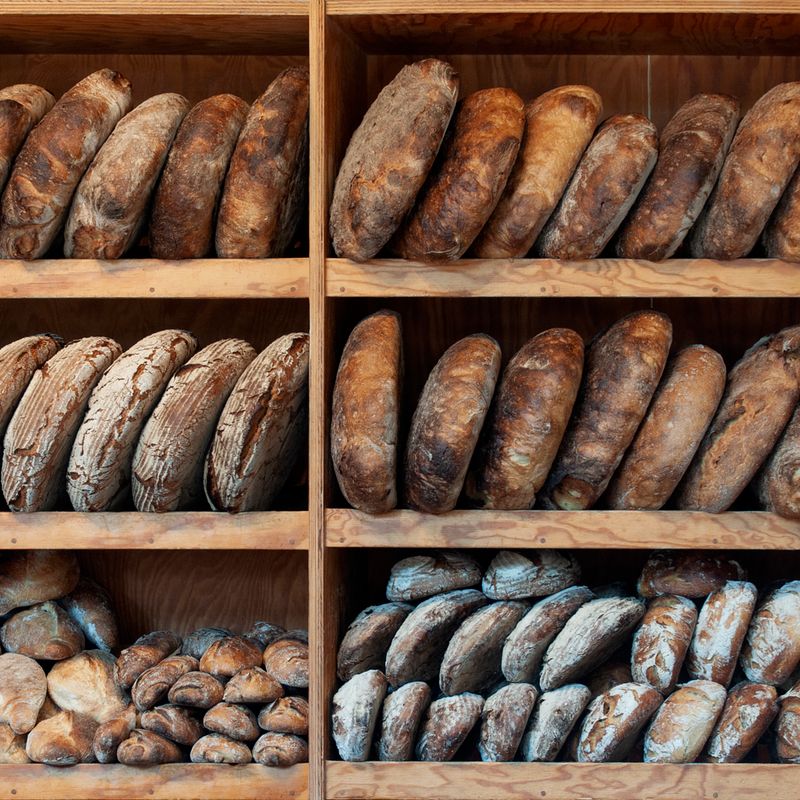
Sourdough Iraqi Samoon Sandwich Rolls
Soft, pillowy Iraqi samoon rolls made with sourdough starter for depth of flavor and a tender crumb. These oval rolls are brushed with butter and topped with sesame and nigella seeds, perfect for sandwiches or serving alongside mezze. The long fermentation develops tangy notes while keeping the interior light and airy.
- Prep
- 30 min
- Cook
- 25 min
- Wait
- 8 hr
- Total
- 8 hr 55 min
- Makes
- 8 sandwich rolls
Steps
Before you start
- Ensure your sourdough starter is active and bubbly (fed 4–8 hours prior)
- Have bread flour and all other ingredients at room temperature
- Preheat your oven to 425°F (220°C) about 15 minutes before baking
- Line two baking sheets with parchment paper
Mix dough
- In a large bowl, combine the active sourdough starter, lukewarm water (75–80°F / 24–27°C), and bread flour.
- Stir with a wooden spoon until shaggy dough forms with no dry flour visible, about 2 minutes.
- Let it rest for 15 minutes (autolyse).
- Add fine sea salt and mix until fully incorporated, then knead by hand for 5 minutes or use a stand mixer on medium speed for 3 minutes until the dough becomes smooth and slightly sticky but holds together.
- The dough should feel supple and elastic.
+ Show details− Hide details
Ready when: Dough is smooth, elastic, and slightly tacky; passes the windowpane test when a small piece is gently stretched
Tip: Avoid over-kneading; the dough only needs to become cohesive. A slightly sticky dough will be easier to shape and will yield a softer roll.
First bulk fermentation
- Transfer the dough to a lightly oiled bowl, cover with plastic wrap or a damp towel, and let it rise at room temperature (68–72°F / 20–22°C) for 4 hours.
- During the first 2 hours, perform 4 sets of stretches and folds at 30-minute intervals: wet your hand, grab one side of the dough, stretch it up and fold it over the center, rotate the bowl 90 degrees, and repeat until all four sides are folded.
- After the folds, the dough will rise gradually and should increase in volume by about 30–50% by the end of 4 hours.
+ Show details− Hide details
Ready when: Dough has increased 30–50% in volume; poke test shows dough springs back slowly but holds a slight indent
Tip: Perform stretches and folds gently to avoid degassing the dough. The dough should feel airy and alive by the end.
Shape rolls
- Turn the dough out onto a lightly floured surface and divide it into 8 equal pieces (about 110 g each) using a bench scraper or knife.
- Pre-shape each piece into a loose ball, then let them rest for 10 minutes uncovered.
- Working with one piece at a time, gently flatten it into a 3×4-inch (7.5×10 cm) rectangle.
- Fold the top third down, press gently, then fold the bottom third up and seal the seam by rolling the dough toward you.
- Roll the dough gently with your hands to create an oval shape about 4 inches (10 cm) long, keeping the tension even.
- Place each roll seam-side down on a prepared baking sheet, spacing them 2 inches (5 cm) apart (4 rolls per sheet).
+ Show details− Hide details
Ready when: Rolls are oval-shaped, about 4 inches long, with visible surface tension and no visible cracks
Tip: Keep the dough pieces covered loosely with plastic wrap as you work to prevent them from drying out. Avoid over-tensioning when shaping, which can cause the dough to tear or deflate.
Second rise
- Cover both baking sheets loosely with plastic wrap and let the rolls rise at room temperature (68–72°F / 20–22°C) for 2 to 2.5 hours until they are puffy and light.
- The rolls should increase noticeably in size but should still spring back slightly when you gently poke them; they should not be fully risen yet.
+ Show details− Hide details
Ready when: Rolls are puffy and 50–75% larger than before; a gentle poke leaves a slow-springing indent
Tip: Timing varies with room temperature. If your kitchen is cooler, the rolls may need 2.5–3 hours. Don't let them overproof, or they'll collapse in the oven.
Prepare egg wash and seeds
- While the rolls are rising, beat the large egg with 1 tablespoon of water in a small bowl until well combined.
- In another small bowl, combine the sesame seeds and nigella seeds.
- Have the melted butter ready in a small dish.
+ Show details− Hide details
Ready when: Egg wash is smooth and well-mixed; seeds are combined in a bowl
Tip: Prepare these components so you can work quickly when the rolls are ready for topping; egg wash dries quickly if exposed to air.
Preheat ovenOven 425°F / 220°C
- About 15 minutes before the rolls finish their second rise, preheat your oven to 425°F (220°C).
- If you have a baking stone or steel, place it on the middle rack; it will help create a more even bake and slight crust development.
+ Show details− Hide details
Ready when: Oven reaches 425°F (220°C); preheated light turns off
Tip: A preheated baking stone helps the rolls bake more evenly and develop better crust. It's optional but recommended.
Top rolls
- When the rolls are ready (puffy but not overproofed), gently brush each roll with the beaten egg wash using a pastry brush, working quickly and evenly.
- Immediately sprinkle the sesame and nigella seed mixture over the top of each roll, pressing gently so the seeds adhere.
- Use about 7–8 g of the seed mixture per roll.
+ Show details− Hide details
Ready when: All rolls are evenly coated with egg wash and seeds; seeds cling to the surface
Tip: Work quickly so the rolls don't overproof while you're topping them. If the rolls are slightly underproofed, they'll continue to rise in the oven for a better result.
Bake rollsOven 425°F / 220°C
- Place both baking sheets in the preheated 425°F (220°C) oven on the middle and upper-middle racks.
- Bake for 22–25 minutes until the rolls are deep golden brown on top and the sides are pale golden.
- Rotate the sheets halfway through baking (at 12–13 minutes) to ensure even color.
- If the tops are browning too quickly, you can tent the sheets loosely with foil for the final 5 minutes, but this usually isn't necessary.
+ Show details− Hide details
Ready when: Rolls are deep golden brown on top; internal temperature is 205–210°F (96–99°C) at the center; they sound hollow when tapped on the bottom
Tip: Rotating the sheets ensures even baking and prevents one batch from browning too quickly. If your oven runs hot, check the rolls at 20 minutes.
Cool and serve
- Transfer the rolls to a wire cooling rack and let them cool for at least 10 minutes before serving.
- While still warm, you can optionally brush the rolls lightly with a little melted butter for added richness, though this is not necessary.
- The rolls are best served warm or at room temperature within a few hours.
+ Show details− Hide details
Ready when: Rolls are cool enough to handle; the crust has set and is firm
Tip: Cooling on a rack allows steam to escape so the crust remains crispy rather than soggy. Don't wrap them until they're completely cool.
Good to know
Tips
- Active sourdough starter is crucial: feed it 4–8 hours before mixing so it's bubbly and at peak activity. A sluggish or unfed starter will result in slow fermentation and dense rolls.
- Don't skip the stretches and folds during bulk fermentation. These gentle folds build gluten structure without overworking the dough and are key to achieving an open, tender crumb.
- Samoon rolls are soft and tender inside with just enough crust to hold their shape. Avoid over-baking; they will continue to firm as they cool. A golden-brown top and a hollow sound when tapped indicate doneness.
- The long, cool fermentation (bulk + shaping + second rise) develops complex sourdough flavor. If you're in a hurry, you can reduce timings, but the rolls will have less depth of flavor and a tighter crumb.
Make ahead
Make and shape the rolls up to 12 hours ahead: after shaping, cover them tightly and refrigerate overnight. The next day, remove them from the fridge, let them come to room temperature (about 1–1.5 hours), then proceed with topping and baking. Cold fermentation deepens the sourdough flavor.
Storage & reheating
Room temperature: Store in an airtight container or bread bag for up to 2 days. Refrigerator: Up to 5 days in an airtight container. To reheat, wrap loosely in foil and warm in a 325°F (163°C) oven for 8–10 minutes. Freezer: Wrap each roll individually in plastic wrap and place in a freezer-safe bag for up to 3 months. Thaw at room temperature for 1–2 hours, then reheat as above.
Substitutions
- sesame seeds → Poppy seeds or a mix of poppy and sesame seeds. Poppy seeds will give a different flavor and darker appearance but work well in the traditional Iraqi style.
- nigella seeds (kalonji) → Omit or replace with more sesame seeds. Nigella seeds provide a subtle nutty, onion-like flavor. If unavailable, use all sesame or a combination of sesame and poppy seeds.
- bread flour → All-purpose flour (13% protein) or a blend of 450 g all-purpose and 50 g whole wheat flour. All-purpose flour will produce a slightly softer crumb and less chewy texture; whole wheat adds a subtle nuttiness.
- unsalted butter, melted → Olive oil or neutral vegetable oil. Oil provides a lighter taste while still adding richness; olive oil gives a Mediterranean note that complements the sourdough.
More rolls & buns
See all →




Find more like this
- Meal
- Lunch
- Cuisine
- Iraqi
- Method
- Oven
- Quick & Easy
- Make Ahead