Sourdough Indian Roasted Masala and Curry Leaf Dinner Rolls
Soft, tangy sourdough rolls infused with roasted garam masala, fresh curry leaves, and toasted coconut. The warm spices bloom in the dough while it rises, creating an aromatic, slightly sweet crumb with subtle heat. Perfect alongside curries, dals, or simply torn and dipped in ghee. These rolls balance the traditional sourdough tang with the warm, earthy notes of Indian spices.
- Prep
- 45 min
- Cook
- 25 min
- Wait
- 8 hr
- Total
- 9 hr 10 min
- Makes
- 12 dinner rolls
Steps
Before you start
- Ensure sourdough starter is active and fed 4–6 hours before mixing (should be bubbly and risen)
- Measure all dry ingredients and prepare curry leaves and coconut ahead of time
- Place oven rack to upper-middle position and preheat to 425°F (220°C) 30 minutes before baking
Toast spices and aromatics
- Heat a small 8-inch (20 cm) skillet over medium heat.
- Add the garam masala and toast for about 30 seconds, stirring constantly, until very fragrant.
- Transfer to a small bowl.
- In the same skillet, add the shredded coconut and toast over medium heat, stirring often, for 2–3 minutes until it turns pale golden and releases a toasted aroma.
- Set aside to cool slightly.
+ Show details− Hide details
Ready when: Garam masala is fragrant; coconut is pale golden and aromatic
Tip: Toast the spices separately to control their browning—the coconut needs longer and can scorch quickly.
Mix sourdough base
- In a large 3-quart (3-liter) bowl, combine the active sourdough starter and lukewarm water.
- Stir until mostly incorporated, about 30 seconds.
- Add the bread flour, salt, toasted garam masala, chopped curry leaves, and melted ghee.
- Mix with your hand or a dough scraper until no dry flour remains and the dough comes together into a shaggy, sticky mass.
- It should feel slightly tacky but hold together.
+ Show details− Hide details
Ready when: All dry flour is incorporated and dough holds together as a shaggy mass
Tip: Don't overwork the dough at this stage; a few flour streaks are okay. The gluten will develop during the bulk ferment.
Fold in toasted coconut
- Sprinkle the cooled toasted coconut over the surface of the dough.
- Perform a few gentle stretches and folds to incorporate it evenly—fold one edge of the dough up and over itself, rotate the bowl 90 degrees, and repeat 4 times.
- The coconut should be distributed throughout but some small pieces on the surface are fine.
+ Show details− Hide details
Ready when: Coconut is evenly distributed through most of the dough
Tip: Be gentle—you are not kneading, just distributing the coconut. Rough handling at this stage can deflate the fermentation.
Bulk fermentation with folds
- Cover the bowl loosely with a damp kitchen towel or plastic wrap.
- Let it rest at room temperature (68–72°F / 20–22°C) for 30 minutes.
- Perform a set of stretch-and-folds: wet your hand, reach under one side of the dough, stretch it up and over the center, rotate the bowl 90 degrees, and repeat 4 times.
- Return to rest.
- Repeat this stretch-and-fold routine at 30-minute intervals for a total of 3 sets (total elapsed time: 1 hour and 30 minutes).
- After the final folds, let the dough rest until it has increased in volume by about 50% and shows bubbles on the surface and sides, another 60–90 minutes (total bulk time: 2 hours 30 minutes to 3 hours).
+ Show details− Hide details
Ready when: Dough has increased by about 50%, feels airy and webbed with bubbles when you gently press it
Tip: If your kitchen is very cool (below 68°F / 20°C), the ferment will take longer—up to 4 hours total. Look for visual cues (bubbles, rise) rather than the clock.
Shape into rolls
- Turn the dough out onto a lightly floured work surface.
- Using a dough scraper or bench knife, gently divide it into 12 roughly equal pieces (each around 65 g / 2.3 oz).
- Working with one piece at a time, fold the edges toward the center to form a ball shape.
- Flip it seam-side down and, using the cupped heel of your hand, roll it firmly in a circular motion to form a tight, round roll.
- Place each shaped roll into a lightly oiled muffin cup (if using muffin tins) or on a parchment-lined baking sheet, spacing them about 1.5 inches (4 cm) apart.
+ Show details− Hide details
Ready when: All 12 rolls are shaped and placed in tins or on the baking sheet
Tip: Shape all rolls firmly to maintain an even rise. Loose shaping leads to uneven puffing in the oven.
Final proof
- Cover the rolls loosely with a damp towel or plastic wrap.
- Let them rise at room temperature (68–72°F / 20–22°C) until they are puffy and light, and when you poke one gently with your finger, the indentation springs back slowly but does not fully disappear.
- This typically takes 2 to 2.5 hours.
- The rolls should nearly double in size and feel soft and pillowy to the touch.
+ Show details− Hide details
Ready when: Rolls are puffy and nearly doubled; a gentle poke leaves a slow-springy indentation
Tip: During final proof, avoid drafts and temperature fluctuations. If your kitchen is warm (above 75°F / 24°C), reduce proofing time to 1.5–2 hours to prevent overproofing.
Preheat and prepare ovenOven 425°F / 220°C
- About 30 minutes before baking, preheat your oven to 425°F (220°C).
- Position one rack in the upper-middle of the oven.
- If using a baking sheet, line it with parchment paper or place the muffin tins on the middle rack and ensure the oven is fully preheated.
+ Show details− Hide details
Ready when: Oven thermometer reads 425°F (220°C)
Tip: A fully preheated oven gives the rolls maximum oven spring and creates a crisp exterior.
Brush and bakeOven 425°F / 220°C
- Just before baking, lightly brush the tops of each roll with melted ghee.
- If using fleur de sel, sprinkle a tiny pinch on each roll (optional but recommended for visual appeal and a subtle salt crust).
- Place the muffin tins or baking sheet into the preheated 425°F (220°C) oven.
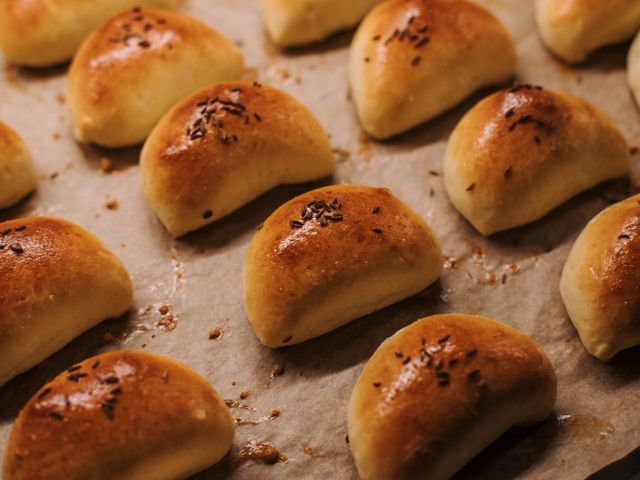
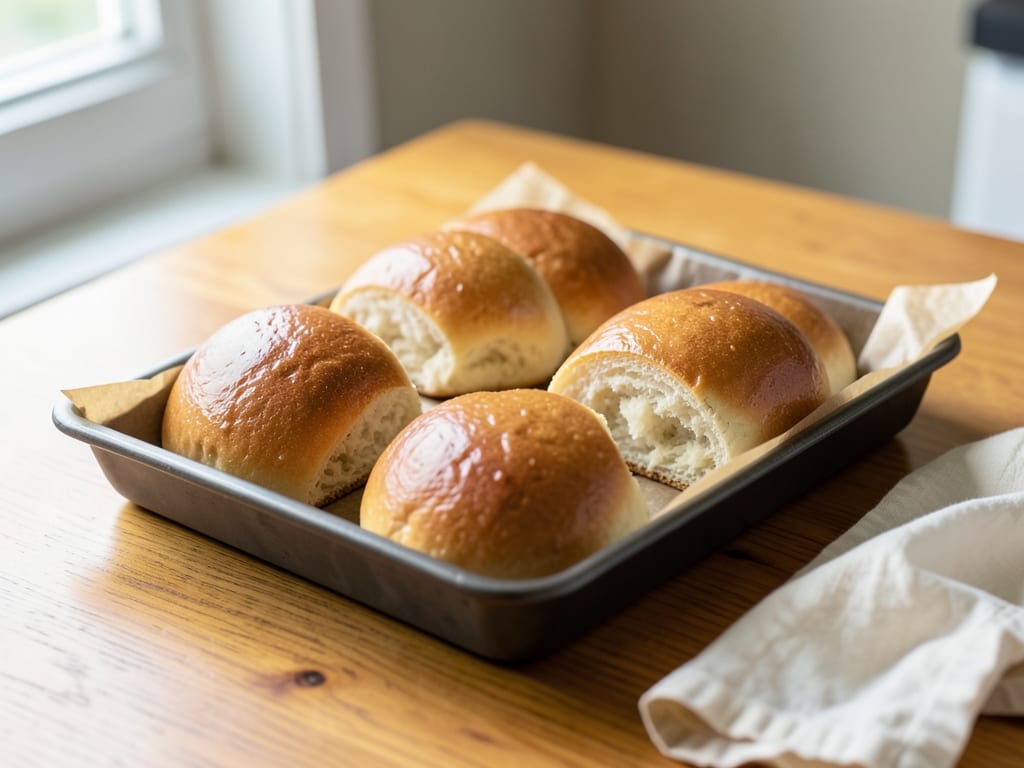
- Bake for 20–25 minutes, until the rolls are deep golden brown on top and sound hollow when tapped on the bottom.
- An internal temperature read at the center of a roll should reach 205–210°F (96–99°C).
+ Show details− Hide details
Ready when: Rolls are deep golden brown; tap the bottom of one roll and hear a hollow sound; internal temperature is 205–210°F (96–99°C)
Tip: If the tops brown too quickly, tent loosely with foil after 15 minutes. Muffin tins may brown darker on the sides than a baking sheet, which is normal.
Cool and finish
- Remove the tins or baking sheet from the oven and let the rolls cool in the tins for 5–10 minutes.
- This allows them to set slightly without deflating.
- Turn them out onto a wire rack or serve directly from the tins.
- If desired, brush the warm rolls lightly with additional melted ghee.
- Serve warm or at room temperature.
+ Show details− Hide details
Ready when: Rolls are firm enough to handle but still warm
Tip: Overbaking even slightly (past 210°F / 99°C internal) will dry out the crumb; they continue to cook slightly as they cool.
Good to know
Tips
- Curry leaves can be hard to source; check Indian grocery stores, larger supermarkets with international sections, or buy frozen curry leaves online. Frozen leaves work just as well in this dough.
- Timing varies significantly with kitchen temperature and humidity. Trust the visual and tactile cues (bubbles, oven spring, internal temperature) over clock times alone.
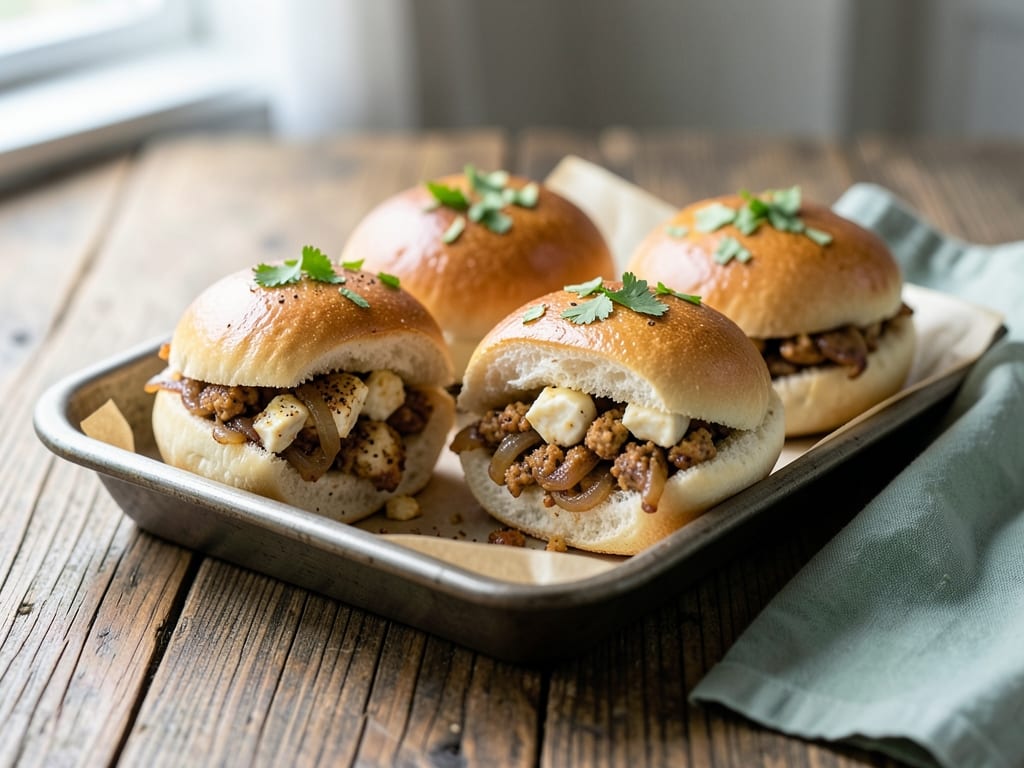
- These rolls pair beautifully with Indian curries, dal, pickles, or simply torn open and dipped in warm ghee. They also make excellent sandwich rolls with spiced roasted vegetables or paneer.
- For a shinier finish and extra flavor, brush the rolls with ghee infused with a pinch of nigella seeds (kalonji) just before baking.
Make ahead
Dough can be mixed up to 4 hours ahead and bulk fermented in the refrigerator overnight (8–12 hours). Shape the rolls the next morning and let them come to room temperature (30–40 minutes) before final proofing and baking. This extended cold fermentation deepens the sourdough tang and improves flavor.
Storage & reheating
Room temperature (in an airtight container): up to 2 days. Warm and serve from the oven at 350°F (175°C) for 5 minutes. Refrigerator (in an airtight container): up to 4 days; reheat wrapped in foil at 350°F (175°C) for 8–10 minutes. Freezer (in a freezer bag, well sealed): up to 1 month. Thaw at room temperature for 1–2 hours, then reheat as above.
Substitutions
- garam masala → 1 teaspoon roasted coriander seed powder mixed with 0.5 teaspoon roasted cumin seed powder and a pinch of clove or cinnamon. Creates a more fragmented spice profile but captures warm, earthy notes if you cannot find or prefer to make your own garam masala blend.
- fresh curry leaves → 1 tablespoon fresh cilantro, finely chopped, plus a pinch of asafoetida (hing) stirred into the dough. Cilantro offers fresh herbal notes; asafoetida adds umami depth. Not identical but keeps the Indian flavor profile alive.
- unsweetened shredded coconut → 0.25 cup finely ground sesame seeds, lightly toasted. Adds a nutty, slightly creamy texture and richness without the sweetness of coconut; equally good with the spices.
- ghee or unsalted butter, melted → 2 tablespoons unsalted butter, melted, or neutral oil (such as vegetable or grapeseed oil). Butter works well but lacks the subtle nutty depth ghee provides. Oil makes the dough slightly looser; reduce the water by 1 tablespoon if using oil.