Sourdough Indian Methi and Fenugreek Seed Dinner Rolls
Tender, tangy sourdough rolls infused with fresh fenugreek leaves (methi), toasted fenugreek seeds, and ajwain (carom) seeds. The sourdough culture delivers a gentle sourness while the Indian spices add an earthy, aromatic complexity. These rolls are soft inside with a lightly crispy crust and work beautifully alongside curries, dals, or as an elevated bread course.
- Prep
- 25 min
- Cook
- 20 min
- Wait
- 3 hr
- Total
- 3 hr 45 min
- Makes
- 12 dinner rolls
Steps
Before you start
- Have active sourdough starter at room temperature (fed 4–6 hours prior, bubbly and ready)
- Preheat oven to 425°F (220°C) 20 minutes before baking
- Wash and fully dry the fresh fenugreek leaves; finely chop and measure
- Toast fenugreek and ajwain seeds in a dry skillet over medium heat for 1–2 minutes until fragrant, then cool slightly
Mix the dough
- In the bowl of a stand mixer fitted with a dough hook, combine 150g active sourdough starter, 280ml warm water (80–90°F / 27–32°C), and 500g bread flour.
- Mix on low speed for 2 minutes until a shaggy mass forms.
- Cover and rest for 30 minutes at room temperature (autolyse); this hydrates the flour and develops gluten structure.
+ Show details− Hide details
Ready when: Dough is shaggy and cohesive
Tip: Autolyse is essential for sourdough; it reduces kneading time and improves extensibility.
Incorporate salt and hydration
- Return the mixer to low speed.
- Sprinkle 10g fine sea salt over the dough and mix for 1 minute.
- The dough should come together and become slightly sticky.
- Continue mixing on low speed for another 4 minutes until the dough is smooth and elastic, and it holds its shape when pulled.
+ Show details− Hide details
Ready when: Dough is smooth, elastic, and holds a gentle tension when stretched
Tip: Salt is added after autolyse to prevent interfering with gluten hydration; this technique strengthens the dough.
Knead in aromatics
- With the mixer still on low, add 100g finely chopped fresh fenugreek leaves, 20g toasted fenugreek seeds, and 8g toasted ajwain seeds.
- Mix for 2–3 minutes, scraping down the bowl once halfway through, until the herbs and seeds are evenly distributed throughout the dough.
- The dough may look slightly mottled with green.
+ Show details− Hide details
Ready when: Herbs and seeds are evenly incorporated; no large pockets remain
Tip: Toasting the seeds releases their oils and deepens their flavor—do not skip this step. It transforms the rolls' aromatic profile.
Oil the dough
- Transfer the dough to a lightly oiled bowl.
- Rub 15ml olive oil over the surface and gently fold the dough in half a few times to coat it evenly.
- Cover the bowl tightly with plastic wrap or a damp cloth.
+ Show details− Hide details
Ready when: Dough is lightly coated and ready for bulk fermentation
Tip: Oil prevents the dough from drying out during the long fermentation; it also makes handling easier later.
Bulk fermentation with folds
- Let the dough rise at room temperature (68–72°F / 20–22°C) for 3 hours, performing 4 sets of stretch-and-folds during the first 90 minutes.
- Every 20–25 minutes, wet your hand and gently stretch one side of the dough up and fold it over the center; rotate the bowl and repeat on the other three sides.
- After 90 minutes, stop folding and let the dough rest undisturbed for the final 90 minutes.
+ Show details− Hide details
Ready when: Dough increases by 50–75%, feels pillowy, and when poked gently, the impression slowly springs back halfway
Tip: Stretch-and-folds replace intensive kneading and are gentler on the dough. They improve open crumb and strength without degassing.
Shape the rolls
- Turn the dough out onto a lightly floured work surface.
- Using a bench scraper, gently divide it into 12 equal pieces (roughly 65–70g each).
- Round each piece by cupping your hand around it and dragging it toward you 3–4 times, creating surface tension.
- Place each roll seam-side down on the prepared baking sheets, spacing them 2 inches (5 cm) apart (6 rolls per sheet).
+ Show details− Hide details
Ready when: Each roll is a taut, evenly shaped ball
Tip: Do not overwork the dough during shaping—gentle handling preserves the gas that developed during bulk fermentation.
Final proof
- Cover the baking sheets loosely with plastic wrap or a dry kitchen towel.
- Let the rolls proof at room temperature for 60–90 minutes until they are visibly puffy and increase by about 50% in volume.
- They should not quite double.
- To test, gently press your finger into one roll; the indent should spring back slowly but not completely.
+ Show details− Hide details
Ready when: Rolls are puffy, increase by 50% in size, and spring back slowly when poked
Tip: Overproofed rolls (that don't spring back) will be dense. Watch them closely; if your kitchen is warm, they may proof faster.
Brush with egg wash
- Remove the plastic wrap.
- Brush each roll evenly with the beaten egg wash (1 large egg mixed with 1 tbsp water).
- Work quickly to keep the rolls warm.
- If desired, sprinkle a few toasted fenugreek seeds on top for garnish before baking.
+ Show details− Hide details
Ready when: Rolls are evenly coated with a thin, shiny egg wash
Tip: Egg wash brushed just before baking gives the rolls a glossy, deep golden-brown exterior and adds a subtle shine.
Bake the rollsOven 425°F / 220°C
- Preheat the oven to 425°F (220°C) if not already done.
- Place both baking sheets in the oven (stagger them on two racks if needed).
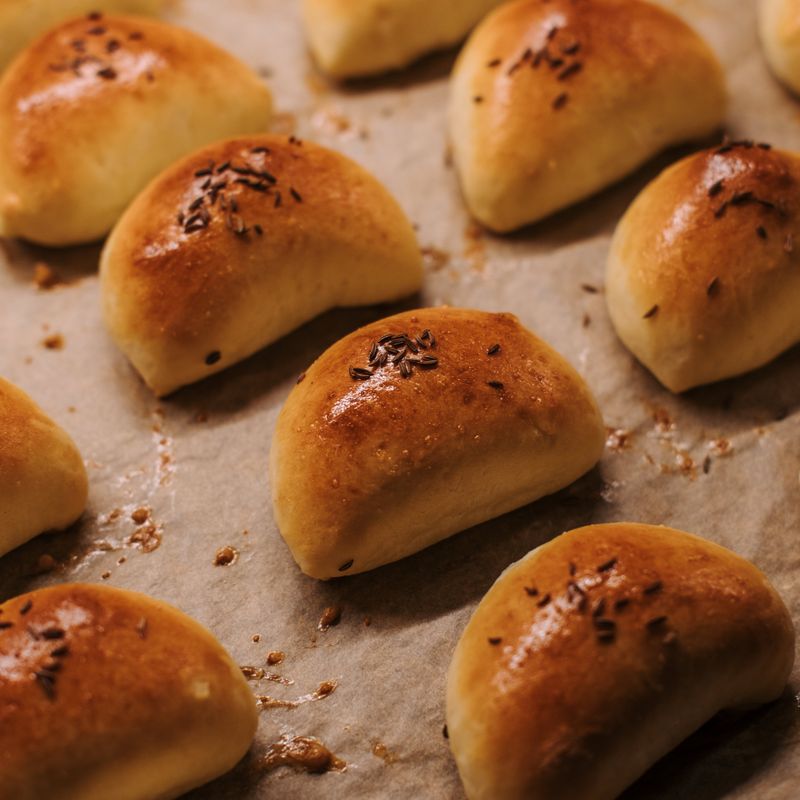
- Bake for 18–20 minutes until the rolls are deep golden brown on top and hollow-sounding when tapped on the bottom.
- The internal temperature at the center should reach 205–210°F (96–99°C).
+ Show details− Hide details
Ready when: Rolls are deep golden brown; hollow sound when tapped; internal temperature 205–210°F (96–99°C)
Tip: If the tops brown too quickly, loosely tent with foil for the final 5 minutes. Every oven is different; check at 16 minutes.
Cool and serve
- Transfer the baking sheets to a wire rack.
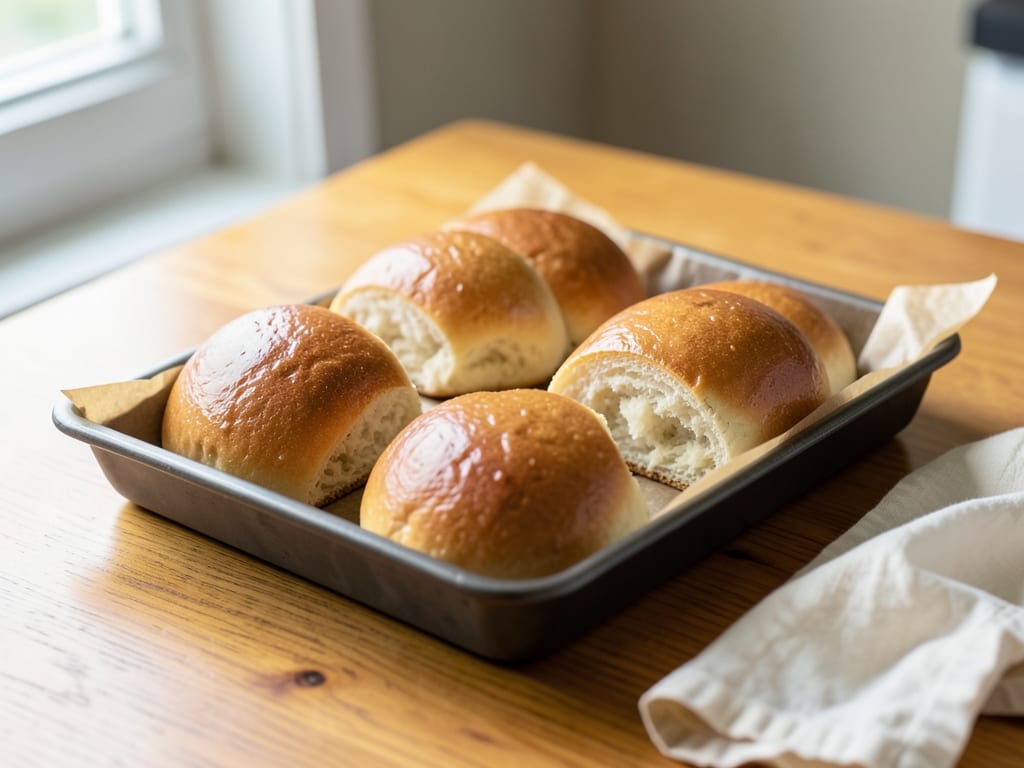
- Let the rolls cool for 5–10 minutes on the sheet (they continue to set), then turn them out onto the rack to cool for another 10 minutes before serving.
- The rolls are best enjoyed warm or at room temperature.
+ Show details− Hide details
Ready when: Rolls are firm and no longer steaming
Tip: Serve warm with ghee, cultured butter, or alongside curries and dals for the best experience.
Good to know
Tips
- Fenugreek leaves have a subtle bitterness that mellows when baked and pairs beautifully with sourdough's acidity. Start with the full amount; you can reduce it in future batches if you prefer a milder profile.
- Toasting the fenugreek and ajwain seeds is non-negotiable—it converts raw, sometimes harsh spice flavors into warm, welcoming aromatics that define these rolls.
- Sourdough fermentation is temperature-sensitive. In a cool kitchen (65°F / 18°C), bulk fermentation may take 4–5 hours; in a warm kitchen (75°F / 24°C), it may take only 2–2.5 hours. Poke the dough regularly to judge doneness rather than relying on time alone.
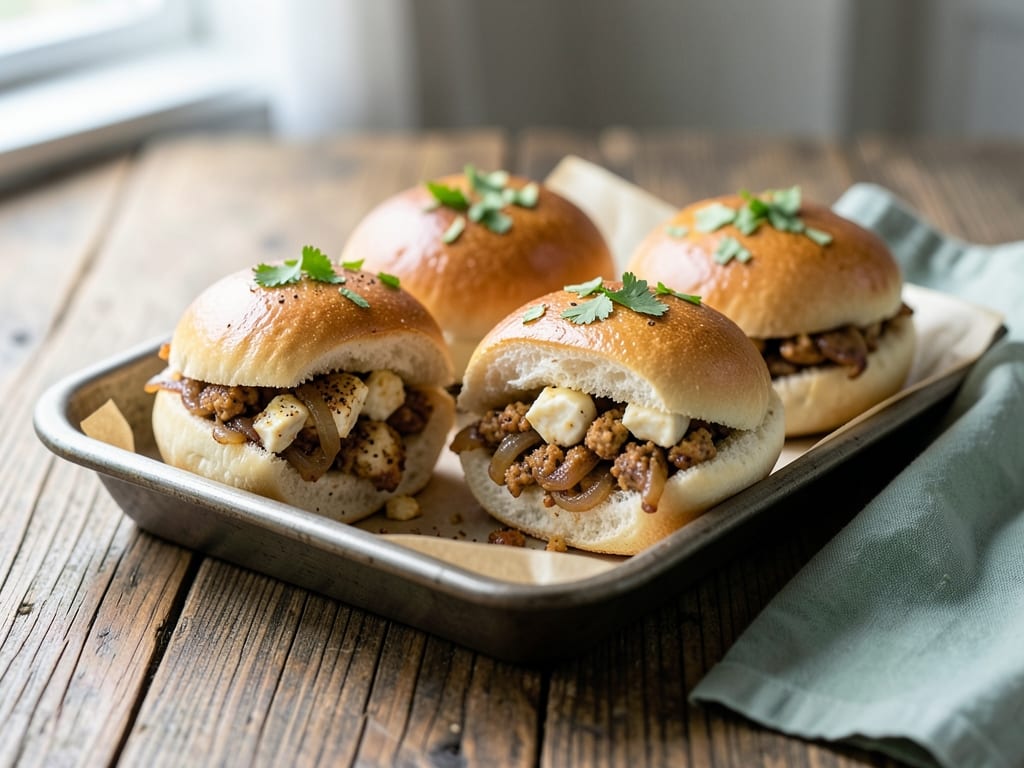
- These rolls are wonderful served warm with ghee-brushed butter or alongside Indian curries, but they are equally delicious split and filled with soft cheeses, chutneys, or leftover dal.
Make ahead
Fully proof the rolls (through the final proof) up to 12 hours in advance by covering and refrigerating after shaping. Remove from the fridge 45 minutes before baking to come to room temperature; they will rise slightly again. Egg wash and bake as usual. This makes morning baking convenient.
Storage & reheating
Room temperature: Store in an airtight container for up to 2 days; they gradually firm and dry. Refrigerator: Wrap in plastic and store for up to 5 days; reheat gently wrapped in foil at 325°F (163°C) for 10 minutes to refresh. Freezer: Wrap individually in plastic wrap, then foil, and freeze for up to 3 months. Thaw at room temperature (1–2 hours) or reheat from frozen at 325°F (163°C) for 15–18 minutes, covered.
Substitutions
- fresh fenugreek leaves (methi), finely chopped → dried fenugreek leaves (kasuri methi), rehydrated in warm water for 5 minutes and squeezed dry. Use half the weight (50g) of dried leaves; they are more concentrated in flavor and become tender when rehydrated.
- fenugreek seeds, toasted and cooled → nigella seeds (black cumin) or additional ajwain seeds. Nigella seeds provide a similar earthy note with less bitterness. Increase ajwain to 12g if using only ajwain.
- bread flour → all-purpose flour. All-purpose flour works but yields slightly less rise; use 510g to compensate for lower protein content.
- active sourdough starter, room temperature → ½ tsp instant yeast mixed into 150g of a refreshed liquid culture (equal parts starter and water by weight). This is a workaround if your starter is inactive; however, it sacrifices sourdough's signature tang and complexity.