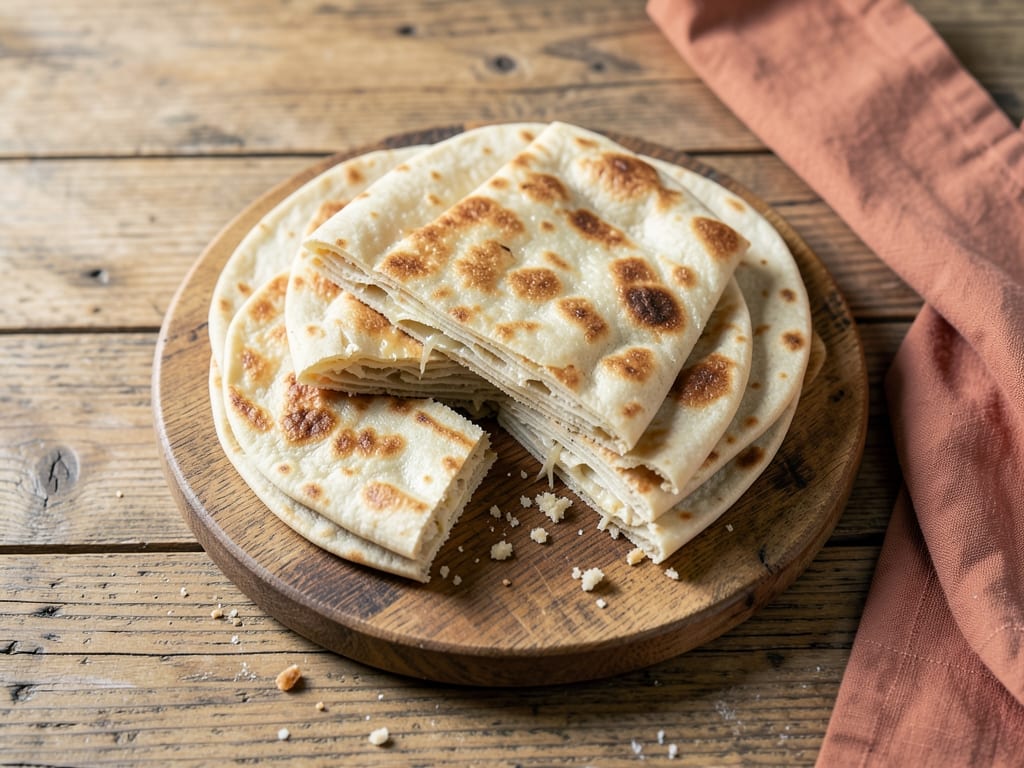
Sourdough Indian Paneer and Methi Saag Flatbread
A rustic Indian-inspired flatbread combining tangy sourdough discard with a savory filling of crumbled paneer, fresh fenugreek greens, and aromatic spices. The dough is fermented for depth of flavor, while the filling brings warmth and earthiness to each bite. Crisp on the outside, tender within, this bread works as an appetizer, side dish, or light meal.
- Prep
- 25 min
- Cook
- 18 min
- Wait
- 2 hr
- Total
- 2 hr 43 min
- Makes
- 4 flatbreads (8–10 inches each)
Steps
Before you start
- Have your sourdough discard at room temperature and recently fed (active and bubbly if possible)
- Crumble the paneer into small pieces (roughly ¼-inch) before mixing the filling
- Pat the methi saag dry with paper towels to remove excess moisture
- Have a cast-iron skillet or heavy-bottomed griddle preheated and ready to use
Mix and knead the dough
- In a 2-quart mixing bowl, combine 1 cup (240 ml) of room-temperature sourdough discard, 1.5 cups (190 g) all-purpose flour, 0.5 cup (60 g) whole wheat flour, and 1 teaspoon (6 g) fine sea salt.
- Add 0.5 cup (120 ml) lukewarm water and stir with a wooden spoon until a shaggy dough forms.
- Knead by hand for 5–7 minutes until the dough comes together into a smooth, slightly sticky mass.
- The dough should pull away from the bowl walls but still have some tackiness.
- If too dry, add water 1 tablespoon at a time; if too wet, dust with a little flour.
+ Show details− Hide details
Ready when: Dough is smooth, slightly sticky, and holds together
Tip: Whole wheat flour absorbs more water, so add liquid gradually; you may not need all of it
First rise
- Cover the dough bowl with a damp kitchen towel or plastic wrap.
- Let it rest at room temperature (68–72°F / 20–22°C) for 2 hours, or until visibly puffy and increased in volume by about 30 percent.
- The dough should feel airy and smell pleasantly sour.
+ Show details− Hide details
Ready when: Dough is visibly puffy and has risen about 30 percent
Tip: A warmer kitchen will speed fermentation; a cooler one will slow it. Aim for 2–3 hours if it's cool
Prepare the filling
- While the dough rises, heat 2 tablespoons (30 ml) of ghee or neutral oil in a large skillet over medium heat.
- When shimmering, add 0.75 teaspoon (4 g) cumin seeds and toast for 30 seconds until fragrant.
- Stir in 1 medium diced onion (about 110 g) and sauté for 3–4 minutes, stirring occasionally, until the onion softens and begins to turn translucent.
- Add 1 tablespoon (15 g) ginger-garlic paste and cook for 1 minute, stirring constantly, until aromatic.
- Reduce heat to medium-low, then add the 0.25 teaspoon (1 g) ground turmeric, 0.25 teaspoon (0.5 g) ground red chili, and 0.5 teaspoon (2 g) garam masala.
- Stir for 30 seconds, then add 2 cups (100 g) chopped, patted-dry methi saag.
- Cook, stirring often, for 4–5 minutes until the greens wilt and any liquid cooks off.
- Fold in 8 ounces (225 g) crumbled paneer and cook for 1 more minute.
- Season with 0.5 teaspoon (3 g) fine sea salt.
- Transfer to a plate and let cool to room temperature before using.
+ Show details− Hide details
Ready when: Greens are completely wilted, paneer is warm, and excess liquid has evaporated
Tip: Pat the methi saag very dry with paper towels—excess moisture will make the flatbread soggy
Divide and shape dough portions
- Once the dough has risen and the filling has cooled, turn the dough out onto a lightly floured surface.
- Divide it into 4 equal pieces using a bench scraper or knife (each piece will be roughly 200 g).
- Gently shape each into a ball by pulling the edges toward the center, then cover with a damp towel while you work.
+ Show details− Hide details
Ready when: Dough is divided into 4 even balls
Tip: Work gently to avoid deflating the dough; handle it as little as possible
Fill and shape flatbreads
- Take one dough ball and roll it out on parchment paper into a 6-inch (15 cm) round, about 0.2 inch (5 mm) thick.
- Spread 3–4 tablespoons (about 65 g) of the cooled filling over half of the round, leaving a 0.5-inch (1 cm) border.
- Fold the plain half over the filling to create a half-moon, pressing the edges gently to seal (do not seal completely—leave a slight opening so steam can escape and keep the bread from puffing too much).
- Gently roll or press the folded flatbread into an oval or round about 8–10 inches (20–25 cm) in diameter and roughly 0.25 inch (6 mm) thick.
- Repeat with the remaining dough balls and filling.
- You can stack the shaped flatbreads between sheets of parchment or plastic wrap if needed.
+ Show details− Hide details
Ready when: All flatbreads are shaped, filled, and roughly 8–10 inches in diameter
Tip: Roll gently and evenly; the dough should be thin but strong enough to hold the filling without tearing
Cook the flatbreads
- Heat a cast-iron skillet or heavy griddle (10–12 inch) over medium-high heat until very hot; a drop of water should sizzle and evaporate immediately.
- Working one at a time, carefully transfer a filled flatbread from the parchment onto the hot skillet.
- Cook for 4–5 minutes on the first side, undisturbed, until the underside is speckled with brown spots and feels crispy to the touch.
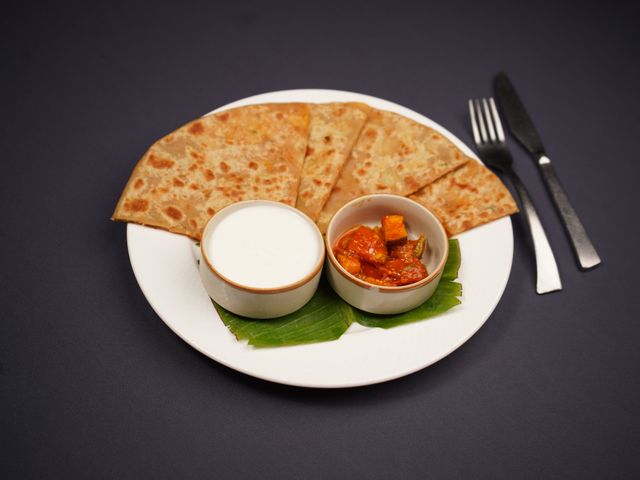
- Flip and cook the other side for 3–4 minutes, pressing lightly with a spatula once or twice to encourage even browning, until both sides are golden-brown and slightly charred in spots.
- The flatbread should puff slightly during cooking.
- Transfer to a plate and repeat with the remaining flatbreads, adjusting heat if needed to prevent burning.
+ Show details− Hide details
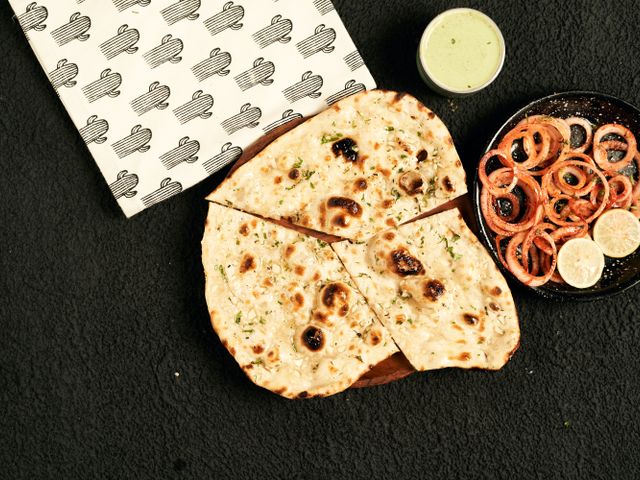
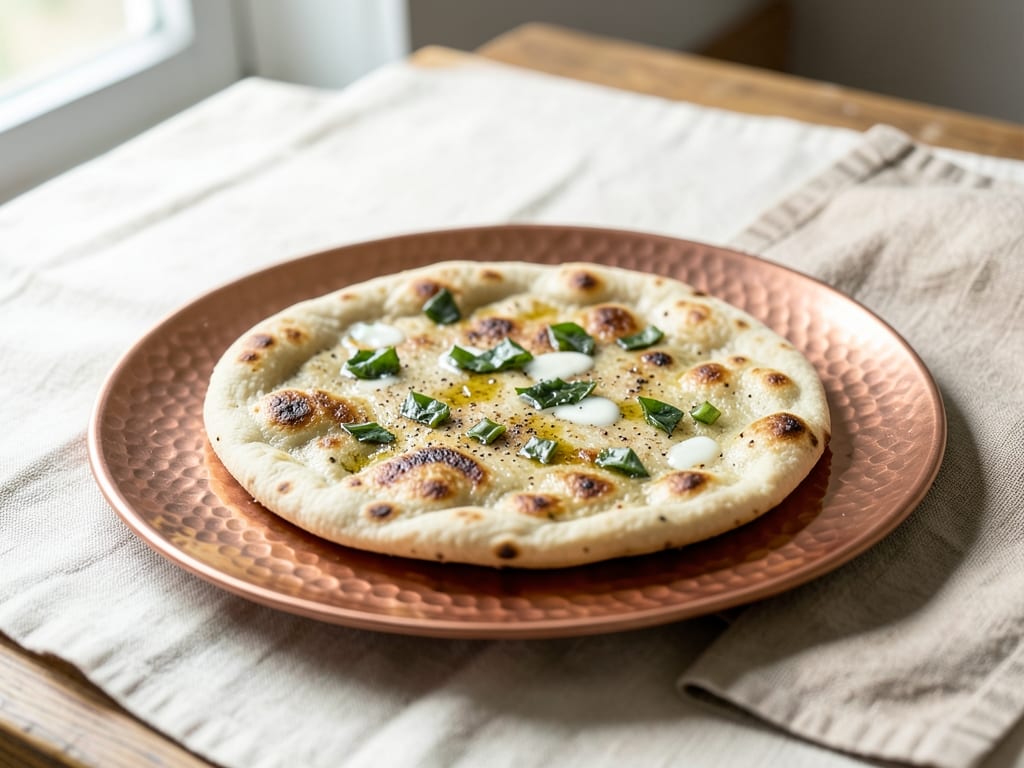
Ready when: Both sides are golden-brown with scattered dark spots; crust is crispy and slightly flexible
Tip: Do not flip too early—wait until the bottom is set and spotty, otherwise the flatbread may tear or stick
Finish and serve
- Brush each warm flatbread with a little melted ghee (about 1 teaspoon per bread) and scatter a pinch of fresh cilantro on top if desired.
- Serve immediately while still warm and crispy.
- These flatbreads are best eaten fresh but can be wrapped in a clean kitchen towel to keep warm for a few minutes.
+ Show details− Hide details
Tip: Ghee adds richness and helps keep the flatbread tender; cilantro brightens the savory spices
Good to know
Tips
- For the most pronounced sour flavor, use sourdough discard that has not been fed for 24–48 hours; an unfed starter is at peak acidity and contributes stronger tang to the dough.
- If you do not have fresh methi saag, dried fenugreek leaves (kasuri methi) can be substituted at half the weight—crumble and add them in step 3 when the greens would go in, but reduce their cooking time to 1–2 minutes so they rehydrate without becoming mushy.
- The skillet temperature is crucial: if it is not hot enough, the flatbread will absorb oil and become greasy rather than crispy; if too hot, the outside will burn before the inside cooks through. Preheat for at least 2 minutes and test with a drop of water.
- These flatbreads pair beautifully with plain yogurt, a squeeze of fresh lemon, or a cooling cucumber raita, which balances the warm spices and earthiness of the methi and paneer.
Make ahead
You can prepare the filling up to 1 day ahead and store it in the refrigerator in an airtight container. Allow it to come to room temperature before assembling the flatbreads. The shaped (unbaked) flatbreads can be refrigerated for up to 4 hours; bring them to room temperature for 15 minutes before cooking, or add 1–2 extra minutes to the cooking time if cooking cold.
Storage & reheating
Store cooled flatbreads at room temperature in an airtight container for up to 2 days, or wrap individually in foil and freeze for up to 3 months. To reheat, place a cold or thawed flatbread in a dry skillet over medium heat for 1–2 minutes per side until warmed through and crispy again. Alternatively, wrap in a damp towel and microwave for 20–30 seconds, though this will soften the crust slightly.
Substitutions
- fresh fenugreek greens (methi saag) → Fresh spinach or kale, chopped and patted very dry. Methi has a slightly bitter, peppery note; spinach is milder. Use the same weight and prepare the same way.
- paneer cheese → Crumbled firm tofu or ricotta cheese. Tofu has less fat but similar texture; ricotta is creamier. Adjust salt slightly if using ricotta.
- sourdough discard (active, bubbly) → Plain yogurt (Greek or full-fat) mixed with a little whole-wheat flour. Use 0.75 cup (180 ml) yogurt plus 2–3 tablespoons (15–23 g) whole-wheat flour to mimic tang and fermented flavor. The bread will be less sour and rise faster.
- garam masala → Equal parts ground cumin, coriander, and a pinch of cinnamon and clove. This approximates the warming spice blend without pre-made garam masala.