Sourdough Indian Paneer and Kasuri Methi Flatbread
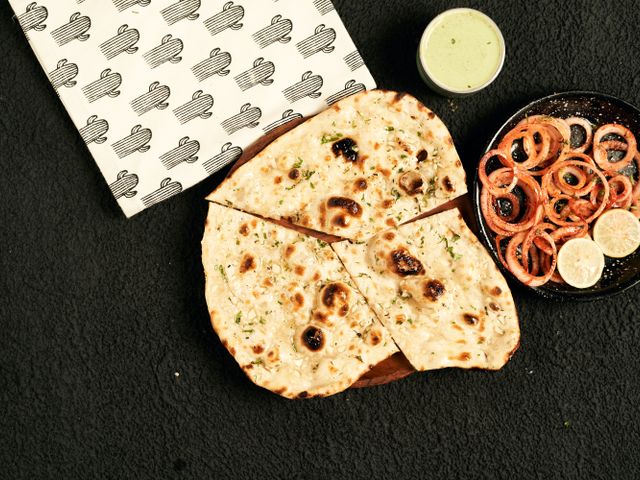
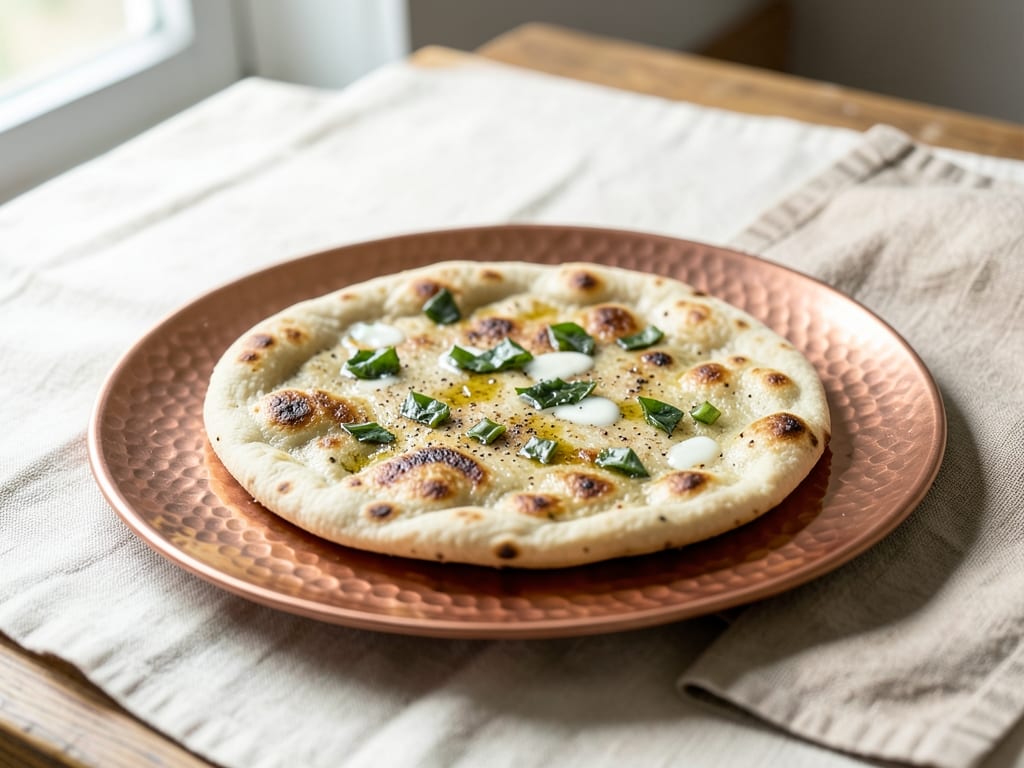
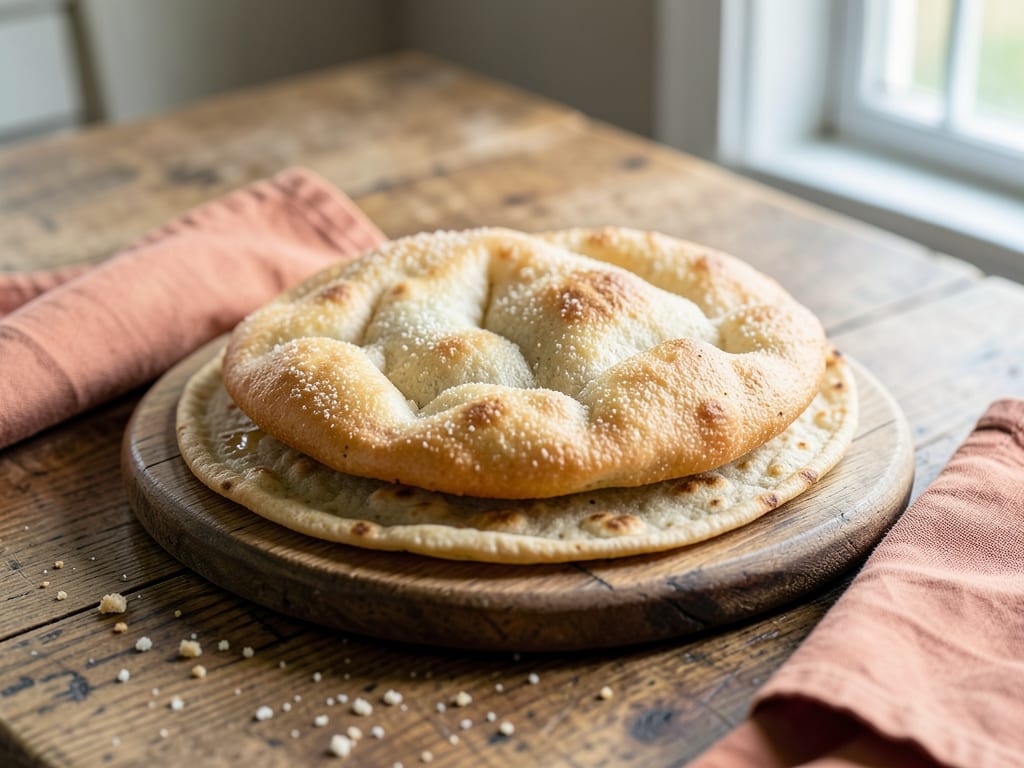
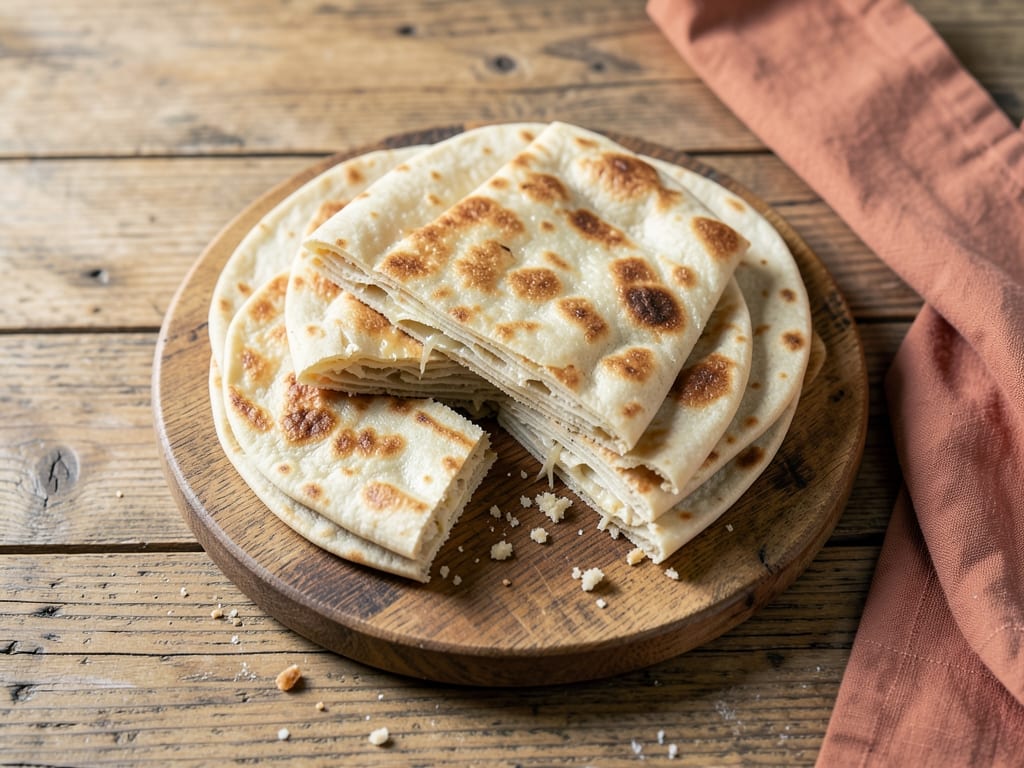
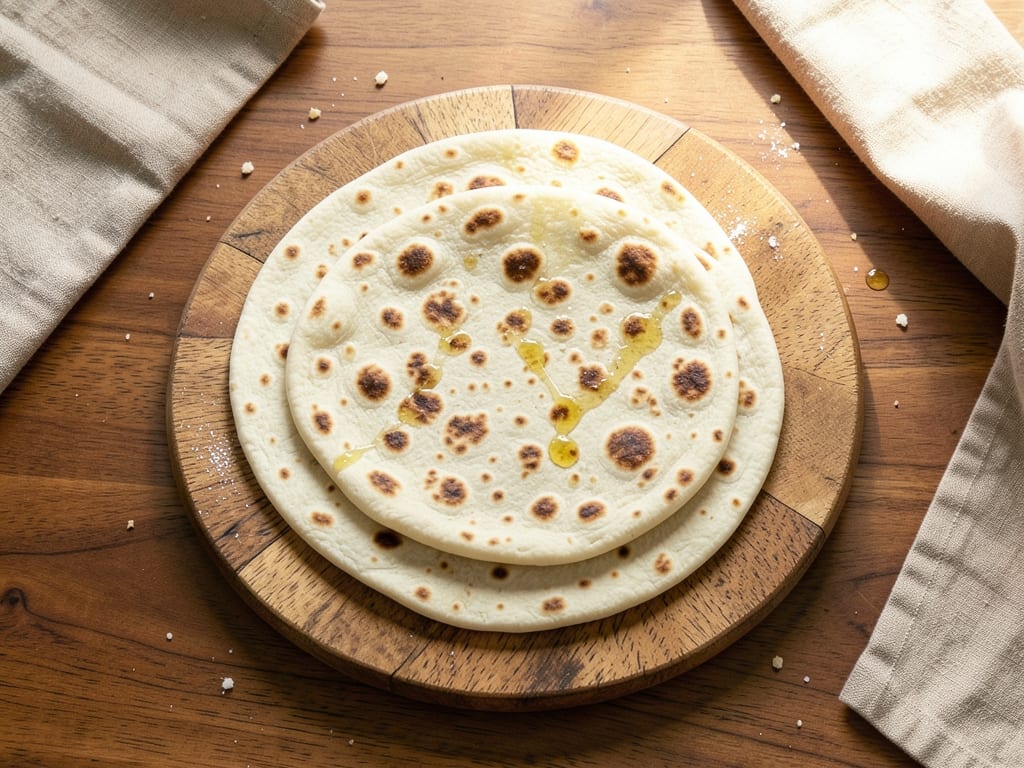
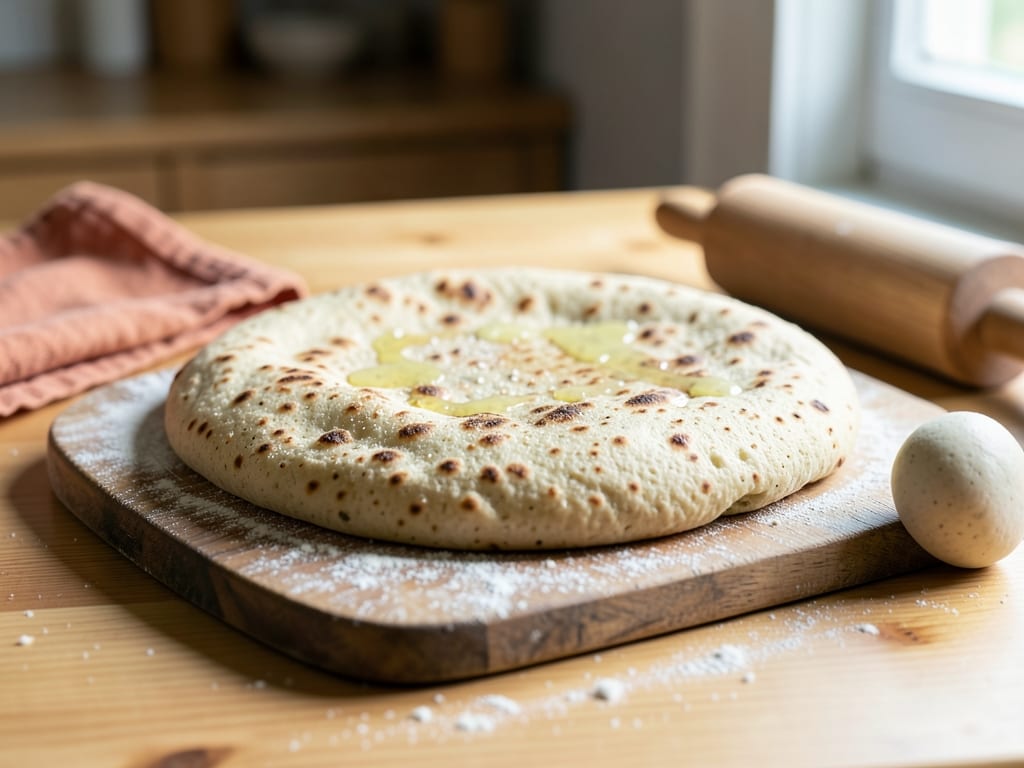
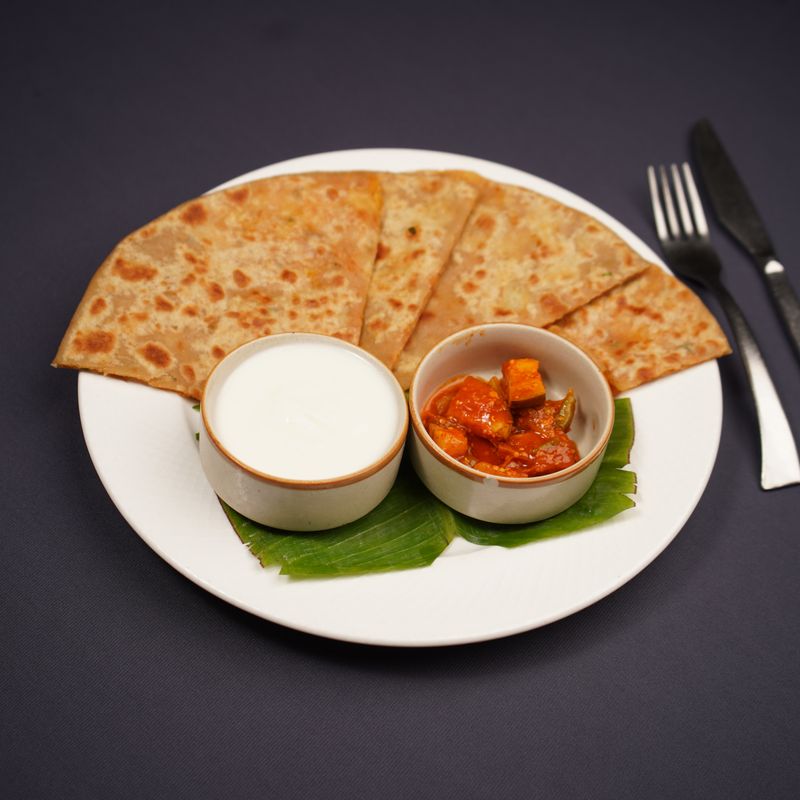
Crispy-edged, chewy sourdough flatbreads filled with crumbly paneer cheese and aromatic dried fenugreek leaves (kasuri methi). The tangy sourdough dough balances the earthy spices and rich paneer, creating a savory Indian-inspired bread that's perfect for curries, dips, or on its own. Pan-fried until golden and blistered, these flatbreads have a slight char and tender interior.
- Prep
- 25 min
- Cook
- 20 min
- Wait
- 1 hr 30 min
- Total
- 2 hr 15 min
- Makes
- 4 flatbreads (about 8 inches each)
Steps
Before you start
- Remove sourdough starter from the refrigerator and let it sit at room temperature for 30 minutes before measuring
- Crumble paneer into bite-sized pieces and have kasuri methi and cumin measured and ready
- Have a cast iron or carbon steel skillet ready (do not use nonstick)
Mix dough
- In a large bowl, combine 180 ml (¾ cup) active sourdough starter, 120 ml (½ cup) warm water, and 195 g (1½ cups) bread flour.
- Mix with a wooden spoon until no dry flour remains and the mixture is shaggy, about 1 minute.
- Let this sit for 15 minutes (autolyse) so the flour fully hydrates.
- Then add 6 g (1 tsp) fine sea salt and mix thoroughly with the spoon until the salt is fully incorporated and the dough is cohesive.
+ Show details− Hide details
Ready when: Dough is shaggy and cohesive; salt is fully incorporated
Tip: The autolyse rest allows the flour to fully absorb water, which improves gluten development and extensibility.
First rise and stretch
- Cover the bowl loosely with a damp kitchen towel.
- Let the dough rest at room temperature (68–72°F / 20–22°C) for 60 minutes.
- During the last 20 minutes of this rest, perform 2–3 sets of stretches and folds: wet your hand, grab one side of the dough from inside the bowl, stretch it up and fold it over the top of the dough, rotate the bowl 90 degrees, and repeat 3–4 times per set.
- This builds strength without kneading.
+ Show details− Hide details
Ready when: Dough has increased in volume by about 50%, feels airy, and stretches without tearing
Tip: Stretches and folds create strength in the dough without the heavy hand-kneading of traditional methods. Cold starter or cool room temperature slows fermentation, giving better flavor.
Prepare filling
- While the dough rises, prepare the filling.
- In a small bowl, combine 225 g (8 oz) crumbled paneer, 3 g (2 tsp) crushed kasuri methi, 5 g (1 tsp) cumin seeds, 80 g (½ medium) finely diced yellow onion, optional minced green chili, and 1.5 g (¼ tsp) fine sea salt.
- Toss gently with a fork to combine.
- The filling should be chunky, not compacted.
- Taste and adjust salt and spice as needed.
+ Show details− Hide details
Ready when: Filling is evenly mixed with all ingredients distributed; paneer remains chunky
Tip: Don't press or compress the paneer; it should stay in distinct pieces to give the flatbread texture and prevent it from becoming pasty.
Divide into portions
- Turn the dough out onto a lightly floured work surface.
- Use a bench scraper to divide it into 4 equal portions (about 140 g / 5 oz each).
- Shape each portion into a loose round by gathering the edges to the underside and gently rotating it on the work surface until it's somewhat round.
- Do not overwork; these should be casual shapes.
- Cover loosely with a damp towel while you work through the shaping.
+ Show details− Hide details
Ready when: Four equal portions shaped into loose rounds
Tip: Loose, gentle shaping preserves the gas bubbles from fermentation, which make the flatbread light and chewy rather than dense.
Rest portioned dough
- Place the four dough rounds on a floured surface or a sheet of parchment paper, spacing them about 3 inches apart.
- Cover with a damp towel and let them rest for 15 minutes at room temperature.
- This relaxes the gluten so the dough is easier to stretch without snapping back.
+ Show details− Hide details
Ready when: Dough feels relaxed and no longer springs back immediately when poked
Tip: This short rest is crucial; without it, the dough will snap back as you try to stretch it, and the flatbreads will be tough.
Shape flatbreads with filling
- Work with one dough round at a time.
- On a lightly floured surface, gently stretch and flatten it into a thin circle about 6 inches in diameter.
- Spoon about 35 g (3 tbsp) of the paneer-methi filling onto the lower half of the circle, leaving about ½ inch margin from the edge.
- Fold the top half of the dough over the filling to form a half-moon.
- Press the edges gently to seal, pinching any loose spots.
- The filling may peek out slightly, which is fine.
- Transfer to a floured plate or parchment.
- Repeat with the remaining dough and filling.
+ Show details− Hide details
Ready when: Four half-moon shaped flatbreads with filling sealed inside and edges pinched closed
Tip: If the dough resists stretching, let it rest for 2–3 minutes on the counter and try again. Don't force it; it will tear and the filling will leak during cooking.
Pan-fry first flatbread
- Heat a 10-inch cast iron or carbon steel skillet over medium-high heat for 2 minutes.
- The pan should be hot and dry.
- Lightly brush or wipe the skillet with a clean paper towel to remove any dust.
- Place one filled flatbread onto the skillet.
- Within 30 seconds, bubbles should appear on the bottom.
- Cook for 2–3 minutes until the bottom is golden brown with some charred spots.
- Brush the top with 1 tsp ghee or oil.
- Flip carefully using a spatula and cook the other side for another 2–3 minutes until it's also golden and puffy, with charred spots.
+ Show details− Hide details
Ready when: Both sides are golden brown with light char; flatbread is puffy and cooked through when pressed gently with your finger
Tip: Do not flip too early; the bottom needs 2–3 minutes to develop color and the dough to set. Too high heat will blacken the exterior before the interior cooks.
Transfer and keep warm
- Transfer the cooked flatbread to a plate.
- Brush the top lightly with ½ tsp ghee if desired for richness.
- Cover loosely with a clean towel to keep it warm.
- Do not stack directly or steam will soften the crust.
+ Show details− Hide details
Tip: A light tent of foil or a clean towel preserves warmth and crispness without trapping too much steam.
Cook remaining flatbreads
- Repeat steps 7 and 8 with the remaining three filled flatbreads.
- Use the same skillet, wiping it briefly between each one if necessary (it should stay hot).
- Cook each on medium-high heat until both sides are golden brown with charred spots, 2–3 minutes per side.
- The pan should still be hot when you add the next flatbread so it starts cooking immediately.
+ Show details− Hide details
Ready when: All four flatbreads are golden brown, puffy, and charred on both sides; paneer filling is warm throughout when pressed
Tip: Keep the skillet hot between batches; a drop of water flicked onto the pan should sizzle immediately, confirming the temperature.
Serve
- Arrange the four warm flatbreads on a serving platter.
- They are best eaten warm within a few minutes of cooking.
- Serve alongside a yogurt raita, Indian pickle, or curries such as chana masala or paneer tikka masala.
- The flatbreads can also be enjoyed plain or with a squeeze of fresh lemon juice.
+ Show details− Hide details
Tip: Sourdough flatbreads are best served hot; flavor and texture degrade as they cool, though they can be gently reheated.
Good to know
Tips
- Active sourdough starter is essential. If your starter is sluggish or cold, let it sit at room temperature for 30–60 minutes after feeding and before measuring. It should be bubbly, slightly risen, and float a spoonful in water.
- Do not skip the stretches and folds during the first rise. They build gluten structure without heavy kneading, resulting in a lighter, more open crumb and better chew.
- Use a cast iron or carbon steel skillet, not nonstick. The high, even heat and rough surface create the charred, blistered exterior that gives these flatbreads their characteristic flavor and texture.
- If paneer begins to leak or the filling is too wet, drain any excess liquid from the filling bowl with a paper towel before assembly. Overly wet filling will burst through the dough.
Make ahead
You can prepare the dough and filling components separately 1 day ahead. Keep the shaped, unfilled dough in the refrigerator overnight (covered tightly), then bring to room temperature for 30 minutes before filling and cooking. Store the filling in an airtight container in the refrigerator for up to 2 days. Assemble and cook the flatbreads fresh when ready to serve for the best texture.
Storage & reheating
At room temperature in a covered container: up to 4 hours (texture becomes soft). In the refrigerator: up to 3 days, wrapped tightly. Reheat in a dry cast iron skillet over medium-high heat for 1–2 minutes per side until warm and crispy again. Do not microwave, as this makes them rubbery. Freezer: up to 1 month (wrap individually in plastic wrap, then foil). Thaw at room temperature for 1 hour, then reheat as above.
Substitutions
- kasuri methi (dried fenugreek leaves) → dried mint or a mix of dried oregano and a pinch of coriander. Kasuri methi has a distinct earthy, slightly bitter flavor. If unavailable, dried mint (2 tsp) gives a brighter taste but less earthiness. A 1:1 mix of dried oregano and ground coriander (1 tsp each) approximates the herbal complexity.
- paneer cheese, firm → firm tofu, pressed and crumbled, or fresh mozzarella torn into small pieces. Paneer has a high melting point and mild flavor. Pressed firm tofu gives a similar crumbly texture; fresh mozzarella will soften more when cooked but offers creaminess. Adjust salt accordingly as mozzarella is often saltier.
- active sourdough starter, fed 4–6 hours prior → ¾ cup all-purpose flour mixed with ½ cup whole milk and a pinch of instant yeast (let sit 30 minutes before using). This makeshift starter replicates the tang and rise of sourdough starter. Reduce the bread flour to 1¼ cups total since the milk adds moisture. You will lose some of the deep sourdough flavor but gain a faster rise.
- cumin seeds → nigella seeds, fennel seeds, or a mix of both. Cumin adds a warm, slightly nutty flavor. Nigella (kalonji) is more peppery; fennel is sweet and aromatic. Either can replace cumin 1:1 for a different spice profile.