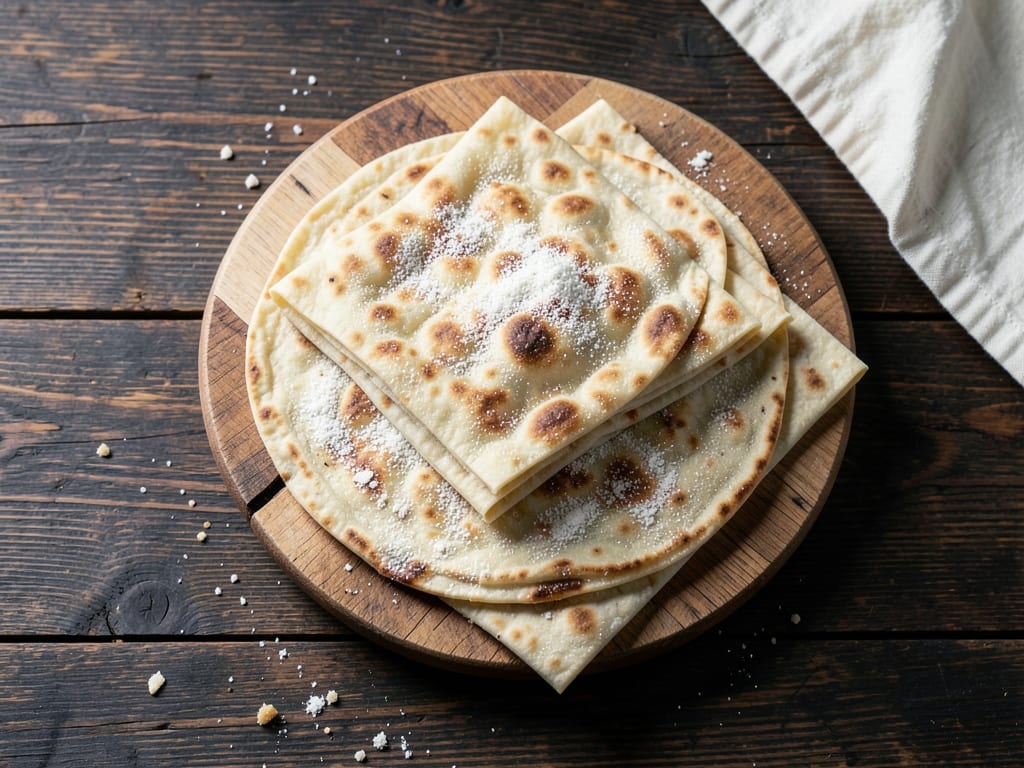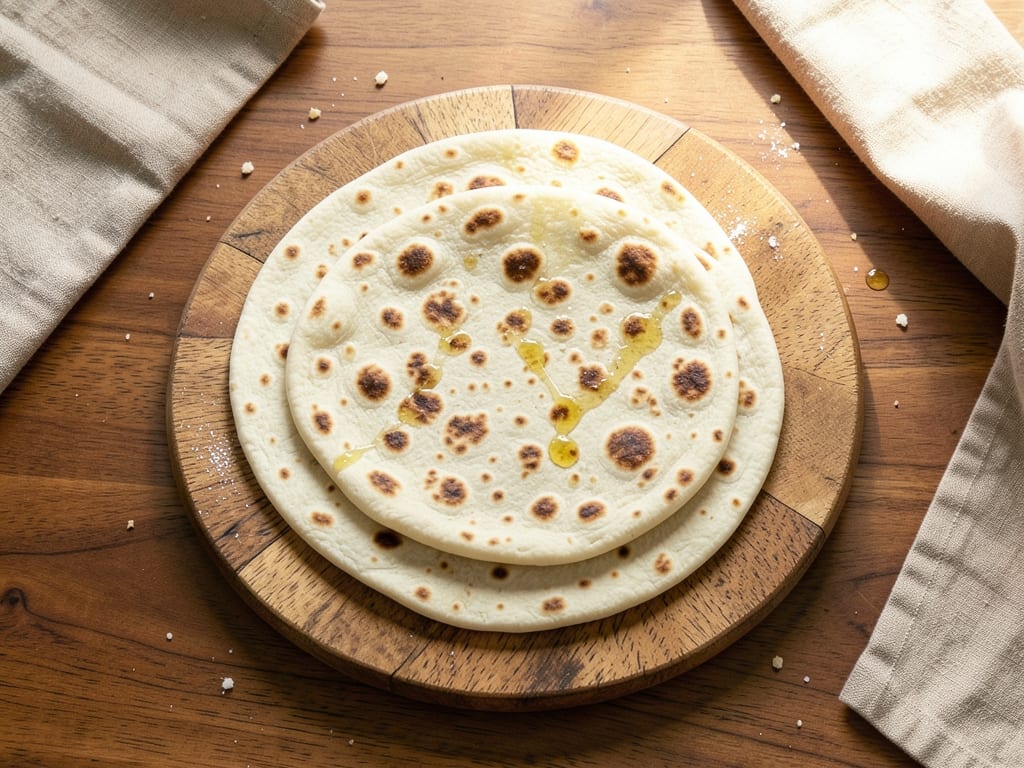
Soft Chapati Dough (Whole Wheat Roti Dough)
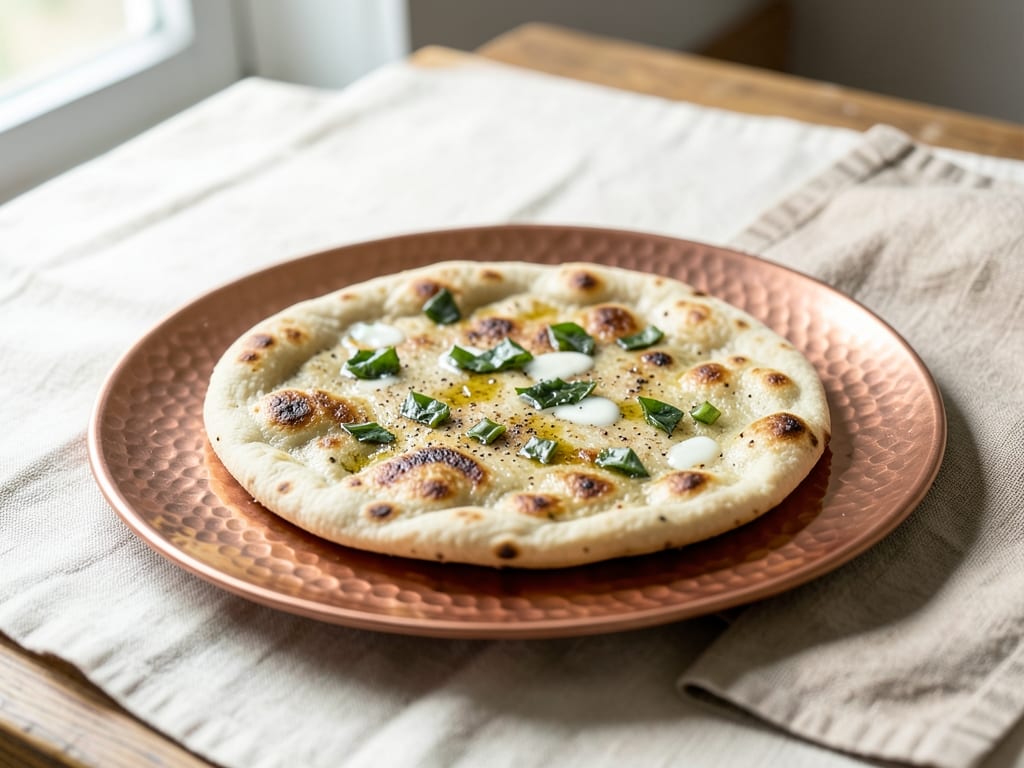
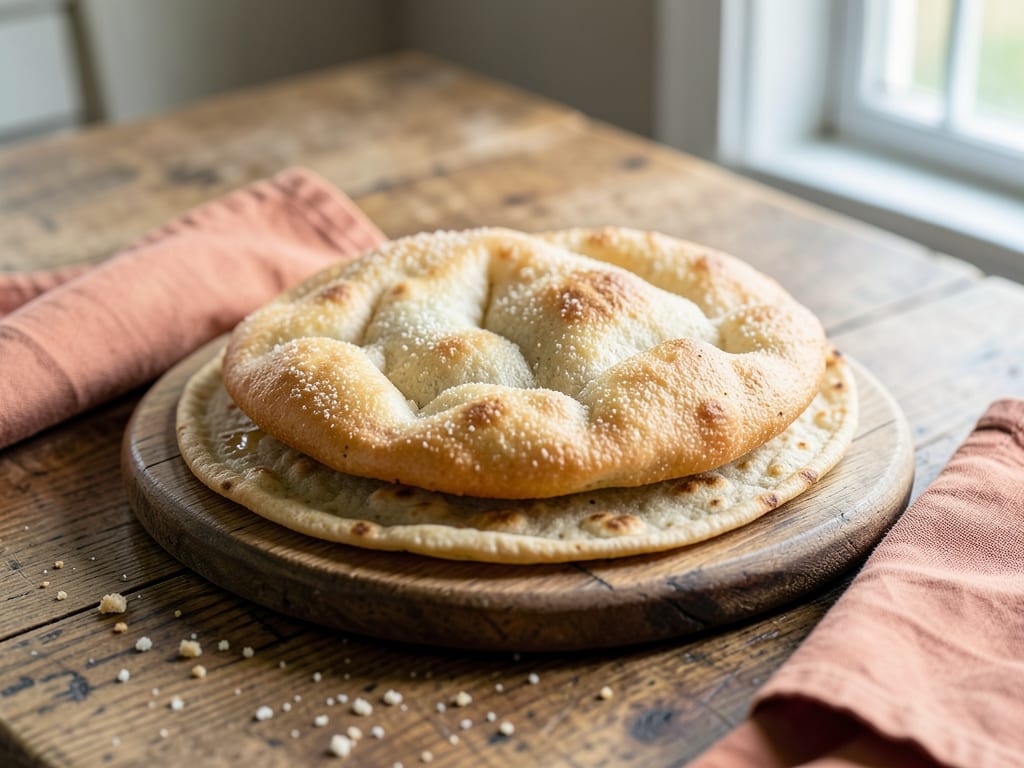
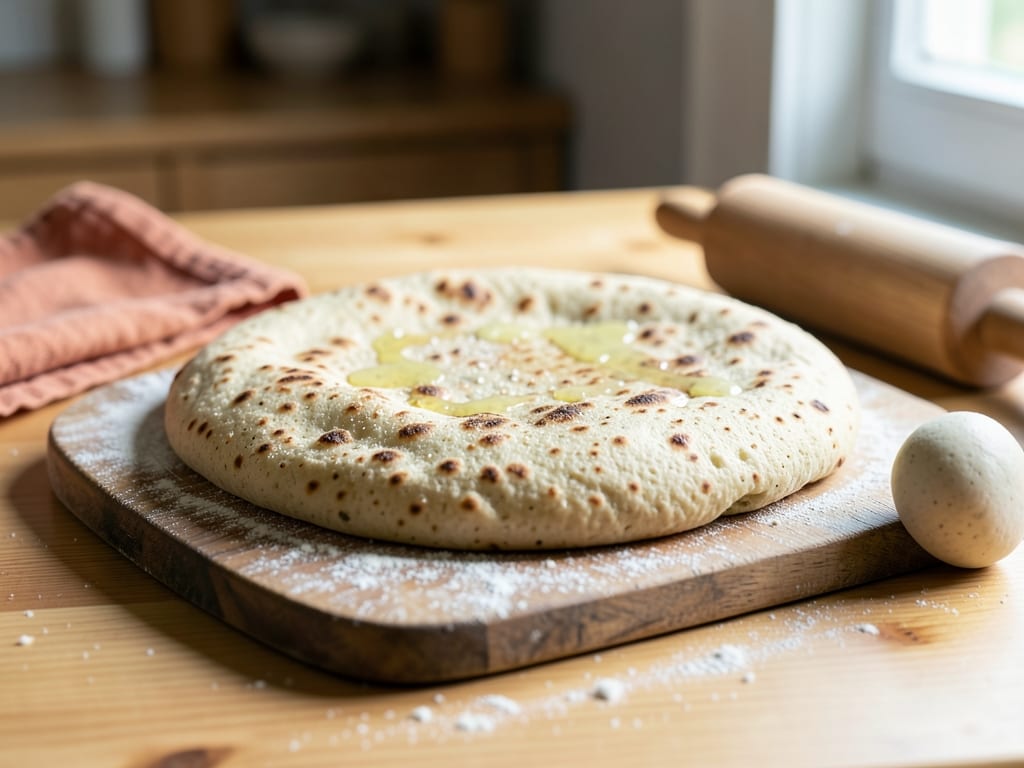
A simple, reliable dough of whole wheat atta, warm water, salt and a little oil, kneaded until smooth and rested so it rolls thin and puffs on the tawa into soft, pliable chapatis.
- Prep
- 25 min
- Cook
- 20 min
- Wait
- 30 min
- Total
- 1 hr 15 min
- Makes
- 10 chapatis (about 7 inches / 18 cm each), enough for 5 people at 2 each
Steps
Before you start
- Use atta (finely milled Indian whole wheat flour) if you can. Regular whole wheat flour works but may need 1 to 2 extra tablespoons of water.
- Warm the water to comfortably warm to the touch, about 100°F (38°C). It helps the dough relax and turn soft.
- Plan on 30 minutes of resting time. Don't skip it, because it is what makes the dough easy to roll thin.
- Have a clean kitchen towel or lidded container ready to keep the cooked chapatis steamy and soft.
Mix flour and salt
- Add the 2½ cups (300 g) atta and ½ tsp salt to a large mixing bowl.
- Whisk with a fork for 20 seconds so the salt is evenly distributed.
- Make a shallow well in the center.
+ Show details− Hide details
Ready when: Flour looks uniform with no salt clumps.
Add water and oil
- Pour the 1 tbsp oil into the well.
- Add about two-thirds of the warm water (¾ cup / 180 ml total) and stir with your fingers or a fork, drawing flour in from the sides.
- Add the remaining water gradually, until no dry flour remains and a shaggy dough forms.
+ Show details− Hide details
Ready when: All the flour is hydrated and the dough holds together in a rough, slightly sticky mass.
Tip: Atta varies in thirst. If the dough feels stiff and crumbly, add water 1 tablespoon at a time, up to 2 tablespoons.
Knead until smooth
- Turn the dough onto the counter or knead in the bowl.
- Press, fold and push with the heel of your hand for 7 to 8 minutes.
- If it sticks to your hands, dust lightly with flour from the plate; if it feels dry, wet your hands slightly.
+ Show details− Hide details
Ready when: The dough is smooth, soft and elastic, like an earlobe, and springs back slowly when poked.
Tip: Proper kneading develops gluten, which is the key to chapatis that puff and stay soft.
Rest the dough
- Shape the dough into a ball, rub the surface with a few drops of oil, and return it to the bowl.
- Cover with a damp towel or lid and let it rest at room temperature for 30 minutes.
+ Show details− Hide details
Ready when: The dough feels softer and more stretchy than before resting.
Tip: Keep it covered so a dry skin doesn't form, which would cause cracked edges.
Divide into balls
- Knead the rested dough briefly for 30 seconds.
- Divide into 10 equal pieces, about 50 g each.
- Roll each between your palms into a smooth ball with no cracks, and keep them under the towel.
+ Show details− Hide details
Ready when: Ten smooth, crack-free balls about the size of a golf ball.
Heat the tawa
- Place the tawa over medium-high heat for 3 to 4 minutes while you roll the first chapati.
- Keep a small plate of dusting flour nearby.
+ Show details− Hide details
Ready when: A pinch of flour sprinkled on the tawa browns slowly within about 30 seconds, not instantly.
Tip: If the tawa is too hot the chapati will scorch before it cooks through. Too cool and it dries out and turns stiff.
Roll out a chapati
- Flatten one ball into a disc, press one side into the dusting flour, and roll with even strokes, rotating a quarter turn after each pass.
- Roll to a 7-inch (18 cm) round about 1/16 inch (2 mm) thick, dusting lightly only when it sticks.
- Shake off the excess flour.
+ Show details− Hide details
Ready when: The round is even in thickness, with no thick center or torn edges.
Tip: Use light, even pressure from the center out. Too much dusting flour will burn on the tawa and taste bitter.
Cook the first side
- Lay the chapati on the hot tawa.
- Cook for about 30 to 40 seconds, until small bubbles appear on the surface and the color turns slightly opaque.
- Flip with tongs.
+ Show details− Hide details
Ready when: Tiny bubbles form and the top looks dry and matte.
Cook second side and puff
- Cook the second side for 40 to 50 seconds until light brown spots appear on the underside.
- Flip again so the first side is down.
- Press gently around the edges with a folded towel; the chapati should puff into a ball within 10 to 20 seconds.
- Remove it once it has puffed and has light brown spots on both sides.
+ Show details− Hide details
Ready when: The chapati puffs up, with light golden-brown freckles on both sides and no raw white patches.
Tip: If it doesn't puff, the tawa may be too cool or the chapati rolled unevenly. It will still be edible and soft.
Finish and keep warm
- Brush the hot chapati lightly with melted ghee if using.
- Stack in a towel-lined container and cover.
- Repeat rolling and cooking with the remaining balls, about 2 minutes per chapati, wiping stray burnt flour off the tawa occasionally.
- Serve warm.
+ Show details− Hide details
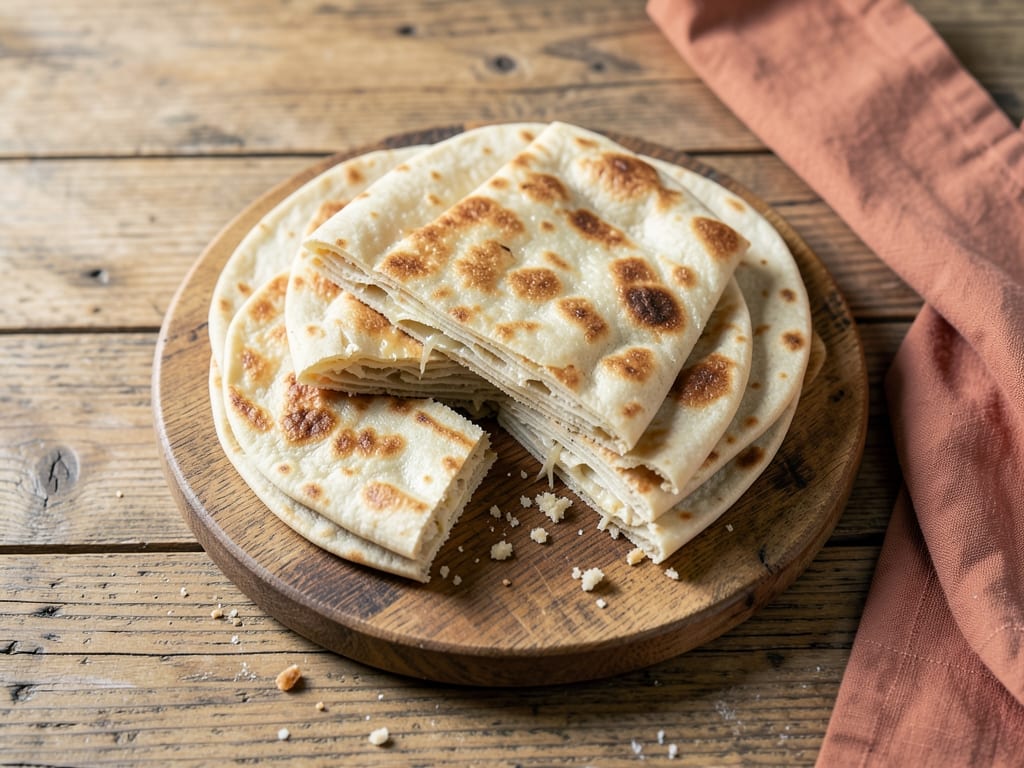
Ready when: The stack is soft and pliable, and the chapatis bend without cracking.
Tip: Roll the next chapati while the previous one cooks to keep the pace steady.
Good to know
Tips
- Aim for a dough softer than bread dough but not sticky. It should feel like soft clay and spring back slowly when poked.
- Weigh the dough balls (about 50 g each) so chapatis are the same size and cook at the same speed.
- Stacking hot chapatis in a covered container traps steam and keeps them soft. Leaving them uncovered makes them dry and leathery.
- If your chapatis keep turning stiff, check three things: dough too dry, rolled too thick, or tawa too cool.
Make ahead
The raw dough can be kneaded, oiled, covered tightly and refrigerated for up to 24 hours. Bring it to room temperature for 30 minutes and knead briefly before dividing and rolling. Cooked chapatis can also be made a few hours ahead.
Storage & reheating
Room temperature: cooked chapatis keep wrapped in a towel or foil for up to 8 hours. Fridge: store in an airtight container or zip bag for up to 3 days. Freezer: stack with parchment between them and freeze in a freezer bag for up to 2 months. Reheat on a hot tawa for 15 to 20 seconds per side, or wrap in a damp paper towel and microwave for 15 to 20 seconds. Raw dough keeps covered in the fridge for up to 24 hours.
Substitutions
- whole wheat flour (atta) → half whole wheat flour and half all-purpose flour. Gives a lighter, softer chapati that is less nutty. Use the same total weight (300 g) and expect to add 1 to 2 tablespoons less water.
- neutral oil (or melted ghee) → melted ghee or melted unsalted butter. Adds richer flavor. Use the same amount (1 tbsp / 14 g).
- water → warm milk. Makes chapatis noticeably softer and slightly sweeter. Use the same amount.
- ghee or melted butter → softened butter or a light brush of oil. Either works for finishing. Or leave it off for a drier, lower-fat chapati.