Sourdough Egyptian Mulukkhiya Herb and Crispy Garlic Flatbread
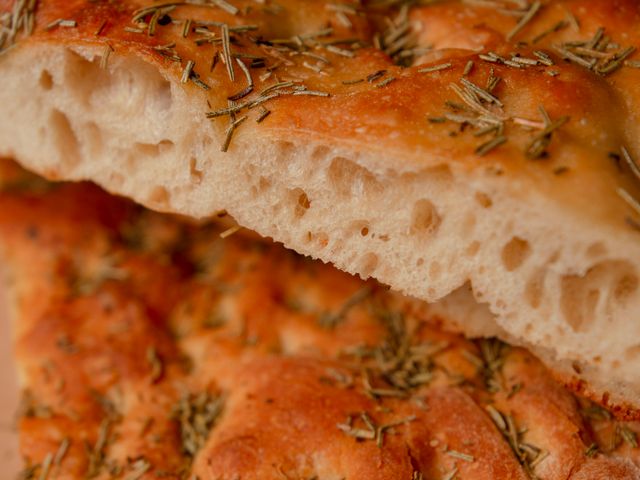
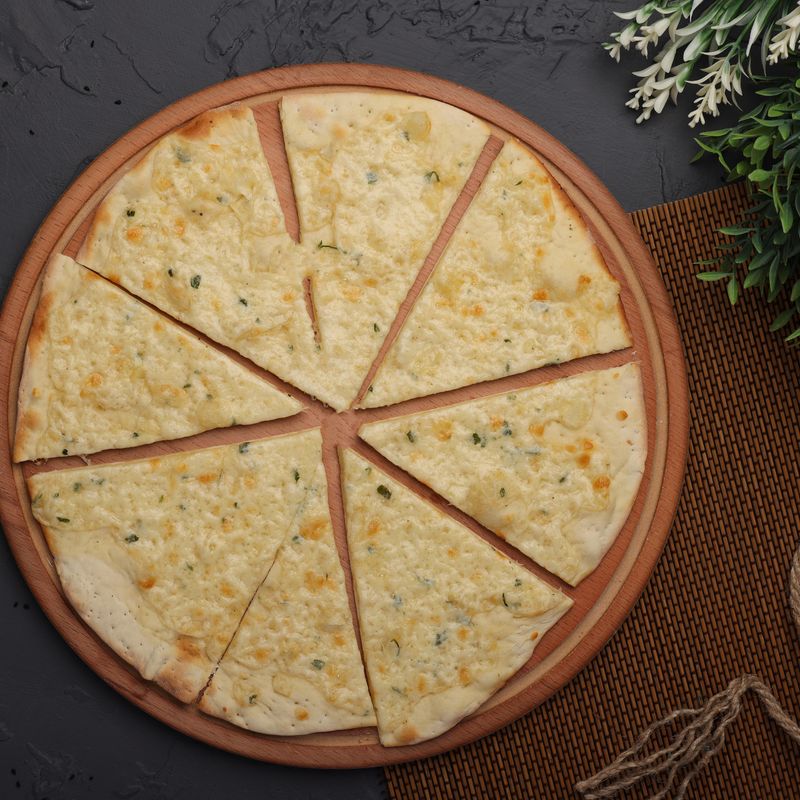
A savory pan-baked flatbread using active sourdough discard, studded with earthy mulukkhiya leaves (a traditional Egyptian green herb) and topped with crispy garlic chips and toasted coriander. The dough is tender and slightly tangy from the sourdough, while the filling adds authentic North African flavor and vibrant color. Perfect warm from the pan with labneh, hummus, or as a base for stews.
- Prep
- 25 min
- Cook
- 12 min
- Wait
- 1 hr 30 min
- Total
- 2 hr 7 min
- Makes
- 4 flatbreads (about 6 inches each)
Steps
Before you start
- Have active sourdough discard at room temperature (fed 2–4 hours prior)
- Wash and dry mulukkhiya leaves thoroughly to remove any grit
- Measure all spices and mince garlic before you begin
- Line a baking sheet with parchment; have a damp kitchen towel ready
Mix the dough
- In a large mixing bowl, combine the sourdough discard, warm water, and 2 tablespoons of olive oil.
- Stir until the liquid is absorbed.
- Add the flour and kosher salt.
- Using a wooden spoon or dough whisk, mix until a shaggy dough forms with no dry flour visible.
- The dough should be slightly sticky but hold together.
- Let rest for 5 minutes.
+ Show details− Hide details
Ready when: Dough holds together and flour is completely moistened
Tip: Do not overmix; a slightly lumpy texture is fine and will develop gluten naturally.
Knead and fold the dough
- Using a bench scraper or dough knife, perform 4 sets of stretches and folds over the next 20 minutes: wet your hand, pull one side of the dough up and over itself, rotate the bowl 90 degrees, and repeat 4 times per set, waiting 5 minutes between sets.
- After the final fold, the dough should be smoother and hold its shape better.
- It will still be slightly sticky.
+ Show details− Hide details
Ready when: Dough is cohesive, passes the windowpane test (small piece stretches thin without tearing), and springs back gently when poked
Tip: Wet hands prevent sticking. Folding is gentler than kneading and preserves the sourdough's open crumb.
Bulk ferment the dough
- Cover the bowl loosely with a damp kitchen towel.
- Let the dough rise at room temperature (68–72°F / 20–22°C) for 60 minutes.
- The dough should increase by about 50 percent in volume and feel airy when gently poked.
+ Show details− Hide details
Ready when: Dough is noticeably puffed, with visible bubbles on the surface and sides
Tip: If your kitchen is cool, fermentation may take longer (up to 90 minutes). Look for volume increase, not just time.
Prepare the filling
- While the dough ferments, heat 2 tablespoons of the olive oil in a medium skillet over medium heat.
- Add the sliced garlic and toast, stirring frequently, until the edges are golden and fragrant (about 3 minutes).
- Remove the garlic chips with a slotted spoon to a paper towel.
- In the same skillet, lightly toast the coriander seeds over medium heat for 1–2 minutes until fragrant, then crush them lightly with the back of a spoon.
- Set aside.
- Toss the mulukkhiya leaves with the remaining 1 tablespoon of olive oil, crushed coriander, black pepper, and a pinch of salt in a medium bowl.
+ Show details− Hide details
Ready when: Garlic is golden at edges; coriander releases aroma when crushed
Tip: Don't overtoast the coriander—it should smell warm and spicy, not burnt.
Divide and shape the dough
- Turn the fermented dough onto a lightly oiled counter.
- Using a bench scraper, divide it into 4 equal pieces (about 100 g each).
- Gently pre-shape each piece into a round by pulling the edges toward the center.
- Let rest on parchment paper, loosely covered with the damp towel, for 10 minutes.
+ Show details− Hide details
Ready when: Dough rounds are relaxed and hold their shape without immediately shrinking
Tip: Divide with a bench scraper rather than a knife to avoid compressing the dough.
Final shape and fill
- Working with one piece at a time, gently pat and stretch it into a thin round about 6 inches in diameter on a lightly oiled surface.
- Place on a piece of parchment paper.
- Spoon about 2 tablespoons of the mulukkhiya mixture onto the center.
- Fold the edges up and over the filling in a rustic galette style, leaving the center slightly exposed (the filling should peek through and some herb may overhang the edges slightly).
- Repeat with the remaining dough pieces and filling.
+ Show details− Hide details
Ready when: Each flatbread is roughly 6 inches in diameter with filling secured by folded edges
Tip: If the dough springs back too much, let it rest for 2–3 minutes before continuing to stretch.
Pan-bake the flatbreads
- Place a 10–12 inch skillet (cast iron or nonstick) over medium heat and lightly oil it.
- Once hot, carefully transfer one flatbread (still on parchment) to the skillet.
- Remove the parchment immediately.
- Cook for 3–4 minutes until the bottom is light golden brown and some of the herbs are slightly crisp.
- Carefully flip and cook the other side for 2–3 minutes until golden and the herbs at the edges are charred slightly.
- Transfer to a plate and tent loosely with foil to keep warm.
- Repeat with the remaining flatbreads.
+ Show details− Hide details
Ready when: Bottom is golden with lightly charred edges; herbs on top are fragrant and some are crispy
Tip: Use medium heat—if the pan is too hot, the dough will brown before cooking through; too cool and the herbs won't crisp.
Finish and serve
- Remove the flatbreads from heat and immediately scatter the crispy garlic chips over the top of each.
- Drizzle with a small amount of extra-virgin olive oil and season with fleur de sel and black pepper to taste.
- Serve warm, ideally within 5 minutes of cooking.
+ Show details− Hide details
Ready when: Garlic chips are distributed and glistening with oil
Tip: Add garlic only at the end so it stays crispy and doesn't soften from residual heat.
Good to know
Tips
- Mulukkhiya (Corchorus olitorius) is a leafy green vegetable sold fresh, frozen, or dried in Middle Eastern and North African groceries. If you can only find the dried version, rehydrate it gently in warm water, then squeeze dry and chop before using.
- The sourdough discard must be actively bubbly and fed 2–4 hours before use; if it's dormant or unfed, the dough will be dense. Active starter is key to good rise and flavor.
- Don't skip the stretches and folds in step 2—they build gluten without the aggressive handling of traditional kneading, keeping the crumb light.
- Cast-iron skillets distribute heat very evenly for this recipe and give the best browning; nonstick works but monitor the heat carefully to avoid sticking on cooler patches.
Make ahead
Prepare the dough through the end of step 3 up to 8 hours ahead. Cover and refrigerate after bulk fermentation. The next day, remove from the fridge 30 minutes before shaping, then proceed with steps 5–7. Alternatively, prepare the mulukkhiya filling (step 4) up to 2 hours ahead and store in an airtight container.
Storage & reheating
Best served fresh and warm. Leftovers keep in an airtight container at room temperature for up to 1 day or refrigerated for up to 3 days. Reheat in a skillet over medium heat for 2–3 minutes per side to restore crispness. Do not freeze (the sourdough texture and herb quality degrade when thawed).
Substitutions
- fresh mulukkhiya leaves, packed → Fresh spinach or arugula, roughly chopped. Use the same weight. Spinach will be milder; arugula more peppery. Both lack the traditional slimy texture of cooked mulukkhiya but work well in this raw, crispy application.
- coriander seeds → Ground cumin or caraway seeds. Toast and crush lightly as directed. Cumin adds warmth; caraway adds earthiness. Either complements garlic and greens well.
- active sourdough discard, at room temperature → ¾ cup (180 ml) whole-wheat flour mixed with ¼ cup (60 ml) plain yogurt at room temperature, plus 1 teaspoon instant yeast dissolved in the warm water. If you don't have sourdough starter, this adds tang and fermentation flavor. Let the dough rise a bit longer (45–90 minutes depending on temperature).
- all-purpose flour → Bread flour or spelt flour. Bread flour gives a chewier crumb and stronger gluten structure; spelt is more fragile and may need slightly less water. Add water gradually if substituting.