Sourdough Tunisian Caraway and Roasted Red Onion Focaccia
A rustic, pillowy sourdough focaccia infused with the warm, earthy notes of caraway seeds and topped with caramelized red onions. This North African–inspired bread bridges the tanginess of sourdough with Tunisian spice, finished with a drizzle of herb-infused olive oil and fleur de sel. Perfect for sharing at the table or serving alongside tagines and mezze.
- Prep
- 20 min
- Cook
- 45 min
- Wait
- 8 hr
- Total
- 9 hr 5 min
- Makes
- 1 sheet pan focaccia (8 slices)
Steps
Before you start
- Ensure your sourdough starter is active and bubbly (fed 4–8 hours prior)
- Have all ingredients at room temperature
- Line a 13×18-inch (33×46 cm) sheet pan with parchment paper
- Preheat oven to 450°F (232°C) 30 minutes before baking
Mix the dough
- In a large bowl, combine the active sourdough starter and warm water, stirring until mostly combined.
- Add the bread flour and salt, then fold with a bench scraper or dough whisk until all flour is hydrated and no dry bits remain (about 2 minutes).
- The dough will be shaggy.
- Fold in the toasted caraway seeds and 2 tablespoons of olive oil, working until the oil is fully incorporated and the dough feels cohesive.
+ Show details− Hide details
Ready when: All flour is hydrated and the dough is cohesive
Tip: Don't knead aggressively; gentle folding develops gluten naturally in sourdough over time.
Bulk fermentation
- Cover the bowl with a damp kitchen towel and let rest at room temperature (68–72°F / 20–22°C) for 3.5–4 hours.
- Perform 3 to 4 sets of stretch-and-fold (every 30 minutes for the first 2 hours): wet your hand, grab one edge of the dough, stretch it up and fold it over itself, rotate the bowl 90 degrees, and repeat 4 times.
- By the end of bulk fermentation, the dough will have increased 50–75% in volume and feel airy.
+ Show details− Hide details
Ready when: Dough has increased 50–75% in volume and is light and airy
Tip: Temperature matters: a cooler room means longer fermentation. If your kitchen is warmer, check earlier; if cooler, extend the time.
Roast the red onions
- While the dough ferments, prepare the topping.
- Heat 3 tablespoons of olive oil in a shallow baking dish or large skillet over medium heat.
- Add the sliced red onions, minced garlic, and toasted coriander seeds.
- Stir to coat, then reduce heat to medium-low and cook for 25–30 minutes, stirring occasionally, until the onions are deeply caramelized, glossy, and jammy.
- They should be soft and sweet, with the edges turning dark brown.
- Season with a pinch of salt and let cool slightly.
+ Show details− Hide details
Ready when: Onions are deeply caramelized, glossy, jammy, and soft with dark brown edges
Tip: Don't rush caramelization; low, steady heat creates depth. Stir every 5 minutes to prevent burning.
Shape onto the sheet pan
- Once bulk fermentation is complete, turn the dough out onto the prepared parchment-lined 13×18-inch (33×46 cm) sheet pan.
- Gently stretch it to fill the pan, working from the center outward.
- If the dough resists, let it rest for 5 minutes, then stretch again.
- The dough should be an even ½-inch (1.3 cm) thick and fill the pan.
+ Show details− Hide details
Ready when: Dough fills the pan evenly and is about ½ inch (1.3 cm) thick
Tip: Use gentle pressure; if the dough tears, allow it to rest a bit longer before continuing.
Final proof
- Cover the shaped dough with a damp towel and let it proof at room temperature for 45 minutes to 1 hour.
- The dough should rise noticeably and feel pillowy when you gently press a finger into it; the indent should spring back slowly but not completely.
+ Show details− Hide details
Ready when: Dough has risen noticeably and feels pillowy; a gentle finger indent springs back slowly
Tip: Proofing time varies with room temperature. In a warm kitchen, start checking at 30 minutes.
Dimple and topOven 450°F / 230°C
- Preheat the oven to 450°F (232°C) if not already done.
- Using your fingertips, gently dimple the entire surface of the dough, creating shallow wells about ¼ inch (6 mm) deep—this creates the characteristic focaccia texture.
- Distribute the caramelized red onions evenly over the surface, nestling them into the dimples.
- Drizzle any accumulated oil from the onions over the top.
- Sprinkle with a light pinch of fleur de sel and the fresh thyme leaves if using.
+ Show details− Hide details
Ready when: Surface is dimpled and evenly topped with caramelized onions
Tip: Don't press too hard when dimpling; gentle pressure prevents deflating the proofed dough.
Bake until goldenOven 450°F / 230°C
- Place the sheet pan in the preheated 450°F (232°C) oven and bake for 20–25 minutes, until the focaccia is puffed and the top is deep golden brown.
- The edges and bottom should be crisp.
- Rotate the pan halfway through baking if your oven has hot spots.
+ Show details− Hide details
Ready when: Top is deep golden brown, edges and bottom are crisp, and the focaccia sounds hollow when tapped on the bottom
Tip: If the top browns too quickly, tent loosely with foil for the last 5 minutes, but the crust should be well-colored.
Cool and serve
- Remove the focaccia from the oven and let it cool on the pan for 5 minutes, then slide it onto a wire rack or cutting board to cool for another 10–15 minutes.
- Serve warm or at room temperature.
- Cut into 8 pieces and accompany with extra olive oil for dipping if desired.
+ Show details− Hide details
Ready when: Focaccia has cooled enough to handle safely and is still warm to the touch
Tip: The focaccia is best enjoyed within a few hours of baking, while the crust is still crisp.
Good to know
Tips
- Sourdough starter health is essential: feed it 4–8 hours before you begin so it's bubbly and at peak rise.
- Caraway and coriander are characteristic of Tunisian spice blends; toasting them briefly releases their oils and enhances their flavor.
- If your dough is sluggish during fermentation (in a cool kitchen), cover it and place in a turned-off oven with the light on (creates ~75°F / 24°C warmth).
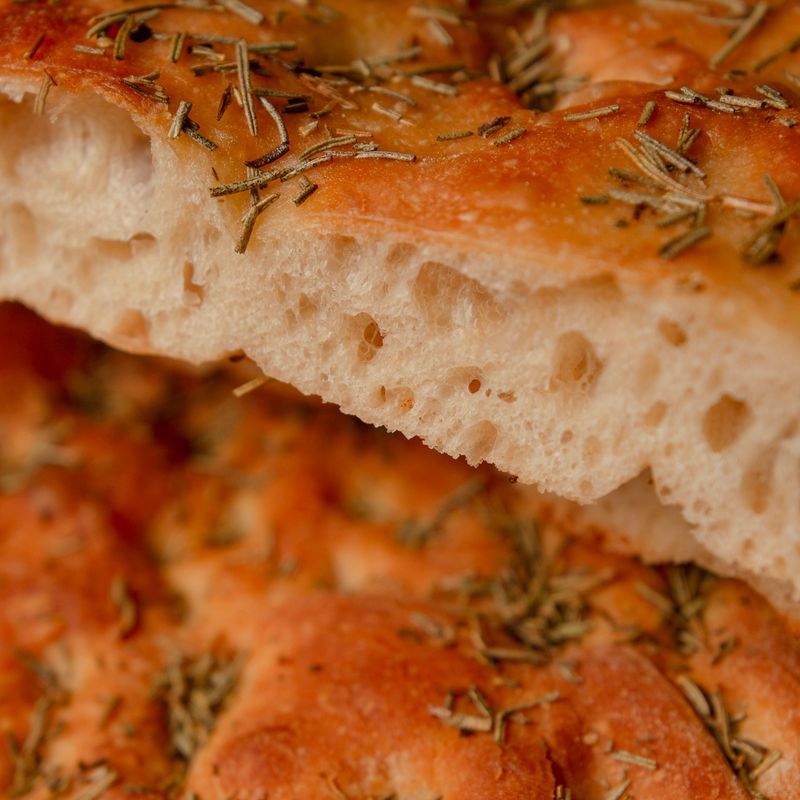
- Focaccia is forgiving: the goal is a pillowy, open crumb on the inside and a crisp, golden crust on the outside—don't worry about perfection.
Make ahead
You can prepare the caramelized red onion topping up to 2 days ahead; store it in an airtight container in the refrigerator and bring to room temperature before topping the focaccia. You can also bulk-ferment the dough in the refrigerator overnight (8–12 hours at 40°F / 4°C) after mixing; remove it 30 minutes before shaping and proceed from there. Cold fermentation deepens the sour flavor.
Storage & reheating
Store the cooled focaccia in an airtight container at room temperature for up to 2 days. It will gradually become denser as it cools. To reheat, wrap lightly in foil and warm in a 325°F (163°C) oven for 10 minutes. You can also freeze the cooled focaccia (tightly wrapped) for up to 3 months; thaw at room temperature and reheat as above.
Substitutions
- caraway seeds → cumin seeds or fennel seeds. Both offer warm, earthy notes. Use the same amount and toast lightly before adding to the dough.
- red onions → yellow onions. Yellow onions caramelize slightly faster and are less sweet; the flavor will be less pronounced but still delicious.
- fresh thyme leaves → fresh rosemary or oregano. Either brings Mediterranean herbalism; use the same amount, stripped and finely chopped.
- active sourdough starter, bubbly and at peak → 1 teaspoon instant yeast mixed with 1 cup (240 ml) water. This removes the sourdough tang and fermentation time but speeds the process. Reduce bulk fermentation to 1.5 hours and final proof to 30 minutes.