Plantain Flour Flatbread Dough
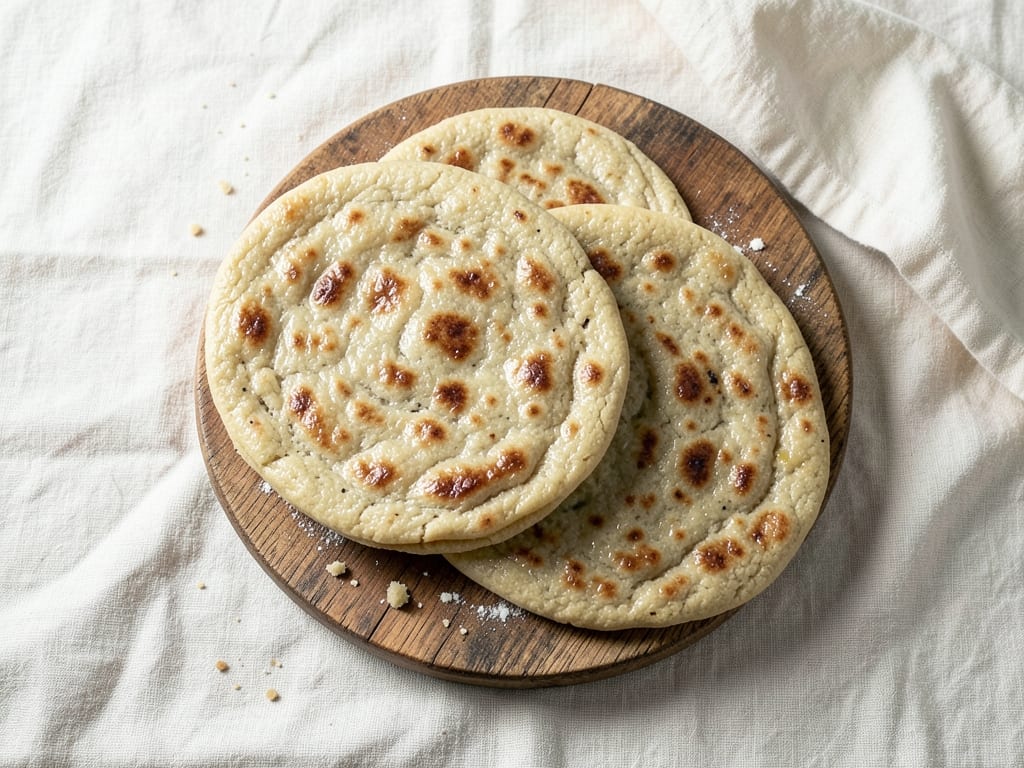
A Caribbean-inspired flatbread dough blending plantain flour with all-purpose flour for a slightly sweet, tender crumb with subtle tropical character. The dough is mixed by hand, kneaded until smooth, and ready to shape into arepas, pupusas, or traditional flatbreads. Coconut oil adds richness and keeps the dough tender and pliable.
- Prep
- 10 min
- Cook
- —
- Wait
- 15 min
- Total
- 25 min
- Makes
- 1 pound dough (8 flatbreads or arepas)
Steps
Before you start
- Use warm water (110°F / 43°C), not hot, to keep the dough workable
- Have all ingredients measured and ready before mixing
- If your kitchen is cool, let the rested dough warm to room temperature before shaping
Combine dry ingredients
- In a medium mixing bowl, whisk together the plantain flour (180 g / 1½ cups), all-purpose flour (120 g / 1 cup), and fine sea salt (4.5 g / ¾ teaspoon).
- Make a well in the center with your fingers.
+ Show details− Hide details
Ready when: Well forms easily in the flour mixture
Tip: Whisking incorporates air and ensures even salt distribution
Add wet ingredients
- Pour the warm water (180 ml / ¾ cup) and melted coconut oil (30 ml / 2 tablespoons) into the well.
- Using a wooden spoon or your fingers, draw the dry ingredients toward the center, mixing until a shaggy dough forms.
- Work until no dry flour remains.
+ Show details− Hide details
Ready when: All flour is incorporated; dough looks rough and slightly sticky
Tip: Adding liquids to a well prevents clumping; mix gently at first to avoid splashing
Knead the dough
- Transfer the dough to a clean work surface.
- Knead for 5–6 minutes, using the heel of your hand to push the dough away from you, then fold it back over itself and rotate a quarter turn.
- Repeat this motion steadily until the dough becomes smooth, elastic, and no longer sticky.
- It should hold together in a soft ball without cracks.
+ Show details− Hide details
Ready when: Dough is smooth, elastic, springs back when poked, and no longer leaves residue on your hands
Tip: Plantain flour absorbs liquid slightly differently than wheat flour; if the dough feels too sticky after 3 minutes, dust with a tablespoon of all-purpose flour. If it feels dry and crumbly, wet your hands lightly and continue kneading
Rest the dough
- Shape the kneaded dough into a smooth ball.
- Cover it loosely with plastic wrap or a damp kitchen towel and let it rest at room temperature for 15 minutes.
- This relaxes the gluten and makes the dough easier to shape.
+ Show details− Hide details
Ready when: Dough is still soft and slightly puffy
Tip: Cover loosely so the dough doesn't dry out, but leave space for minimal expansion
Good to know
Tips
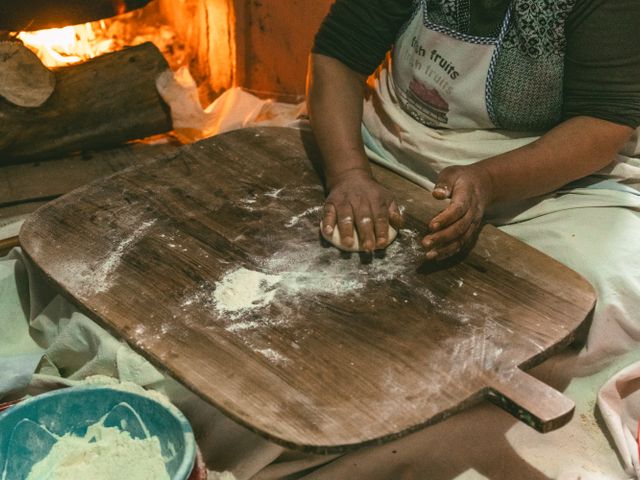
- This dough is best used fresh for flatbreads, arepas, pupusas, or pan-fried cakes. Divide into 8 equal portions (2 oz / 55 g each), rest each 5 minutes, then flatten into circles ⅛ to ¼ inch thick.
- Plantain flour adds natural sweetness and a subtle tang; avoid overmixing after the initial mixing, as overworking can make the dough tough despite the high moisture content.
- If you don't have a kitchen scale, weigh the rested dough ball, divide by 8, then roll each portion between your hands into a smooth ball before flattening.
- Store unused portions of rested dough in the refrigerator in an airtight container; they're easier to shape cold and will keep for up to 3 days.
Storage & reheating
**Room temperature**: Cover tightly with plastic wrap; use within 2 hours. **Refrigerator**: Wrap in plastic and store up to 3 days; bring to room temperature before shaping. **Freezer**: Wrap tightly and freeze up to 1 month; thaw in the refrigerator overnight, then warm gently before shaping.
Substitutions
- coconut oil, virgin → olive oil or vegetable oil. Use the same amount (30 ml / 2 tablespoons). You'll lose the subtle coconut flavor but the dough will remain tender and workable.
- plantain flour (green or yellow) → cassava flour or additional all-purpose flour (total 2 cups / 240 g). Cassava flour is closest in texture and mild flavor; all-purpose makes a less sweet, more neutral flatbread.
- warm water → coconut milk (unsweetened, warmed to 110°F / 43°C). Use the same volume (180 ml / ¾ cup). This enriches the dough and deepens the tropical character; reduce coconut oil to 1 tablespoon to avoid excess richness.
- fine sea salt → kosher salt. Use 1 teaspoon (5.5 g) kosher salt, as it is less dense than sea salt.