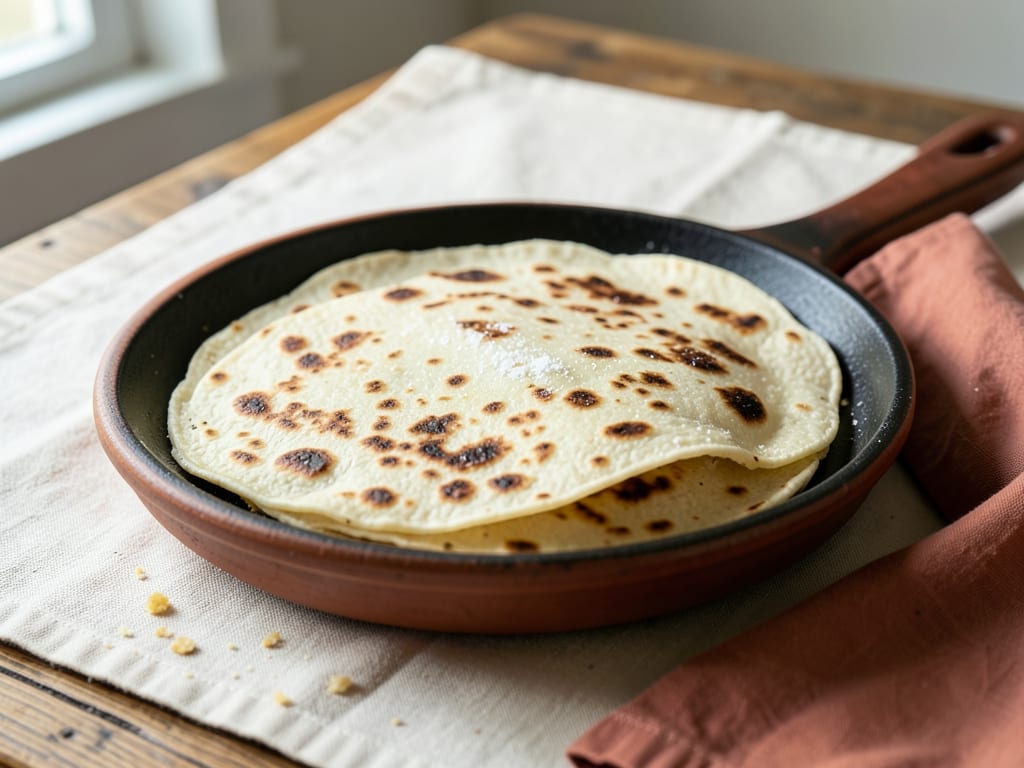
Achiote & Cacao Flatbread Dough
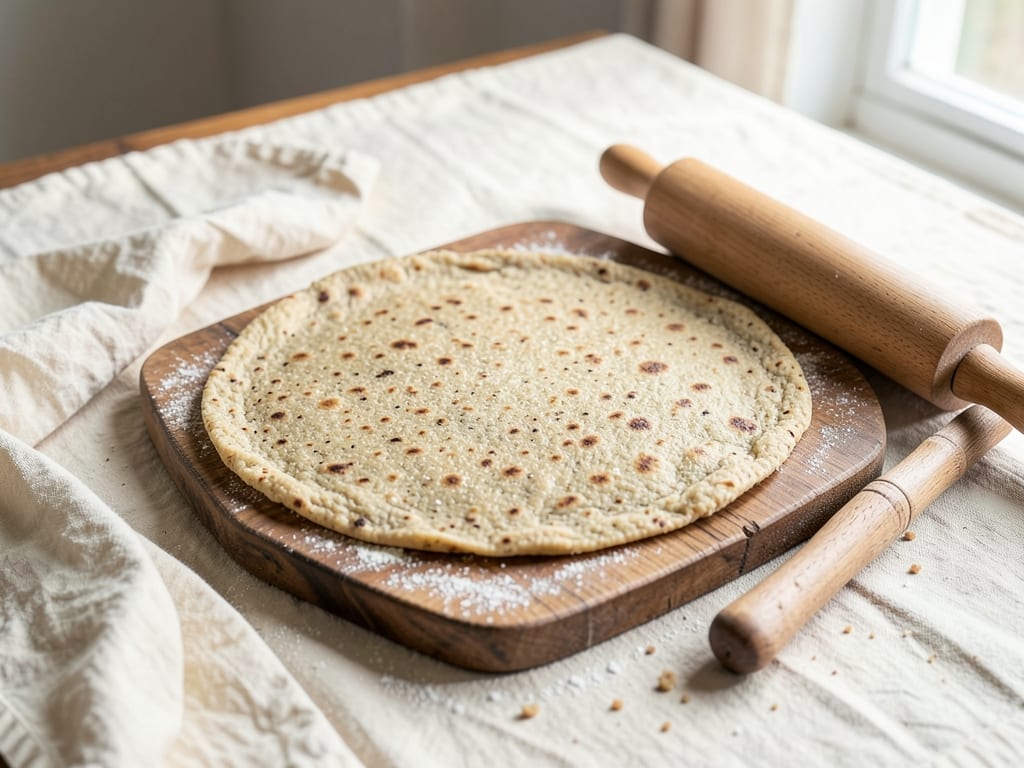
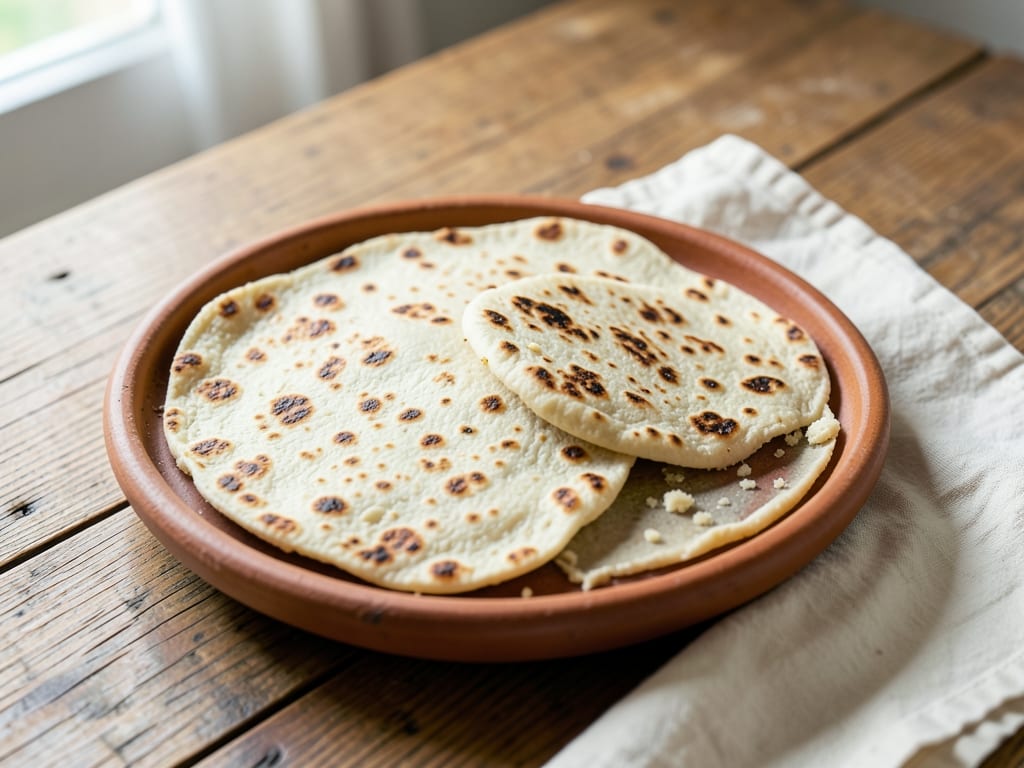
A rustic Latin American-inspired flatbread dough infused with achiote paste and cacao powder. The achiote brings earthy spice and a subtle peppery warmth, while cacao adds depth and complexity without making the dough sweet. This dough is soft, pliable, and ready to shape into thin flatbreads, perfect for grilling, pan-frying, or baking. The result has a warm reddish-brown hue and a sophisticated flavor that pairs beautifully with savory toppings.
- Prep
- 15 min
- Cook
- —
- Wait
- 1 hr
- Total
- 1 hr 15 min
- Makes
- 4 flatbreads (10-inch/25 cm), or 8 smaller flatbreads
Steps
Before you start
- Use warm water (around 110°F/43°C) to activate the dough properly
- Have all ingredients measured and ready before you begin
- Choose unsweetened cacao powder, not cocoa mix
- Achiote paste should be at room temperature for easier mixing
Combine dry ingredients
- In a medium bowl, whisk together the all-purpose flour, unsweetened cacao powder, and fine sea salt until evenly combined.
- The mixture should have a uniform brown color with no streaks of flour.
- Set aside.
+ Show details− Hide details
Ready when: uniform brown color with no streaks
Tip: Whisking the cacao powder thoroughly prevents lumps in the dough.
Bloom achiote paste
- In a large mixing bowl, pour the warm water (about 110°F/43°C).
- Add the room-temperature achiote paste and stir vigorously with a wooden spoon until the paste dissolves completely into the water.
- The water should turn a deep reddish-brown color.
- This dissolves the pigments and flavors evenly throughout the dough.
+ Show details− Hide details
Ready when: achiote paste fully dissolved, water is deep reddish-brown
Tip: Stir the achiote paste hard; it resists dissolving at first but will eventually break down completely.
Form the dough
- Add the extra-virgin olive oil to the achiote-water mixture and stir to combine.
- Gradually add the dry ingredient mixture to the wet ingredients, stirring with a wooden spoon until a shaggy dough forms.
- The dough should be slightly sticky but manageable.
- Mix until no visible dry flour remains.
+ Show details− Hide details
Ready when: shaggy dough forms, no visible dry flour
Tip: Add the dry mixture slowly to avoid lumps; a few seconds of extra stirring prevents flour pockets.
Knead the dough
- Turn the dough out onto a lightly floured work surface.
- Knead for 8–10 minutes by hand, using the heel of your hand to push the dough away, then folding it back over itself and turning it 90 degrees.
- The dough should become smooth, elastic, and slightly springy.
- If it feels too dry, wet your hands lightly and continue kneading; if too wet, dust with a tiny bit of flour.
+ Show details− Hide details
Ready when: dough is smooth, elastic, and springs back when poked
Tip: Knead thoroughly: under-kneaded dough will tear easily when rolled. A video reference can help if you've never kneaded before.
First rise (bulk fermentation)
- Form the dough into a ball and place it in the large mixing bowl.
- Lightly oil the top with a thin coat of olive oil to prevent drying.
- Cover the bowl with a damp kitchen towel and let the dough rise at room temperature (68–72°F/20–22°C) for about 1 hour, until it increases in size by roughly 50–75% and feels airy when gently poked.
+ Show details− Hide details
Ready when: dough is visibly puffed, soft, and springs back slowly when poked
Tip: A warmer kitchen speeds fermentation; a cooler one slows it. Check at 45 minutes if your kitchen is very warm.
Shape and rest (pre-cook)
- Turn the risen dough onto a floured surface and gently press it down to release excess gas.
- Divide into 4 equal pieces (or 8 if making smaller flatbreads).
- Shape each piece into a rough ball, then let them rest under the damp towel for 10 minutes.
- This resting period makes the dough easier to roll out without tearing.
+ Show details− Hide details
Ready when: dough feels relaxed and is easier to stretch without resistance
Tip: Don't skip this rest; it prevents the dough from shrinking back as you shape it.
Good to know
Tips
- This dough is forgiving and doesn't require commercial yeast because the achiote paste and cacao contribute flavor depth. If you want faster rising, add ¼ teaspoon instant yeast to the warm water in step 2, then reduce the rise time to 30–45 minutes.
- The achiote-cacao combination is savory-leaning; serve these flatbreads with grilled meats, stews, cheese, or bean spreads rather than sweet toppings.
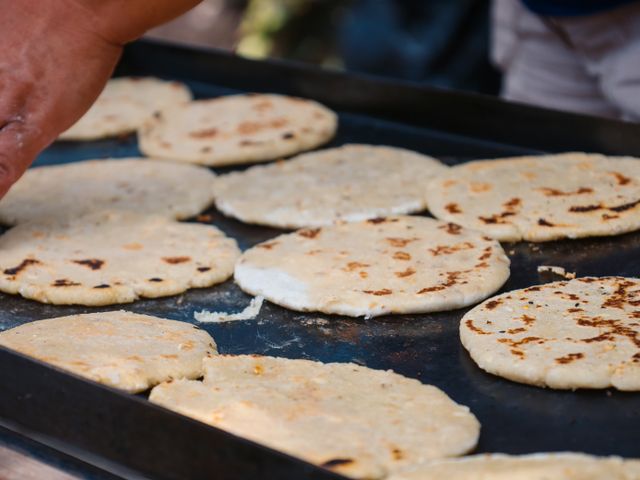
- For pan-frying: Heat a cast-iron skillet or griddle over medium-high heat with a thin coating of oil. Cook each flatbread for 2–3 minutes per side until golden and blistered. For grilling: Grill over medium-high heat for 2–3 minutes per side, rotating a quarter-turn halfway through each side for nice char marks.
- The dough's reddish-brown color comes from the achiote pigment and is safe and food-coloring-free. It may stain your hands slightly; wash with warm soapy water.
Make ahead
You can prepare the dough up to 12 hours ahead. After the first rise, divide, shape, and place the dough balls in a covered container in the refrigerator. Let them come to room temperature (about 30 minutes) before rolling out and cooking.
Storage & reheating
Room temperature: Store wrapped flatbreads in an airtight container or zip-top bag for up to 2 days. Refrigerator: Wrapped flatbreads keep for up to 5 days; reheat in a dry skillet over medium heat for 1–2 minutes per side, or wrap in foil and warm in a 350°F (175°C) oven for 8–10 minutes. Freezer: Wrap individual flatbreads in parchment, then in plastic wrap, and freeze for up to 3 months. Thaw at room temperature before reheating in a skillet or oven. Uncooked dough: Refrigerate for up to 3 days or freeze individual balls (wrapped and sealed) for up to 1 month.
Substitutions
- achiote paste (recado or annatto paste) → 1½ teaspoons (3 g) achiote powder mixed with 1 tablespoon (15 ml) warm water. Achiote powder is less concentrated than paste, so you need slightly less and must hydrate it separately. Mix the powder into the water before adding to the dough.
- unsweetened cacao powder → 2 tablespoons (10 g) finely ground coffee or espresso powder. This loses the subtle chocolate note but adds earthiness and depth. The dough will be darker and more bitter.
- warm water → chicken or vegetable stock (same amount, warm). Using stock instead of plain water adds savory depth and pairs beautifully with achiote and cacao.
- extra-virgin olive oil → neutral oil (vegetable, canola, or light avocado oil). Neutral oil won't change the flavor profile. Avoid nut oils, which might overpower the delicate achiote-cacao balance.