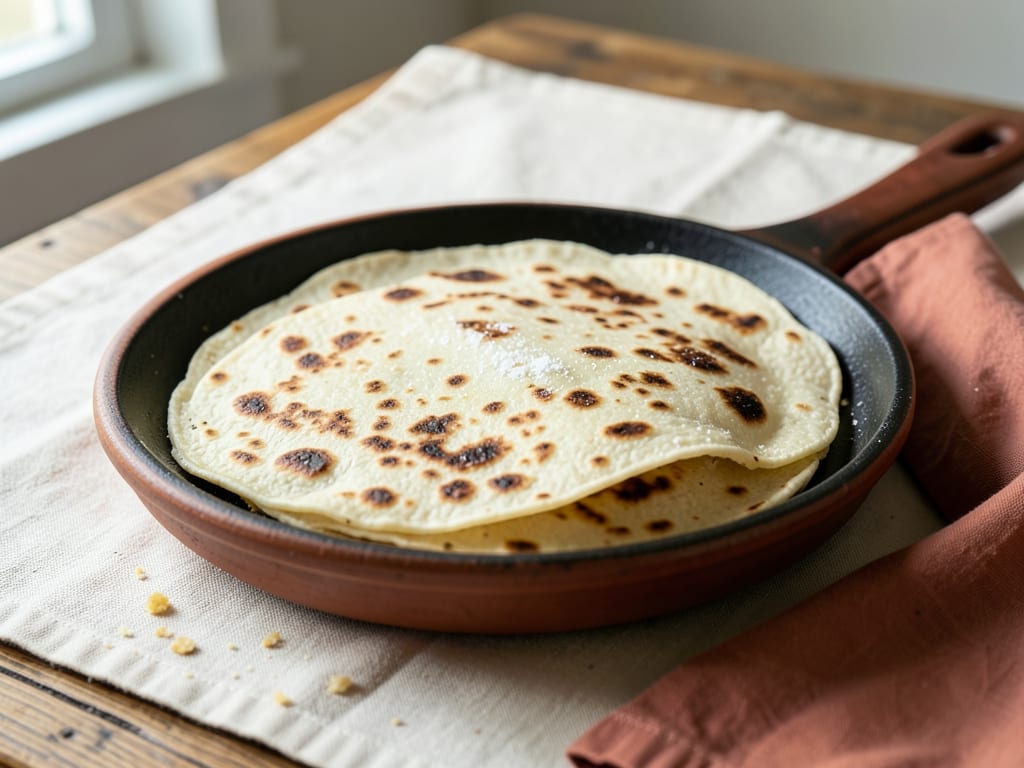
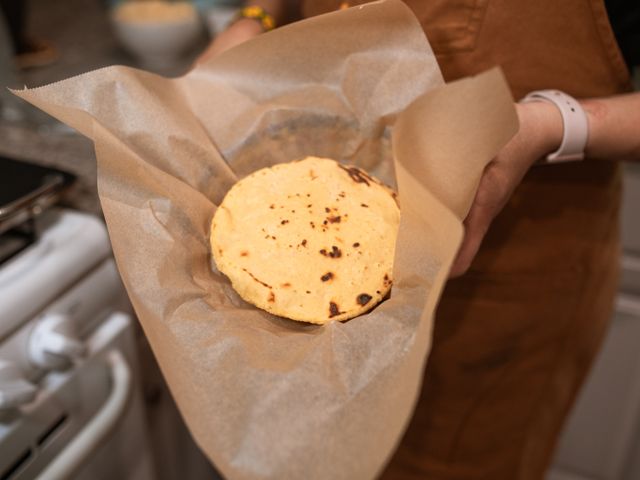
Sourdough Mexican Chorizo and Epazote Crackers
Crispy, savory crackers made with active sourdough starter and studded with spiced chorizo, fresh epazote, and cumin. The sourdough tang pairs beautifully with the heat and depth of Mexican chorizo, while epazote adds its signature peppery, mineral note. These crackers are perfect for snacking, serving with cheese and salsa, or alongside soups and stews.
- Prep
- 20 min
- Cook
- 25 min
- Wait
- 3 hr
- Total
- 3 hr 45 min
- Makes
- 24 crackers (about 3 ounces/85 g each)
Steps
Before you start
- Feed your sourdough starter 4–6 hours ahead so it is bubbly and active at peak rise
- Remove chorizo casings and break the meat into small crumbles
- Strip epazote leaves from stems and roughly chop
- Preheat oven to 400 °F (200 °C) 15 minutes before baking
Mix dough
- In a large bowl, combine the bubbly sourdough starter, bread flour, whole wheat flour, salt, and water.
- Stir with a rubber spatula or use a stand mixer fitted with a dough hook.
- Mix on low speed for 3–4 minutes until all flour is incorporated and a shaggy dough forms.
- The dough will be slightly sticky but should hold together.
+ Show details− Hide details
Ready when: All flour is moistened and dough pulls away from bowl sides
Tip: Don't overmix; you want a relaxed dough, not a tight one.
Incorporate chorizo and epazote
- Add the crumbled chorizo, chopped epazote, ground cumin, and lime zest to the dough.
- Fold and knead gently by hand or on low mixer speed for 2–3 minutes until the ingredients are evenly distributed throughout.
- The dough should look flecked with chorizo and herb throughout.
+ Show details− Hide details
Ready when: Chorizo and epazote are evenly dispersed with no dry pockets
Tip: Don't knead too much or the epazote will darken and lose flavor; stop when ingredients are just combined.
First rise
- Cover the bowl with a damp kitchen towel or plastic wrap.
- Let the dough rise at room temperature (68–72 °F / 20–22 °C) for 90 minutes.
- The dough should increase by about 50–75% in volume and look puffy, with visible bubbles on the surface.
+ Show details− Hide details
Ready when: Dough is visibly puffed, with bubbles breaking the surface; passes poke test (indent slowly springs back halfway)
Tip: If your kitchen is cool, rise may take up to 120 minutes; just watch the dough, not the clock.
Prepare baking sheetsOven 400°F / 205°C
- Line two 9×13-inch (23×33 cm) baking sheets with parchment paper.
- Set aside.
- Preheat your oven to 400 °F (200 °C) if you haven't already.
Divide and shape
- Turn the risen dough onto a lightly floured surface.
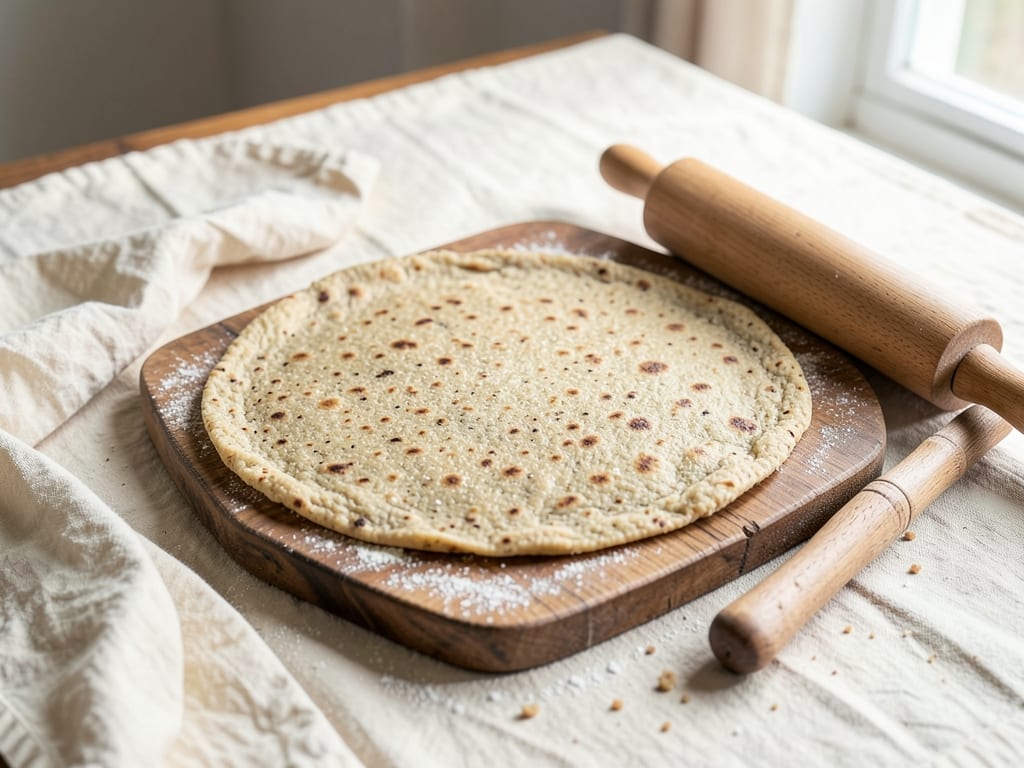
- Gently stretch and shape it into a rough 12×8-inch (30×20 cm) rectangle.
- Cut the rectangle in half lengthwise, then cut each half into 12 equal strips (you'll have 24 pieces total).
- Transfer the pieces to the prepared baking sheets, spacing them about ½ inch (1 cm) apart.
+ Show details− Hide details
Ready when: 24 evenly sized pieces arranged on baking sheets
Tip: If the dough resists, let it rest for 5 minutes under a towel before cutting; this relaxes the gluten.
Second rise and finish
- Cover the shaped crackers loosely with a kitchen towel.
- Let them rise at room temperature for 45 minutes until they look slightly puffed and feel airy when gently pressed.
- Lightly brush the tops with olive oil and sprinkle with fleur de sel or sea salt to taste.
+ Show details− Hide details
Ready when: Crackers are visibly puffed; a gentle press yields to light pressure but slowly springs back
Tip: Don't let them rise too long or they'll be too puffy to crisp properly; aim for a light, airy texture, not a full bread rise.
Bake until crispyOven 400°F / 205°C
- Bake at 400 °F (200 °C) for 22–26 minutes, rotating the baking sheets halfway through (around the 12-minute mark).
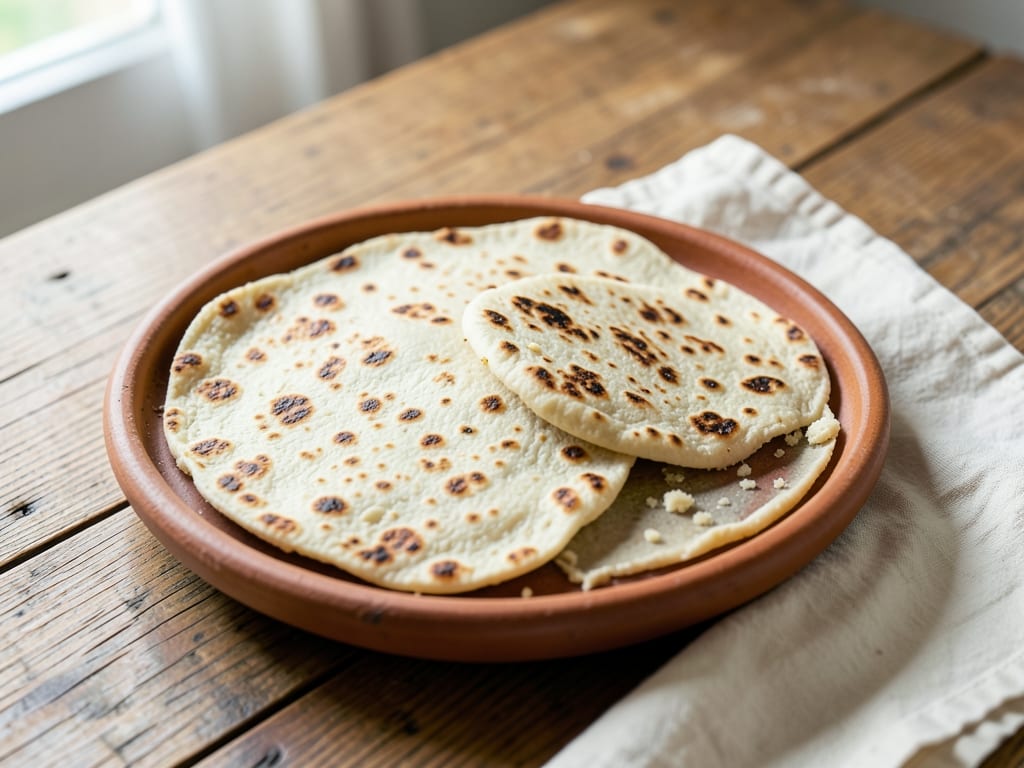
- The crackers are done when they are deep golden brown on top and bottom, and feel completely rigid when cooled slightly.
- They should break crisply in your hands.
+ Show details− Hide details
Ready when: Deep golden brown, rigid and crispy, audibly crackle when broken
Tip: Don't underbake; the crackers will firm up more as they cool, but they should sound crispy in the oven.
Cool and serve
- Transfer the hot crackers to a wire cooling rack.
- Let them cool completely (about 10 minutes) so they crisp fully.
- Once cool, store in an airtight container until serving.
+ Show details− Hide details
Ready when: Crackers are room temperature and fully crispy throughout
Tip: Don't stack them in the container until fully cooled, or they'll trap steam and soften.
Good to know
Tips
- Fresh epazote is key to authenticity—if unavailable, substitute cilantro, but the mineral peppery quality will be lost. Look for epazote in Latin markets or grow it from seed; it's hardy and prolific.
- Use a sourdough starter that has been fed 4–6 hours before—it should be bubbly and at its peak rise with a domed or slightly collapsed top. A weak or sluggish starter will produce dense crackers.
- For maximum crispness, ensure your oven is fully preheated and use the convection setting if your oven has it; it helps crackers dry evenly and cook faster.
- These crackers are best enjoyed within 1–2 days of baking, when they are at peak crispness. Serve with cheese, hot sauce, guacamole, or alongside soups like tortilla or black bean.
Make ahead
Dough can be mixed the evening before, refrigerated overnight, and brought to room temperature in the morning before the first rise. Shaped crackers can be frozen on a baking sheet for up to 2 weeks, then baked directly from frozen (add 3–4 minutes to baking time).
Storage & reheating
Room temperature: Store in an airtight container or resealable bag for up to 5 days. They crisp back up in a 300 °F (150 °C) oven for 3–5 minutes if they soften. Freezer: Cool completely, then freeze in an airtight container or freezer bag for up to 1 month; thaw at room temperature or refresh in a warm oven.
Substitutions
- fresh epazote → fresh cilantro. Cilantro is milder and sweeter but will give you a fresh herbal note. Use the same amount.
- fresh Mexican chorizo → spicy Spanish chorizo or andouille sausage. These are smokier and often leaner; chop finely so they distribute evenly and cook through during baking.
- whole wheat flour → spelt flour or rye flour. Both add earthiness and chew. Spelt is slightly nuttier; rye adds a subtle tang that complements the sourdough.
- lime zest → orange zest. Orange is slightly sweeter and pairs well with cumin; use the same amount.