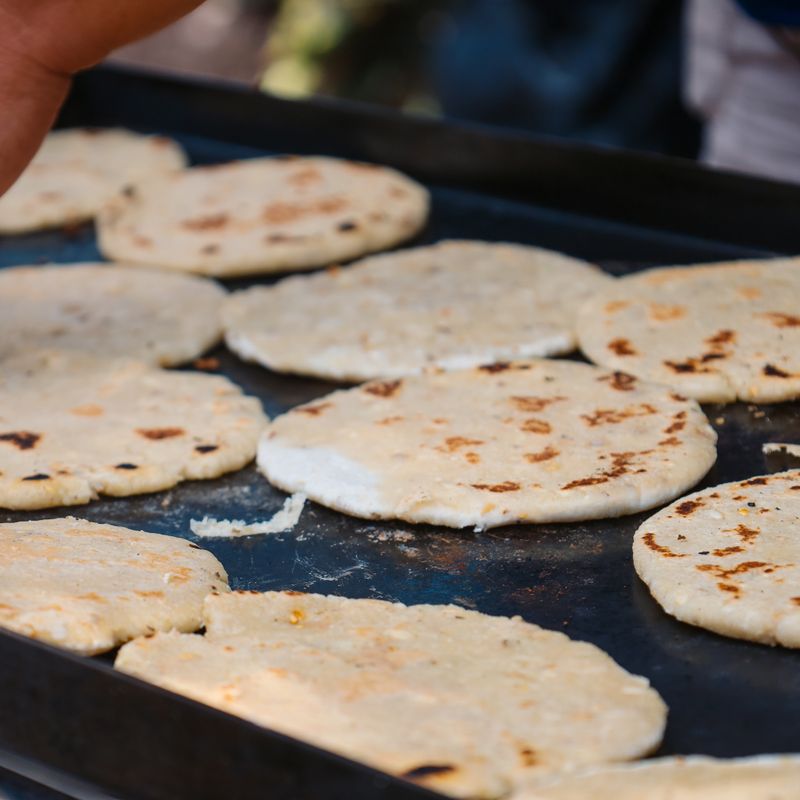
Cornmeal Jalapeño Flatbread Dough
A rustic flatbread dough that blends cornmeal and all-purpose flour with fresh jalapeños for subtle heat and bright flavor. The dough is easy to mix, benefits from a brief rest, and can be shaped and pan-cooked into tender, charred flatbreads. Serve warm with soups, stews, or grilled proteins for an authentic Latin American touch.
- Prep
- 15 min
- Cook
- —
- Wait
- 30 min
- Total
- 45 min
- Makes
- 1 batch (dough for 6 flatbreads)
Steps
Before you start
- Measure all ingredients and set them out (mise en place).
- Pat the jalapeños dry with paper towels before mincing to prevent excess moisture.
- Have a large mixing bowl (3–4 quarts) and wooden spoon ready, or set up a stand mixer with dough hook.
Combine flours and salt
- In a large mixing bowl, whisk together the all-purpose flour, cornmeal, and kosher salt until evenly combined.
- Create a shallow well in the center of the dry ingredients.
+ Show details− Hide details
Ready when: Dry ingredients are evenly combined and no streaks of cornmeal remain
Tip: Whisking the dry ingredients thoroughly helps distribute the salt and cornmeal evenly, preventing lumps in the final dough.
Add wet ingredients
- Place the minced jalapeños in the well.
- Pour the room-temperature water and olive oil over the jalapeños.
+ Show details− Hide details
Ready when: Jalapeños and liquids are pooled in the center of the flour mixture
Tip: Seeding the jalapeños reduces the heat; leave some seeds in if you prefer a spicier dough.
Mix wet and dry together
- Using a wooden spoon or the dough hook on low speed of a stand mixer, begin mixing from the center outward, gradually incorporating the dry ingredients into the wet ingredients.
- Continue mixing for 2–3 minutes until all flour is incorporated and a shaggy, rough dough forms.
- Small lumps and streaks are fine at this stage.
+ Show details− Hide details
Ready when: All flour is incorporated; dough looks shaggy and rough but holds together
Tip: Stop mixing as soon as the flour disappears. Overmixing at this stage can develop too much gluten, resulting in a tough, dense dough.
Knead until smooth
- Turn the dough onto a lightly floured work surface and knead by hand for 5–6 minutes, folding it over itself and pushing down with the heel of your hand.
- Alternatively, use a stand mixer on medium speed with the dough hook for 4–5 minutes.
- The dough should become smoother, more cohesive, and slightly elastic.
- It will still feel a bit sticky, which is normal for cornmeal dough.
+ Show details− Hide details
Ready when: Dough is smooth and elastic, springs back slightly when pressed, and the jalapeños are evenly distributed throughout
Tip: Cornmeal doughs are naturally softer and stickier than all-flour doughs. Resist the urge to add too much extra flour; if needed, dust with just a tablespoon at a time. The dough should feel supple and slightly tacky.
Rest and relax dough
- Shape the dough into a smooth ball.
- Coat a large bowl lightly with olive oil and place the dough inside, turning it over once to coat all sides.
- Cover the bowl with a damp kitchen towel or plastic wrap.
- Let the dough rest at room temperature (68–72°F / 20–22°C) for 30 minutes.
- During this time, the gluten will relax and the flavors will develop, making the dough much easier to shape.
+ Show details− Hide details
Ready when: Dough has softened and puffed slightly; it won't double in volume but will appear noticeably fuller and softer
Tip: Don't skip this rest step. Even a 10-minute rest helps, but 30 minutes is ideal for the best flavor and extensibility.
Good to know
Tips
- Cornmeal can absorb water unevenly because of its coarser grain. If your dough feels dry and crumbly after mixing, add water 1 tablespoon at a time until it reaches a soft, supple consistency. Conversely, if the dough feels overly wet, dust with a bit more flour.
- Fresh jalapeños vary greatly in moisture content. Patting them dry before mincing is crucial to prevent the dough from becoming too wet. For a milder dough, remove all seeds and white ribs; leave some seeds for more heat.
- This dough is forgiving. Even a 10-minute rest improves shapeability; 30 minutes is ideal for best flavor and elasticity. You can also refrigerate it for longer, which develops more complex flavor.
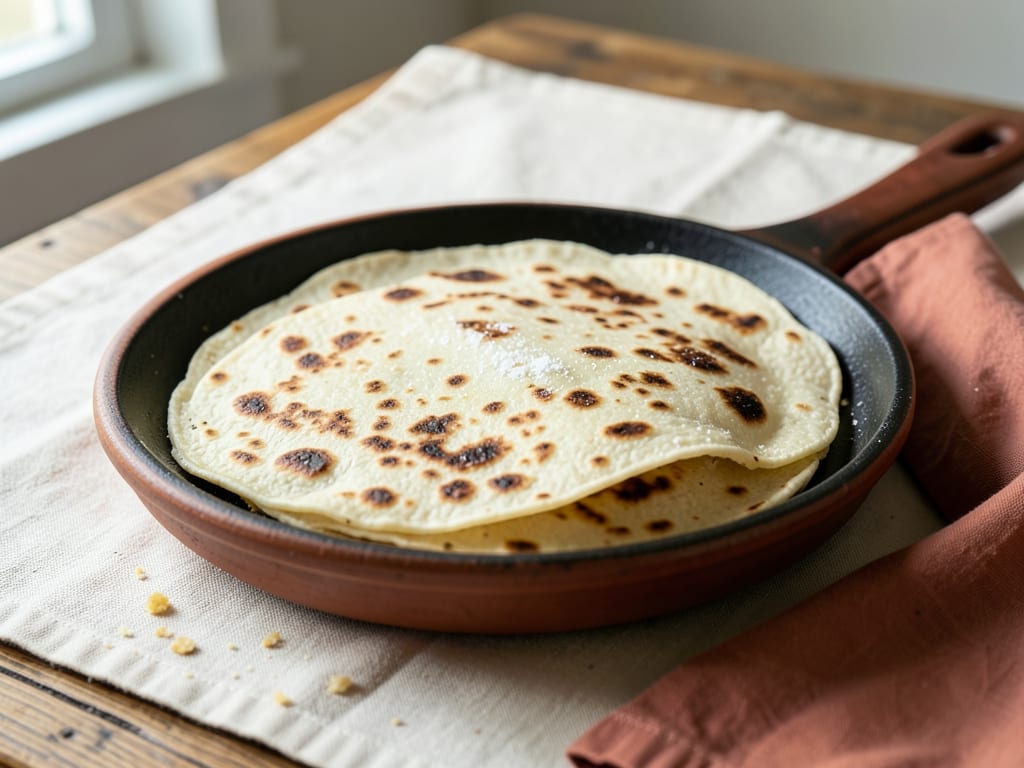
- Once rested, divide the dough into 6 equal pieces (about 120g each), shape into balls, and let rest 5 minutes. Flatten each into a disk about 1/4 inch thick and cook on a hot cast-iron skillet or griddle over medium-high heat for 1–2 minutes per side until puffed and lightly charred.
Make ahead
Yes. Mix and knead the dough up to 8 hours ahead. Refrigerate it in an oiled, tightly covered container. Let the cold dough come to room temperature for about 15 minutes before shaping (or shape directly from the fridge if you prefer). You can also freeze the dough for up to 3 months in an airtight container; thaw overnight in the refrigerator.
Storage & reheating
Store the rested dough in an oiled, airtight container in the refrigerator for up to 5 days. Freeze for up to 3 months. Thaw frozen dough overnight in the refrigerator. Let refrigerated dough rest at room temperature for 15 minutes before shaping to make it easier to work with.
Substitutions
- cornmeal (polenta) → Polenta or masa harina. Polenta gives a similar grind and texture; masa harina (corn flour) adds traditional Mexican flavor and can be used 1:1. Stone-ground cornmeal also works beautifully for a heartier texture.
- fresh jalapeño peppers → Diced roasted green chiles or jalapeño powder. Use 1/4 cup (60g) canned roasted green chiles (drained and chopped) and reduce water by 2 tablespoons. Jalapeño powder (1–2 teaspoons) works if fresh peppers aren't available, though it's milder.
- water → Buttermilk or whole milk. Either will add richness and a slight tang. Use 1 cup (240ml) and monitor dough consistency; you may need 1–2 tablespoons less liquid as dairy adds moisture.
- olive oil → Vegetable oil, corn oil, or melted butter. Any neutral oil works fine. Melted butter adds richness and a more tender crumb, though it will brown more easily during cooking.
More flatbread doughs
See all →
Find more like this
- Meal
- Dinner
- Cuisine
- Mexican
- Quick & Easy
- 5 Ingredients or LessEasyBeginner