Tunisian Kesra Flatbread
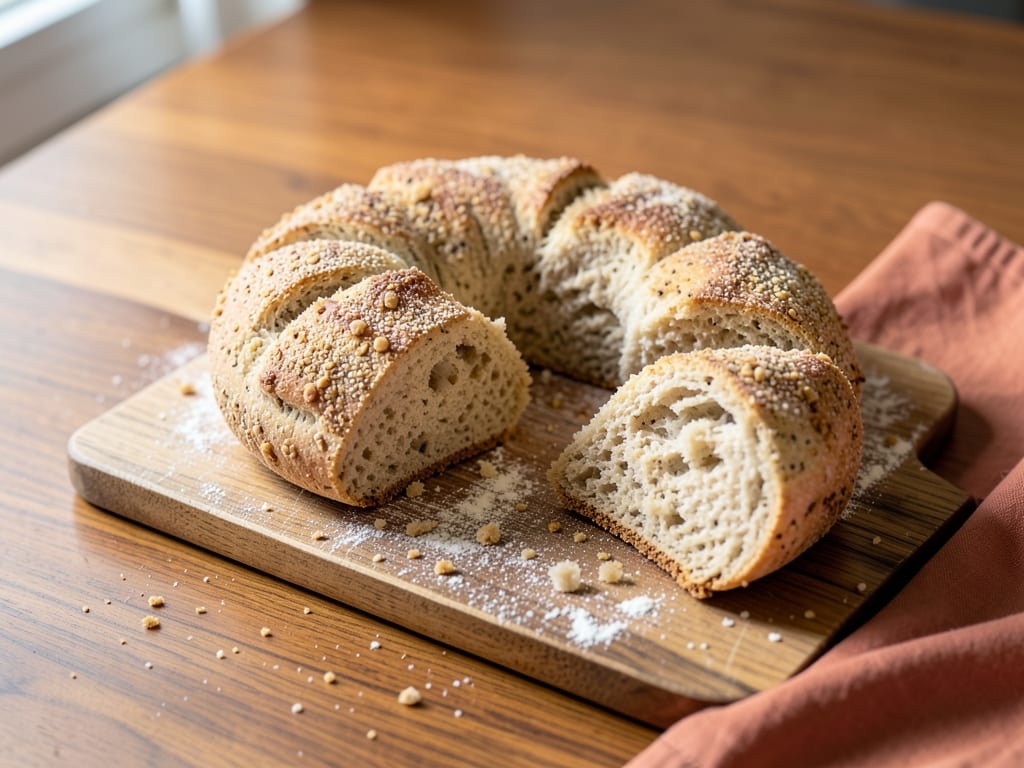
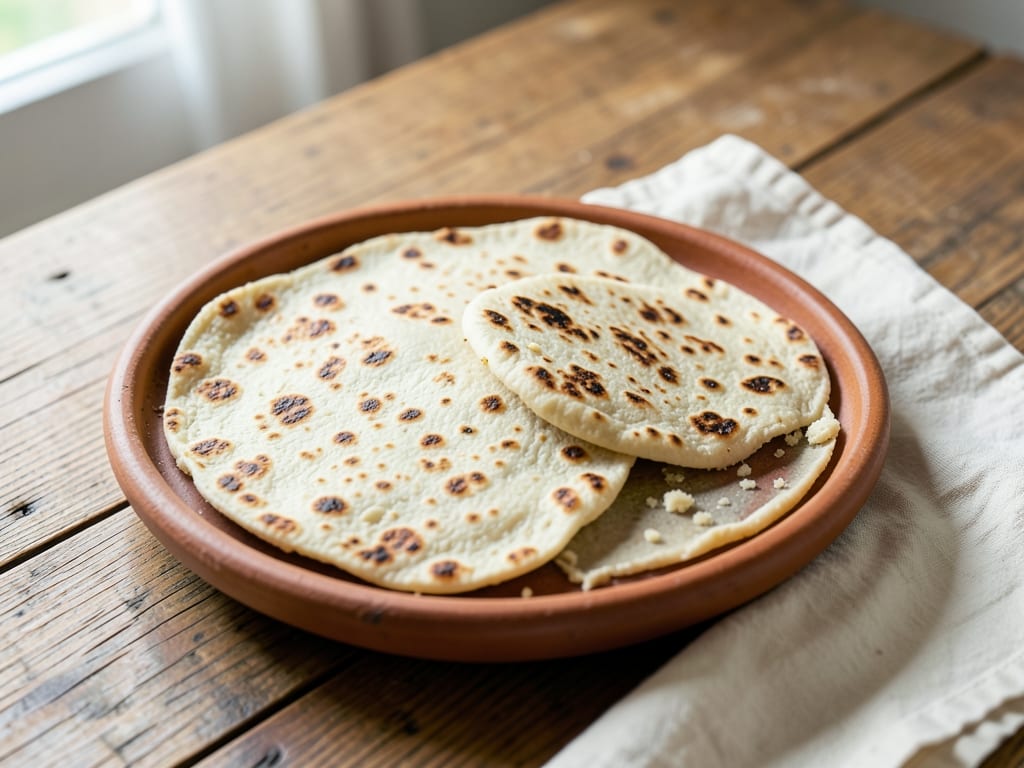
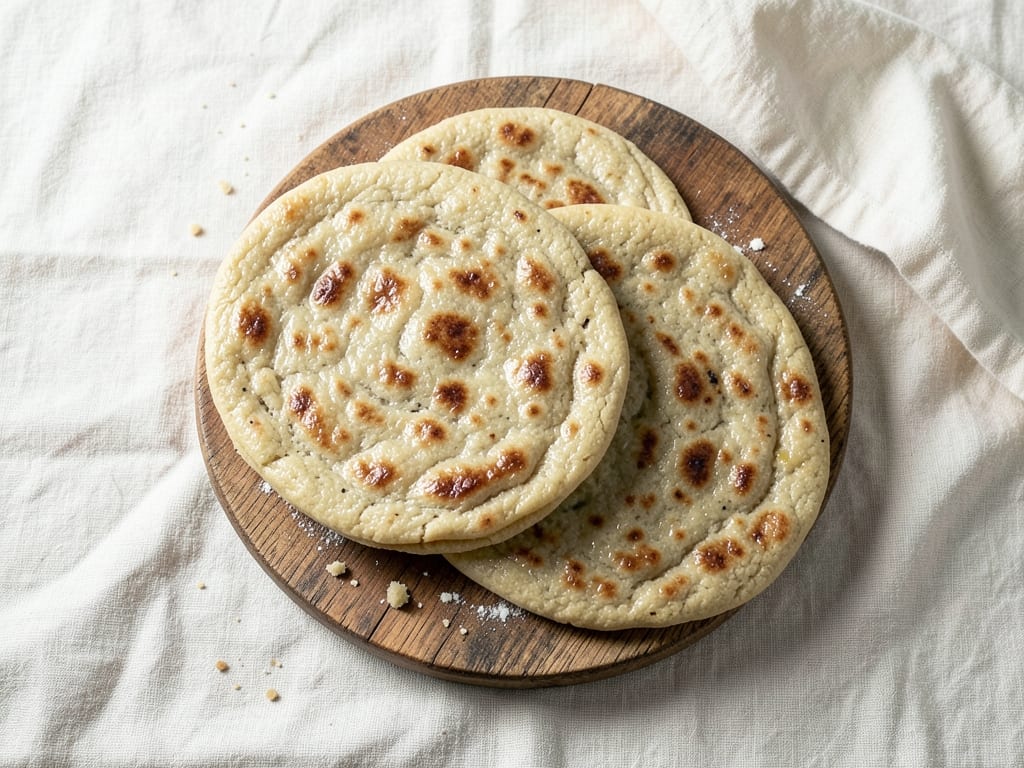
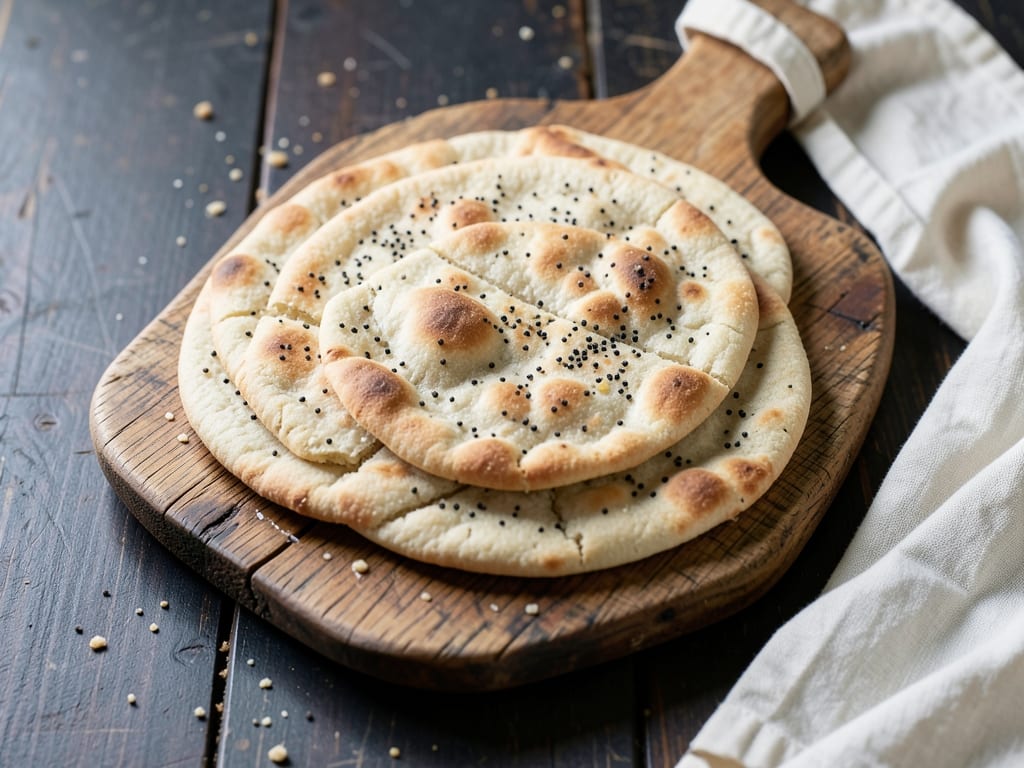
Kesra is a thick, tender North African flatbread with a golden semolina crust and a soft, slightly nutty crumb. This yeasted version cooks entirely in a dry skillet on the stovetop. Tear it and use it to scoop up stews, harissa, or olive oil.
- Prep
- 25 min
- Cook
- 48 min
- Wait
- 1 hr 40 min
- Total
- 2 hr 53 min
- Makes
- 4 rounds, each about 7 inches (18 cm) wide; serves 8 (½ round each)
Steps
Before you start
- Use fine semolina (sometimes labeled 'semolina flour' or 'extra-fine'). Coarse semolina makes a gritty bread.
- Warm the water to 105–110°F (40–43°C). It should feel comfortably warm, not hot, or it can weaken the yeast.
- Plan on about 3 hours in total. Most of that is rising and resting.
- You need a heavy 10-inch (25 cm) skillet, preferably cast iron. The rounds cook one at a time unless you have two pans.
Mix the dry ingredients
- In a large bowl, whisk together the fine semolina (300 g), all-purpose flour, instant yeast, sugar and salt for 30 seconds, until evenly combined.
- Make a well in the center.
+ Show details− Hide details
Ready when: No streaks of yeast or salt are visible in the flour mixture.
Tip: Whisk the salt in well. Concentrated salt can slow the yeast.
Make the dough
- Pour the warm water and 3 tablespoons (45 ml) olive oil into the well.
- Stir with a wooden spoon or your hand until no dry flour remains and the dough is shaggy and sticky.
- Turn it out onto a lightly oiled counter and knead for 8–10 minutes, until it looks smooth.
+ Show details− Hide details
Ready when: The dough is smooth, soft and slightly tacky but not sticking to your hands. When poked, it springs back slowly.
Tip: Semolina absorbs water slowly. If the dough feels sticky at first, resist adding flour. Knead for a few more minutes and it will firm up.
First rise
- Brush a clean large bowl with a little of the finishing olive oil (about 1 teaspoon).
- Shape the dough into a ball and place it in the bowl, turning it once to coat.
- Cover tightly with plastic wrap or a damp towel and let rise in a warm spot (75–80°F / 24–27°C) for 60 minutes.
+ Show details− Hide details
Ready when: The dough has nearly doubled and a floured fingertip leaves a dent that fills back in slowly.
Tip: In a cool kitchen, give it up to 30 extra minutes. Judge by the dough's size, not just the clock.
Shape the rounds
- Dust a rimmed baking sheet and your work surface with some of the dusting semolina.
- Turn out the dough and divide it into 4 equal pieces of about 225 g each.
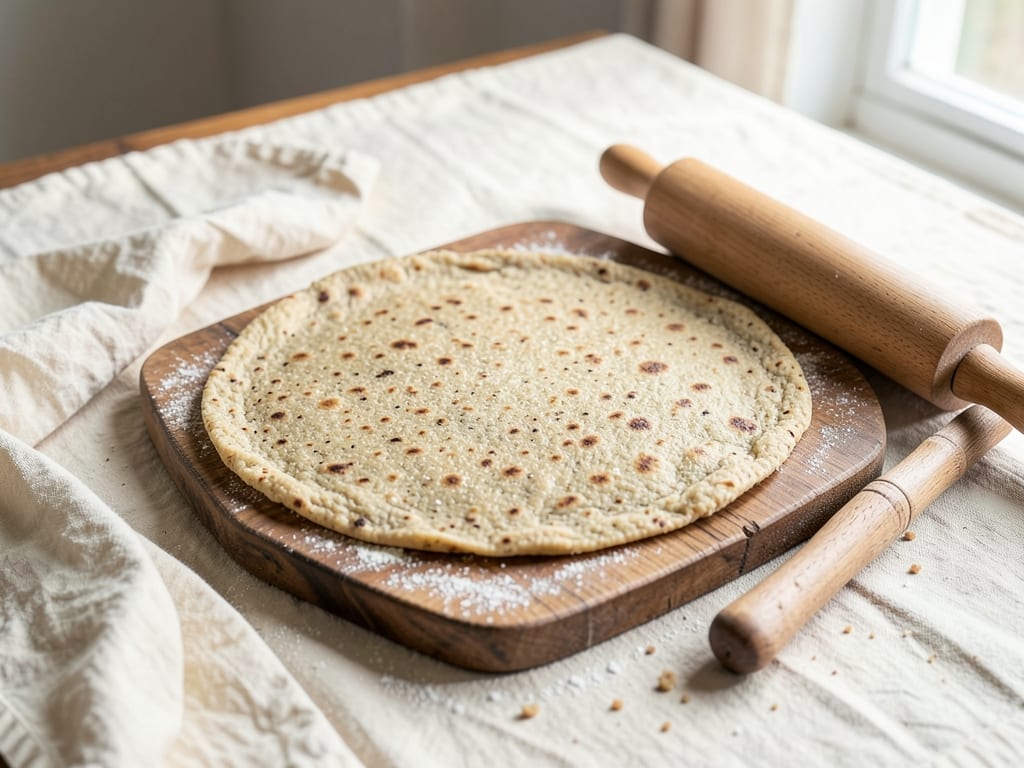
- Shape each piece into a ball, then press and stretch it into a disk about 7 inches (18 cm) wide and ½ inch (1.2 cm) thick.
- Place the disks on the sheet, leaving a 1-inch (2.5 cm) gap between them.
- Sprinkle with nigella seeds, if using, and press them in lightly.
+ Show details− Hide details
Ready when: The disks are even in thickness, with no thin spots or tears.
Tip: Use your fingertips and palms, not a rolling pin. Rolling squeezes out the gas and gives a denser crumb.
Rest the shaped bread
- Cover the disks loosely with a clean kitchen towel and let them rest for 30 minutes at room temperature.
+ Show details− Hide details
Ready when: The disks look puffy, and a gentle fingertip press leaves a dent that slowly springs back.
Tip: Do not let the towel rest on the dough. Use a bowl or a light tent so it does not stick.
Heat the skillet
- Place a dry 10-inch (25 cm) skillet over medium-low heat for 3 minutes, until evenly hot.
- Do not add oil.
+ Show details− Hide details
Ready when: A pinch of semolina sprinkled in the pan slowly turns tan within about 30 seconds.
Tip: If the semolina scorches right away, the pan is too hot. The thick bread would burn outside before cooking through.
Cook the kesra
- Gently lift one disk and lay it in the skillet.
- Cook for 5–6 minutes on the first side, without moving it, until the underside is deep golden with light brown spots.
- Flip and cook another 5–6 minutes.
- Repeat with the remaining disks, one at a time, brushing off any burnt semolina from the pan between batches.
+ Show details− Hide details
Ready when: Both sides are deep golden with brown spots, the bread feels light and firm, and it sounds hollow when tapped on the bottom. The center should read 200–210°F (93–99°C) if you check.
Tip: If the crust browns before the center feels set, lower the heat and cook an extra 2 minutes per side.
Brush and cool
- As each round comes out of the skillet, brush the top lightly with the remaining olive oil (about 1 tablespoon in total, across all four).
- Set on a wire rack and cool for at least 10 minutes before cutting into wedges.
+ Show details− Hide details
Ready when: The bread is warm, not steaming, and slices cleanly without squashing.
Tip: Don't stack the hot rounds. Trapped steam softens the crust.
Good to know
Tips
- Fine semolina is what gives kesra its sandy golden crust. Do not swap in coarse semolina or cornmeal.
- Keep the heat at medium-low. A thick flatbread needs time to cook through before the crust darkens.
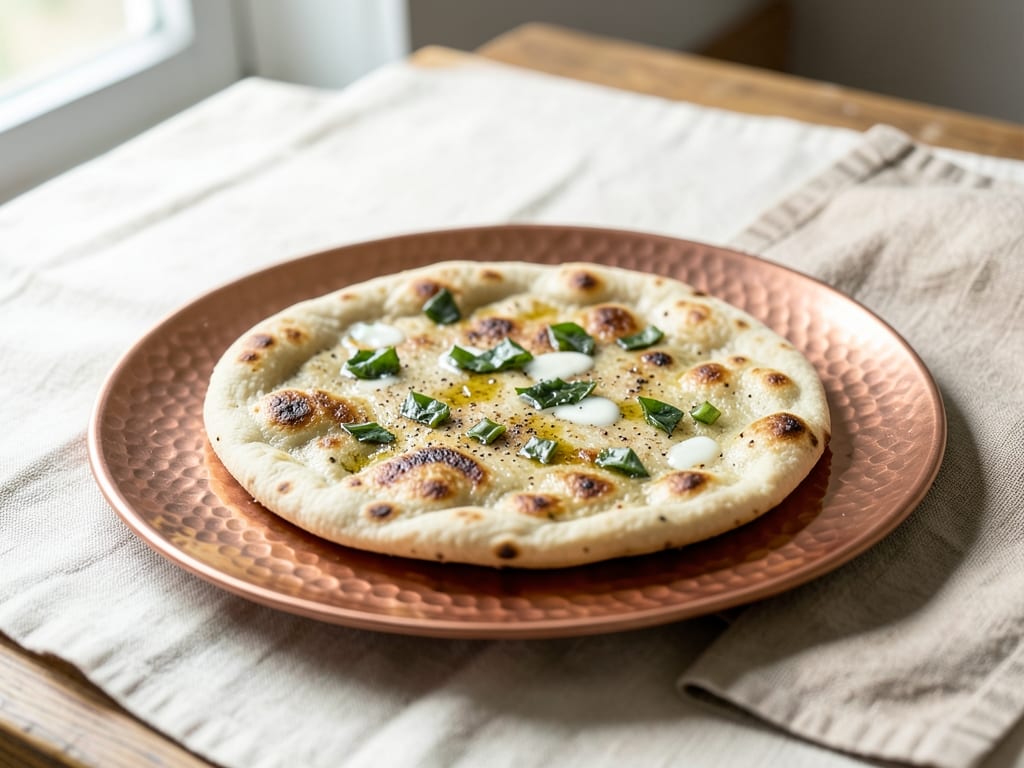
- Serve warm with tajine, chorba soup, or shakshuka, or dip it in olive oil and harissa.
- Weigh the flours if possible. Semolina packs differently from cup to cup and affects the dough's hydration.
Make ahead
Make the dough through step 2, then refrigerate it in an oiled, covered bowl for up to 24 hours. Let it stand at room temperature for 1 hour, until puffy, then continue from step 4.
Storage & reheating
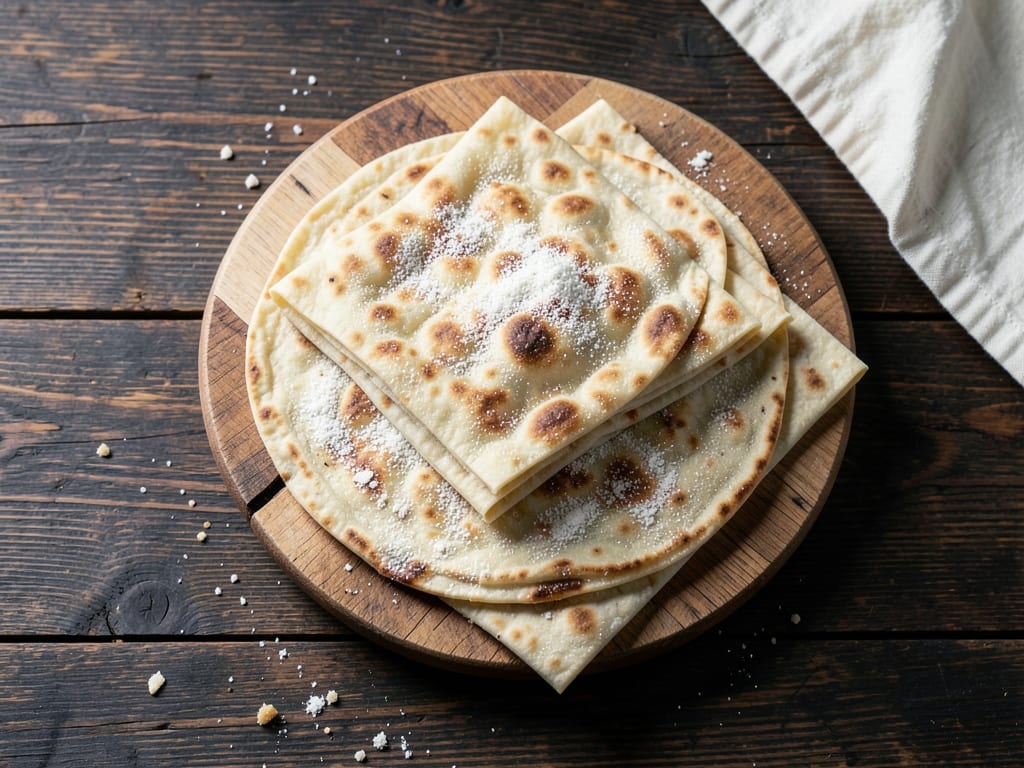
Room temperature: wrap in a clean towel or bag and keep up to 2 days. Fridge: up to 5 days in an airtight bag. Freezer: wrap well and freeze up to 3 months. Reheat wedges in a dry skillet over medium-low heat for 1–2 minutes per side, until warm and the crust is crisp again.
Substitutions
- instant yeast → active dry yeast, 2¾ tsp (8.5 g). Stir it into the warm water with the sugar and let it stand 5–10 minutes until foamy before adding it to the flour.
- all-purpose flour → bread flour. Gives a slightly chewier crumb. Add 1–2 tablespoons more water if the dough feels stiff.
- nigella seeds or sesame seeds → sesame seeds or aniseed. Aniseed is common in North African breads and gives a gentle licorice note.
- extra-virgin olive oil → unsalted butter, melted. Gives a richer, less peppery flavor. Use the same weight.