Ramadan Iftar Harissa and Roasted Vegetable Sauce
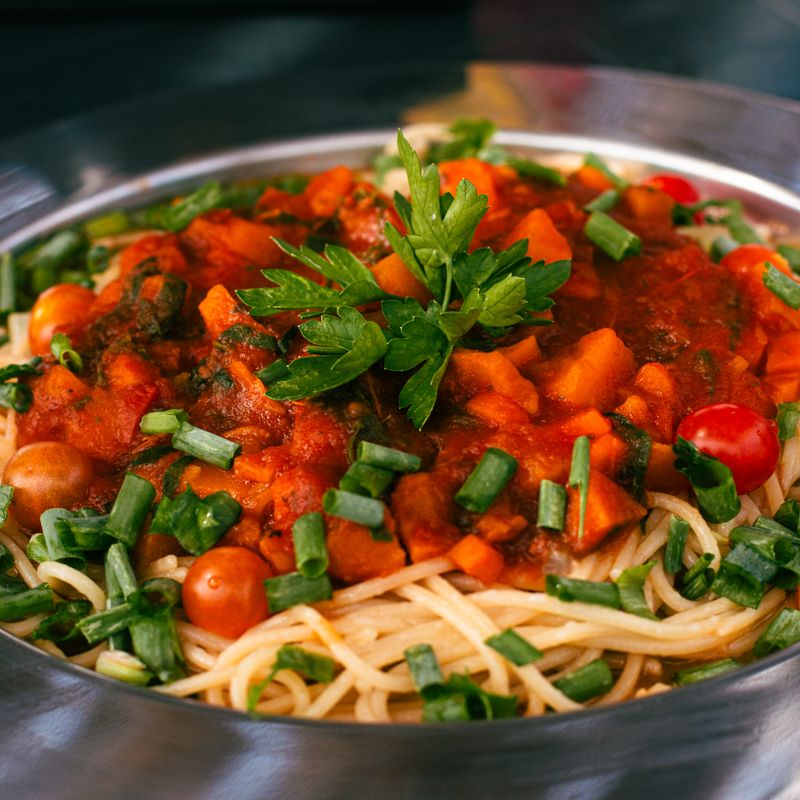
A warm, spiced Tunisian pasta sauce built on homemade harissa and air-fried vegetables. Bell peppers, zucchini, and eggplant are roasted until caramelized, then simmered with tomatoes, garlic, and fragrant harissa paste. Perfect for breaking the fast with comforting, aromatic depth.
- Prep
- 20 min
- Cook
- 35 min
- Wait
- 5 min
- Total
- 1 hr
- Makes
- About 4 cups (950 ml) sauce, enough for 1 lb (450 g) pasta
Steps
Before you start
- Preheat your air fryer to 400°F (200°C) while you prep vegetables
- Have harissa paste ready (store-bought or homemade)
- Read through the roasting times so you can stagger vegetables if needed
Prep and season vegetables
- On a large cutting board, cut the red bell peppers, yellow bell pepper, zucchini, and eggplant into ¾-inch (2 cm) pieces.
- Transfer to a large bowl.
- Drizzle with 4 tablespoons (60 ml) olive oil, sprinkle with 1 teaspoon (6 g) sea salt and ½ teaspoon (1.5 g) black pepper, and toss until evenly coated.
- Do not over-crowd the vegetables—they should be in a single layer when roasting.
+ Show details− Hide details
Ready when: Vegetables are evenly coated with oil and seasoning
Tip: Cut vegetables to consistent size so they cook at the same rate. Slightly smaller pieces cook faster in the air fryer.
Air-fry vegetables until caramelizedOven 400°F / 205°C
- Working in batches if needed to avoid crowding, arrange vegetables in a single layer in the air fryer basket.
- Air-fry at 400°F (200°C) for 18–22 minutes, shaking the basket halfway through.
- Vegetables should be golden brown at the edges and tender-crisp inside, with some caramelization on the flat surfaces.
+ Show details− Hide details
Ready when: Vegetables are golden brown with tender interiors, some charred edges visible
Tip: Don't skip shaking the basket halfway—this ensures even browning on all sides. If your air fryer is small, roast in two batches rather than overcrowding.
Toast spices and bloom harissa
- In a large heavy-bottomed pot or Dutch oven over medium heat, warm 2 tablespoons (30 ml) olive oil.
- Add 5 minced garlic cloves and cook for 30 seconds, stirring constantly, until fragrant.
- Add 0.75 teaspoon (1.5 g) dried oregano and 0.5 teaspoon (1.2 g) ground cumin; stir for another 15 seconds.
- Reduce heat to medium-low, then stir in 2 tablespoons (30 g) harissa paste until it forms a smooth, aromatic slurry.
- Cook for 1 minute, stirring often.
+ Show details− Hide details
Ready when: Garlic is soft and fragrant, harissa paste is smooth and darkened slightly
Tip: Keep the heat at medium or lower when blooming spices so the harissa doesn't scorch. Burnt harissa tastes bitter.
Build the sauce base
- Pour in 28 oz (800 g) crushed canned tomatoes and 1 tablespoon (15 g) tomato paste.
- Stir well to combine, scraping up any browned bits from the bottom of the pot.
- Add 1 cup (240 ml) vegetable or chicken broth.
- Bring to a gentle simmer over medium heat, stirring occasionally.
+ Show details− Hide details
Ready when: Mixture is simmering gently with small, steady bubbles around the edges
Tip: Deglazing the pot with the tomato mixture pulls up flavor from the garlic and spice buildup on the bottom.
Add roasted vegetables
- When the sauce is simmering, carefully pour in all the air-fried vegetables (and any oil from the basket) into the pot.
- Gently fold them in with a wooden spoon, being careful not to break them apart.
- The sauce should bubble gently around the vegetables.
- Add half of the fresh cilantro (about 3 tablespoons / 6 g) and stir gently.
+ Show details− Hide details
Ready when: Vegetables are evenly distributed in the tomato sauce
Tip: Add the cilantro partway through simmering so some remains fresh and bright for garnish later.
Simmer and balance flavors
- Reduce heat to medium-low and simmer uncovered for 10–12 minutes, stirring gently every 2–3 minutes.
- The sauce should thicken slightly and the vegetables will soften further.
- Stir in 1 teaspoon (7 g) honey and 1.5 tablespoons (22 ml) fresh lemon juice.
- Taste and adjust salt, pepper, or harissa to your preference—the sauce should be warm, slightly spicy, and well-balanced with a touch of brightness from the lemon.
+ Show details− Hide details
Ready when: Sauce has thickened slightly, vegetables are very tender, and flavors are well-integrated
Tip: Add honey and lemon off the heat or right at the end to preserve their fresh qualities. These balance the harissa's heat with sweetness and brightness.
Finish and serve
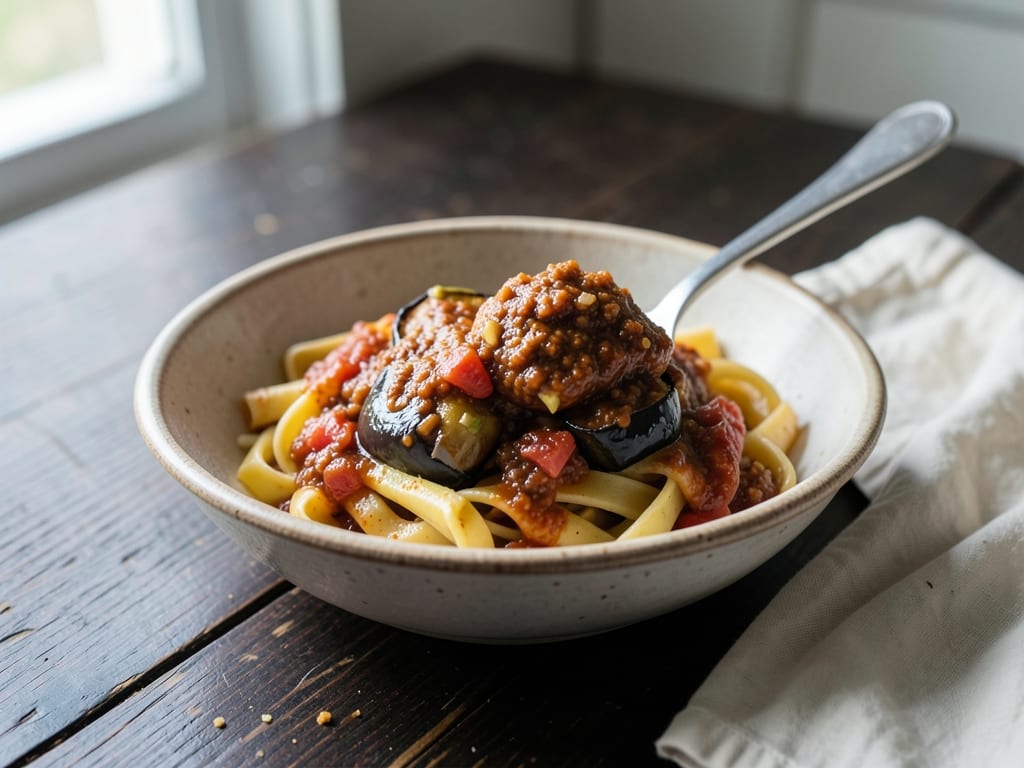
- Transfer the sauce to a serving bowl or ladle directly over hot pasta (about 1 lb / 450 g cooked).
- Garnish with the remaining fresh cilantro (about 3 tablespoons / 6 g) and fresh mint if using (about ¼ cup / 6 g).
- Drizzle a little extra-virgin olive oil on top, if desired.
- Serve warm as part of your iftar meal.
+ Show details− Hide details
Ready when: Sauce is hot and ready to serve; fresh herbs are visible on top
Tip: Keep the sauce warm until you're ready to serve. If making ahead, reheat gently on the stove over medium-low heat, adding a splash of broth or water if it's thickened too much.
Good to know
Tips
- Air-frying prevents the oven from heating up your kitchen during Ramadan—important for a pleasant iftar experience. If you don't have an air fryer, roast vegetables in a 425°F (220°C) conventional oven on a large baking sheet for 20–25 minutes, tossing halfway through.
- Harissa paste varies in heat level by brand. Start with 1.5 tablespoons (22 g) and taste after simmering; add more if you prefer it spicier.
- This sauce pairs beautifully with fresh couscous, penne, fusilli, or served alongside warm flatbread for dipping. It's also delicious spooned over grilled fish or chicken.
- For a creamier sauce, stir in 2–3 tablespoons (30–45 ml) of heavy cream or yogurt at the very end of cooking. This mellows the heat slightly.
Make ahead
Roast and season vegetables up to 4 hours ahead, storing them in an airtight container at room temperature. Build and simmer the sauce up to 1 day ahead; store covered in the refrigerator. Reheat gently on the stove over medium-low heat for 5–8 minutes, stirring occasionally, and adjust consistency with a splash of broth if needed. Garnish fresh just before serving.
Storage & reheating
Room temperature (up to 2 hours if the weather is cool). Refrigerator (up to 4 days in an airtight container). Freezer (up to 3 months in a freezer-safe container; thaw overnight in the fridge and reheat gently on the stove). Do not freeze fresh cilantro and mint garnish; add them after reheating.
Substitutions
- Italian eggplant or baby eggplant → 1 medium portobello or cremini mushroom (about 250 g), cut into ¾-inch cubes. Mushrooms will have a softer, earthier character. Roast for slightly less time (16–18 minutes) as they release water.
- harissa paste (Tunisian red chili paste) → 1.5 tablespoons (22 g) roasted red pepper paste plus 1 teaspoon cayenne pepper, or 2 tablespoons (30 g) sriracha. Roasted red pepper paste is milder; sriracha is vinegary and slightly less traditional but adds a familiar heat. Adjust to taste.
- canned crushed tomatoes (San Marzano) → 2 cups (480 ml) tomato juice plus 1 tablespoon (15 g) tomato paste, whisked together. Tomato juice mixed with paste mimics crushed tomatoes and is useful if you don't have canned on hand. The sauce may be slightly thinner; simmer 2–3 minutes longer.
- fresh cilantro, packed → fresh parsley or a mix of parsley and dill. Cilantro is traditional in Tunisian cooking, but parsley is a gentler alternative if cilantro is unavailable or disliked. Use the same quantities.