Ramadan Herb Flatbread Rolls
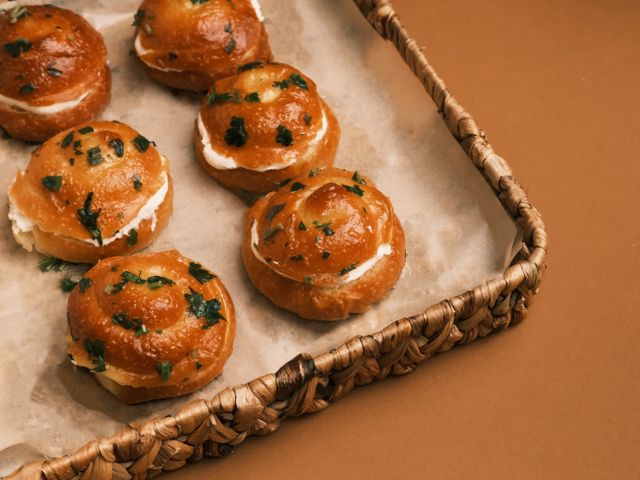
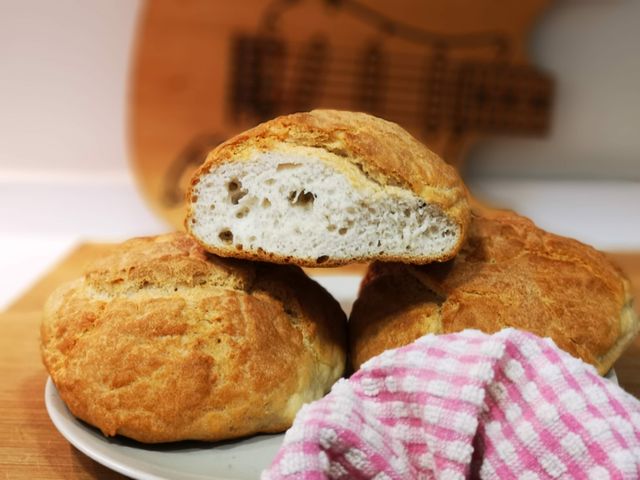
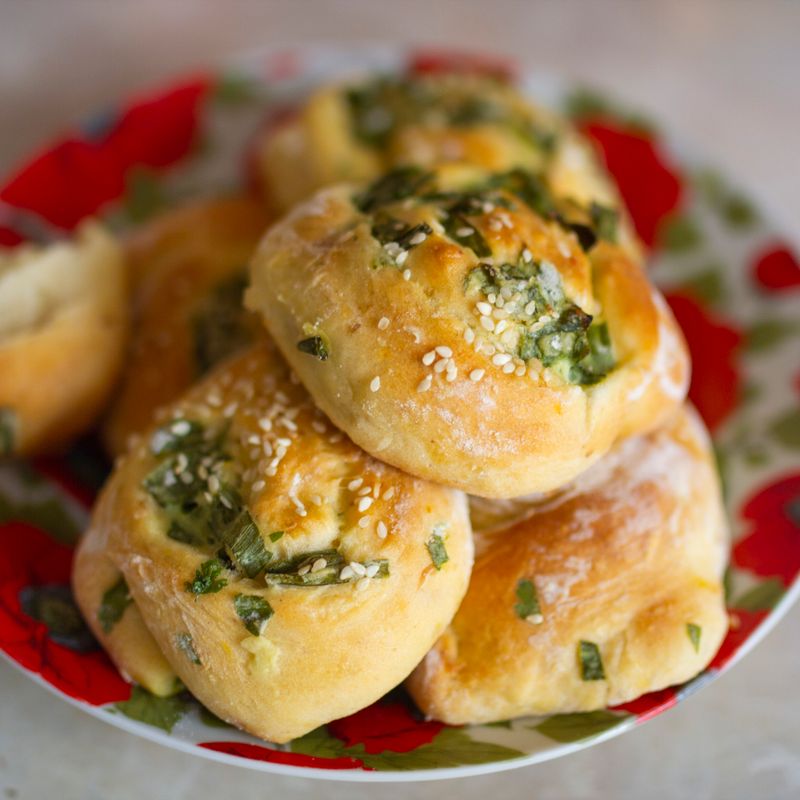
Tender, pillowy flatbread rolls infused with fresh parsley, dill, and mint, brushed with aromatic herb-olive oil. These soft rolls are perfect for tearing and dipping into stews, or serving alongside Ramadan meals. The dough is warm and supple, the herbs bright and fragrant—a simple yet elegant bread that comes together in under two hours.
- Prep
- 25 min
- Cook
- 20 min
- Wait
- 1 hr 10 min
- Total
- 1 hr 55 min
- Makes
- 8 rolls
Steps
Before you start
- Warm the water to 105–110°F (40–43°C) so it activates the yeast without killing it
- Use fresh herbs if possible; dried herbs will be less fragrant but work in a pinch
- Preheat your oven to 400°F (200°C) 15 minutes before the second rise finishes
Activate yeast
- Pour warm water into a large mixing bowl.
- Add instant yeast and sugar, and stir gently with a whisk.
- Let it sit for 2–3 minutes until foamy on top, indicating the yeast is alive and active.
+ Show details− Hide details
Ready when: Yeast mixture is foamy on the surface
Tip: If the yeast doesn't foam, it's dead—start over with fresh yeast and water at the correct temperature.
Mix dough
- Add flour and kosher salt to the yeast mixture.
- Using a stand mixer with a dough hook on medium speed, mix for 6–8 minutes until a shaggy, sticky dough forms.
- (Or mix by hand: stir with a wooden spoon until no dry flour remains, then knead on a work surface for 8–10 minutes.) The dough should be soft but hold together; it will be slightly sticky.
+ Show details− Hide details
Ready when: Dough is smooth, elastic, and slightly sticky; it springs back when poked
Tip: Don't add extra flour—a sticky dough produces softer rolls. If using a mixer, let it do the work; kneading by hand is more tiring but works fine.
Oil dough and rest
- Add 3 tablespoons olive oil to the dough and mix on low speed for 2 minutes until fully incorporated and the dough is glossy.
- Transfer to a clean bowl, cover with a damp kitchen towel, and let rise at room temperature (68–72°F / 20–22°C) for 45–50 minutes until roughly doubled in volume.
+ Show details− Hide details
Ready when: Dough is puffy and almost doubles; poke leaves a slow-to-fade indentation
Tip: If your kitchen is cold, place the bowl in a warmed (then turned off) oven or on top of the refrigerator to speed rising.
Prepare herb filling
- While dough rises, combine chopped parsley, dill, mint, minced garlic, and 2 tablespoons olive oil in a small bowl.
- Stir well to combine.
- Taste and adjust herbs if needed—the mixture should smell bright and fresh.
- Set aside.
+ Show details− Hide details
Ready when: Herb mixture is well combined and fragrant
Tip: Prep the herbs the day before and store in a sealed container in the fridge if needed—this saves time.
Shape rolls
- Line a 9×13-inch (23×33 cm) baking pan with parchment paper.
- Turn risen dough onto a lightly floured work surface and gently press out gas without deflating completely.
- Divide dough into 8 equal pieces (about 60 g each).
- Roll each piece into a thin oval roughly 4×5 inches (10×13 cm), about ¼ inch (6 mm) thick.
+ Show details− Hide details
Ready when: All 8 ovals are even in thickness and arranged on work surface
Tip: If dough springs back as you roll, let it rest for 2 minutes and return to it—this makes it easier to stretch.
Fill and roll
- Spoon about 1 tablespoon (12 g) herb filling onto the lower half of each oval, leaving a ½-inch (1 cm) border.
- Fold the top half over the filling to create a half-moon, pressing edges gently to seal.
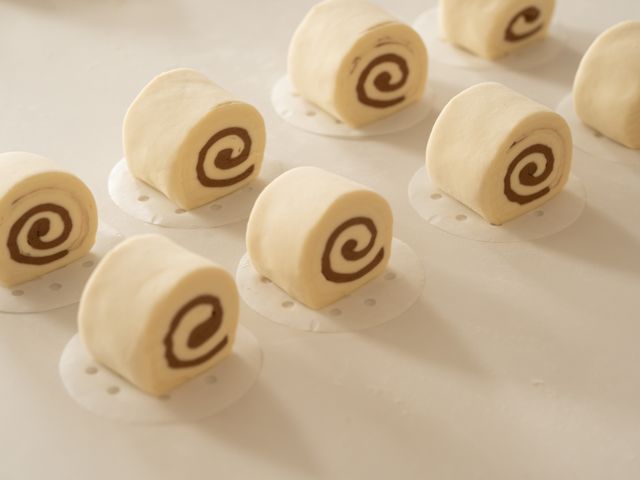
- Roll each filled half-moon from one end to the other to form a tight spiral or log, then coil it into a pinwheel shape.
- Place seam-side down in the prepared pan, spacing rolls about 1½ inches (4 cm) apart.
+ Show details− Hide details
Ready when: All 8 rolls are shaped, coiled, and nestled in the pan
Tip: Don't overfill—excess herbs can leak and dry out during baking. Sealing the edges prevents leakage.
Second riseOven 400°F / 205°C
- Cover the pan loosely with a damp kitchen towel and let rolls rise at room temperature for 20–25 minutes until puffy and lightly touching each other.
- Preheat your oven to 400°F (200°C) about 10 minutes before baking.
+ Show details− Hide details
Ready when: Rolls are visibly puffed and slightly spring back when gently poked
Tip: Don't let them overproof—if they rise too much, they can collapse in the oven. A gentle poke should leave a slow-to-fade indentation.
Brush and bakeOven 400°F / 205°C
- Brush the tops of the rolls with 1 tablespoon olive oil, then sprinkle with coarse sea salt.
- Place pan in the preheated 400°F (200°C) oven and bake for 18–22 minutes until golden brown on top.
- The rolls should feel light and sound hollow when tapped on the bottom.
+ Show details− Hide details
Ready when: Rolls are golden brown, smell fragrant, and sound hollow when tapped
Tip: If tops brown too quickly, loosely tent with foil halfway through baking. Rolls are done when the interior reaches 190°F (88°C) if you use a thermometer.
Cool and serve
- Remove from oven and transfer rolls to a wire rack or serve directly from the pan.
- Let cool for 5 minutes (they'll firm up slightly).
- Serve warm or at room temperature alongside soups, stews, or dips.
+ Show details− Hide details
Ready when: Rolls are set, cool enough to handle, and aromatic
Tip: These rolls are best eaten the day they're made. Serve them warm with labneh, hummus, or a light lentil soup.
Good to know
Tips
- Fresh herbs are essential—frozen or dried herbs won't provide the same aromatic, vibrant character that makes these rolls special.
- These rolls are versatile: serve them warm at Suhoor with labneh and olives, or at Iftar alongside a hearty lentil soup or tagine.
- If you don't have a stand mixer, hand-kneading is absolutely fine and only takes an extra few minutes. The dough is forgiving.
- For extra flavor, mix a pinch of sumac or black nigella seeds into the herb filling or sprinkle on top before baking.
Make ahead
Dough can be made up to 12 hours ahead: after the first rise (step 3), punch down, wrap tightly, and refrigerate. Bring to room temperature 30 minutes before shaping. Shaped, unfilled rolls can be frozen up to 3 months; thaw, fill, and do the second rise before baking.
Storage & reheating
Room temperature: Store in an airtight container or bread bag up to 2 days; they dry out quickly. Refrigerator: Place in an airtight container up to 4 days; reheat wrapped in foil at 350°F (175°C) for 8–10 minutes. Freezer: Wrap baked rolls individually in plastic wrap and aluminum foil, or place in a freezer bag, up to 3 months; thaw at room temperature 1–2 hours and reheat as directed above.
Substitutions
- fresh flat-leaf parsley → fresh cilantro or fresh basil. Use the same amount. Cilantro brings a bright, peppery note; basil adds sweetness. Either works beautifully.
- fresh dill → fresh chives or additional parsley. Chives add a mild onion flavor; if using chives only, increase to ¾ cup (22 g). Dill is key to the herbaceous character, so don't omit it entirely unless unavoidable.
- fresh mint → fresh tarragon or a mix of oregano and thyme. Mint adds cooling freshness; tarragon or dried herbs create a warmer flavor profile but still work well.
- instant yeast → active dry yeast. Use the same weight (8 g / 2.5 teaspoons); let it bloom an extra minute to ensure it's fully hydrated.