Ramadan Black Chickpea and Tahini-Stuffed Dolma
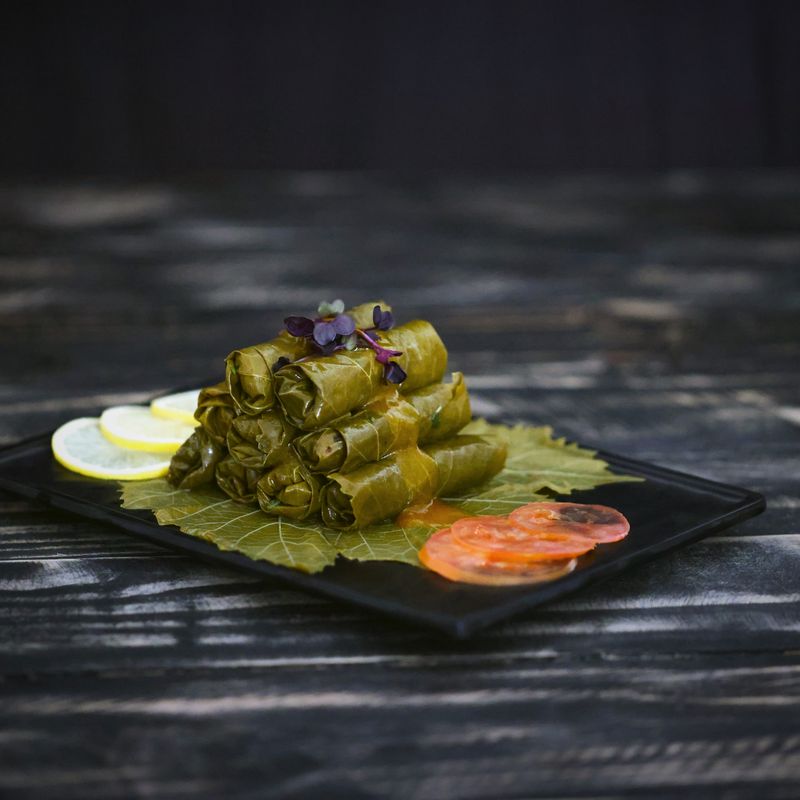
Tender grape leaves wrapped around a savory filling of black chickpeas, tahini, fresh dill, and warm spices. These dolma are simmered gently until the leaves soften and the flavors meld, then served at room temperature with a squeeze of bright lemon juice. A vegetarian-friendly, protein-rich addition to the Ramadan iftar table that honors traditional Turkish preparations while celebrating the earthiness of black chickpeas.
- Prep
- 45 min
- Cook
- 50 min
- Wait
- 20 min
- Total
- 1 hr 55 min
- Makes
- 24 dolma (about 6–8 servings as an appetizer or side)
Steps
Before you start
- If using jarred grape leaves in brine, rinse and pat them dry with paper towels at least 30 minutes before rolling to remove excess salt and water.
- Prepare your rolling surface: lay out a clean kitchen towel and have all filling ingredients measured and ready.
- Have a 10-inch (25 cm) skillet or shallow saucepan ready for simmering.
Make the filling
- In a large mixing bowl, combine the rinsed and patted-dry black chickpeas, tahini, minced onion, minced garlic, fresh dill, olive oil, cumin, sumac (if using), 2 tablespoons of the lemon juice, and a pinch of salt and pepper.
- Stir until well blended; the filling should hold together when pressed but remain loose enough to spoon.
- Taste and adjust seasoning—it should be noticeably flavorful since the grape leaves provide little salt.
+ Show details− Hide details
Ready when: Filling is evenly mixed and holds together when pressed
Tip: Prepare the filling first so it's ready to use as soon as you begin rolling. This prevents the grape leaves from drying out.
Prepare the workspace
- Lay a clean kitchen towel on your work surface.
- Arrange the rinsed, patted-dry grape leaves in a single layer, shiny side down, on the towel.
- Have a small spoon or measuring spoon ready for portioning the filling.
+ Show details− Hide details
Ready when: Grape leaves are laid out flat and dry
Tip: Keep unused grape leaves covered with a damp towel so they don't dry out while you roll.
Roll the dolma
- Working with one grape leaf at a time, place it shiny side down.
- Spoon about 1 tablespoon of filling into the center, slightly closer to the stem end.
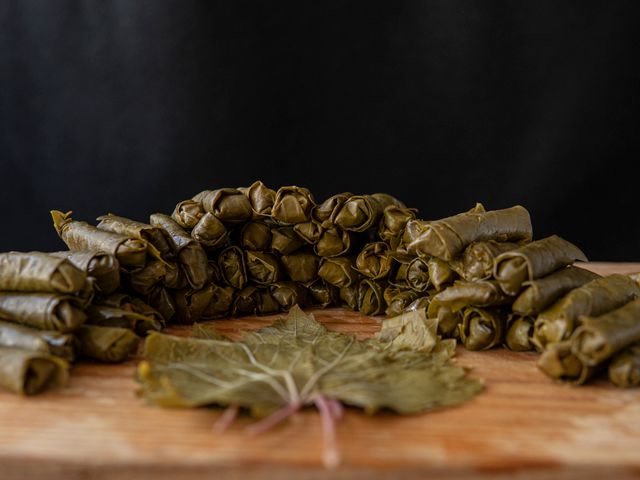
- Fold the stem end and both sides inward, then roll tightly toward the tip, creating a compact cylinder about 3 inches (7.5 cm) long.
- The leaf should enclose the filling completely; if it tears, use a small piece of another leaf as a patch.
- Place each dolma seam side down on a plate as you finish rolling.
- You should have about 24 dolma.
+ Show details− Hide details
Ready when: All dolma are rolled and seam-side down on a plate
Tip: If a grape leaf is small or torn, overlap two leaves or patch with a scrap; the filling and gentle simmering will keep them sealed. Work deliberately but not slowly—the leaves should stay pliable.
Arrange in the pan
- Arrange the rolled dolma seam side down in a single layer in the 10-inch (25 cm) skillet or shallow saucepan, packing them snugly but not crushing them.
- If necessary, arrange a second layer on top.
- Place lemon slices (if using) between the layers or on top for flavor.
+ Show details− Hide details
Ready when: Dolma are arranged seam side down, tightly packed in a single or double layer
Tip: Packing them snugly prevents them from unraveling during simmering, but don't crush them—they should just fit snugly.
Pour the braising liquid
- In a small bowl, whisk together the water and remaining 1 tablespoon of lemon juice.
- Pour this evenly over the dolma until they are just covered (the liquid should reach about three-quarters up the sides).
- If needed, add a touch more water.
- Cover the skillet with a lid or foil.
+ Show details− Hide details
Ready when: Liquid covers the dolma; lid is secure
Tip: This liquid will steam the dolma gently and extract flavor from the grape leaves, making them tender and melding all the spices.
Bring to a simmer
- Place the skillet over medium heat and bring the liquid to a gentle simmer (you should see small bubbles breaking the surface).
- Once simmering, reduce the heat to medium-low to maintain a gentle, steady simmer.
- The dolma should cook undisturbed with the lid on.
+ Show details− Hide details
Ready when: Liquid comes to a gentle simmer with small bubbles
Tip: Watch for the initial simmer and then immediately turn down the heat. Too-vigorous boiling can break apart the grape leaves.
Simmer gently
- Maintain a gentle simmer over medium-low heat for 40–50 minutes.
- The grape leaves should become very tender and meld with the filling, and most of the liquid will be absorbed or evaporated.
- You will know they are done when a dolma is very soft when prodded with a fork and the leaves have darkened slightly.
+ Show details− Hide details
Ready when: Grape leaves are very tender, darkened slightly, and most liquid is absorbed
Tip: Resist the urge to peek or stir; the gentle, undisturbed steam is what makes the leaves tender and keeps the dolma intact.
Cool and rest
- Remove the skillet from the heat and allow the dolma to rest, still covered, for 15–20 minutes.
- This allows the residual heat to finish cooking and the filling to set slightly, making the dolma less likely to fall apart when served.
+ Show details− Hide details
Ready when: Dolma are warm but no longer steaming hot
Tip: This resting step is crucial for structure—dolma are delicate right after cooking and benefit from a gentle cool-down.
Serve
- Using tongs or a slotted spoon, carefully transfer the dolma to a serving platter.
- Drizzle with any remaining pan liquid (if very little, simply serve as is).
- Serve warm, at room temperature, or chilled, with extra lemon wedges on the side for squeezing.
- These are excellent on their own or with a dollop of thick yogurt.
+ Show details− Hide details
Ready when: Dolma are plated and ready to eat
Tip: Dolma taste even better after a few hours as the flavors continue to develop, making them an ideal do-ahead dish for Ramadan iftar.
Good to know
Tips
- Rolling dolma is a gentle skill that improves with practice. The first few may look imperfect, but the grape leaves will soften during simmering and hold their shape beautifully.
- This recipe is naturally vegan and high in plant-based protein, making it perfect for Ramadan fasting. The tahini and chickpeas provide sustained energy for the fast ahead.
- Dolma are best enjoyed the same day or the next day, once flavors have melded. They are traditionally served at room temperature or chilled as part of a meze spread, which also makes them ideal for large iftar gatherings.
- For a creamier filling, you can add 2–3 tablespoons of thick yogurt or a splash of plant-based cream to the filling mixture, though the tahini provides plenty of richness on its own.
Make ahead
Dolma can be rolled and stored in the refrigerator on a parchment-lined tray, covered, for up to 2 days before simmering. They can also be fully cooked, cooled completely, then refrigerated in an airtight container for up to 4 days. Reheat gently over medium-low heat with a splash of water for 10–15 minutes, covered, until warmed through.
Storage & reheating
Room temperature: up to 2 hours (serve at room temperature or chilled for best flavor). Refrigerator: up to 4 days in an airtight container. To reheat, place in a covered skillet with a splash of water over medium-low heat for 10–15 minutes until warmed through. Freezer: up to 3 months in an airtight container or freezer bag. Thaw overnight in the refrigerator, then reheat as above.
Substitutions
- canned black chickpeas, drained and rinsed → regular chickpeas or white beans. White beans or regular chickpeas work well; the black chickpeas add a distinctive earthy flavor and striking color, but any legume of similar texture is a good substitute.
- tahini (sesame paste) → hummus or ground sesame seeds mixed with olive oil. If tahini is unavailable, use hummus (which will add a garlicky note) or grind sesame seeds with a tablespoon of olive oil for a similar nutty, binding texture.
- fresh dill, finely chopped → fresh mint or parsley. Fresh mint brings a cooler, herbaceous note and pairs beautifully with black chickpeas; parsley is milder but also works. Use the same quantity.
- ground sumac (or extra lemon zest) → additional lemon zest or a squeeze of pomegranate molasses. Sumac's tangy brightness is optional but lovely. Lemon zest adds brightness; pomegranate molasses adds deeper complexity. Either enhances the dish.