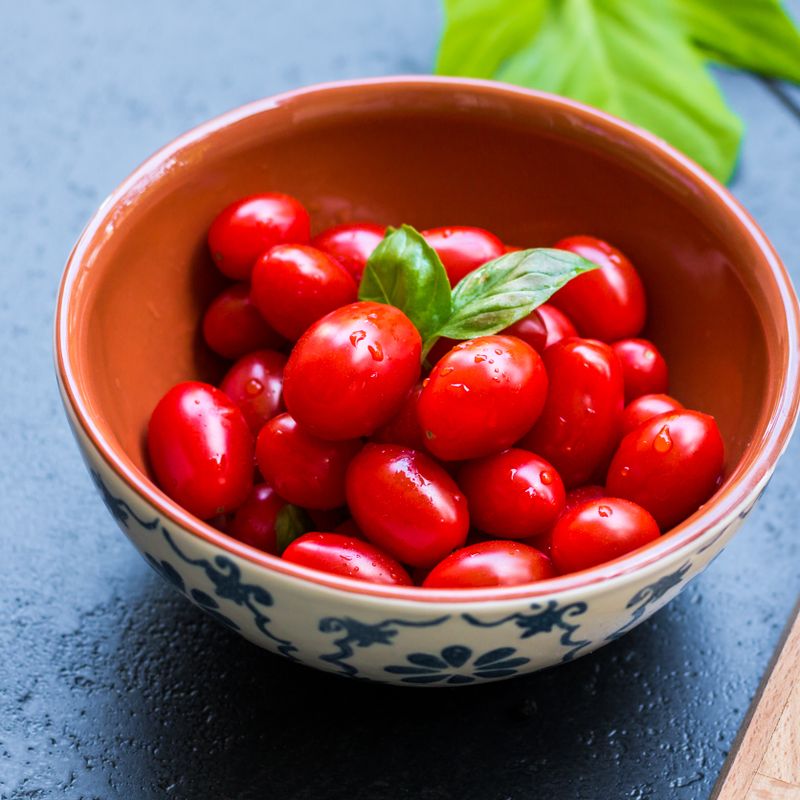
Quick Roasted Cherry Tomato and Basil Couscous
A vibrant, weeknight-friendly side dish combining fluffy couscous with bursts of caramelized cherry tomatoes, fresh basil, and garlic. The tomatoes roast until their skins blister and collapse, releasing natural juices that infuse the couscous with bright, concentrated flavor. Ready in under 25 minutes.
- Prep
- 8 min
- Cook
- 15 min
- Wait
- 2 min
- Total
- 25 min
- Makes
- 4 servings (about 1 cup each)
Steps
Before you start
- Measure out couscous and broth ahead of time
- Remove basil from the refrigerator 5 minutes before cooking so it's not cold and brittle
- Preheat oven to 425°F (220°C)
Roast the tomatoesOven 425°F / 220°C
- Preheat your oven to 425°F (220°C).
- Place halved cherry tomatoes in a 12-inch (30 cm) ovenproof skillet, cut-side up.
- Drizzle with 3 tablespoons (45 ml) olive oil, scatter the minced garlic over the tomatoes, and season generously with sea salt and black pepper.
- Roast in the oven for 10–12 minutes, until the tomato skins blister, darken slightly at the edges, and begin to collapse.
- The tomatoes should release visible juices into the pan.
+ Show details− Hide details
Ready when: Tomato skins blister and collapse, pan juices are visible
Tip: Place the skillet on the middle oven rack so the tomatoes roast evenly without scorching the pan bottom.
Pour in broth and add couscous
- Carefully remove the hot skillet from the oven.
- Pour the warmed broth directly over the roasted tomatoes and garlic, and stir to combine and scrape up any flavorful browned bits on the skillet bottom.
- Stir in the pearl couscous, breaking up any lumps with the back of a spoon.
- The broth should just cover the couscous.
- If using regular couscous instead of pearl, you may need slightly less broth (about 2 cups); add it slowly and adjust as needed.
+ Show details− Hide details
Ready when: Broth and couscous are fully mixed with tomatoes
Tip: Warm broth reduces carryover cooking time and helps couscous hydrate faster.
Cover and finish cookingOven 425°F / 220°C
- Return the skillet to the oven, uncovered, for 3–4 minutes.
- The liquid should be nearly absorbed and the couscous tender with a slightly chewy bite.
- If the couscous still looks wet after 4 minutes, return it for 1 minute more.
- Remove from the oven and let it rest off the heat for 2 minutes so any remaining liquid fully absorbs.
+ Show details− Hide details
Ready when: Liquid is nearly absorbed, couscous is tender and fluffy
Tip: Pearl couscous holds its shape better than regular couscous and won't turn mushy if slightly overcooked.
Finish with basil and oil
- Stir in the fresh basil leaves and the remaining 1 tablespoon (15 ml) olive oil.
- Taste and adjust seasoning with salt and pepper.
- If using optional lemon zest, stir it in now for brightness.
- Transfer to a serving bowl or plate.
+ Show details− Hide details
Ready when: Basil is distributed throughout and couscous is tossed
Tip: Add basil off heat so its flavor stays bright and aromatic rather than cooking down to an olive tone.
Optional: Top with cheese
- If desired, sprinkle finely grated Parmigiano-Reggiano over each serving just before eating for richness and umami depth.
+ Show details− Hide details
Tip: Add cheese at the table so it doesn't melt into the warm couscous and lose its salty, nutty character.
Good to know
Tips
- For the deepest tomato flavor, look for fully ripe, in-season cherry tomatoes. Roasting concentrates their natural sugars and develops caramelization.
- Pearl couscous is larger and chewier than regular (Israeli) couscous—it resists mushiness and looks more appealing in a composed grain dish. If substituting regular couscous, reduce broth to 2 cups and watch carefully as it absorbs liquid faster.
- Don't stir the couscous while it's in the oven or resting. Agitation breaks the grains and releases starch, making them gummy. A gentle stir at the end is all you need.
- This dish pairs beautifully with grilled chicken, fish, or roasted vegetables. It also works as a light vegetarian main course when topped with a dollop of ricotta or crumbled feta cheese.
Make ahead
Couscous can be cooked up to 1 day ahead and reheated gently in a covered skillet over medium-low heat with a splash of water or broth, stirring occasionally. Stir in fresh basil and finishing oil just before serving. Do not assemble with basil or oil more than a few hours ahead, as basil will darken and lose fragrance.
Storage & reheating
Store leftovers in an airtight container in the refrigerator for up to 3 days. Reheat gently in a covered skillet over medium-low heat, adding a few tablespoons of water or broth to restore moisture. Freshen with a small handful of torn basil before serving. The dish is best served warm or at room temperature and does not freeze well due to the delicate texture of couscous.
Substitutions
- pearl couscous → orzo pasta or farro. Use the same dry amount. Cook orzo on the stovetop following package directions and toss with roasted tomatoes. Farro requires about 25 minutes of simmering and is heartier; it makes a more substantial side dish.
- fresh basil leaves → fresh mint or a combination of parsley and oregano. Mint brings a cooler, more herbaceous note; dried oregano (use 1 tablespoon) is more assertive and works well if fresh herbs aren't available. Add dried herbs in step 2 instead of at the end.
- cherry tomatoes, halved → grape tomatoes or halved regular tomatoes. Grape tomatoes are similar in flavor and size. Regular tomatoes should be cut into ½-inch chunks to roast evenly in the same time frame.
- vegetable or chicken broth, warmed → water with a vegetable bouillon cube, or white wine mixed with water. Use the same total liquid amount. Water alone will be less flavorful; white wine adds acidity and complexity. Do not use red wine as it can overpower the fresh tomato flavor.
More quinoa & couscous
See all →


Find more like this
- Meal
- Dinner
- Main ingredient
- Tomatoes
- Diet
- HalalSugar-Free
- Method
- Oven