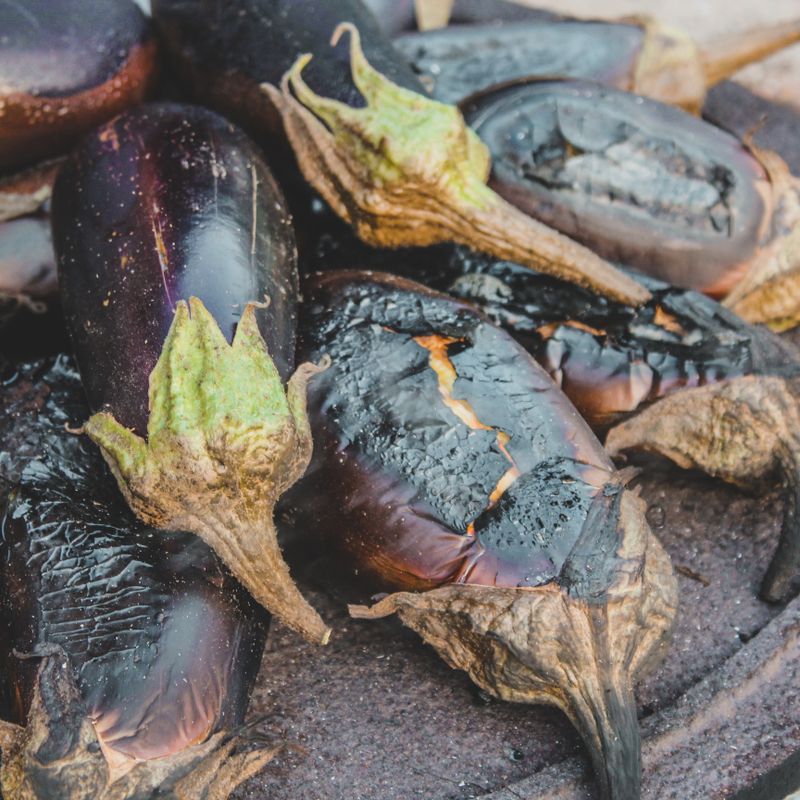
Slow Cooker Sicilian Eggplant Caponata with Couscous
A rustic Sicilian vegetable stew of tender eggplant, tomatoes, olives, and capers cooked low and slow with sweet and savory notes, served over fluffy pearl couscous for a complete, satisfying meal.
- Prep
- 20 min
- Cook
- 6 hr
- Wait
- 10 min
- Total
- 6 hr 30 min
- Makes
- 4 servings (about 1.5 cups caponata with ¾ cup couscous per person)
Steps
Before you start
- Read through the recipe and plan for 6 hours of slow cooking time
- Cut all vegetables before starting; they cook better when uniform
- Have a 6-quart slow cooker ready
- Use firm, fresh eggplant without soft spots
Prepare the vegetables
- On a large cutting board, cut the eggplants into uniform ½-inch (1.3 cm) cubes.
- Dice the onion and mince the garlic.
- Set aside.
+ Show details− Hide details
Tip: Cut all vegetables to similar size so they cook evenly in the slow cooker.
Combine in slow cooker
- In a 6-quart slow cooker, combine the diced eggplant, onion, garlic, crushed tomatoes, tomato paste, red wine vinegar, olive oil, both varieties of olives, capers, raisins, oregano, basil, salt, pepper, and sugar (if using).
- Stir in the vegetable broth until all ingredients are well combined.
- The liquid should come about three-quarters up the side of the vegetables.
Cook on low
- Cover and cook on LOW for 6 hours (or on HIGH for 3–3.5 hours).
- The eggplant should be very tender but not falling apart, and the sauce should have thickened slightly.
- Taste and adjust salt, vinegar, or sugar as needed—the caponata should be balanced between sweet, sour, and savory.
+ Show details− Hide details
Ready when: Eggplant is very tender but not falling apart; sauce has thickened slightly; flavors have melded
Tip: Don't peek too often during cooking; each time you lift the lid, you add 15–20 minutes to the cooking time.
Toast pine nuts
- While the caponata finishes cooking, place a small skillet over medium-low heat.
- Add the pine nuts and toast for 2–3 minutes, shaking the pan often, until fragrant and lightly golden.
- Transfer to a small bowl.
+ Show details− Hide details
Ready when: Pine nuts are fragrant and lightly golden
Tip: Watch closely to prevent burning; pine nuts toast quickly and can scorch in seconds.
Prepare couscous
- In a medium saucepan, bring 1¾ cups (420 ml) of vegetable broth or water to a boil over medium-high heat.
- Add the pearl couscous, olive oil, and salt.
- Stir once, then remove from heat.
- Cover tightly with a lid or plastic wrap and let sit for 10 minutes until the couscous is tender and has absorbed all the liquid.
- Fluff gently with a fork.
+ Show details− Hide details
Ready when: Couscous is tender and all liquid is absorbed
Tip: Don't stir the couscous during steeping; this keeps it fluffy and prevents mushiness.
Stir in pine nuts
- Stir the toasted pine nuts into the warm caponata.
- Taste again and adjust seasoning with salt, pepper, or a splash more vinegar if desired.
Plate and serve
- Divide the fluffy couscous among four shallow bowls or plates.
- Spoon the warm caponata over the couscous, making sure each serving gets a generous portion of the vegetables and sauce.
- Garnish with lemon zest and fresh basil or parsley if desired.
- Serve warm.
Good to know
Tips
- If your eggplant seems very watery, salt the cubes 15–20 minutes before adding to the slow cooker; this draws out excess moisture and prevents a soupy caponata.
- This dish is even better the next day after the flavors have melded—consider making it ahead for entertaining.
- For a spicy version, add ¼–½ teaspoon red pepper flakes to the slow cooker with the other seasonings.
- Pearl couscous has a firmer, more interesting texture than regular couscous and is worth seeking out for this dish.
Make ahead
The caponata can be made 1–2 days ahead and refrigerated in an airtight container. Reheat gently over low heat in a saucepan, or in the slow cooker on LOW for 1 hour. The flavors actually deepen after a day of resting, making it ideal for advance prep or entertaining.
Storage & reheating
Room temperature: Keep covered for up to 2 hours. Refrigerator: Store caponata in an airtight container for up to 4 days; couscous can be kept separately for up to 3 days. Freezer: The caponata (without couscous) freezes well for up to 3 months. Thaw overnight in the fridge and reheat gently over low heat in a saucepan. Couscous can be frozen for up to 1 month; reheat by fluffing with a fork and warming in a covered pot with a splash of broth.
Substitutions
- pearl couscous → regular couscous, farro, or orzo pasta. Regular couscous reduces cooking liquid to 1½ cups and steeping time to 5 minutes; farro and orzo provide different textures
- red wine vinegar → balsamic vinegar or white wine vinegar. Balsamic is more intense, so use slightly less; white wine vinegar gives a lighter flavor
- pitted green Sicilian (Castelvetrano) olives → Cerignola olives or a mix of green and black olives. Avoid overly salty brined varieties; Castelvetrano and Cerignola olives have better flavor balance
- pine nuts → toasted walnuts, almonds, or sunflower seeds. These provide a similar crunch and richness; adjust amounts as walnuts and almonds are slightly stronger in flavor
More stews
See all →
Find more like this
- Meal
- Dinner
- Cuisine
- Sicilian
- Method
- StovetopSlow Cooker
- Quick & Easy
- Easy