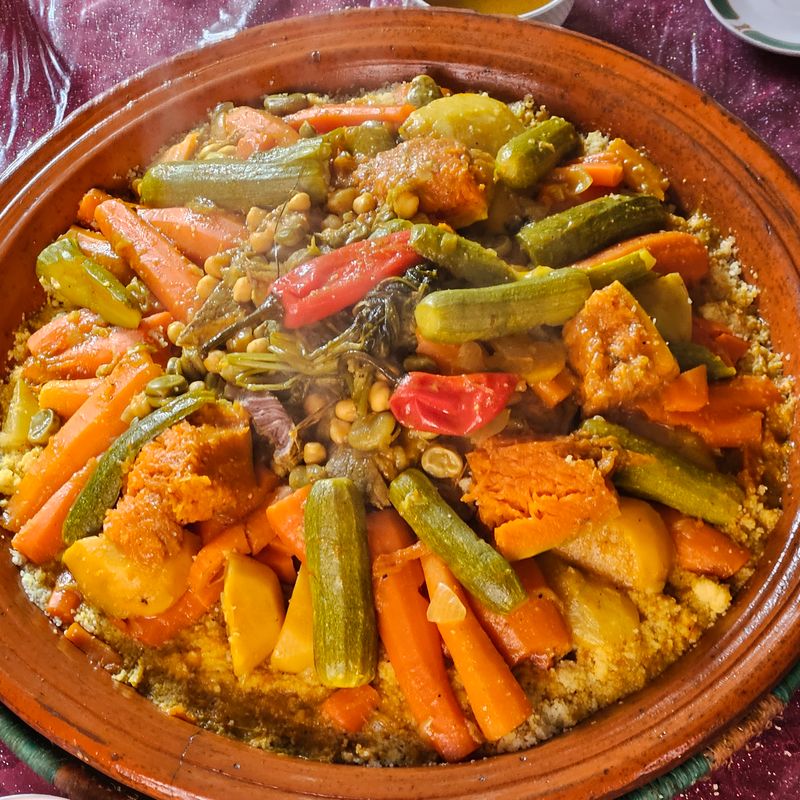
Slow Cooker French Beef Daube with Couscous
A slow cooker version of the classic French beef daube—tender beef braised in red wine with pearl onions and carrots, served over fluffy pearl couscous. The perfect make-ahead dinner: rich, warming, and even more delicious the next day.
- Prep
- 25 min
- Cook
- 50 min
- Wait
- 6 hr 30 min
- Total
- 7 hr 45 min
- Makes
- Serves 6 with couscous
Steps
Before you start
- Peel pearl onions ahead (or blanch them first in boiling salted water for 2 minutes to loosen skins, making peeling easier)
- Pat beef chuck dry with paper towels before browning—this ensures it sears and browns rather than steams
- Prep all vegetables and ingredients (mise en place) before you start browning to keep the process flowing smoothly
- Have your 6-7 quart slow cooker clean and ready, or preheat it if your model recommends it
Prep vegetables and beef
- Cut beef chuck into 2-inch (5 cm) cubes and pat dry with paper towels—this helps with browning.
- Peel pearl onions; if using the blanching method, they'll be much easier.
- Cut carrots into 2-inch (5 cm) pieces.
- Mince garlic cloves.
- Quarter the cremini mushrooms if using.
- Chop bacon into small pieces.
- Measure out all remaining ingredients and have them ready (mise en place).
+ Show details− Hide details
Tip: Peeling pearl onions is the most tedious part—blanching them in boiling salted water for 2 minutes really does make the skins slip off more easily. Pat the beef dry so it browns instead of steaming.
Brown beef in batches
- Heat 3 tablespoons olive oil in a large heavy-bottomed pot or Dutch oven (5-6 quart capacity) over medium-high heat until the oil shimmers and just begins to smoke lightly.
- Working in batches to avoid overcrowding, add beef cubes in a single layer.
- Let each batch brown undisturbed for 3-4 minutes on the first side, then turn and brown the other side for another 3-4 minutes, until a deep golden crust forms on at least two sides.
- Transfer browned beef to a clean plate.
- Don't worry if the inside is still raw—the slow cooker will finish the job.
+ Show details− Hide details
Ready when: beef has a deep golden-brown crust on the outside
Tip: Crowding the pan drops the temperature and causes steaming instead of browning. Use a meat thermometer or timer to avoid overcooking—we just want the surface seared and golden.
Cook bacon and vegetables
- Add chopped bacon to the same pot (don't clean it out—all those browned bits are liquid gold) and cook over medium heat, stirring occasionally, for 5-7 minutes until the bacon is crisp and the fat is rendered.
- Using a slotted spoon, transfer crisp bacon to a paper towel-lined plate.
- Add pearl onions and carrots to the rendered fat and bacon drippings.
- Cook for 5 minutes, stirring occasionally, until the edges of the onions start to golden.
- Stir in the minced garlic and cook for 1 minute until very fragrant.
- If using mushrooms, add them now and cook for 2-3 minutes, stirring, until they release some liquid.
+ Show details− Hide details
Ready when: bacon is crisp, onions are slightly golden at edges, garlic is very aromatic
Tip: Keep the heat at medium to avoid burning the garlic—you want it fragrant and toasted, not charred.
Deglaze and build braising base
- Stir in 2 tablespoons tomato paste and cook for 1-2 minutes, stirring frequently, until the paste darkens and caramelizes slightly on the bottom of the pot.
- Pour in 2.5 cups red wine.
- Scrape the bottom and sides of the pot vigorously with a wooden spoon to loosen all those browned, flavorful caramelized bits.
- Add 1 cup beef broth (reserve the remaining 2.25 cups for couscous).
- Stir in 2 bay leaves and 2 teaspoons fresh thyme leaves (or 1 teaspoon dried thyme crushed between your fingers).
- Add 1 teaspoon salt and ½ teaspoon freshly ground black pepper.
- Bring the mixture to a gentle simmer and let it bubble for 2-3 minutes, then taste and adjust seasonings as needed.
+ Show details− Hide details
Ready when: braising liquid simmers gently and tastes well-seasoned; browned bits are dissolved into the liquid
Tip: Those caramelized brown bits are where the deep flavor lives—scrape the pot thoroughly. Taste the braising liquid now because you can't easily adjust it once it's in the slow cooker for 6+ hours.
Add ingredients to slow cooker
- Return the browned beef and crisp bacon to the pot with the braising liquid, or transfer everything to your 6-7 quart slow cooker.
- Stir gently to combine, making sure the beef is mostly submerged in the liquid (the vegetables will rise to the surface, and that's fine).
- Cover the slow cooker with its lid and prepare to cook.
+ Show details− Hide details
Ready when: all ingredients are combined and the mixture is ready to cook
Tip: If you don't have a 6-7 quart slow cooker, you can use a slightly smaller one, but don't fill it more than 3/4 full or it may boil over during cooking.
Slow-cook until beef is tenderOven 200°F / 95°C
- Set the slow cooker to the LOW setting (approximately 190-200°F / 87-93°C) and cook for 6-8 hours.
- The exact cooking time depends on your specific slow cooker and how tender you like the beef—at 6 hours it will be quite tender, at 8 hours the meat will be nearly falling apart.
- Do NOT lift the lid during cooking, as each time you do it adds 15-20 minutes to the cooking time.
- At the 6-hour mark, if you're curious, you can lift the lid briefly to check that the liquid is simmering gently (small bubbles at the edges) and that the beef is softening.
+ Show details− Hide details
Ready when: beef shreds easily when pierced with a fork, and vegetables are very soft
Tip: Resist the urge to peek! Every lift of the lid adds 15-20 minutes of cooking time. Trust the process—slow cooking is very forgiving.
Check doneness and finish
- After 6-8 hours, lift the lid and test the beef—it should break apart very easily with a fork or wooden spoon.
- Taste the sauce and adjust seasoning with additional salt and pepper if needed.
- If the sauce seems too thin and you'd like it thicker, you can simmer it uncovered on the slow cooker's HIGH setting for 15-30 minutes to reduce and concentrate the flavors.
- Let the daube rest uncovered for 5-10 minutes before serving.
+ Show details− Hide details
Ready when: beef is very tender and breaks apart easily with a fork
Tip: If you want a thicker sauce, uncover and simmer on HIGH for 15-30 minutes. If the sauce is perfect as is, just let it rest while you make the couscous.
Cook pearl couscous
- In a medium saucepan, bring 2.25 cups beef broth to a boil over medium-high heat.
- Add ½ teaspoon salt.
- Stir in 1.5 cups pearl couscous and 2 tablespoons unsalted butter.
- Return to a boil, then immediately remove from heat, cover tightly with a lid, and let sit for 5 minutes.
- Fluff with a fork, taste, and adjust seasoning with a pinch more salt and a few grinds of black pepper if desired.
+ Show details− Hide details
Ready when: couscous is fluffy and tender, all liquid is absorbed
Tip: Don't skip the 5-minute rest period—it allows the couscous to fully absorb the liquid and become tender. Fluff gently with a fork to avoid making it mushy.
Serve daube with couscous
- Spoon the pearl couscous into shallow bowls or plates.
- Ladle the beef daube and its rich sauce generously over the top.
- Garnish with fresh parsley.
- Serve immediately while steaming hot.
+ Show details− Hide details
Ready when: plated and ready to serve
Good to know
Tips
- Beef daube is a dish that improves with time—make it a day or two ahead and reheat gently just before serving. The flavors deepen and meld beautifully overnight.
- Don't skip the browning step. Searing the beef and caramelizing the tomato paste are what build the deep, savory, complex flavors that make this dish special. The 20 minutes is worth it.
- Pearl onions are tedious to peel, but blanching them in boiling salted water first really does make the task much easier. Plan ahead if you're making this for company.
- This recipe is very forgiving. If your slow cooker cooks hotter or cooler than average, adjust the time accordingly. Start checking after 5.5-6 hours and cook until the beef falls apart with a fork—there's no single magic time for all slow cookers.
Make ahead
"Yes, beef daube actually tastes better when made 1-3 days ahead—the flavors meld beautifully. Store in an airtight container in the refrigerator. Reheat gently on the stovetop over medium-low heat with a splash of red wine or broth. The daube also freezes exceptionally well for up to 3 months; thaw overnight in the refrigerator before reheating."
Storage & reheating
Room temperature: Keep the daube hot and eat within 2 hours, then refrigerate. Refrigerator: 3-4 days in a covered airtight container. Freezer: Up to 3 months in a freezer-safe container (thaw overnight in fridge before reheating). Reheat gently on the stovetop over medium-low heat with a splash of red wine or broth, stirring occasionally, until warmed through, 15-20 minutes. Alternatively, reheat in a 325°F (163°C) oven covered for 20-30 minutes."
Substitutions
- beef chuck roast → beef shoulder, chuck eye roast, or stew meat. Use other tough, well-marbled cuts that benefit from long, slow braising. Avoid very lean cuts like sirloin, which will dry out.
- dry red wine (such as Côtes du Rhône or Burgundy) → beef broth mixed with 1-2 tablespoons red wine vinegar or balsamic vinegar. The dish will be less complex and aromatic without wine, but still delicious and warming. The vinegar adds the tang that wine provides.
- pearl couscous → regular (Israeli) couscous, egg noodles, small pasta, or boiled potatoes. Pearl couscous has a chewier, more distinct texture. Regular couscous will be fluffier and quicker. Noodles and potatoes change the character of the dish but work well for soaking up sauce.
- pearl onions → 2 medium onions (quartered) or 8-10 shallots (halved). Regular onions won't provide the same elegant presentation and will cook down more. Shallots are delicious but more expensive. Both work well for flavor.
More stews
See all →

Find more like this
- Meal
- Dinner
- Cuisine
- French
- Main ingredient
- Beef RoastBacon
- Diet
- Sugar-Free
- Method
- StovetopSlow Cooker
- Quick & Easy
- Make Ahead