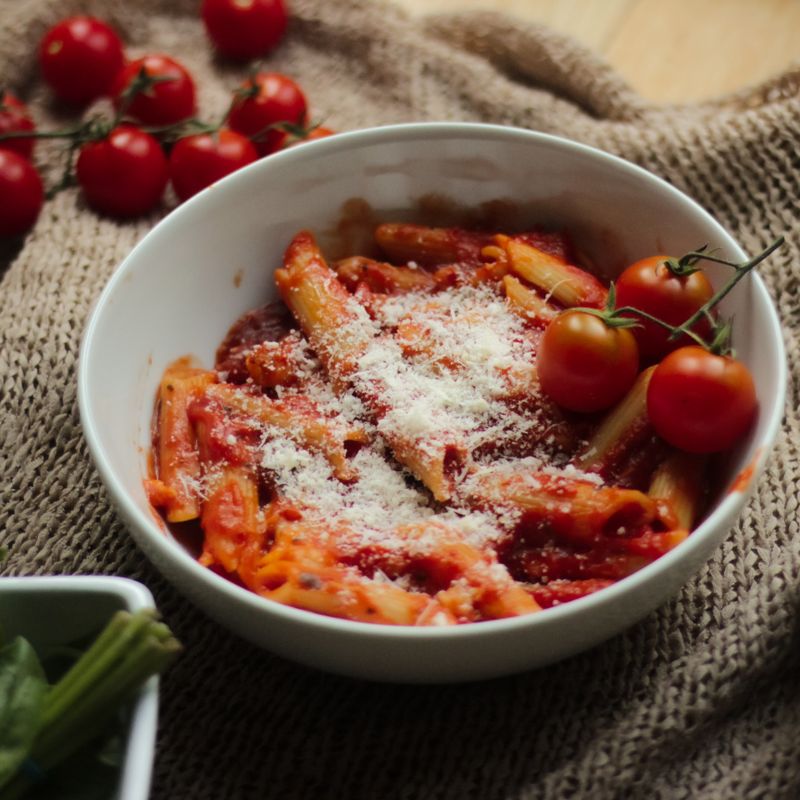
Tomato Basil Pearl Couscous Pasta Style
Pearl couscous (also called Israeli couscous) is toasted and sautéed with aromatic garlic and onion, then simmered in a bright tomato broth infused with fresh basil. The larger grains absorb the sauce while maintaining a tender yet slightly chewy bite, creating a dish that delivers the comfort of pasta with the elegance of a couscous pilaf. Finished with fresh basil and a drizzle of quality olive oil, this Mediterranean-inspired main is ready in under 30 minutes.
- Prep
- 12 min
- Cook
- 16 min
- Wait
- 5 min
- Total
- 33 min
- Makes
- 4 servings (about 1.5 cups each)
Steps
Before you start
- Gather all ingredients before starting; have fresh basil torn or cut into ribbons just before serving
- Use good-quality canned tomatoes or fresh ripe tomatoes at peak season
- Pearl couscous is larger than regular couscous and shouldn't be rinsed before cooking
Toast the couscous
- Heat the olive oil in a large skillet over medium heat.
- Once shimmering, add the pearl couscous and stir constantly for 2 to 3 minutes until the grains become lightly golden and fragrant.
- This toasting step deepens the nutty flavor and helps each grain cook individually.
+ Show details− Hide details
Ready when: Grains are light golden and smell nutty
Tip: Stir constantly to prevent burning; the couscous should look dry and slightly darkened, not brown
Sauté aromatics
- Add the diced onion to the toasted couscous and stir for 1 minute.
- Add the minced garlic and cook for another 30 seconds, stirring constantly.
- The onion will begin to soften and the garlic will become fragrant.
+ Show details− Hide details
Ready when: Garlic is fragrant and onion is starting to turn translucent
Tip: Don't let the garlic brown; it will turn bitter. Keep the heat at medium and stir constantly
Add tomatoes and broth
- Pour in the crushed tomatoes (with their liquid) and the vegetable or chicken broth.
- Stir well to combine all ingredients.
- The couscous should be covered by the liquid by about ½ inch.
- Add a pinch of sea salt and freshly ground black pepper, and the optional red pepper flakes if using.
+ Show details− Hide details
Ready when: All ingredients are combined and liquid reaches about ½ inch above couscous
Tip: The ratio of liquid to couscous is critical; pearl couscous needs more liquid than regular couscous to cook properly
Bring to a simmer and cover
- Increase the heat to medium-high and bring the mixture to a simmer, stirring occasionally.
- Once it reaches a gentle simmer (small bubbles breaking the surface), reduce the heat to medium-low, cover the skillet with a lid, and simmer for 10 to 12 minutes.
- Do not stir during this time; the couscous will absorb the liquid and cook through.
+ Show details− Hide details
Ready when: Most liquid is absorbed, couscous is tender but still has a slight bite, and no liquid pools at the bottom
Tip: Resist the urge to stir; this allows the couscous to cook evenly and develop better texture. If liquid remains after 12 minutes, simmer uncovered for another minute or two
Rest and finish
- Remove the skillet from the heat and let it rest, covered, for 5 minutes.
- This allows the couscous to finish absorbing any remaining moisture and the flavors to meld.
- Fluff gently with a fork.
+ Show details− Hide details
Ready when: Couscous is fluffy and no steam escapes when lid is lifted
Tip: This resting step is as important as cooking; don't skip it for the best texture
Fold in fresh basil
- Add most of the fresh basil leaves (reserving a small handful for garnish), tearing or slicing them into ribbons.
- Fold gently into the couscous with a fork until evenly distributed.
- Taste and adjust seasoning with sea salt and black pepper as needed.
+ Show details− Hide details
Ready when: Basil is evenly distributed throughout and the dish smells herbaceous and bright
Tip: Add basil at the end to preserve its fresh color and delicate flavor; raw basil added during cooking will blacken and lose potency
Plate and serve
- Divide the couscous evenly among four bowls or plates.
- Drizzle each serving with a little extra virgin olive oil.
- Top with the reserved fresh basil leaves and, if using, freshly grated Parmigiano-Reggiano cheese.
+ Show details− Hide details
Ready when: Dish is plated and garnished
Tip: Serve immediately while the couscous is still warm; it can become firm as it cools
Good to know
Tips
- For deeper tomato flavor, use San Marzano tomatoes—their lower acidity and dense flesh make a superior sauce. If using regular crushed tomatoes, add 1 teaspoon (4 g) sugar to balance acidity.
- Pearl couscous is significantly larger than regular couscous and absorbs more liquid. Do not substitute one for the other without adjusting both the liquid ratio and cooking time, or your dish will be mushy or dry.
- If you prefer a brothier consistency (closer to risotto), add an extra ½ cup (120 ml) of broth in step 3. For a drier, pilaf-like consistency, reduce broth by ¼ cup (60 ml).
- This dish pairs beautifully with grilled vegetables (zucchini, eggplant, bell peppers), a simple green salad dressed with lemon vinaigrette, or roasted chicken. A crisp white wine like Pinot Grigio or Vermentino complements the bright tomato and basil flavors.
Make ahead
You can prepare the dish up to step 3 (adding broth) up to 2 hours ahead. Cover and refrigerate the skillet. When ready to serve, bring to a simmer over medium heat and proceed with step 4, adding 1 to 2 extra minutes to the simmering time if the mixture is cold.
Storage & reheating
Refrigerate leftovers in an airtight container for up to 3 days. To reheat, place in a skillet over medium-low heat with a splash of broth or water (2 to 3 tablespoons) to restore moisture, stirring gently for 3 to 4 minutes until warmed through. Do not use the microwave, as it will dry out the couscous. The dish does not freeze well due to the delicate texture of the couscous and the basil.
Substitutions
- canned crushed tomatoes (San Marzano preferred) → 2 pounds (900 g) fresh ripe tomatoes, cored and roughly chopped. Use fresh tomatoes when in season. Increase simmering time by 2 to 3 minutes to allow fresh tomatoes to break down fully. You may need to add an extra ¼ cup (60 ml) of broth if the fresh tomatoes release less liquid than canned.
- fresh basil leaves → 2 tablespoons (6 g) dried Italian seasoning or 1 tablespoon (3 g) dried basil. Add dried herbs during step 3 (when adding broth) rather than at the end. Dried herbs lose potency quickly once added to hot liquid, so this timing ensures the best flavor.
- vegetable or chicken broth → 1 cup (240 ml) water mixed with 1 teaspoon (5 g) vegetable or chicken bouillon powder. This creates a simple homemade broth. Adjust salt to taste, as bouillon can be salty.
- pearl couscous (Israeli couscous) → 1.5 cups (300 g) regular couscous (not pearl). Regular couscous is smaller and cooks much faster. Reduce the simmering time to 2 to 3 minutes and use only 1.5 cups (360 ml) total liquid (tomatoes plus broth). The texture will be finer and less chewy than pearl couscous.
More quinoa & couscous
See all →
Find more like this
- Meal
- Dinner
- Cuisine
- Mediterranean
- Main ingredient
- Tomatoes
- Diet
- HalalSugar-Free
- Method
- Stovetop