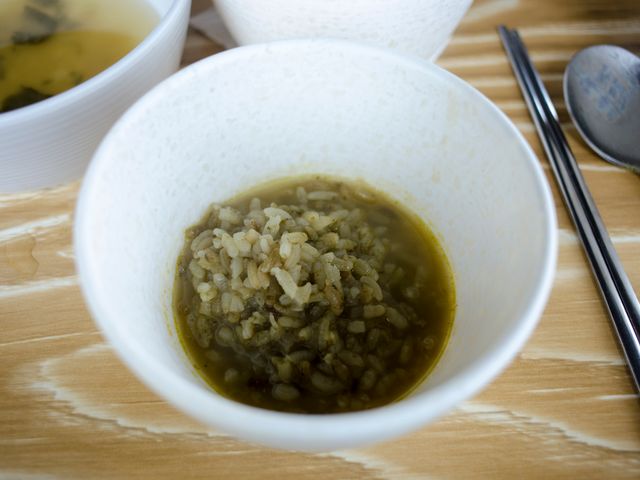
Quick Miso Butter and Crispy Nori Sorghum Rice
A nutty, umami-rich side dish combining toasted sorghum grain with the savory depth of white miso and the briny crunch of crispy nori seaweed. Finished with butter for richness, it's a modern take on Japanese flavors that cooks in under 30 minutes and pairs beautifully with grilled fish, chicken, or vegetables.
- Prep
- 5 min
- Cook
- 20 min
- Wait
- 5 min
- Total
- 30 min
- Makes
- 4 servings (about 1 cup per person)
Steps
Before you start
- Have all ingredients measured and prepped before you start cooking—sorghum cooks quickly and benefits from active attention
- Use a damp paper towel nearby to prevent the dry-pan toasting from overpowering your kitchen with grain fragrance
- Choose white (shiro) or mild red miso; avoid dark/intense varieties that overpower the delicate sorghum flavor
Toast the sorghum
- Place the sorghum in a large heavy-bottomed skillet over medium-high heat.
- Toast, stirring constantly with a wooden spoon, for 3–4 minutes, until the grain turns a shade darker and becomes fragrant (you'll smell a warm, toasted grain aroma).
- Watch carefully—sorghum can scorch quickly.
+ Show details− Hide details
Ready when: Grain darkens slightly and smells toasted; a few grains may pop softly
Tip: Don't walk away—sorghum burns fast once toasted. Keep the heat honest but not scorching.
Add water and miso
- Pour the hot water into the skillet.
- In a small bowl, whisk the white miso with 2 tablespoons of the hot water from the pan until smooth and dissolved, then pour the miso mixture back into the skillet, stirring well to combine.
- Add a pinch of salt.
+ Show details− Hide details
Ready when: Liquid is evenly amber-brown and miso is completely incorporated
Tip: Dissolve miso separately first; never boil it directly in the hot water, as boiling destroys its probiotic and flavor qualities.
Bring to a boil and reduce heat
- Bring the liquid to a boil over medium-high heat (about 1 minute), then reduce heat to medium-low.
- You should see a gentle bubble breaking the surface every few seconds.
- Cover partially with the lid (leave it slightly ajar) to prevent splashing while allowing some evaporation.
+ Show details− Hide details
Ready when: Liquid boils gently; steam rises from the pan
Tip: A partial cover preserves the sorghum texture and prevents the pan from boiling dry.
Simmer until tender
- Simmer the sorghum uncovered, stirring occasionally, for 15–18 minutes, until the grains are tender and the liquid is mostly absorbed (a tiny bit of liquid pooling at the bottom is fine).
- The sorghum should have a slight chew, not mushy.
+ Show details− Hide details
Ready when: Grains are tender and chewy, liquid is nearly absorbed; a wooden spoon dragged through the pan leaves a faint trail
Tip: If liquid remains after 18 minutes, raise the heat to medium briefly to evaporate it; if the pan is too dry before the grain is tender, add ¼ cup more hot water.
Crisp the nori
- While the sorghum simmers, place the nori sheets on a cutting board.
- Use your hands to crumble or tear them into bite-sized pieces (roughly ½ to 1 inch).
- Do not cook them yet—you'll add them at the end for maximum crispness.
+ Show details− Hide details
Ready when: Nori is torn into small, irregular pieces
Tip: Tear nori by hand rather than cutting with a knife—hand-torn pieces stay crispier and won't shred into powder.
Finish with butter and nori
- Remove the skillet from heat.
- Stir in the cold butter pieces until they melt and coat the sorghum with a glossy sheen.
- Add the crumbled nori and gently fold it in with a wooden spoon, taking care not to crush the delicate seaweed.
- Season with a small pinch of white pepper if desired.
- Taste and adjust salt if needed.
+ Show details− Hide details
Ready when: Butter is melted and nori is gently folded throughout; the dish smells rich and briny
Tip: Add butter off-heat so it melts gently without browning; browning will make the dish taste burnt. Fold nori in last to keep it crispy.
Rest and serve
- Let the sorghum rest uncovered for 3–5 minutes.
- This allows any residual steam to escape and the nori to retain its crispness.
- Spoon into bowls or a serving dish and serve warm alongside grilled fish, chicken, or roasted vegetables.
+ Show details− Hide details
Ready when: Surface is no longer steaming; nori feels crisp to the touch
Tip: Resting prevents the nori from becoming soggy and allows the miso-butter to set slightly, making every spoonful more flavorful.
Good to know
Tips
- Sorghum has a popcorn-like texture and a mild, slightly sweet flavor—toasting it brings out complexity and prevents a bland, starchy dish.
- White miso is essential here. Dark miso will make the dish taste overwhelming and bitter. If you only have dark miso, reduce the amount by half.
- For a vegetarian dish, ensure your miso is made without dashi (fish stock). Check the label or ask at an Asian grocer.
- Crispy nori is the key to this dish's texture contrast. Add it only at the end and serve within 5 minutes of cooking to preserve its crispness.
Make ahead
Sorghum can be toasted 1 day ahead and stored in an airtight container at room temperature. Nori can be torn and stored in a dry container for up to 3 days. Combine on the stovetop fresh the day you serve.
Storage & reheating
Leftovers keep in an airtight container in the refrigerator for up to 3 days. The nori will soften over time. Reheat gently in a skillet over medium-low heat with a splash of water (1–2 tablespoons) for 2–3 minutes, or microwave covered for 1–2 minutes. Do not freeze; the texture of both sorghum and nori will degrade.
Substitutions
- whole grain sorghum → pearl barley or farro. Use the same weight. Both cook in similar time. Pearl barley yields a softer, creamier result; farro is nuttier and chewier.
- white miso paste (shiro) → light chickpea miso or barley miso. Use the same weight. Avoid dark red miso, which will overpower the grain. Some misos are saltier—taste and adjust seasoning.
- nori seaweed sheets → toasted sesame seeds or crispy sage leaves. Use 2 tablespoons sesame seeds or ½ ounce crispy sage. These add crunch and umami but won't replicate nori's briny flavor exactly.
- unsalted butter → ghee or extra-virgin olive oil. Use the same amount. Ghee adds nutty richness; olive oil adds fruitiness. Both work beautifully with miso and nori.