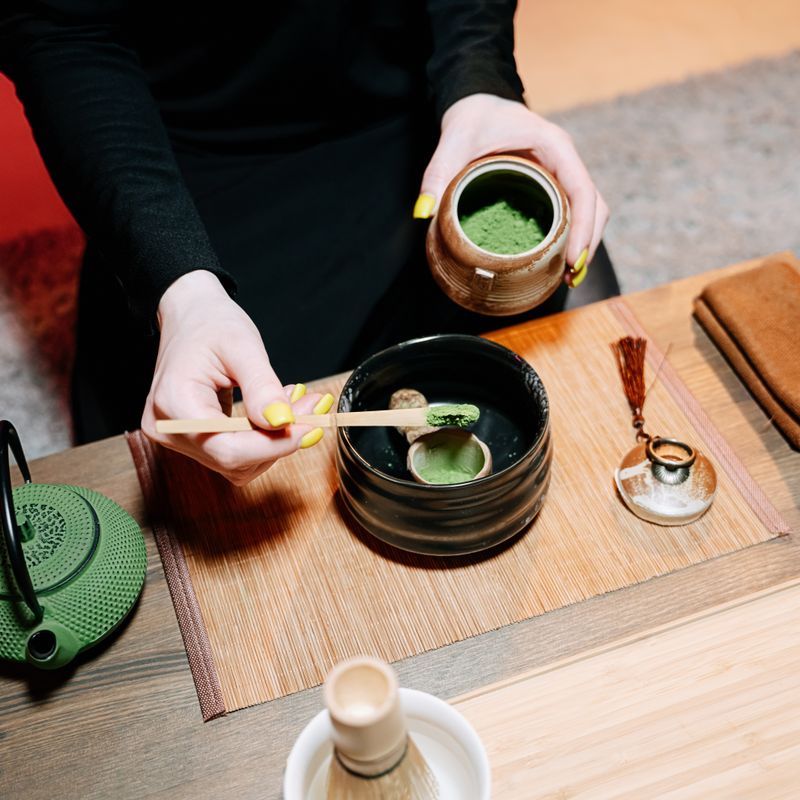
Japanese Matcha Green Tea Infused Rice
Delicate short-grain rice infused with vibrant matcha powder and umami-rich dashi, finished with a touch of butter for silky texture. This elegant side dish brings the subtle earthiness and color of matcha to the dinner table, pairing beautifully with grilled fish, seafood, or light poultry dishes. The matcha is whisked into the cooking liquid before steaming, ensuring even distribution and a pale green hue throughout each grain.
- Prep
- 5 min
- Cook
- 20 min
- Wait
- 15 min
- Total
- 40 min
- Makes
- 4 servings (about 3 cups cooked rice)
Steps
Before you start
- Measure rice and dashi accurately—volume matters for proper absorption and texture
- Use culinary-grade matcha powder (not ceremonial grade, which is more expensive and bitter for cooking)
- Have butter at room temperature for easier blending
- Read through the resting step—it's essential for fluffy, separate grains
Whisk matcha into dashi
- Pour the cooled dashi into a small bowl.
- Add the sifted matcha powder and whisk continuously for 1–2 minutes until the matcha is fully dissolved and no lumps remain.
- The mixture should be pale green and smooth.
- This step prevents the matcha from clumping when it meets the hot rice.
+ Show details− Hide details
Ready when: Matcha is completely dissolved, no visible particles or lumps
Tip: Whisk with vigor to break up matcha clumps; a dull matcha paste that won't blend is the most common mistake here
Combine rice, matcha dashi, and salt
- Add the rinsed and drained rice to a medium 3- to 4-quart (3- to 4-liter) saucepan with a tight-fitting lid.
- Pour the matcha-dashi mixture over the rice and sprinkle in the salt.
- Stir gently with a fork 3–4 times to distribute the liquid and matcha evenly throughout the rice.
- The rice grains should be separated and coated with the pale green liquid.
+ Show details− Hide details
Ready when: Rice grains are evenly distributed and coated with liquid
Tip: Don't overstir—you want separation, not a clumpy mass
Bring to a boil
- Place the saucepan over medium-high heat and bring the liquid to a boil, uncovered.
- You'll see small bubbles breaking the surface and hear a gentle rolling sound, about 4–5 minutes.
- Watch closely so you catch the boil and don't let it overflow.
+ Show details− Hide details
Ready when: Liquid boils rapidly with visible steam and rolling bubbles
Tip: If foam rises too high, reduce heat slightly or tilt the lid partway over the pan to prevent boiling over
Reduce heat and cover
- Once boiling, immediately reduce the heat to low.
- Cover the saucepan with a tight-fitting lid and let the rice steam for 15 minutes without lifting the lid.
- The liquid will be gradually absorbed by the rice and the surface will appear dry and slightly creviced when done.
+ Show details− Hide details
Ready when: Surface is dry, no visible liquid pooling; steam hole may appear in the rice
Tip: Do not lift the lid during this step—escaping steam is heat loss and can result in undercooked rice
Rest off heat with butter
- Remove the saucepan from heat.
- Quickly scatter the room-temperature butter pieces over the rice, then immediately cover again with the lid.
- Let the pan rest for 3–5 minutes.
- The carryover heat will soften the butter and distribute it through the rice as you fluff it.
+ Show details− Hide details
Ready when: Butter is soft and beginning to melt; rice is tender
Tip: Using room-temperature butter ensures it blends smoothly into the rice rather than sitting in hard pieces
Fluff and serve
- Uncover the pan and use a fork to gently fluff the rice, breaking up any clumps and distributing the melted butter evenly.
- Work from the bottom and sides of the pan to the top, turning the grains over gently.
- Transfer to a serving bowl or divide among individual plates.
- The rice should have a pale green hue throughout, with separated, fluffy grains.
+ Show details− Hide details
Ready when: Grains are separated, fluffy, and evenly colored pale green; no clumps remain
Tip: Fluff gently—rough handling can crush the delicate grains and make the rice pasty
Good to know
Tips
- Matcha's color fades slightly with heat and time; serve this dish as soon as it's fluffed for the most vivid green hue and brightest, freshest matcha flavor
- Culinary-grade matcha (sometimes labeled 'cooking grade') is finely ground, affordable, and designed for integration into foods. Ceremonial-grade matcha is reserved for traditional whisked tea ceremonies and would be a waste here
- If you don't have dashi on hand, make a quick batch: steep 1 piece of kombu (2×2 inches / 5×5 cm) and a small handful of bonito flakes (katsuobushi) in 2 cups (480 ml) of hot water for 3–5 minutes, then strain
- Pair this rice with grilled sea bass, seared scallops, steamed vegetables, or a simple miso-glazed chicken thigh for an elegant, cohesive Japanese dinner
Storage & reheating
Store in an airtight container in the refrigerator for up to 3 days. Reheat gently in a microwave (covered, 1–2 minutes, stirring halfway) or in a steamer basket over simmering water for 5–7 minutes until warmed through. Do not freeze, as the matcha color and rice texture will degrade.
Substitutions
- dashi stock → unsalted vegetable or kombu broth. Dashi has a subtle umami depth; vegetable or kombu broth will work but lack the traditional fish stock flavor. If using vegetable broth, the taste will be lighter and more herbaceous.
- short-grain Japanese rice (sushi or shari rice) → medium-grain or arborio rice. Short-grain rice is traditional and absorbs liquid evenly, producing fluffy grains. Medium or arborio rice will cook similarly but may be slightly firmer with a creamier mouthfeel.
- culinary-grade matcha powder → powdered green tea (gyokuro or sencha powder). Other Japanese green tea powders work similarly; matcha is most vibrant in color. Gyokuro will taste slightly sweeter and richer; sencha powder is more delicate and earthy.
- unsalted butter → white miso paste (½ teaspoon) whisked into the dashi, with no butter. Miso adds savory umami depth instead of the buttery richness; this version is more traditionally Japanese and works well for those avoiding dairy.