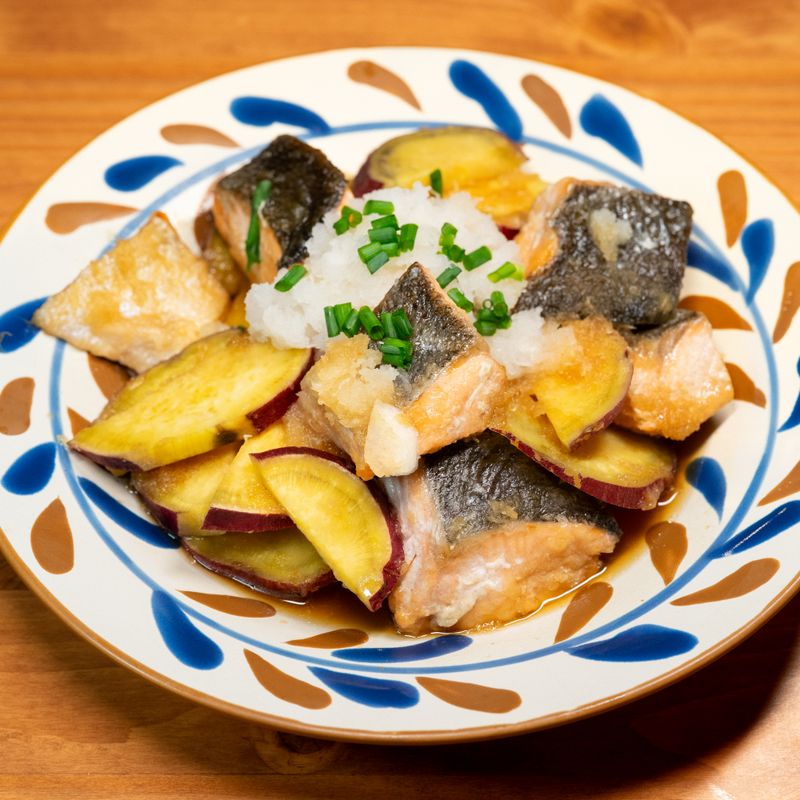
Japanese Mirin Sweet Potato Rice
A glossy, slightly sweet Japanese-style rice pilaf made with short-grain rice, roasted cubes of sweet potato, and a delicate glaze of mirin, soy sauce, and fresh ginger. The mirin caramelizes gently as the rice cooks, creating a subtle umami sweetness that complements the tender potato without being cloying. Perfect as a side dish or light meal with grilled fish or pickled vegetables.
- Prep
- 15 min
- Cook
- 35 min
- Wait
- 10 min
- Total
- 1 hr
- Makes
- 4 servings (about 3½ cups cooked rice)
Steps
Before you start
- Rinse short-grain rice under cold water until water runs mostly clear to remove excess starch
- Peel and cut sweet potato into ¾-inch (2 cm) cubes
- Measure all liquid and seasonings ahead so you're ready to add them quickly
Toast rice lightly
- Place the rinsed rice in a medium saucepan (2- to 3-quart / 2- to 3-liter) and cook over medium heat, stirring frequently with a wooden spoon, for 1 to 2 minutes.
- The rice should smell fragrant and grains will begin to look slightly opaque.
- This step enhances the rice's natural flavor and helps each grain cook separately.
+ Show details− Hide details
Ready when: Rice smells fragrant and grains look slightly opaque
Tip: Do not let the rice brown; it should remain white or very pale.
Add sweet potato and liquid
- Pour in the water (or dashi if using) and add the mirin, soy sauce, salt, and ginger slices.
- Stir well to combine.
- Add the sweet potato cubes and gently fold them in so they're distributed throughout the rice.
- The mixture should come to a simmer.
+ Show details− Hide details
Ready when: Mixture begins to simmer with gentle bubbles at the surface
Tip: Ginger slices will infuse the rice during cooking; they can be left in or removed after cooking, depending on preference.
Bring to boil, then reduce heat
- Increase heat to medium-high and bring the mixture to a gentle boil.
- Once boiling, immediately reduce heat to low, cover the saucepan with a tight-fitting lid, and do not lift the lid during cooking.
+ Show details− Hide details
Ready when: Rice is tender and has absorbed all liquid; no water remains at bottom of pan
Tip: Do not peek or stir; lifting the lid releases steam needed for even cooking and can result in unevenly cooked rice.
Rest and finish
- Remove from heat but keep the lid on for 10 minutes.
- This resting period allows the rice to finish steaming gently and allows the mirin glaze to set into a light sheen on the grains.
- After resting, fluff the rice gently with a wooden spoon or rice paddle, breaking up any clumps.
- Remove ginger slices if desired (or leave them for extra flavor).
+ Show details− Hide details
Ready when: Rice is fluffy, glossy, and grains separate easily; sweet potato is fork-tender
Tip: Fluff gently to avoid breaking the tender sweet potato cubes.
Garnish and serve
- Transfer the rice to a serving bowl or dish.
- Sprinkle with toasted sesame seeds and sliced scallion if desired.
- Serve warm as a side dish with grilled fish, chicken, or vegetables, or enjoy on its own.
+ Show details− Hide details
Tip: Toasting sesame seeds for 1 to 2 minutes in a dry skillet brings out their nutty flavor.
Good to know
Tips
- Rinsing the rice removes excess starch, preventing a gummy texture. Use a fine-mesh strainer and rinse until the water runs mostly clear (about 2 to 3 rinses).
- Cut sweet potato cubes uniformly (about ¾ inch / 2 cm) so they cook evenly with the rice. Smaller pieces may fall apart; larger pieces may not cook through.
- For a deeper umami flavor, use homemade or quality instant dashi stock instead of plain water. Kombu or bonito dashi are traditional choices.
- This dish is best served warm or at room temperature on the day it is made. Leftover rice can be repurposed into fried rice or mixed into salads.
Storage & reheating
Store cooled rice in an airtight container in the refrigerator for up to 3 days. Reheat gently in a microwave (cover with a damp paper towel to restore moisture) or in a saucepan over low heat with a splash of water. Do not freeze, as the texture of cooked rice becomes mealy after thawing.
Substitutions
- dashi stock (or water) → Kombu-based dashi stock or instant dashi powder mixed with water. Dashi adds deeper umami; use it if available. If using instant dashi powder, follow package directions and substitute for the water amount.
- mirin (sweet rice wine) → 1½ tablespoons (22 ml) honey or light brown sugar mixed with 1½ tablespoons (22 ml) water. Honey or sugar will provide sweetness but lack mirin's subtle fermented depth. Stir well to dissolve before adding.
- medium sweet potato (about 10 oz / 280 g) → Kabocha squash or regular potatoes (cut into slightly smaller cubes for even cooking). Kabocha offers a similar sweet earthiness; potatoes are less sweet but still delicious. Potato cubes may need an extra 2 to 3 minutes to become tender.
- fresh ginger → ¼ teaspoon (1 g) ground ginger or ½ teaspoon (1 g) ginger paste. Ground ginger is more concentrated and less fresh-tasting; use sparingly. Ginger paste offers better flavor than powder.
More rice bowls
See all →


Find more like this
- Meal
- Dinner
- Cuisine
- Japanese
- Main ingredient
- Sweet PotatoesRice
- Quick & Easy
- 5 Ingredients or Less