Quick Beef Broth with Onion Skin
A fast, flavorful beef broth made with beef chuck, onion (skin included for color and depth), carrot, bay leaf, and peppercorns. Simmered on the stovetop for just 1.5 hours, this broth develops rich, savory flavor with minimal fuss. The onion skin adds a subtle caramelized note without the labor of traditional long-simmered broths. Perfect for soups, risotto, or as a cooking liquid for grains.
- Prep
- 10 min
- Cook
- 1 hr 30 min
- Total
- 1 hr 40 min
- Makes
- About 2 quarts (8 cups) of broth
Steps
Before you start
- Keep the papery onion skin on—it adds color and subtle caramel notes
- Have cold water ready to rinse the meat if desired, to reduce scum
- Use beef chuck with some fat and connective tissue for the best body and flavor
Prep the ingredients
- Cut the beef chuck into 3-inch (7.5 cm) chunks, trimming excess fat but leaving about 1/4 inch attached for flavor.
- Halve the onions lengthwise, leaving the papery skin on and just trimming the root end.
- Cut the carrot into 2-inch (5 cm) chunks; do not peel.
- Lightly crush the peppercorns with the side of your knife or in a mortar.
+ Show details− Hide details
Tip: Leaving the onion skin on gives the broth a deeper golden color and subtle caramelized notes.
Combine and bring to a simmer
- Place the beef chunks in a large 4-quart (3.8 L) pot and pour 8 cups (2000 ml) of cold water over them.
- Set the pot over medium-high heat and bring to a simmer.
- As the water heats, gray-white scum will rise to the surface.
- Once the broth reaches a gentle simmer, skim off this scum with a ladle or large spoon for about 2–3 minutes, skimming every 30 seconds.
- This step is quick but removes impurities that cloud the broth.
+ Show details− Hide details
Ready when: Water reaches a gentle, rolling simmer; scum has risen to the surface
Tip: Cold water draws out proteins and impurities; starting with cold water rather than hot helps create a cleaner broth.
Add aromatics and adjust heat
- Add the onion halves, carrot chunks, bay leaves, and crushed peppercorns to the pot.
- Reduce the heat to medium-low so the broth simmers very gently—you should see occasional bubbles rising through the liquid, not a rolling boil.
- A gentle simmer prevents the broth from becoming cloudy and helps extract flavor without breaking down the solids too aggressively.
+ Show details− Hide details
Ready when: Broth is at a gentle simmer with infrequent bubbles rising
Tip: Avoid a rolling boil—it will emulsify fat into the broth and make it cloudy rather than clear.
Simmer the broth
- Let the broth simmer gently for 1.5 hours (90 minutes).
- Do not stir.
- The beef will become very tender and the vegetables will soften.
- The broth should smell rich and savory.
- If scum rises again during the first 30 minutes of simmering, skim it off.
- After that, you can leave it undisturbed.
+ Show details− Hide details
Ready when: Beef is very tender, vegetables are soft, broth is fragrant and golden with amber notes from the onion skin
Tip: Resist the urge to stir; gentle, undisturbed simmering produces the clearest, most flavorful broth.
Strain the broth
- Pour the broth through a fine-mesh strainer set over a large bowl or pot, discarding the solids (beef, vegetables, bay leaves, peppercorns).
- If you prefer an extra-clear broth, line the strainer with cheesecloth and strain a second time, but this is optional—a single strain through a fine-mesh sieve is usually sufficient.
- Let it drain naturally; do not press on the solids.
+ Show details− Hide details
Ready when: All broth has drained into the bowl; solids are completely separated
Tip: Don't press on the solids—pressing will force cloudiness and small particles into the broth.
Season and cool
- Taste the warm broth and season with kosher salt.
- Start with 1/2 teaspoon (about 3 g) and adjust to your preference, remembering that salt intensifies slightly as the broth cools.
- If you plan to use the broth right away, it is now ready.
- To cool for storage, transfer to a clean container and let it cool to room temperature uncovered for about 30 minutes, then refrigerate or freeze.
+ Show details− Hide details
Ready when: Broth is well-seasoned and tastes rich and savory; no underseasoned or overly salty notes
Tip: Taste before adding all the salt—you can always add more, but you cannot remove it.
Good to know
Tips
- The papery onion skin is key to this recipe—it adds a subtle caramelized color and depth without the time investment of charring the onion. Do not discard it.
- For extra depth, char the onion halves cut-side down in a dry skillet over medium-high heat for 2–3 minutes before adding them to the pot. This optional step deepens the flavor but adds a few minutes to prep time.
- If your broth looks cloudy after straining, it is still delicious and perfectly usable; cloudiness is cosmetic only. Chill it in the refrigerator overnight—the fat will solidify on top, and any particles will settle to the bottom, clarifying the liquid.
- This broth freezes beautifully in ice-cube trays, giving you convenient portions for sauces, gravy, or quick soups.
Make ahead
Broth can be made up to 3 days ahead and refrigerated. It can also be frozen for up to 3 months.
Storage & reheating
Room temperature: cool completely uncovered, then cover and refrigerate within 2 hours. Refrigerator (3 days): transfer to an airtight container. A layer of fat will solidify on top—you can skim it off or leave it as a protective seal. Freezer (up to 3 months): pour into freezer-safe containers, leaving 1 inch headspace for expansion, or freeze in ice-cube trays and transfer cubes to a freezer bag. To reheat: thaw overnight in the refrigerator or reheat gently on the stovetop over medium heat until steaming. Do not boil.
Substitutions
- beef chuck, bone-in or boneless → Beef knuckle, shank, or brisket. Any flavorful, well-marbled beef cut works; chuck gives the best balance of flavor and economy for a quick broth.
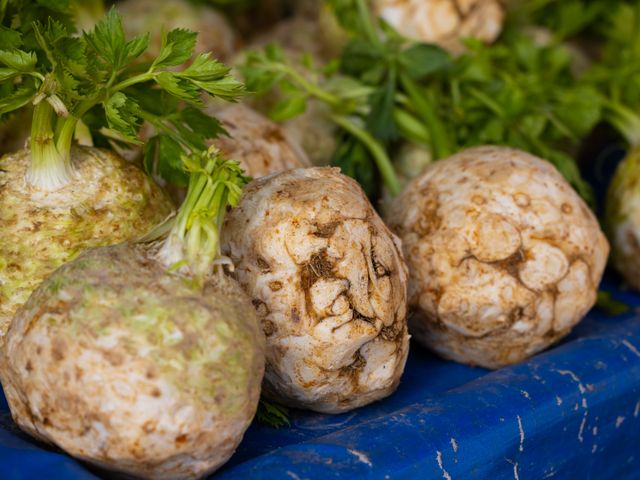
- medium carrot → Parsnip or celery root. These add different but equally pleasant notes. Use the same quantity.
- bay leaf → Fresh thyme sprig and 1 whole clove. Thyme is earthier; cloves add warmth. Remove before straining.
- black peppercorns → White peppercorns or a pinch of whole allspice berries. White pepper is milder; allspice adds a subtle spice note. Start with half the amount of allspice.