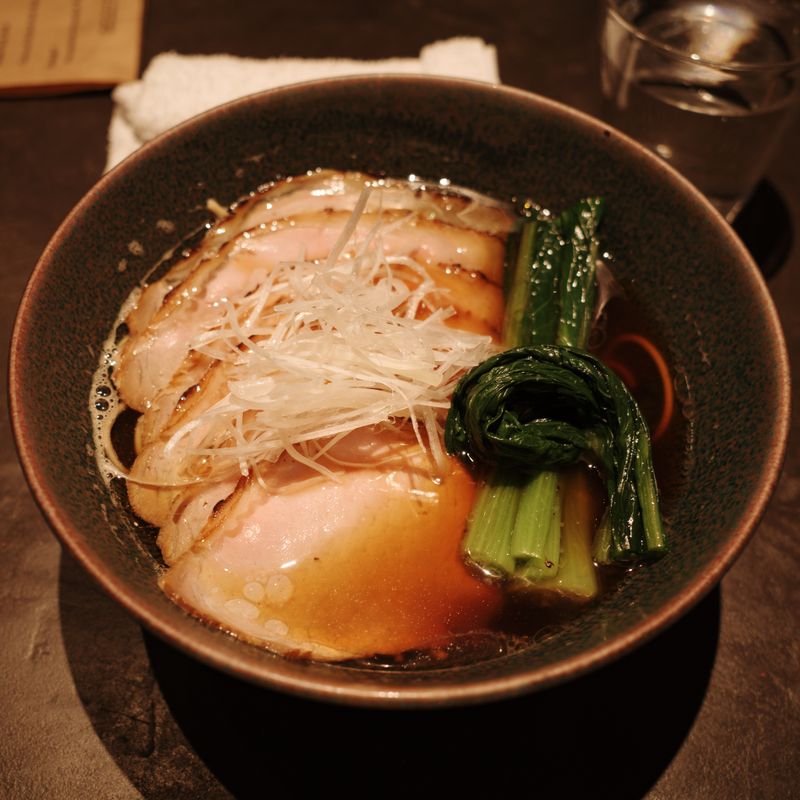
Pork Shoulder and Cabbage Broth
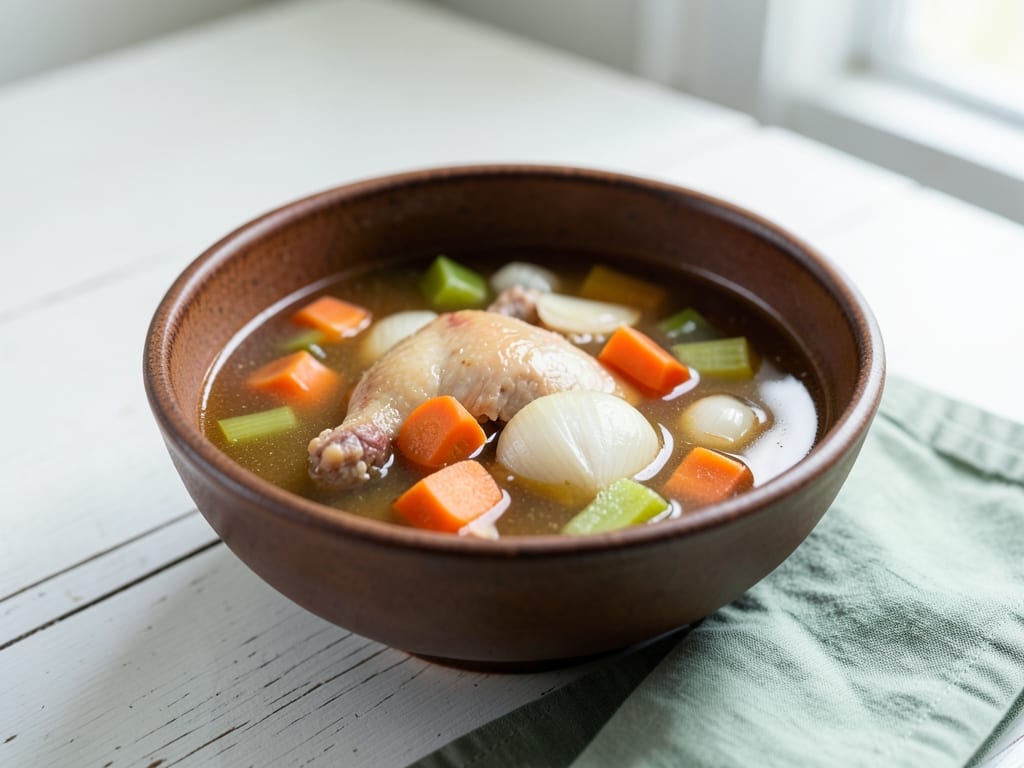
A hearty, deeply flavored Eastern European-style broth built on tender pork shoulder simmered with tangy cabbage, caraway seeds, and a touch of vinegar. Rich enough to serve as a light main course with bread, or use as a flavorful base for soups and stews. The long simmer extracts gelatin from the pork, creating a silky, nourishing broth.
- Prep
- 20 min
- Cook
- 1 hr 30 min
- Total
- 1 hr 50 min
- Makes
- About 2 quarts (8 cups) broth with pork and vegetables
Steps
Before you start
- Cut pork shoulder into 2-inch cubes so it cooks evenly
- Have a colander or fine-mesh strainer ready to skim any foam that rises early in simmering
- Taste the broth near the end—you may want more vinegar or salt depending on your preference
Start the broth
- In a large heavy-bottomed pot (6-quart or larger), bring the cold water to a boil over high heat.
- Add the pork shoulder cubes.
- Let the water return to a rolling boil, then reduce the heat to medium-low so the broth simmers gently.
- Using a colander or fine-mesh strainer, skim any gray foam or impurities that rise to the surface for the first 5 minutes.
- This step ensures a clear, clean-tasting broth.
+ Show details− Hide details
Ready when: Water boils and foam appears on the surface
Tip: Don't skip the skimming—it removes impurities and makes a noticeably clearer broth.
Add aromatics and seasonings
- After skimming, add the halved onion (with skin), caraway seeds, bay leaf (if using), thyme (if using), salt, and black pepper.
- Stir gently to distribute.
- Adjust the heat so the broth barely simmers—you should see small bubbles breaking the surface but no rolling boil.
- Cook uncovered at this gentle simmer for 45 minutes.
+ Show details− Hide details
Ready when: Pork is beginning to soften; broth smells fragrant
Tip: Keep the heat low so the broth stays clear and the pork stays tender; a hard boil will make it cloudy and tough.
Add cabbage and vinegar
- Stir in the coarsely chopped cabbage and apple cider vinegar.
- The vinegar will brighten the broth and bring out the sweet, tangy cabbage flavor.
- Return to a gentle simmer and cook uncovered for another 35–40 minutes, stirring occasionally.
- The pork should be very tender and the cabbage soft but not falling apart.
+ Show details− Hide details
Ready when: Cabbage is tender; pork shreds easily with a fork; broth is rich and aromatic
Tip: Add the vinegar at this stage so it doesn't evaporate completely; it should be a subtle tanginess, not sharp.
Taste and adjust
- Remove from heat and let cool for 2 minutes.
- Taste a spoonful of broth.
- Add more salt, pepper, or vinegar as needed to suit your taste.
- The broth should taste savory, slightly tangy, and deeply porky.
- If you prefer a lighter broth, you can strain out the solids and serve just the liquid; for a heartier bowl, ladle the pork and cabbage into bowls and pour the broth over.
+ Show details− Hide details
Ready when: Flavors are balanced to your preference
Tip: Don't undersalt—broth needs adequate salt to shine; taste before serving, not just during cooking.
Good to know
Tips
- For the clearest broth, skim diligently in the first few minutes after the pork comes to a boil, and maintain a gentle simmer throughout (not a rolling boil).
- Save the onion skin—it adds subtle color and flavor. Discard it only before serving if you prefer a paler broth.
- This broth freezes beautifully in ice cube trays; once frozen, pop the cubes into freezer bags for easy portioning and reheating.
- Serve with thick slices of rye bread or crusty sourdough to soak up the savory, tangy broth. A dollop of sour cream on the side is a traditional Eastern European accompaniment.
Make ahead
Broth can be made up to 5 days ahead. Let it cool completely, then refrigerate in an airtight container. The broth may gel slightly when chilled due to pork gelatin—this is normal and delicious. Reheat gently over medium-low heat until steaming.
Storage & reheating
Room temperature: cool to 70°F (21°C) within 2 hours, then refrigerate. Refrigerator: up to 5 days in an airtight container. Freezer: up to 3 months in freezer bags or ice cube trays (freeze flat, then stack). Thaw overnight in the refrigerator and reheat over medium-low heat until steaming. Do not boil hard when reheating, as this can toughen the pork.
Substitutions
- apple cider vinegar → white wine vinegar or distilled white vinegar. Use the same amount; white vinegar is slightly sharper, so you may want to start with 1.5 tbsp (22 ml) and adjust to taste.
- green cabbage, coarsely chopped → fresh sauerkraut (drained), added in the last 10 minutes. This shifts the flavor profile toward a tangier, more fermented broth. Reduce the apple cider vinegar to 1 tbsp (15 ml) to avoid oversourness.
- caraway seeds → whole cumin seeds or fennel seeds. Use the same amount. Cumin will be earthier; fennel will be slightly sweeter. Caraway is traditional for Eastern European broths.
- pork shoulder, cut into 2-inch cubes → pork neck, pork ribs, or pork belly (with skin). Any fatty cut will create a rich broth. Ribs need only 60 minutes of simmering; belly cuts may need up to 100 minutes. Aim for pork that is tender when pierced with a fork.