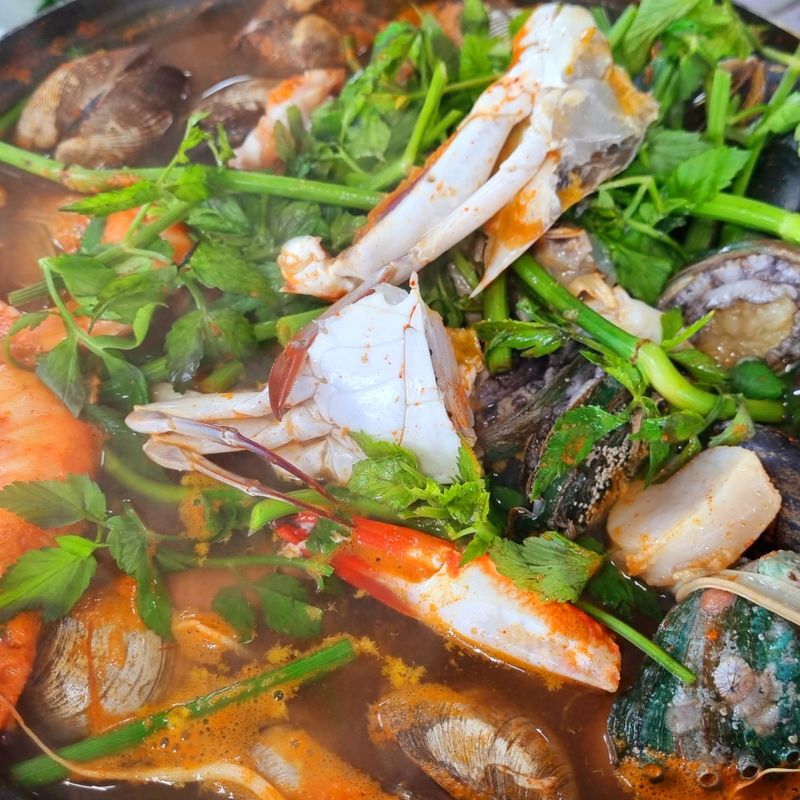
Anchovy and Fennel Broth
A delicate Italian-inspired broth built on the umami backbone of anchovies and the subtle licorice notes of fennel. White wine and garlic round out the flavor, creating a sophisticated base for seafood pasta, risotto, or sipped on its own as a restorative light soup. The broth is strained and silky, meant to showcase the interplay of its few but essential ingredients.
Steps
Before you start
- Have a fine-mesh sieve or cheesecloth ready for straining
- Use high-quality anchovies packed in salt or oil—they are the backbone
- Measure your ingredients before you begin; this broth comes together quickly
Sauté aromatics
- Heat a large saucepan or Dutch oven over medium heat.
- Add the chopped anchovies and smashed garlic cloves.
- Stir constantly for about 2 minutes until the anchovies begin to break down and dissolve into the pan, releasing their rich, savory flavor.
- You should see the anchovies soften and start to create a pungent, aromatic paste—this is the flavor foundation of your broth.
+ Show details− Hide details
Ready when: Anchovies are mostly dissolved and smell distinctly savory and pungent
Tip: Don't let the garlic or anchovies brown or burn; keep the heat at medium and stir constantly so they melt gently into the pan.
Deglaze with white wine
- Pour in the dry white wine and scrape the bottom of the pan with a wooden spoon to lift any flavorful browned bits.
- Let the wine bubble gently for about 3 minutes, stirring occasionally, so the alcohol cooks off and the wine's acidity mellows into the base.
+ Show details− Hide details
Ready when: Wine is slightly reduced and smells less sharp; aromatic and integrated with the anchovy base
Tip: If the wine reduces too quickly, lower the heat slightly so you don't lose all the liquid before the fennel goes in.
Add fennel and water
- Add the sliced fennel bulb and pour in the water.
- Stir to combine, making sure the fennel is submerged.
- Increase the heat to medium-high and bring the broth to a gentle boil.
+ Show details− Hide details
Ready when: Broth reaches a gentle boil with steam rising steadily
Tip: Keep the fennel submerged so it cooks evenly and releases its flavor throughout the broth.
Simmer until fennel is tender
- Reduce the heat to low and maintain a gentle, barely perceptible simmer.
- Partially cover the pan and let it bubble softly for about 20 minutes, until the fennel becomes very soft and pale, having surrendered much of its flavor to the broth.
- You can test by pressing a piece of fennel against the side of the pan—it should break apart easily.
+ Show details− Hide details
Ready when: Fennel is pale, very soft, and easily breaks apart; broth is fragrant with fennel and anchovy
Tip: A gentle simmer, not a rolling boil, prevents the broth from becoming cloudy and ensures delicate flavor extraction.
Season the broth
- Taste the broth.
- Add a small pinch of sea salt and a few grinds of fresh black pepper.
- Stir well and taste again, adjusting as needed.
- Remember that the anchovies are salty, so go slowly—you likely need less salt than you expect.
+ Show details− Hide details
Ready when: Broth is balanced in flavor, with no harsh edges; anchovy and fennel are both evident
Tip: Taste multiple times—salt is cumulative, and the broth will taste different once it cools slightly.
Strain the broth
- Remove the pan from heat and let it cool for 2–3 minutes.
- Place a fine-mesh sieve or several layers of cheesecloth over a clean bowl or large measuring cup.
- Carefully pour the broth through the sieve, letting the liquid drain slowly while the solids collect.
- Discard the fennel solids and garlic.
- The broth should be clear and silky.
+ Show details− Hide details
Ready when: Broth passes through the sieve as a clear, golden liquid; solids remain in the sieve
Tip: Don't rush the straining—let gravity do the work so you capture every drop of flavorful broth without pressing or forcing.
Finish with olive oil (optional)
- If desired, drizzle a small amount of extra-virgin olive oil into the strained broth and stir gently.
- This adds a layer of richness and a fruity note that complements the broth beautifully.
+ Show details− Hide details
Ready when: Olive oil is evenly distributed; broth has a slight sheen
Tip: Add the olive oil just before serving so its fresh, fruity character shines rather than cooking off.
Good to know
Tips
- Quality anchovies matter enormously here—use good salt-packed or oil-packed anchovy fillets from a trusted source, not the tinned paste. They should smell briny and pleasant, not musty or off.
- This broth is beautiful served as a light first course in a small bowl, perhaps with a grilled crostini on the side for dipping, or use it as a cooking liquid for seafood pasta, risotto, or delicate white fish.
- The fennel should be genuinely soft by the end of simmering; this signals that its anise-forward compounds have migrated into the broth. Undercooked fennel will taste fibrous and not release its full flavor.
- For a richer broth, add a small knob (about 1 tablespoon / 15 g) of unsalted butter while reheating just before serving. The fat rounds out the flavors and gives the broth a silky mouthfeel.
Make ahead
You can make this broth up to 2 days ahead. Strain it completely, let it cool to room temperature, then refrigerate in an airtight container. Reheat gently over low heat just before serving, or use it straight from the fridge as a chilled broth in summer.
Storage & reheating
Room temperature: up to 2 hours. Refrigerator: up to 3 days in an airtight container. Freezer: up to 3 months in a freezer-safe container (leave ½ inch headspace). Reheat gently over low-to-medium heat on the stovetop or in the microwave in 1-minute intervals, stirring occasionally, until warm.
Substitutions
- salt-packed or oil-packed anchovies, rinsed and chopped → 3 tablespoons (45 g) of anchovy paste or 8–10 anchovy fillets packed in oil. If using paste, whisk it into the saucepan with the garlic at the start to distribute evenly. If using oil-packed fillets, add them whole and mash them as they warm.
- fennel bulb, trimmed → ½ teaspoon (2 g) of fennel seeds (toasted and crushed) plus 1 small leek (white and light green parts, sliced), or ½ pound (225 g) of tender fennel fronds if available. Fennel seeds are much more concentrated, so use less. Leek provides body and sweetness. Fennel fronds are delicate and impart a fresh, less licorice-forward flavor.
- dry white wine → ¾ cup (180 ml) of dry white vermouth, dry white port, or a combination of ½ cup (120 ml) water and ¼ cup (60 ml) of white wine vinegar. Vermouth and port add herbal and oxidized notes. The vinegar-and-water mixture provides acidity but less depth; add slowly and taste as you go.
- water → 4 cups (960 ml) of light seafood or vegetable stock. Stock will add extra body and depth. If using store-bought stock, reduce added salt to account for its sodium content.
More broths
See all →
Find more like this
- Meal
- Lunch
- Cuisine
- Italian
- Method
- Stovetop
- Quick & Easy
- 5 Ingredients or LessEasy