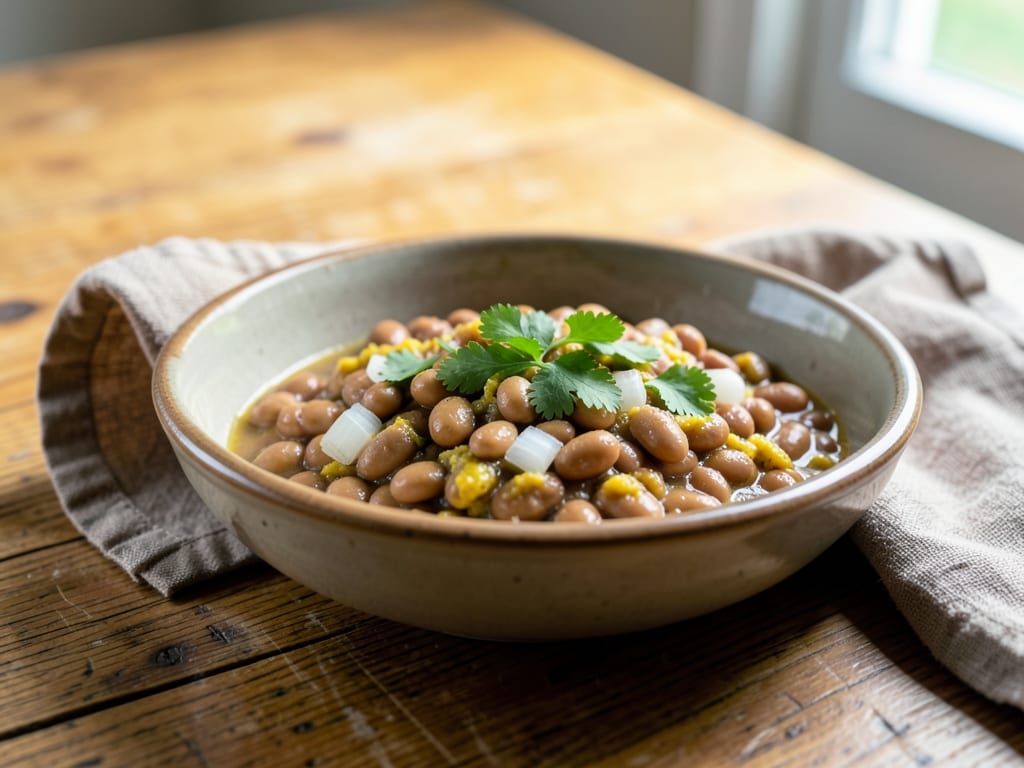
Peruvian Canary Beans with Ají Amarillo
These creamy stewed canary beans are a beloved Peruvian side dish, infused with the earthy warmth of ají amarillo—a distinctive yellow chili paste. Sautéed aromatics and garlic bloom in olive oil before meeting the tender beans in a silky broth. The result is a comforting, flavorful dish with a subtle chili warmth and bright cilantro finish. Serve alongside roasted chicken, grilled fish, or rice for an authentic Peruvian meal.
- Prep
- 15 min
- Cook
- 1 hr 35 min
- Wait
- 8 hr
- Total
- 9 hr 50 min
- Makes
- 4 cups (serves 4 as a side)
Steps
Before you start
- Soak dried canary beans overnight (or use quick-soak method for 1 hour—see step 1)
- Locate ají amarillo paste before you start; it's best sourced from Latin/Peruvian markets or online suppliers
- Have your broth (chicken or vegetable) ready; you'll need 4–5 cups in the final steps
- Read through all instructions so you understand the timing and can plan the bean cooking around your meal preparation
Soak the beans
- Place the dried canary beans in a large bowl and cover with cold water by about 2 inches (5 cm).
- For overnight soaking (traditional method), cover and let sit for 8–12 hours in a cool place.
- Alternatively, use the quick-soak method: bring water and beans to a boil in a pot over high heat, remove from heat, cover, and let sit undisturbed for 1 hour.
- Drain the beans in a colander and rinse thoroughly under cold running water.
- Pick through briefly and discard any beans that look discolored, cracked, or damaged.
+ Show details− Hide details
Ready when: Beans have doubled in size and are no longer rock-hard; they bend rather than snap when pinched
Tip: Soaking not only cuts cooking time but also removes compounds that can cause digestive discomfort. Don't skip this step. If you forget overnight soaking, the quick-soak method works well and takes only 1 hour total.
Simmer the beans
- Transfer the drained, soaked beans to a large pot and cover with 6 cups (1400 ml) of fresh cold water.
- Bring to a boil over medium-high heat—this takes 8–10 minutes.
- Once boiling, reduce heat to medium and maintain a gentle simmer.
- In the first minute, skim off any foam or gray scum that floats to the surface using a spoon.
- Continue simmering for 50–60 minutes, stirring occasionally, until the beans are three-quarters cooked: they should feel tender when pressed between your fingers but still hold their shape without collapsing.
+ Show details− Hide details
Ready when: Beans are three-quarters tender; they yield under finger pressure but do not crumble; test a few beans to ensure even cooking
Tip: Do not add salt at this stage—it can slow bean softening. Reserve the cooking water; you'll use some of it with the broth to give the stew more bean flavor.
Cook aromatics until golden
- While the beans simmer (or beforehand), warm the olive oil in a medium saucepan or skillet over medium heat.
- Add the diced yellow onion and cook for 5–6 minutes, stirring occasionally, until the onion is soft, translucent, and just beginning to turn golden at the edges.
- If the onion is browning too quickly, lower the heat slightly.
- Add the minced garlic and cook for 1 more minute, stirring constantly, until very fragrant.
+ Show details− Hide details
Ready when: Onion is soft and translucent with light golden edges; garlic is intensely fragrant
Tip: Do not let the garlic brown—it turns bitter quickly. If your pan seems too hot, reduce the heat immediately. You can do this step while the beans are simmering.
Bloom ají amarillo paste
- Stir the ají amarillo paste directly into the onion and garlic, stirring constantly for 1–2 minutes.
- The mixture should become very fragrant and deepen slightly in color as the paste toasts briefly in the oil.
- This 'blooming' step releases the essential oils and concentrated flavor of the chili.
+ Show details− Hide details
Ready when: Paste is evenly distributed throughout the oil; mixture is fragrant and slightly darker in color
Tip: Ají amarillo paste can be thick and clump easily. Stir vigorously to break it up and distribute it evenly. If it seems very thick, loosen it slightly with 1 tablespoon of broth.
Add beans and broth
- Once the beans are three-quarters cooked from step 2, pour them into the pot with the bloomed ají amarillo mixture.
- Include 2 cups (480 ml) of their cooking liquid (this adds subtle bean flavor).
- Add the broth—you'll likely need 4–5 cups (960–1200 ml), adjusting based on your remaining bean liquid—until the beans are just covered by about 1 inch (2.5 cm) of liquid.
- Stir well to combine, scraping the bottom and sides of the pan to ensure no ají paste sticks.
+ Show details− Hide details
Ready when: Liquid comes to a gentle simmer; color is uniform with no streaks of paste
Tip: Using some of the bean cooking liquid (not just broth) adds subtle, savory depth to the stew. Stir from the bottom with a wooden spoon to prevent scorching.
Simmer until creamy and tender
- Bring the mixture back to a simmer over medium heat, then immediately reduce heat to medium-low.
- Simmer gently, uncovered, for 20–30 minutes, stirring occasionally, until the beans are completely tender and have a creamy texture.
- The broth should thicken slightly from the beans' released starches.
- The beans should mash easily between your fingers with no resistance.
- If they still feel firm or chalky, continue simmering for another 5–10 minutes and retest.
+ Show details− Hide details
Ready when: Beans are completely tender and yield easily when pressed; they mash with minimal effort; broth is noticeably thickened and coats the beans
Tip: Taste a bean to ensure the interior is completely soft with no chalky or hard center. The longer and gentler the final simmer, the creamier the beans become. If the broth is too thin, simmer a few extra minutes uncovered to reduce and thicken it.
Season and serve
- Taste the beans and season generously with salt and black pepper.
- If using lime juice, stir it in now—its acidity brightens the warm, earthy flavors of the ají and beans.
- Transfer to a serving bowl or platter and garnish with the chopped fresh cilantro.
- Serve warm as a side dish alongside roasted or grilled chicken (pollo a la parrilla), steamed fish, rice, or a fresh green salad.
+ Show details− Hide details
Tip: Add lime juice at the very end to preserve its bright, fresh flavor—heat will dull it if added too early. Fresh cilantro wilts from residual heat and releases its oils when stirred; it softens but brightens the dish.
Good to know
Tips
- Ají amarillo paste is a staple in Peruvian cuisine and the defining ingredient of this dish. It's available in Latin/Peruvian markets, specialty grocery stores, and online retailers. It's worth seeking out for authenticity—no substitute fully captures its color, warmth, and distinctive chili flavor.
- These beans are traditionally served alongside roasted chicken (pollo a la parrilla), seasoned white rice, and a simple green salad with lime vinaigrette. They're also excellent as part of a vegetarian plate with rice, steamed vegetables, and fresh avocado.
- For a silkier, more luxurious texture, use an immersion blender to partially blend the cooked beans before serving—blend just 1–2 cups, leaving some whole beans for texture. This releases more starches and creates a creamier broth.
- Make a double batch and freeze half. These beans taste even better the next day or after freezing, as the flavors deepen and meld. They're perfect for quick weeknight meals throughout the month.
Make ahead
Yes, cook the beans completely up to 1 day ahead. Store in an airtight container in the refrigerator. The beans will thicken as they cool. Reheat gently on the stovetop over medium-low heat, stirring frequently and adding a splash of broth or water to restore a creamy consistency. Taste and re-season as needed before serving.
Storage & reheating
Refrigerate in an airtight container for up to 4 days. The beans thicken as they cool; add broth or water when reheating. Freeze in an airtight container or heavy-duty freezer bag for up to 3 months. Thaw overnight in the refrigerator, then reheat gently on the stovetop over medium-low heat, stirring occasionally and adding broth as needed to loosen.
Substitutions
- Ají amarillo paste → Yellow chili powder (2 tablespoons) mixed with 1 tablespoon paprika and 1 tablespoon olive oil to form a paste, or turmeric and paprika blend (1 teaspoon turmeric mixed with 2 tablespoons paprika and 1 tablespoon oil). Ají amarillo has a unique, slightly fruity chili flavor and distinctive color. These substitutes approximate the color and warmth but won't replicate the exact taste. Start with the smaller amount and adjust to taste.
- Canary beans (dried) → Great Northern beans, cannellini beans, or dried chickpeas (garbanzos). Great Northern and cannellini beans cook faster (35–45 minutes of simmering instead of 50–60). Chickpeas are firmer and may need 60–70 minutes. Adjust simmering times accordingly. Texture will vary; chickpeas create a firmer stew.
- Chicken or vegetable broth → Water (increase salt and adjust seasonings to taste), bone broth, or vegetable broth. Chicken broth is traditional and adds richness. Water works but produces a more delicate flavor. Vegetable broth keeps the dish vegetarian. Bone broth adds depth and subtle richness.
- Fresh cilantro → Flat-leaf parsley, or a mixture of cilantro and fresh mint. Cilantro is traditional in Peruvian cooking and has a distinctive bright flavor. Parsley is a neutral, mild alternative. A cilantro-mint mix adds an unexpected, fresh complexity.
More bean sides
See all →
Find more like this
- Meal
- Dinner
- Main ingredient
- Beans & Lentils
- Method
- Stovetop
- Quick & Easy
- Easy