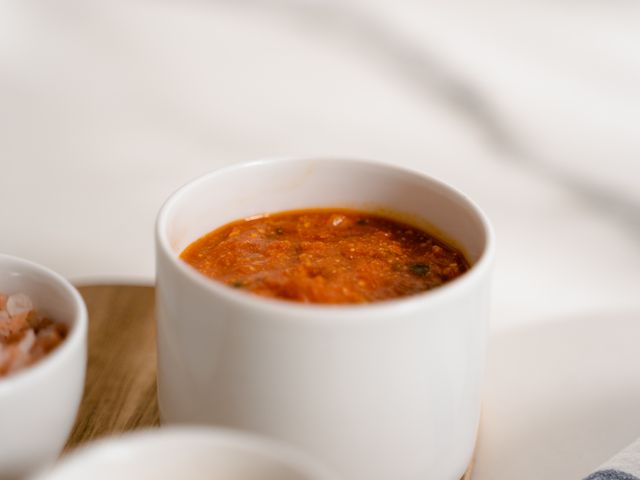
One-Pot Sourdough Spanish Seafood and Saffron Stew with Breadcrumbs
A rustic Spanish-inspired seafood stew thickened and enriched with toasted sourdough breadcrumbs, infused with saffron, paprika, and bright aromatics. Firm white fish and tender squid cook gently in a broth deepened by a traditional picada of breadcrumbs, garlic, and saffron, served in wide bowls with crusty bread for soaking up every drop.
- Prep
- 20 min
- Cook
- 35 min
- Wait
- 10 min
- Total
- 1 hr 5 min
- Makes
- 4 servings (about 2 cups per bowl)
Steps
Before you start
- Pat seafood completely dry before cooking to prevent excess moisture from diluting the broth
- Toast sourdough breadcrumbs in a skillet until golden (5 minutes) and cool slightly before grinding—this deepens their flavor
- Measure saffron threads and steep in 2 tablespoons warm water for 5 minutes before adding to the stew
Build the base
- Heat the olive oil in a large heavy-bottomed pot over medium heat.
- Once shimmering, add the diced onion and red bell pepper.
- Cook, stirring occasionally, for 8–10 minutes until the vegetables soften and the onion becomes translucent.
- Add the minced garlic and cook for 1 minute more until fragrant.
+ Show details− Hide details
Ready when: Onion is soft and translucent; garlic is fragrant
Tip: Don't let the garlic brown—it will turn bitter and overpower the delicate seafood.
Bloom spices
- Stir in the smoked paprika and cook for 30 seconds, stirring constantly.
- The paprika will bloom and release its smoky aroma.
- Add the white wine to deglaze the pot, scraping up any browned bits on the bottom with a wooden spoon.
+ Show details− Hide details
Ready when: Wine sizzles and liquid coats the bottom
Tip: Blooming the paprika in oil develops its depth; skipping this step leaves it flat-tasting.
Add tomatoes and stock
- Pour in the canned diced tomatoes with their juices, then add the warm fish stock.
- Bring the mixture to a gentle simmer, stirring to combine.
- Reduce heat to medium-low and simmer uncovered for 10 minutes to meld the flavors.
+ Show details− Hide details
Ready when: Liquid simmers with small bubbles breaking the surface
Tip: A gentle simmer, not a rolling boil, prevents seafood from becoming tough.
Make the picada thickener
- While the broth simmers, finely grind the cooled toasted sourdough breadcrumbs with a mortar and pestle (or spice grinder) until they resemble coarse flour.
- You should have about ¾ cup (75 g) of ground breadcrumbs.
- Add 2 tablespoons (30 ml) of the warm saffron steep (with threads) to the crumbs and mix until evenly combined into a paste-like mixture.
+ Show details− Hide details
Ready when: Breadcrumbs are finely ground; saffron liquid is absorbed into a paste
Tip: Grinding the breadcrumbs by hand (rather than a food processor) keeps the texture coarser and more authentic—they should thicken the stew without turning it into a purée.
Thicken the broth
- Slowly stir the saffron-breadcrumb mixture into the simmering broth, breaking up any lumps with the back of a spoon.
- Stir constantly for 1–2 minutes until the breadcrumbs fully dissolve and the broth thickens slightly and turns a pale golden color from the saffron.
- The stew should coat a spoon lightly but remain pourable.
+ Show details− Hide details
Ready when: Broth is smooth, golden, and lightly coats the back of a spoon
Tip: Add the breadcrumb paste slowly and stir constantly to prevent lumps from forming—lumps won't dissolve once the broth cools slightly.
Season and add fish
- Taste the broth and season with sea salt and freshly ground black pepper.
- Gently lay the chunks of white fish into the simmering broth, spacing them so they cook evenly.
- Do not stir; let them settle.
- Maintain the simmer and cook for 6–7 minutes until the fish is opaque and flakes easily when tested with a fork.
+ Show details− Hide details
Ready when: Fish is opaque throughout and flakes easily; internal temperature reaches 145°F (63°C)
Tip: Resist the urge to stir—moving the fish too much causes it to fall apart. The gentle simmering liquid will cook it evenly.
Add squid
- Carefully add the sliced squid and tentacles to the pot, stirring gently to distribute.
- The squid will cook very quickly—continue simmering for 2–3 minutes until the squid is opaque and tender, with a slight firmness (it should not be rubbery).
- The squid rings will curl slightly.
+ Show details− Hide details
Ready when: Squid is opaque throughout and slightly curled; internal temperature reaches 145°F (63°C)
Tip: Squid cooks very fast—add it last and keep a close eye. Overcooking turns it rubbery; undercooking leaves it chewy.
Rest and finish
- Remove the pot from heat and let the stew rest, uncovered, for 5 minutes.
- This allows the flavors to settle and the stew to cool slightly.
- Taste once more and adjust seasoning with salt and pepper if needed.
- Stir in the chopped fresh parsley just before serving.
+ Show details− Hide details
Ready when: Stew has stopped actively simmering; aroma is rich and balanced
Tip: Adding parsley at the end preserves its fresh, bright flavor—adding it earlier will dull its color and taste.
Serve
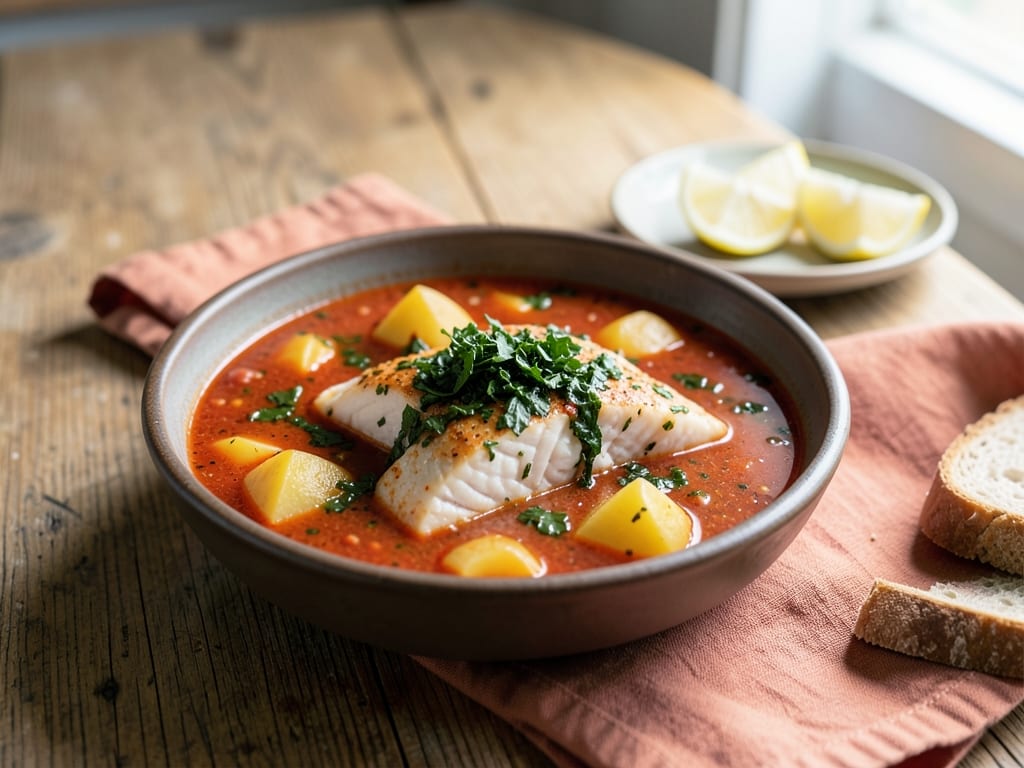
- Ladle the stew into wide, shallow bowls, ensuring each bowl receives fish, squid, and plenty of broth.
- Serve immediately with toasted crusty bread on the side (or rubbed with a cut garlic clove for extra flavor) and fresh lemon wedges.
- Guests can squeeze lemon juice into their bowls to brighten the rich, savory broth.
+ Show details− Hide details
Tip: Wide bowls showcase the golden broth and seafood beautifully. Bread is essential—it soaks up the flavorful liquid at the bottom.
Good to know
Tips
- Toasting sourdough breadcrumbs before grinding releases their nutty, complex flavors and creates a golden color in the finished broth—don't skip this step. Toast them in a dry skillet over medium heat for 4–5 minutes, stirring often, until fragrant and light golden.
- The picada (breadcrumb and saffron paste) is a traditional Spanish thickener that adds body and silky mouthfeel to seafood stews while keeping them lighter than cream or roux-based versions.
- For the best results, use homemade fish stock made from fish heads and bones, or high-quality bottled stock—the broth is the soul of this dish and deserves quality ingredients.
- Serve this stew immediately after cooking; the longer it sits, the more the breadcrumbs will continue to absorb liquid and make the stew gravy-like. If serving family-style from a pot at the table, ladle into a warm tureen to keep it hot.
Make ahead
Prepare the aromatics (onion, bell pepper, garlic) up to 2 days ahead and store in an airtight container in the refrigerator. Toast and cool the sourdough breadcrumbs the night before. The stew itself is best made and served fresh on the day you plan to eat it, as the delicate texture of the seafood does not hold well when reheated.
Storage & reheating
This stew is best eaten fresh the day it is made. If you have leftovers, cool completely and refrigerate in an airtight container for up to 1 day. Reheat gently over low heat in a pot, stirring occasionally, until warm (do not boil or the seafood will toughen further). The stew does not freeze well because the texture of the fish and squid will become mushy upon thawing.
Substitutions
- firm white fish fillets (sea bass, halibut, or cod), skinless → Halibut, cod, monkfish, or any firm white fish with mild flavor. Avoid delicate fish like flounder or sole; they fall apart in the stew. Thicker, firmer flesh holds up better to the gentle simmer.
- fresh or frozen squid, cleaned → Shrimp (21/25 count, peeled and deveined) or a combination of squid and shrimp. Shrimp cooks even faster than squid—add it in the last 1–2 minutes. For seafood-free, use mushrooms (cremini or oyster) instead, sautéed first with garlic.
- sourdough breadcrumbs, from day-old or stale loaf → Day-old crusty bread (baguette or country loaf) made into fresh crumbs, or gluten-free breadcrumbs. Toast fresh crumbs in the same way. The stew will be slightly less tangy without sourdough's characteristic flavor, but still delicious. Quantity remains the same.
- fish or seafood stock, preferably homemade → Vegetable stock or light chicken stock mixed with 1 tablespoon tomato paste for depth. Fish stock is ideal, but in a pinch, light stocks work. Avoid beef or dark meat stocks—they overpower the delicate seafood.