French Pot-au-Feu with Egg Noodles
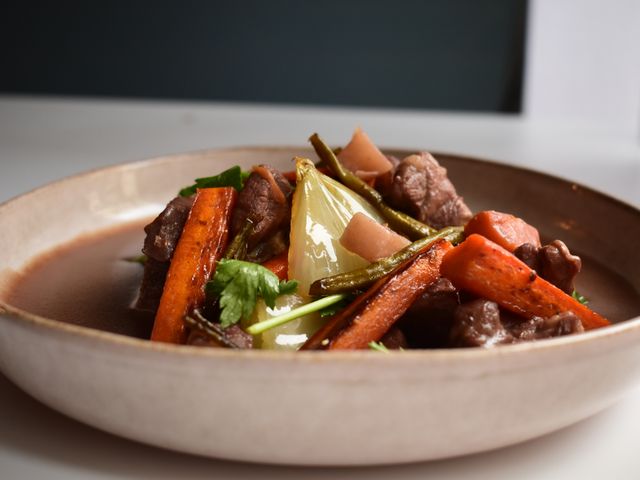
A classic French braise of beef and root vegetables in a rich, aromatic broth, served over tender egg noodles. This traditional comfort dish takes time but requires minimal active work, making it perfect for leisurely cooking. The beef becomes fall-apart tender, vegetables soften to silky texture, and the broth becomes deeply flavorful through slow simmering. Serve with crusty bread and Dijon mustard.
- Prep
- 20 min
- Cook
- 30 min
- Wait
- 2 hr 30 min
- Total
- 3 hr 20 min
- Makes
- 6 servings (about 9–10 cups total)
Steps
Before you start
- Pat the beef dry with paper towels before searing—this helps it brown better.
- Prep all vegetables (cutting, peeling) before you start cooking; mise en place keeps the recipe flowing smoothly.
- Have a heavy-bottomed pot with a tight-fitting lid ready; a Dutch oven is ideal.
- Plan for about 3.5 hours of total time, with over 2 hours of unattended simmering.
Prepare ingredients
- Trim excess fat from the beef brisket, then cut into 2- to 3-inch chunks.
- Peel and cut carrots into 2-inch pieces.
- Cut potatoes into quarters (no need to peel; the skin adds nutrients).
- Peel turnips and cut into quarters.
- Cut celery into 2-inch pieces.
- Lightly crush the peppercorns with the side of a knife.
- Smash the garlic cloves to loosen the skins.
- Cut the onion in half lengthwise, leaving the skin on (the skin helps color the broth).
+ Show details− Hide details
Tip: Uniform vegetable pieces cook evenly. Cut vegetables slightly larger than you think you want—they'll soften considerably during the long simmer.
Sear the beef
- Heat the oil in a large (6- to 8-quart) heavy-bottomed pot or Dutch oven over medium-high heat until shimmering, about 1–2 minutes.
- Working in two batches to avoid crowding, sear the beef chunks until they develop a golden-brown crust on at least two sides, about 3–4 minutes per side.
- Transfer the seared beef to a plate and set aside.
- This step adds rich depth of flavor but can be skipped if time is short.
+ Show details− Hide details
Ready when: Beef shows a dark golden-brown crust on at least two sides (Maillard browning)
Tip: Don't overcrowd the pot; the meat should touch the hot surface directly. If you prefer not to sear, skip this step; the stew will still be delicious, just slightly less complex.
Build the broth
- Pour the beef broth into the pot, using a wooden spoon to scrape up any browned, caramelized bits stuck to the bottom—this flavorful fond enriches the broth.
- Return the seared beef to the pot.
- Add 2 cups of water (or enough so the liquid nearly covers the beef).
- Stir gently.
+ Show details− Hide details
Ready when: Broth is mixed and beef is nearly submerged
Tip: The fond is liquid gold—don't skip the scraping step. The broth will taste deeper and more complex because of these caramelized bits.
Simmer beef with aromatics
- Add the bay leaves, thyme sprigs, crushed peppercorns, smashed garlic cloves, and onion halves to the pot.
- Bring the liquid to a gentle simmer over medium heat, then reduce the heat to low and cover with a lid.
- Simmer for 1 hour.
- The beef should be partially tender when pierced with a fork, though not yet falling apart.
+ Show details− Hide details
Ready when: Liquid simmers gently with occasional lazy bubbles; beef is partially tender when tested with a fork
Tip: Maintain a bare simmer—just the occasional bubble breaking the surface. A vigorous boil will toughen the meat and cause excessive evaporation.
Add the vegetables
- Add the carrots, potatoes, turnips, and celery to the pot.
- Stir gently to distribute them evenly.
- Bring the liquid back to a gentle simmer over medium heat, then cover and reduce heat to low.
+ Show details− Hide details
Ready when: Vegetables are submerged and liquid simmers gently
Finish simmering
- Return the lid to the pot and reduce heat to low.
- Simmer gently for 1 to 1.5 hours more, until the beef is very tender (a fork should shred the meat easily) and the vegetables are so tender they barely hold their shape.
- Check at the 1-hour mark—doneness depends on beef chunk size and your stove's heat output.
- The broth should taste rich and deeply savory.
+ Show details− Hide details
Ready when: Beef shreds easily with a fork; vegetables are very soft but mostly intact; broth is rich and deep brown
Tip: If beef isn't quite falling-apart tender after 1.5 hours, give it another 15–20 minutes. The long, gentle cook is what makes pot-au-feu special. Alternatively, make this ahead; the meat becomes even more tender the next day.
Season to taste
- Remove and discard the bay leaves and thyme sprigs.
- You can fish out the whole peppercorns and garlic cloves if you prefer, though many people enjoy leaving them in.
- Taste the broth carefully and season with salt and pepper.
- Add salt in small pinches, tasting between each addition.
- The broth should taste savory and deeply flavored, but not salty.
+ Show details− Hide details
Ready when: Broth is flavorful and well-balanced
Tip: Season gradually—it's easier to add salt than remove it. Taste as you go.
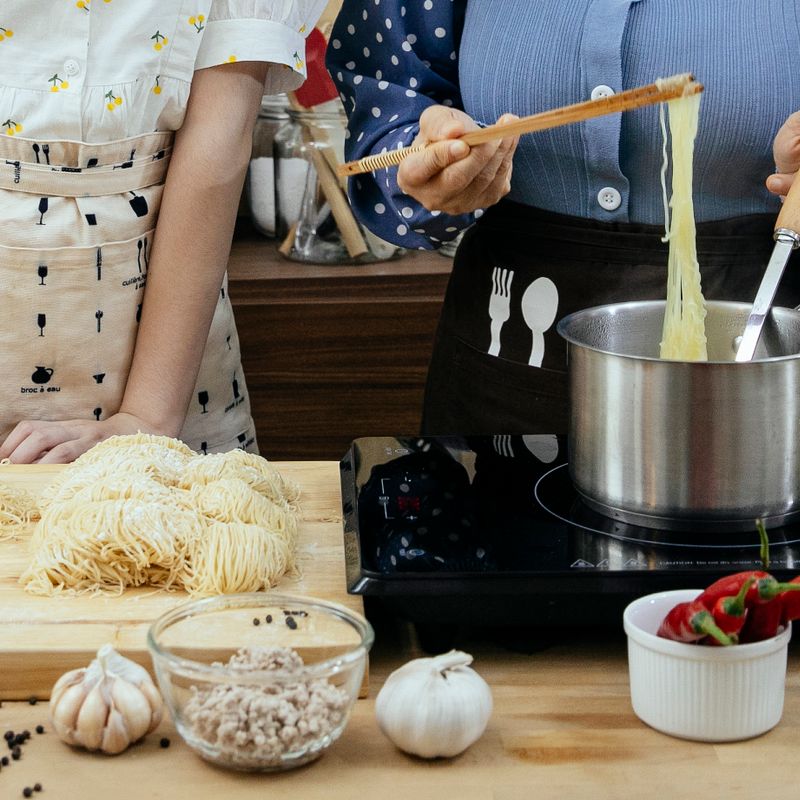
Cook egg noodles
- While the beef simmers during the final cooking phase (around the 30–45 minute mark), fill a large (5-quart) pot with 3 quarts (2.8 liters) of water and bring to a boil over high heat.
- Add a generous pinch of salt to the water.
- Add the egg noodles and stir once to prevent sticking.
- Cook according to package directions, usually 7–8 minutes, until tender and flexible but still slightly firm when bitten (al dente).
- Drain in a colander.
- Return noodles to the pot and toss gently with butter if desired to prevent sticking.
+ Show details− Hide details
Ready when: Noodles are tender, flexible, and al dente; water has been drained
Tip: Cooking noodles separately prevents them from absorbing too much broth and becoming mushy. You can save 1 cup of noodle cooking water to adjust broth consistency when serving if desired.
Serve
- Ladle the beef, vegetables, and broth into wide, shallow bowls.
- Top each serving with a generous portion of warm egg noodles.
- Serve immediately while the broth is hot, with crusty bread on the side.
- Offer Dijon mustard, coarse salt, and small pickles (cornichons) at the table so guests can customize their bowls to taste.
Good to know
Tips
- Pot-au-feu is even better the next day after flavors have had time to meld. The beef becomes even more tender upon reheating.
- Skim any fat from the surface of the broth once the beef is cooked for a lighter dish, or leave it in for richer, more indulgent flavor.
- Serve with coarse salt, Dijon mustard, crusty bread, and cornichons (small pickles) at the table so guests can customize their bowls.
- This recipe freezes beautifully without the noodles. Freeze the beef, vegetables, and broth together, then cook fresh noodles when reheating for the best result.
Make ahead
The beef and vegetables can be cooked fully up to 2 days ahead. Cool completely and refrigerate in the broth. Reheat gently on the stovetop over low heat. Cook egg noodles fresh when ready to serve for best texture.
Storage & reheating
Refrigerator: Store beef, vegetables, and broth together in an airtight container for up to 4 days. Reheat gently on the stovetop over low heat, stirring occasionally. Cook fresh egg noodles or reheat reserved cooked noodles before serving. Freezer: Cool completely, then freeze beef, vegetables, and broth in an airtight container for up to 3 months. Thaw overnight in the refrigerator, then reheat gently on the stovetop. Do not freeze noodles with the broth; cook fresh when serving.
Substitutions
- beef brisket → beef chuck roast or beef shank. Both are tough cuts that become tender with long, moist cooking. Use the same weight and follow the same cooking time.
- fresh thyme sprigs → dried thyme. Use 1 teaspoon dried thyme in place of the 3 sprigs fresh. Add it with the bay leaf.
- egg noodles → short-grain rice or orzo pasta. Use 1.5 cups cooked rice or 1 cup uncooked orzo. Cook rice or pasta separately per package directions before adding to bowls.
- beef broth or beef stock → chicken broth. Use an equal amount of chicken broth; the pot-au-feu will be lighter and less traditional but still flavorful.
More stews
See all →

Find more like this
- Meal
- Dinner
- Cuisine
- French
- Main ingredient
- Stew Beef
- Diet
- HalalSugar-Free
- Method
- Stovetop
- Season
- Winter Comfort Food