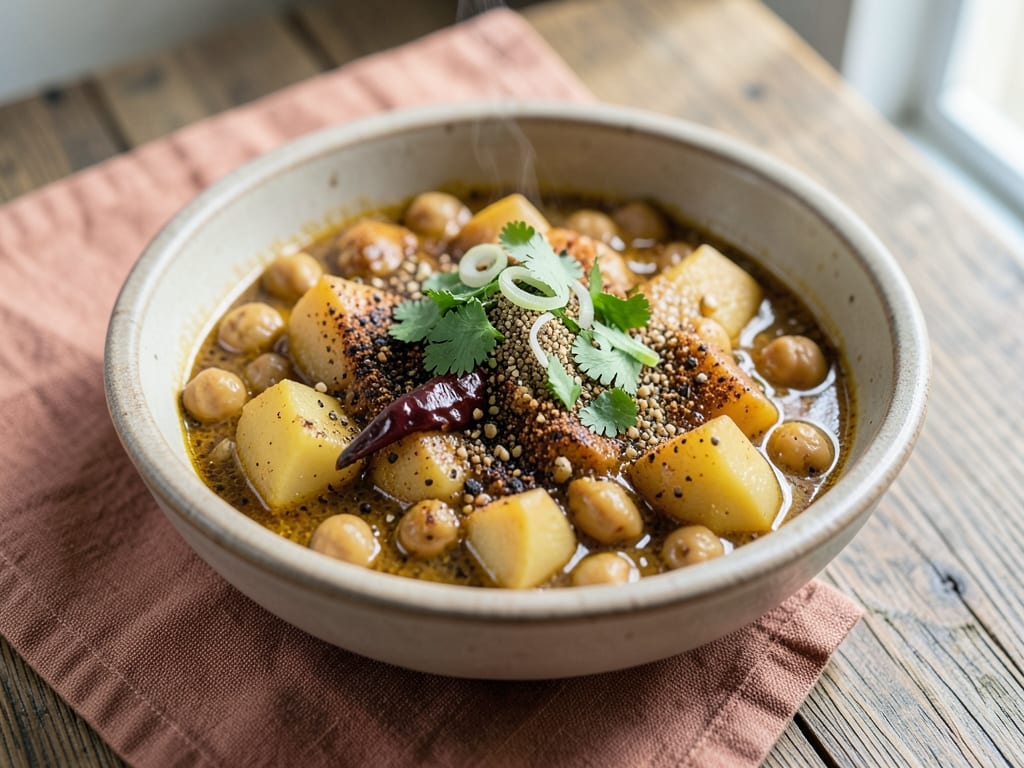
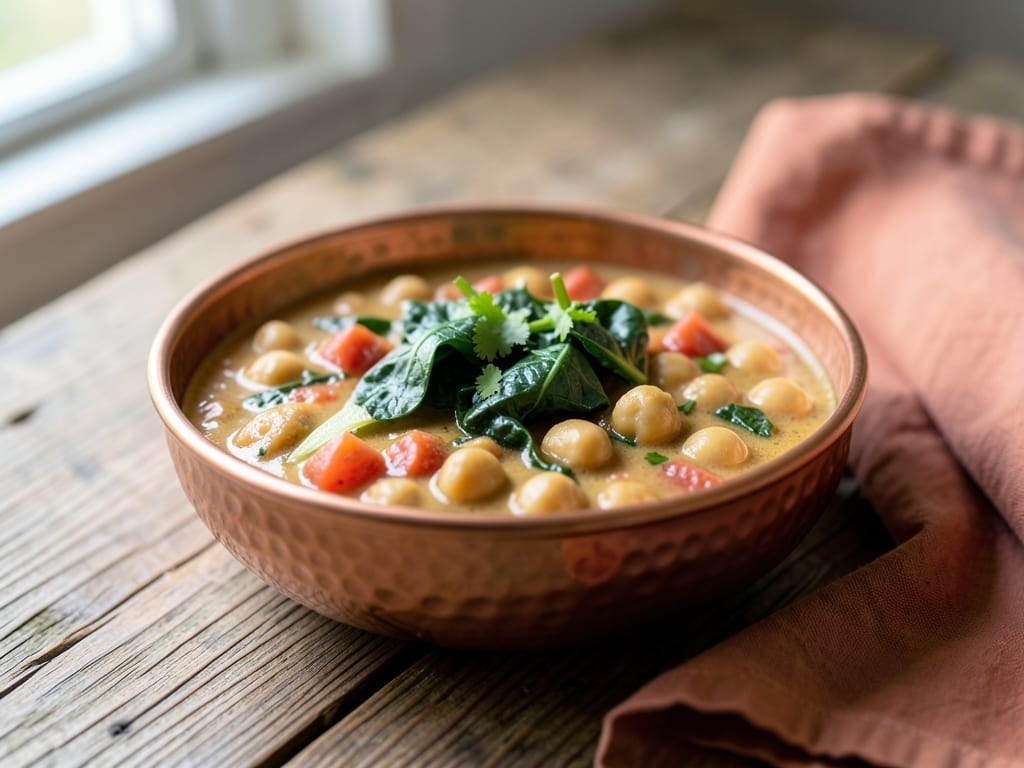
Malaysian Coconut Curry Chickpeas
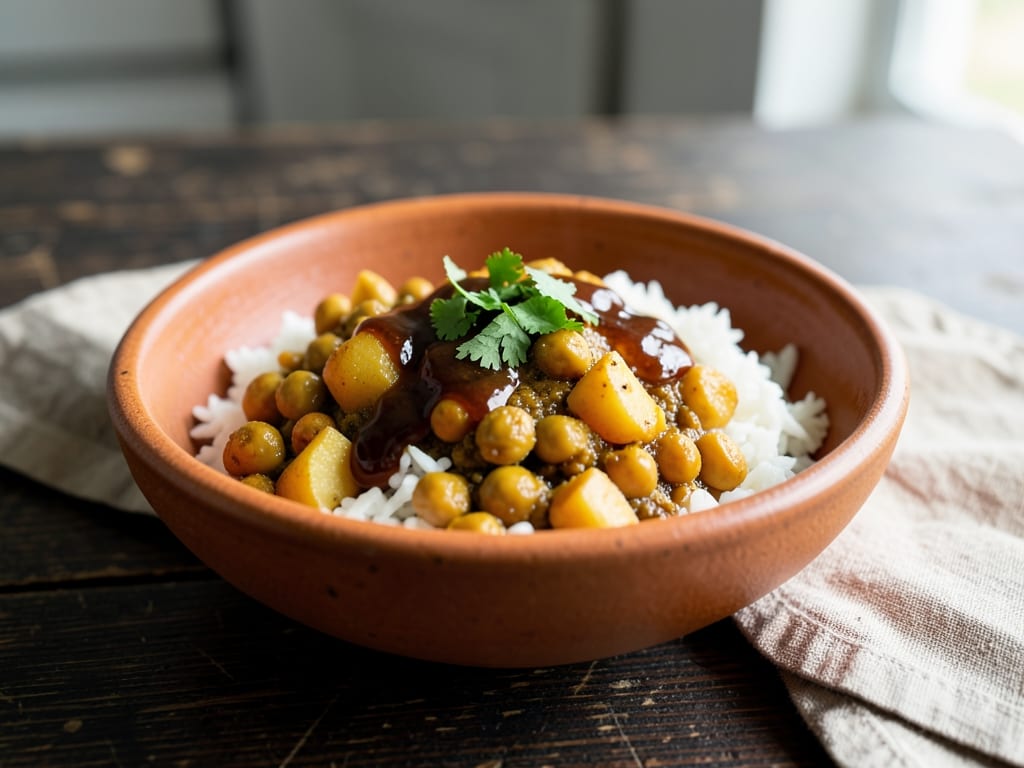
A fragrant, creamy Malaysian-style coconut curry with tender chickpeas, subtly sweet coconut milk, and warming spices. This stovetop dish comes together quickly and is perfect as a vegetarian side or light main course when served over rice.
Steps
Before you start
- Drain and rinse canned chickpeas before you begin cooking
- Prep and measure all ingredients (mise en place) so the curry comes together without pauses
- Juice fresh limes about 30 minutes ahead to have the juice ready
Sauté aromatics
- In a large heavy-bottomed skillet or saucepan (at least 3-quart / 2.8-liter capacity), warm the coconut oil over medium heat until shimmering, about 30 seconds.
- Add the diced onion and cook for 3–4 minutes, stirring occasionally, until it becomes translucent and soft.
- Add the minced garlic and fresh ginger and cook for 1 minute more, stirring constantly, until very fragrant.
- This releases the natural oils and deepens their flavor.
+ Show details− Hide details
Ready when: Onion is translucent and soft; garlic and ginger are very fragrant
Tip: Don't let the garlic brown—reduce heat slightly if it's cooking too fast
Bloom the curry paste
- Add the red curry paste to the aromatic mixture and stir constantly for 1–2 minutes.
- The paste will cook slightly and become even more fragrant, releasing its essential oils into the oil and aromatics.
- You'll see the color deepen slightly and the texture become more incorporated.
+ Show details− Hide details
Ready when: Paste is fragrant and slightly darker in color; oils are released and visible
Tip: Blooming the curry paste is crucial for developing complex, deep flavors—this step cannot be skipped
Add liquid and bring to simmer
- Pour in the full can of coconut milk and the vegetable broth, stirring well to combine and dissolve the curry paste fully.
- Increase the heat to medium-high and bring to a gentle simmer, stirring occasionally.
- You should see small bubbles breaking the surface and steam rising after about 2–3 minutes.
+ Show details− Hide details
Ready when: Liquid bubbles gently at the edges and steam rises steadily
Add chickpeas and simmer
- Stir in the drained and rinsed chickpeas, mixing well to combine.
- Reduce the heat to medium-low and simmer gently for 8–10 minutes, stirring occasionally.
- The chickpeas will warm through, and the sauce will coat them lightly.
- You'll notice the curry becoming slightly thicker as it simmers and the flavors meld together.
+ Show details− Hide details
Ready when: Chickpeas are heated through and sauce lightly coats them; curry is warm throughout
Tip: Maintain a gentle simmer to prevent the coconut milk from breaking or separating
Season the curry
- Remove the skillet from the heat.
- Stir in the fresh lime juice and fish sauce (if using), tasting as you add.
- Fish sauce has a strong aroma but adds essential umami depth—start with 1 teaspoon and add the remaining ½ teaspoon if desired after tasting.
- Season with salt and pepper to taste, starting with a small pinch of each and adjusting until the flavors are bright and balanced.
- The lime should add a subtle tang without being sour.
+ Show details− Hide details
Ready when: Flavors are balanced and bright; lime and fish sauce are well-integrated
Tip: Fish sauce is pungent raw, but it mellows and transforms once integrated into the warm curry—trust the flavor
Finish and serve
- Transfer the curry to serving bowls or plates.
- Generously garnish with fresh chopped cilantro and thinly sliced red chili (if desired).
- Serve hot, optionally with jasmine rice, steamed rice, roti, or naan for scooping and soaking up the fragrant sauce.
Good to know
Tips
- Blooming the curry paste in hot oil is non-negotiable—this step releases the aromatic compounds and develops deeper, more complex flavors that can't be achieved any other way.
- Fish sauce is pungent and unfamiliar to many Western cooks, but it's the backbone of Southeast Asian seasoning. Start conservatively and taste before adding more; a little goes a long way.
- For a thicker curry, simmer uncovered for the final 2–3 minutes to reduce the sauce and create a clingier consistency that coats the chickpeas better.
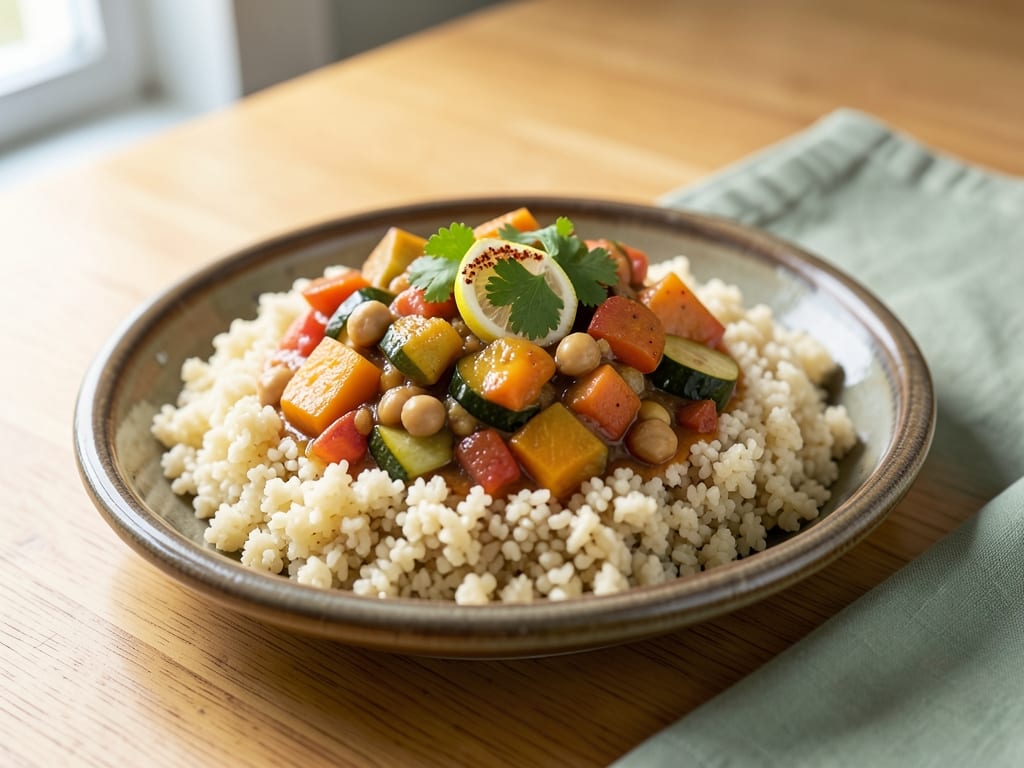
- Serve with jasmine rice, steamed rice, roti, or naan to soak up the fragrant sauce. You can also pair it with roasted vegetables like bell peppers, snap peas, or carrots for a heartier, more colorful meal.
Make ahead
The curry can be made up to 2 days ahead and reheated gently on the stovetop. The flavors deepen and meld overnight, making it even better the next day.
Storage & reheating
Refrigerator: Store in an airtight container for up to 3 days. Reheat gently over low heat on the stovetop, stirring occasionally and adding a splash of coconut milk or broth if it thickens too much. Freezer: Freeze in an airtight container or freezer bag for up to 3 months. Thaw overnight in the refrigerator and reheat gently as above.
Substitutions
- Malaysian red curry paste → Yellow curry paste. Provides a milder, earthier flavor; use the same amount or slightly less to taste
- Fish sauce → Soy sauce. Use a 1:1 ratio by volume for a different but equally umami-rich flavor profile; the curry will taste slightly less authentic but still delicious
- Fresh cilantro → Thai basil or Italian parsley. Cilantro can taste soapy to some people; Thai basil provides a sweeter herbaceous note, or parsley offers a milder flavor
- Coconut oil or neutral vegetable oil → Vegetable, canola, or peanut oil. Neutral oils work equally well; coconut oil adds traditional Malaysian flavor but any neutral oil produces an excellent curry