
Korean Perilla Leaf Bibimbap Rice
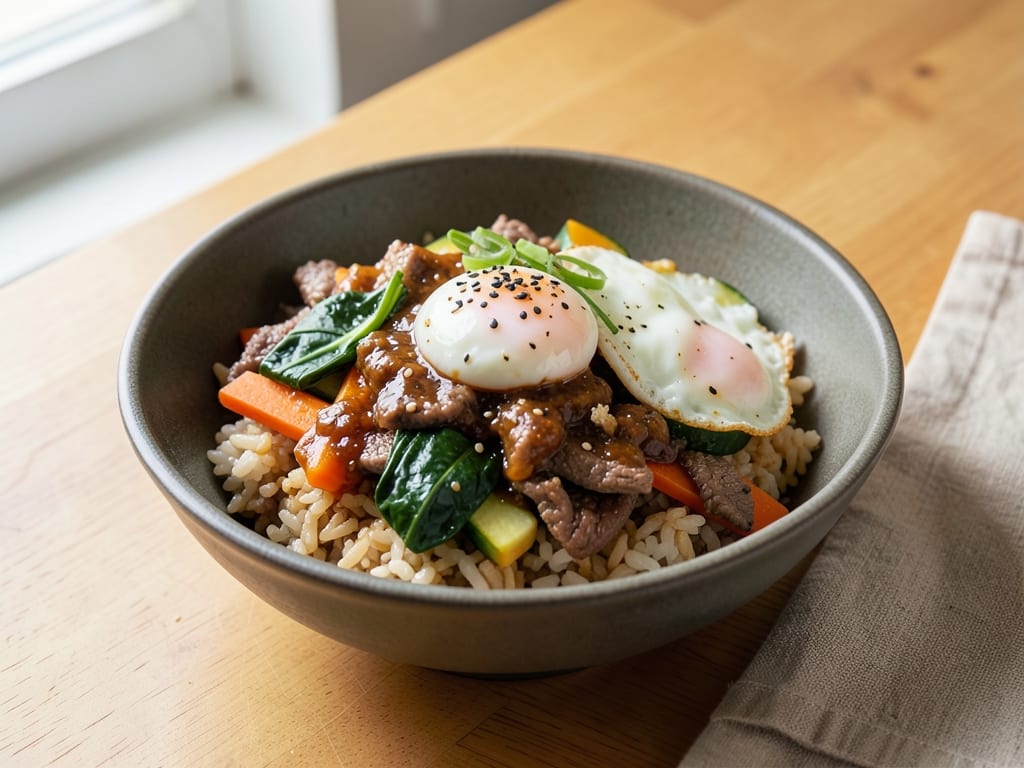
A simple yet elegant Korean rice dish layered with seasoned short-grain rice, crispy fried perilla leaves, and a savory-spicy gochugaru oil. The fresh, anise-like flavor of perilla leaves contrasts beautifully with the toasted sesame undertones and gentle heat. Perfect as a side dish or light main course.
- Prep
- 15 min
- Cook
- 25 min
- Wait
- 10 min
- Total
- 50 min
- Makes
- 4 servings (about 1½ cups each)
Steps
Before you start
- Wash and dry perilla leaves thoroughly to ensure they fry properly
- Measure all seasonings before you start cooking
- Have sesame oil, gochugaru, and minced garlic ready near the stove
Cook the rice
- Place rinsed rice in a medium saucepan and add 2½ cups (600 ml) water and ½ teaspoon (3 g) salt.
- Bring to a boil over high heat, then immediately reduce to low heat, cover tightly, and simmer for 18 minutes.
- The rice is done when all water is absorbed and the surface shows small steam holes.
- Do not stir while cooking.
+ Show details− Hide details
Ready when: All water absorbed, small steam holes visible on rice surface
Tip: Do not lift the lid or stir the rice while it cooks—this releases steam and disrupts even cooking.
Prepare the spiced oil
- While the rice cooks, combine 3 tablespoons (45 ml) sesame oil, 1 tablespoon (8 g) gochugaru, and 4 minced garlic cloves in a small bowl.
- Stir to blend and let sit until the rice is done.
- The heat from the oil will lightly toast the garlic and deepen the chili color.
+ Show details− Hide details
Ready when: Garlic is evenly distributed throughout the oil
Tip: Do not heat the oil directly—the residual warmth of the bowl and the oil's own warmth will suffuse the flavors without burning the garlic.
Fry the perilla leaves
- Heat a 10-inch (25 cm) shallow skillet over medium-high heat.
- When a drop of water sizzles on contact, add about 5 perilla leaves at a time, pressing gently with a wooden spoon for 1–2 minutes per side until they turn crispy and slightly darkened but still vibrant green.
- Leaves should be papery and curl at the edges.
- Transfer to a paper towel–lined plate.
- Work in batches to avoid crowding.
- Season lightly with salt.
+ Show details− Hide details
Ready when: Leaves are papery, slightly crisp, with curled edges, and still retain some green color
Tip: Don't fry too many leaves at once or they will steam instead of crisping. The residual oil from washing the leaves is usually enough; add no additional oil.
Rest the rice
- When the rice finishes cooking, remove the saucepan from heat and let it stand covered for 5 minutes.
- This allows the rice to finish steaming and become fluffy.
Fluff and season
- Uncover the rice and use a wooden spoon to gently fluff it, breaking up any clumps.
- Pour the spiced oil over the warm rice and stir gently to distribute the garlic and gochugaru evenly throughout.
- Taste and adjust salt as needed.
+ Show details− Hide details
Ready when: Rice is fluffy, oil is evenly distributed, and color is uniform throughout
Tip: Stir gently to avoid crushing the rice grains. The warm rice will soften the gochugaru slightly and mellow its heat.
Assemble and serve
- Transfer the seasoned rice to a serving bowl.
- Crumble or arrange the crispy perilla leaves on top in a decorative layer.
- Sprinkle with toasted sesame seeds if desired.
- Serve immediately while the rice is warm and the perilla leaves are still crisp.
+ Show details− Hide details
Tip: Add the perilla leaves just before serving so they stay crispy; if left sitting in the moisture from the rice, they will soften.
Good to know
Tips
- Fresh perilla leaves (kkaennip) are essential to this dish and available at Korean, Japanese, and some Southeast Asian markets, or online. The anise-like flavor is irreplaceable.
- For extra texture and nutrition, scatter toasted white or black sesame seeds and a sprinkle of chopped green onion over the rice before serving.
- This dish pairs wonderfully alongside grilled meats, kimchi, and soft tofu. It also stands alone as a light vegetarian meal.
- If perilla leaves are unavailable or you want to simplify, omit them and increase the sesame oil to 4 tablespoons (60 ml) with an extra minced garlic clove for a classic, oil-dressed bibimbap rice.
Storage & reheating
Stored in an airtight container in the refrigerator, the rice keeps for 3 days. Fried perilla leaves are best used fresh but can be stored separately in an airtight container for up to 2 days. To serve, gently reheat the rice in a microwave (adding 1–2 tablespoons water to restore moisture) and recrisp the perilla leaves in a dry skillet over medium heat for 30–45 seconds, then assemble. The rice can also be frozen for up to 3 months; thaw in the refrigerator overnight and reheat gently.
Substitutions
- fresh perilla leaves (kkaennip) → shiso leaves (Japanese perilla), or crispy fried sage leaves for a different herbaceous quality. Shiso has a similar anise-like flavor; sage will give a more earthy, peppery note. Both should be fried the same way.
- gochugaru (Korean red chili flakes) → cayenne pepper or red pepper flakes, using half the quantity and adjusting to taste. These alternatives lack the fruity, complex flavor of gochugaru, but provide heat. Add more sesame oil if substituting to enhance depth.
- toasted sesame oil → neutral oil (vegetable or canola) mixed with a small drizzle of toasted sesame oil for richness. Pure neutral oil will lack the distinctive sesame aroma; using mostly neutral with a little sesame balances cost and flavor.
- short-grain white rice (sushi or Japanese rice) → medium-grain sushi rice or Korean multigrain rice for a nuttier texture. Cooking times and water ratios may vary slightly; the rice should still be fluffy and tender, not mushy.
More rice bowls
See all →

Find more like this
- Meal
- Dinner
- Cuisine
- Korean
- Main ingredient
- Basmati Rice
- Method
- Stovetop
- Quick & Easy
- 5 Ingredients or LessEasyBeginner