Korean Bibimbap Quinoa Bowls
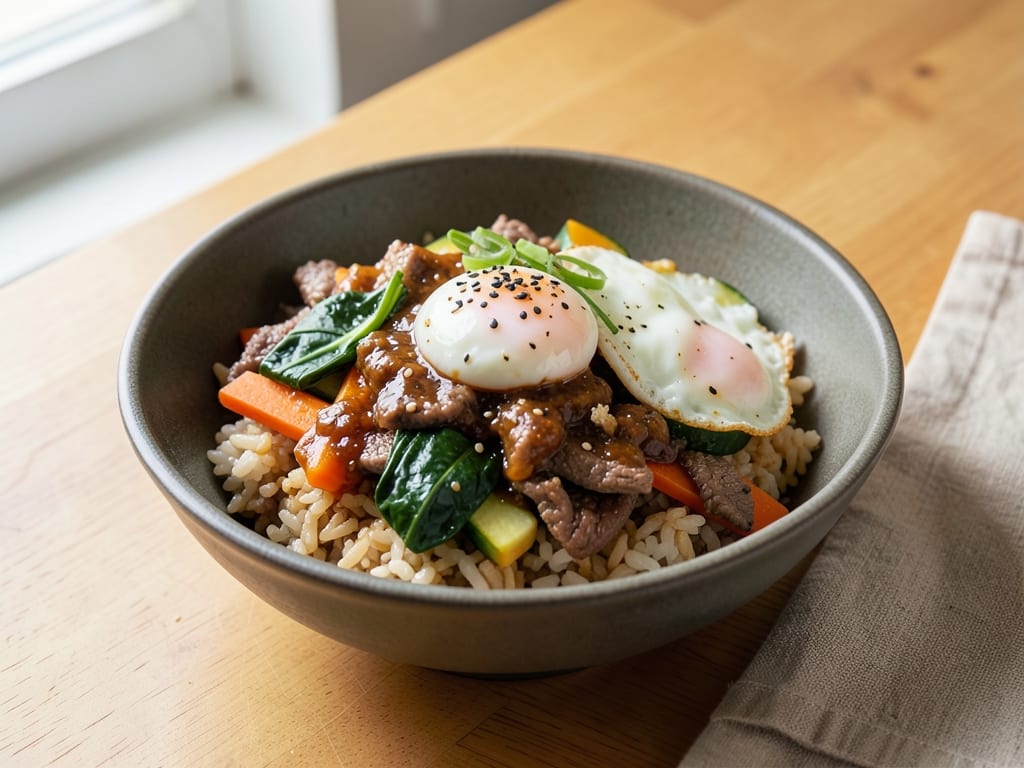
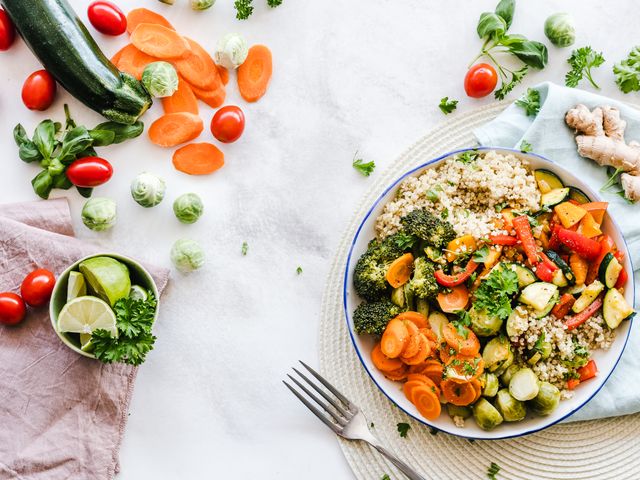
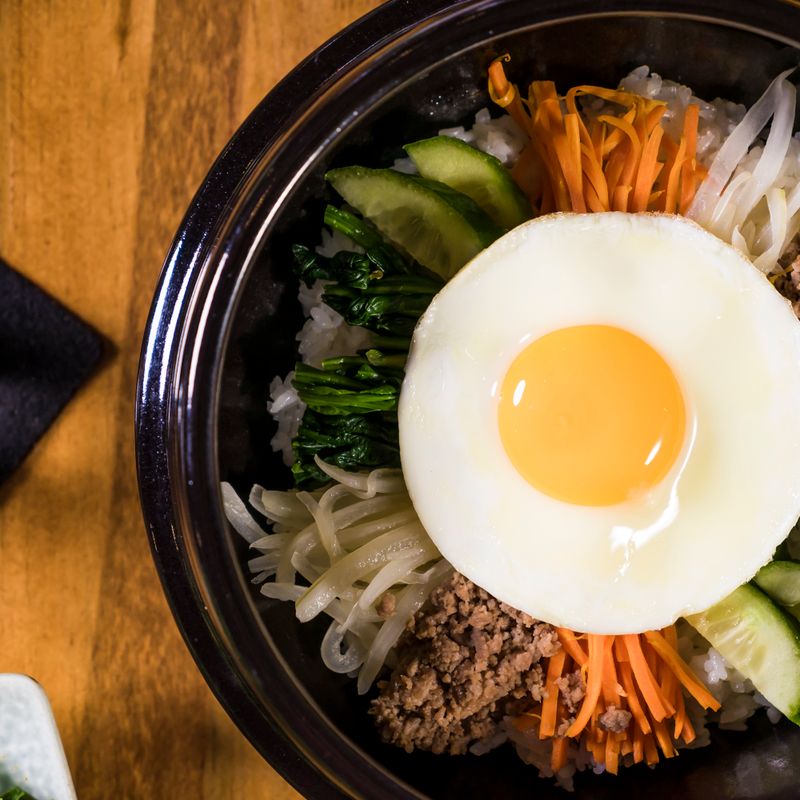
A vibrant, modern take on the classic Korean mixed rice bowl using nutty quinoa instead of traditional rice. Layers of quick-sautéed vegetables—mushrooms, carrots, spinach, and zucchini—sit atop fluffy quinoa with a fried egg nestled in the center. The runny yolk acts as a creamy sauce when mixed through. Finished with a smooth, spicy-sweet gochujang sauce, sesame seeds, and green onion. Colorful, satisfying, and ready in under an hour.
Steps
Before you start
- Preheat a medium saucepan and have a large skillet ready
- Prepare all vegetables in advance (mise en place) for smooth cooking
- Rinse the quinoa in a fine-mesh strainer and have it ready
- Review the recipe timing—some steps overlap for efficiency
Cook Quinoa Base
- Rinse the quinoa in a fine-mesh strainer under cool water.
- Transfer to a medium saucepan and add the vegetable broth and a small pinch of salt.
- Bring to a boil over medium-high heat, about 3–4 minutes.
- As soon as it boils, immediately reduce heat to medium-low, cover with a lid, and simmer undisturbed for 15 minutes until most of the liquid is absorbed.
- Remove from heat and let rest, covered, for 5 minutes.
- This allows any remaining liquid to be fully absorbed and the grains to become fluffy.
+ Show details− Hide details
Ready when: Grains are tender, liquid is fully absorbed, and they fluff easily with a fork
Tip: Rinsing quinoa removes the bitter saponin coating and ensures better texture—never skip this step
Whisk Gochujang Sauce
- While the quinoa simmers, prepare the sauce in a small bowl.
- Whisk together the gochujang, 2 tablespoons of the sesame oil, rice vinegar, honey, 1 tablespoon of the soy sauce, and 1 minced garlic clove until smooth and well combined.
- The sauce should be creamy with no lumps.
- Set aside at room temperature.
- This can be made up to 2 days ahead if you prefer.
+ Show details− Hide details
Ready when: Sauce is smooth with no lumps
Tip: Whisking the sauce now means you won't have to stop mid-sauté; it's best made at room temperature for easier serving
Prep All Vegetables
- While the quinoa simmers, prepare all your vegetables on a cutting board.
- Cut carrots into thin matchstick julienne about 2 inches long and 1/8 inch thick.
- Slice mushrooms into 1/4-inch thick pieces.
- Cut zucchini into similar thin julienne as the carrots.
- Mince the remaining 2 garlic cloves.
- Leave spinach roughly chopped or as whole leaves.
- Having everything prepped and ready will keep you organized during the fast sauté that follows.
+ Show details− Hide details
Ready when: All vegetables are cut uniformly
Tip: Uniform cuts ensure vegetables cook evenly and look professional; take a few extra seconds to make them consistent
Sauté Vegetables
- Heat the remaining 1 tablespoon sesame oil in a large skillet over medium-high heat for about 1 minute until shimmering.
- Add sliced mushrooms with a small pinch of salt and sauté for 3–4 minutes, stirring occasionally, until the mushrooms are tender and golden at the edges.
- Push the mushrooms to the side of the skillet.
- Add the julienned carrots to the empty space and cook for 2–3 minutes, stirring frequently, until carrots are tender-crisp but still have a slight crunch.
- Add the julienned zucchini and minced garlic (2 cloves) and stir everything together.
- Cook for 1–2 minutes until the zucchini is just tender and fragrant.
- Finally, add the spinach and stir constantly for about 1 minute until completely wilted.
- Pour in 1 tablespoon soy sauce and toss gently to coat all vegetables.
- Taste and season with a pinch of salt and black pepper.
- Transfer the vegetables to a clean plate.
+ Show details− Hide details
Ready when: Mushrooms are golden, carrots are tender-crisp, spinach is completely wilted, and all vegetables are glossy from soy sauce
Tip: Cook vegetables in stages so each reaches its perfect doneness without becoming mushy; this staggered approach is the key to vibrant, varied textures
Fry Eggs Until Yolks Set Slightly
- In the same skillet (or a clean one if needed), add a light coating of oil and heat over medium heat for about 1 minute until shimmering.
- Carefully crack all 4 eggs into the skillet, spacing them evenly to avoid overcrowding.
- Fry for 3–4 minutes until the egg whites are completely set and opaque, but the yolks still jiggle slightly when you gently shake the pan.
- Avoid poking or pressing on the yolks.
- Season each egg with a small pinch of salt and black pepper.
+ Show details− Hide details
Ready when: Egg whites are set and opaque; yolks jiggle gently when pan is shaken, not runny but still soft
Tip: Keep yolks runny so they act as a creamy sauce when stirred through the warm bowl—this is essential to the bibimbap experience
Assemble & Serve
- After the quinoa's 5-minute rest, fluff it gently with a fork to separate the grains.
- Divide the fluffed quinoa evenly among 4 serving bowls, using about 3/4 cup per bowl.
- Arrange the sautéed vegetables on top in sections (mushrooms on one side, carrots on another, etc.) for the traditional bibimbap presentation, or lightly mix them throughout—both are authentic.
- Carefully place one warm fried egg in the center of each bowl, yolk facing up.
- Drizzle each bowl with a generous spoonful (about 2 teaspoons) of the gochujang sauce.
- Sprinkle generously with sesame seeds and sliced green onions if using.
+ Show details− Hide details
Ready when: Bowls are arranged with warm ingredients and a creamy yolk visible in the center
Tip: Bibimbap means 'mixed rice'—the traditional way is to break the yolk and give everything a vigorous stir at the table, mixing the yolk through as a binding sauce. Arrange components separately so your diners can customize their mix
Good to know
Tips
- Don't overcook the eggs; keep yolks runny so they become a creamy sauce when mixed through the warm bowl—this is the soul of bibimbap
- Mise en place is crucial: prep all vegetables before you start cooking so you can keep up with the fast-paced sauté without scrambling or burning anything
- Bibimbap means 'mixed rice'—the traditional and most delicious way to eat it is to break the yolk at the table and give everything a vigorous stir, mixing the yolk throughout as a binding sauce
- This bowl is excellent for meal prep: store cooked quinoa, sautéed vegetables, and sauce separately in airtight containers for up to 3 days, then assemble fresh with a warm fried egg when ready to eat
Make ahead
The gochujang sauce improves with time and can be prepared up to 2 days in advance. Cooked quinoa can be refrigerated for up to 3 days and reheated gently before assembly. Vegetables can be cut and stored in airtight containers for up to 8 hours.
Storage & reheating
Store cooked quinoa and sautéed vegetables separately in airtight containers in the refrigerator for up to 3 days; reheat gently on the stovetop or microwave before assembling. Fried eggs are best eaten fresh and do not reheat well. The gochujang sauce keeps refrigerated for up to 2 weeks. This dish is best assembled fresh rather than stored as a complete bowl.
Substitutions
- quinoa → Brown rice or jasmine rice. Use the same 1:2 ratio with liquid (1 cup rice to 2 cups broth). Brown rice will take about 35–40 minutes to cook instead of 20.
- gochujang → 2 tablespoons sriracha mixed with 1 teaspoon soy sauce. This gives similar heat and umami, though the flavor profile is slightly different. Start with 1 tablespoon sriracha if you prefer less spice.
- cremini or shiitake mushrooms → Bell peppers, broccoli florets, or snap peas. Cut into similar sizes. Cook times remain about the same; adjust for softer vegetables like bell pepper which may cook faster.
- fresh spinach → Kale, Swiss chard, or collard greens. Heartier greens may need 1–2 minutes longer cooking time. Remove large stems before cooking.